‘Buffy The Vampire Slayer’ Characters Ranked By Story Impact
From the Hellmouth to high school hallways, Buffy the Vampire Slayer delivered unforgettable characters who shaped seven seasons of demon-fighting drama.
Some heroes saved the world more than once, while certain villains changed everything with a single choice.
Ranking these beloved Scoobies and Big Bads by their story impact reveals who truly left the deepest mark on this legendary series.
Note: Rankings reflect an editorial interpretation of story impact and can vary based on personal viewing history and which arcs resonate most.
20. The Master

Sunnydale’s oldest vampire threat lays down the show’s mythology and high stakes right away. Imprisoned beneath Sunnydale, the Master embodies old world vampire lore and looming prophecy.
His escape and temporary killing of Buffy deliver the series’ first major cliffhanger.
Buffy rises after drowning and defeats him, yet that brief win proves the Slayer can fall.
Gaunt, skeletal features and grand theatrical menace create a model for future Big Bads while kicking off a mix of horror, humor, and heart that defines seven seasons.
19. Drusilla

Angelus’s vampiric protégé brings chaos and prophecy to season two alongside Spike. Drusilla’s visions and childlike madness make her unpredictable and genuinely unsettling.
Her relationship with Spike adds twisted romance to their murderous rampage across Sunnydale.
Angelus’s psychological torture of Drusilla before turning her into a vampire reveals his capacity for cruelty. She represents the lasting damage that evil inflicts on its victims, even when those victims become monsters themselves.
Drusilla’s presence elevates the season two Big Bad lineup with memorable menace and tragedy.
18. Warren Mears

Trio’s leader evolves from a bumbling nuisance into a true monster across season six.
Warren’s robot girlfriends expose a chilling need to control women. Katrina’s death shows how quickly the Trio’s “games” turn lethal and real-world consequences take over.
Sho*ting Buffy and accidentally k*lling Tara pushes Willow toward a dark transformation as the season’s real threat. Ordinary misogyny and entitlement become forces as dangerous as magic, leaving Warren uniquely disturbing and painfully relevant.
17. Jonathan Levinson

The overlooked student appears in 29 episodes, representing every ignored kid who feels invisible in high school. Jonathan’s suicide attempt and subsequent rescue by Buffy creates a powerful moment about recognizing those who suffer in silence.
His spell to make himself the hero backfires spectacularly.
Later, as part of the Trio, Jonathan’s misguided villainy stems from wanting respect and recognition. His eventual attempt to do the right thing shows that even weak people can find courage when it truly matters most.
16. Cordelia Chase

A popular high school antagonist grows from a shallow antagonist into a valued team member across 54 episodes.
Cordelia’s brutal honesty and unexpected bravery make her far more than a stereotypical cheerleader.
Her relationship with Xander crosses social boundaries and sparks genuine character growth for both. When she heads to Los Angeles, Cordelia keeps evolving on Angel’s spin off series.
Her early presence shows how the series flips expectations and uncovers depth in seemingly one dimensional characters, creating a blueprint for future redemption arcs.
15. Riley Finn

During her college years, an Initiative soldier enters Buffy’s world and introduces a contrasting strategy for battling monsters.
Across a 31-episode run, Riley’s story examines military involvement in the supernatural along with the strain of loving someone stronger than himself.
Time spent together reveals Buffy’s ongoing struggle to maintain relationships that feel normal and grounded. Eventually, his exit from Sunnydale shows how even well-meaning people cannot always overcome deep, built-in differences.
After Riley leaves, Buffy must confront whether she pushes others away or simply exists on a level most humans cannot truly share.
14. Joyce Summers

Buffy’s mom grounds the supernatural chaos in real-world parental love and concern across 58 episodes.
Joyce’s discovery of her daughter’s Slayer identity creates season two’s most emotionally raw family conflict. Her brain tumor storyline in season five delivers devastating realism that no magic can fix.
The silent aftermath of her death in The Body is widely praised for its unflinching portrayal of sudden loss. Joyce reminds viewers that ordinary human mortality can hurt far more than any demon attack ever could.
13. Mayor Wilkins

Sunnydale’s clean-cut, folksy mayor hides a century-long plan to become a pure demon on graduation day. His fatherly affection for Faith makes him surprisingly sympathetic despite his monstrous goals.
The Mayor’s transformation into a giant snake creature creates the perfect metaphor for the transition from high school to adulthood.
His politeness and genuine care for his town’s appearance contrast brilliantly with his apocalyptic intentions. Season three’s finale, with the entire graduating class fighting back, represents the ultimate triumph of community over evil authority.
12. Faith Lehane

Suddenly, a second Slayer with a darker worldview crashes into Buffy’s life and complicates everything at once.
Faith’s reckless style and slide into villainy fuel season three’s most personal and painful conflict.
Tension between them reveals what can happen when power lands in the wrong hands without steady guidance.
After accidentally killing a human and joining forces with the Mayor, Faith shows how quickly a hero can fall. Years later, a hard-earned redemption arc confirms that even the darkest road can turn toward the light with real effort and accountability.
11. Glory

A hell goddess trapped in human form dominates season five with terrifying power and Valley Girl speech patterns.
Glory’s search for the Key drives the entire storyline and creates genuine dread since she can defeat Buffy in direct combat. Her mental-draining attacks on innocent victims raise the stakes beyond typical monster-of-the-week threats.
The revelation that Dawn herself is the Key connects Glory’s quest directly to Buffy’s family. This conflict ultimately forces Buffy’s greatest sacrifice, dying to save her sister and close the dimensional portal.
10. The First Evil

Season seven introduces an ancient antagonist that embodies evil in its most fundamental form. Existing as the source of all darkness, the First cannot be killed.
By wearing the faces of the dead, it wages psychological warfare on the heroes while building an army of ancient vampires.
Facing an enemy without a physical body forces Buffy to activate Slayers across the globe, reshaping the mythology forever. Victory in the final battle centers on sharing power instead of carrying that burden alone.
9. Tara Maclay

Willow’s gentle girlfriend brings stability and wisdom during 47 episodes of magical mayhem.
Tara’s powerful yet controlled approach to witchcraft contrasts sharply with Willow’s eventual addiction. Their relationship represents one of television’s groundbreaking same-sex romances, handled with care and authenticity.
Her tragic death at Warren’s hands triggers Willow’s dark transformation into the season six endgame threat. That single bullet fundamentally changes multiple characters and demonstrates how random violence creates devastating ripples throughout interconnected lives.
8. Anya Jenkins

Former vengeance demon learning to live as a human brings comic relief and unexpected emotional depth across 81 episodes. Blunt honesty and social awkwardness give Anya standout moments, while her bond with Xander explores commitment and fear.
Heartbreak after a failed wedding drives her back toward demon life and shows how pain can disrupt hard-won growth.
In the series finale, a selfless sacrifice confirms that redemption grows from choosing to stand on the right side.
Her journey reveals that being human means accepting vulnerability right alongside strength.
7. Dawn Summers

Season five’s reality-bending twist introduces Buffy’s sister who never existed until mystical monks created her from energy.
Dawn’s presence across 66 episodes fundamentally alters family dynamics and raises the emotional stakes. The Key’s importance drives the entire Glory storyline and ultimately leads to Buffy’s sacrificial death.
Though initially controversial among fans, Dawn represents the lengths people go to protect innocent lives. Her existence proves that family bonds transcend blood and biology when love runs deep enough.
6. Angel (And Angelus)

First love in Buffy’s life turns into season two’s most devastating villain once a moment of perfect happiness strips away his soul. Angel’s curse creates one of the show’s most heartbreaking dilemmas and forces Buffy to kill the man she loves to save the world.
Across 56 episodes, his painful redemption journey wrestles with guilt, forgiveness, and impossible choices. Loss of his soul reveals how love can twist into deliberate cruelty under the name Angelus.
Later, a move to Los Angeles launches a spin off series and leaves emotional scars that shape Buffy’s life forever.
5. Spike
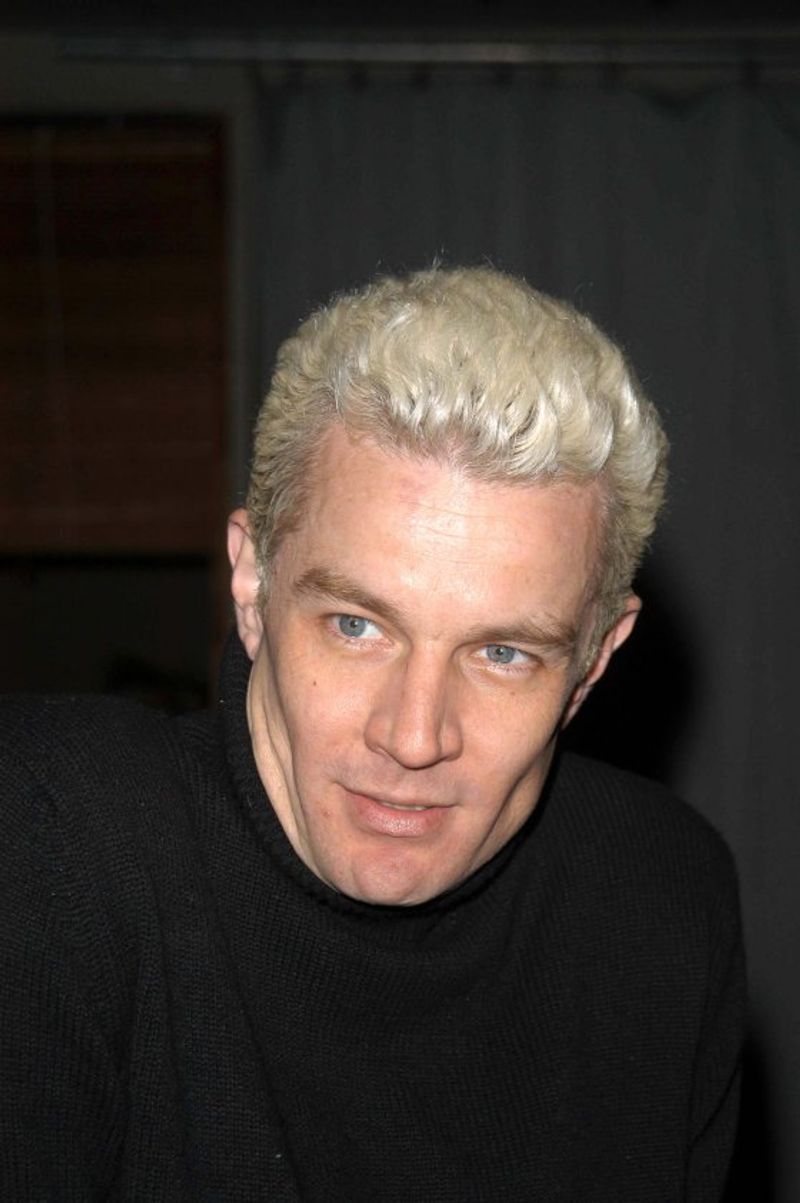
From Big Bad to reluctant ally to souled vampire, Spike’s transformation spans 96 episodes of complex character work. Initially arriving as a season two villain, he evolves into one of the show’s most nuanced antiheroes.
His chip-induced inability to harm humans forces genuine change.
Later, his quest to regain his soul demonstrates redemption’s painful cost. The love story between Spike and Buffy challenges traditional hero-villain dynamics and drives major emotional stakes in the final seasons of the series.
4. Rupert Giles

Buffy’s Watcher stands as a research expert, steady father figure, and guiding moral compass across 121 episodes. Giles supplies the mythological backbone that explains demons, prophecies, and ancient evils circling Sunnydale.
Careful mentorship shapes Buffy’s growth from an impulsive teenager into a thoughtful, capable leader. Faced with impossible choices, he accepts the burden of making decisions others cannot.
A quiet library turns into a war room where plans take shape and friendships grow, making him vital to nearly every major victory.
3. Xander Harris

The heart of the Scooby Gang beats strongest in the guy with no superpowers.
Xander appears in 143 episodes and represents the human perspective that grounds the supernatural chaos. His loyalty keeps the group together during their darkest moments, and his words stop Willow from ending the world in season six.
Though he lacks magic or superhuman strength, his emotional intelligence and unwavering friendship prove just as vital. The show repeatedly demonstrates that ordinary people can make extraordinary differences through courage and compassion.
2. Willow Rosenberg

Beginning as a shy computer nerd, Willow grows into one of the most powerful witches alive. Her expanding magic fuels major storylines and sparks some of the show’s most dramatic turning points.
Season six revolves around her grief driven fall into dangerous dark magic.
Across all 144 episodes, her journey tackles addiction, identity, love, and power with emotional weight that lingers. World altering spells nearly bring everything to an end before a best friend’s compassion pulls her back from the brink.
1. Buffy Summers

Every episode revolves around the girl who was chosen to fight vampires, demons, and the forces of darkness.
Buffy’s journey from reluctant cheerleader to confident leader defines the entire series across all 144 episodes. Her sacrifices literally save the world multiple times, and her relationships with friends, family, and lovers create the emotional core that keeps viewers invested.
Without her courage and growth, there simply is no story to tell. She anchors every major conflict and resolution throughout the show’s run.