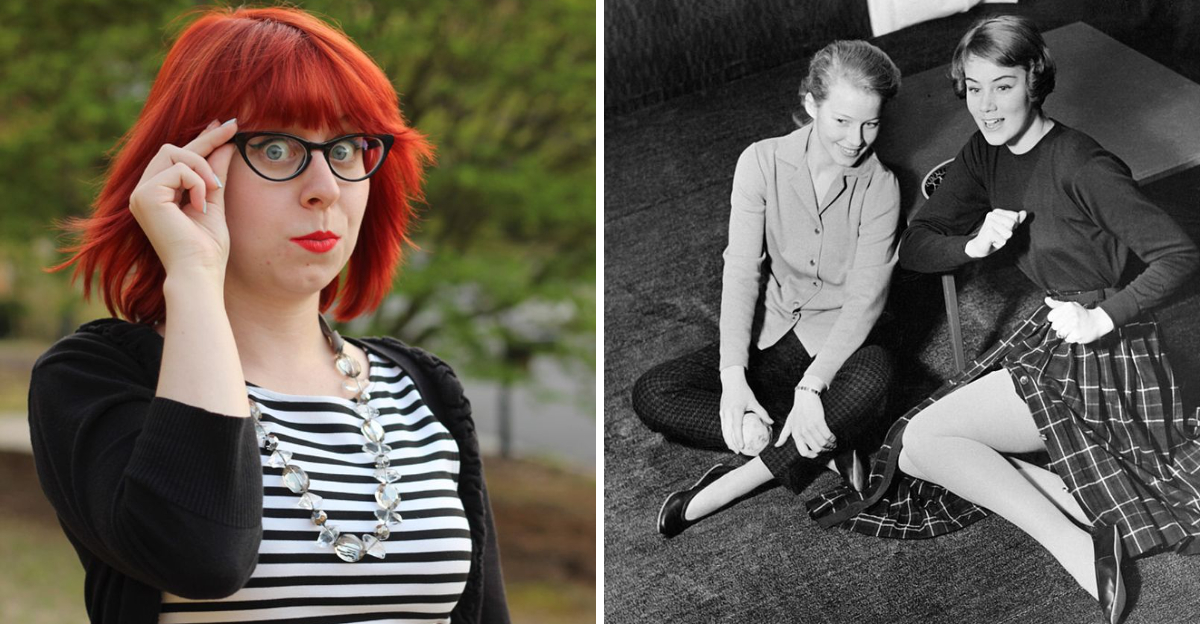
17 Things That Feel Completely Normal Now But Once Stirred Scandal
Things people barely notice now once had the power to start gossip and the kind of public panic that suggests civilization was hanging by one extremely judgmental thread.
A new habit shows up, a hemline changes, a social rule loosens, and suddenly entire generations act like the world has taken a sharp turn into chaos just because someone dared to enjoy life a little differently.
Today’s ordinary routines were often yesterday’s scandal material, which says a lot about how dramatic people can get when change walks into the room uninvited.
A few of the old objections now sound so over-the-top they could pass for comedy with better costumes. That gap between then and now is half the entertainment.
Once you start looking back at what used to cause outrage, modern life starts feeling a lot less rebellious and a lot more funny.
1. Women Wearing Trousers in Public

Picture this: a woman steps outside in 1918 wearing the brand-new “Freedom-Alls,” a belted tunic over harem pants, and the entire neighborhood practically faints.
Trousers on women were seen as a moral threat and an insult to tradition all rolled into one outfit.
Some cities even passed laws banning women from wearing pants in public. Thankfully, those laws eventually disappeared faster than bell-bottoms in the 90s.
Today, women wear everything from joggers to tailored suits without a single eyebrow raised. Progress really does look good on everybody.
2. Short Skirts and Bobbed Hair

When flappers showed up in the 1920s with their bobbed hair and knee-grazing hemlines, conservative society practically needed a fainting couch.
Newspapers ran outraged editorials. Parents issued ultimatums. Some schools banned the look entirely.
The bob haircut alone was treated like an act of rebellion on the level of a supervillain origin story. Barbers who cut women’s hair short were sometimes accused of corrupting public morals.
Fast forward to now, and short skirts and pixie cuts barely register a second glance. Fashion trends that once felt revolutionary eventually just become a Tuesday.
3. Women Going Out Without a Chaperone

For most of Western history, a woman leaving the house without a male relative or approved chaperone was considered reckless at best and shameless at worst.
Social rules made it nearly impossible for women to shop, visit friends, or even take a walk without supervision.
The idea was that women needed protection, though critics today might note it looked a lot more like control.
Department stores in the late 1800s actually became revolutionary spaces because they gave women a legitimate reason to be out alone.
4. Mixed-Gender Schooling

Putting boys and girls in the same classroom was once considered a recipe for chaos, distraction, and moral disaster.
Plenty of educators and parents in the 19th and early 20th centuries believed the two groups simply could not learn effectively in the same room.
Separate schooling was the standard, and arguments against coeducation ranged from concerns about academic performance to some genuinely wild theories about health risks.
Today, coeducation is the global norm, and most students have never known anything different. Progress: 1, Wild Theories: 0.
5. Couples Living Together Before Marriage

Not too long ago, an unmarried couple sharing an apartment was considered a full-blown scandal.
Neighbors gossiped, families issued ultimatums, and landlords frequently refused to rent to unmarried pairs at all. The term “living in sin” was used with complete seriousness.
Even into the 1970s, cohabitation rates were extremely low partly because the social stigma was so intense. Some U.S. states actually had laws against it, though enforcement was another story.
Today, living together before marriage is so common it barely earns a comment at family dinners. Well, mostly. Some grandparents are still processing the news.
6. Divorce Becoming Socially Ordinary

Divorce was once treated like a social crime sentence. In the 19th century, a divorced woman was often shunned by polite society and struggled to find employment.
The stigma was crushing and very public.
Even in the mid-20th century, divorced people were frequently excluded from certain social circles, religious communities, and professional opportunities.
Hollywood stars who divorced faced career consequences that today seem almost unbelievable.
Now, divorce is recognized as a legal right and sometimes the healthiest option available. Society finally caught up to the idea that people deserve second chances, full stop.
7. Visible Tattoos

Walk into almost any office today and you will likely spot at least one person with a visible tattoo.
That would have been unthinkable just a few decades ago, when tattoos were firmly associated with sailors, criminals, and carnival performers.
In the early 20th century, tattooed women were literally sideshow attractions, and not in a complimentary way. Getting inked meant risking your job and your family’s holiday invitation list.
Today, tattoo artistry is recognized as genuine creative skill. Celebrities, teachers, doctors, and athletes all sport ink openly. The transformation in public opinion has been nothing short of spectacular.
8. Men With Long Hair

When The Beatles arrived in America in 1964 with their mop-top haircuts, the reaction from older generations was somewhere between horror and genuine outrage.
Long hair on men was seen as a sign of rebellion, weakness, or worse, according to certain newspaper columnists who had very strong opinions about haircuts.
Schools sent boys home. Employers refused to hire them.
Some towns in the U.S. actually passed ordinances restricting men’s hair length. The culture wars over hair were surprisingly fierce.
Now, men can rock any length they choose without drama. Hair is just hair.
9. Women Driving Cars

When cars first appeared, many people genuinely believed women lacked the mental and physical ability to operate them safely.
So-called experts, just going to say that with full irony, published papers claiming driving could damage women’s health due to the vibrations. Yes, really.
Early female drivers faced mockery, harassment, and in some places, outright bans. Even having a license was controversial.
The argument was always framed as concern for safety, though the target of that concern was rarely the road.
10. Women Riding Bicycles

Believe it or not, the bicycle was once called a “freedom machine” for women, and not everyone was happy about that.
When cycling became popular in the 1890s, critics warned it would cause everything from “bicycle face” (a supposed expression of strain) to moral corruption.
Fashion experts fretted about what women could possibly wear while pedaling. The real issue, of course, was that bicycles gave women independent mobility for the first time in history.
Susan B. Anthony famously called cycling “the freedom machine.” Turns out she was absolutely right, and the critics were absolutely wrong.
11. Women Wearing Visible Makeup in Daytime

Wearing bold lipstick in public during the daytime was once a serious social statement, and not always a welcome one.
For much of the 19th century, visible makeup was associated with actresses and women of questionable reputation. Respectable women were expected to look naturally pale and entirely effort-free.
When cosmetics companies began marketing to everyday women in the early 1900s, there was significant pushback. Some institutions banned female employees from wearing obvious makeup at work.
Today, makeup is a multi-billion-dollar industry and a recognized form of self-expression.
12. Open Discussion of Dating

Not long ago, any open conversation about dating, relationships, or human biology was strictly off-limits in polite company.
Topics that are now covered in middle school health class were once considered far too shocking for mixed company or public discussion of any kind.
Books that addressed relationships even mildly were regularly banned, magazines that discussed dating advice were considered scandalous.
Now, books, school curricula, and casual conversations cover these subjects every single day. Open, honest discussion turned out to be far healthier than enforced silence. Shocking, right?
13. Interracial Marriage
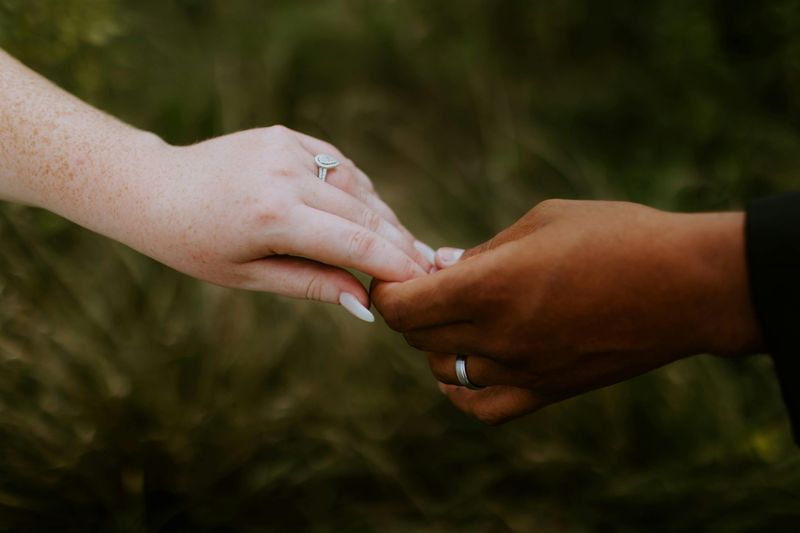
In the United States, interracial marriage was actually illegal in many states until 1967, when the Supreme Court case Loving v. Virginia struck down those laws.
Richard and Mildred Loving were arrested simply for being married. Their case changed history permanently.
Even after legalization, social stigma remained intense for decades. Families were torn apart and communities ostracized those who crossed racial lines in their relationships.
Today, interracial couples are increasingly common and broadly accepted across generations. The Lovings’ courage helped reshape what love is allowed to look like in America.
14. Rock and Roll Dancing Styles

When rock and roll arrived in the 1950s, parents, teachers, and religious leaders treated it like a full-scale emergency.
The hip movements, the partner dancing, the sheer energy of it all was labeled immoral, dangerous, and corrupting to youth. Some TV shows famously filmed Elvis Presley only from the waist up to avoid showing his dancing.
Cities banned certain dances in public venues. Schools prohibited rock and roll at events. The panic was spectacular and, looking back, pretty entertaining.
Now, those same moves appear in children’s dance classes and retirement home talent shows.
15. Piercings Beyond Simple Earlobes

For most of the 20th century, any piercing beyond a single hole in each earlobe was considered edgy at best and shocking at worst.
Multiple ear piercings, nose rings, or eyebrow jewelry marked a person as rebellious or, according to some very dramatic editorials, a threat to society.
Workplaces routinely banned visible piercings, schools sent students home to remove them. Even a simple cartilage piercing could spark a parental confrontation worthy of a dramatic TV movie.
Today, multi-piercing styles are mainstream, with entire jewelry lines dedicated to ear stacking.
16. Women Working After Marriage
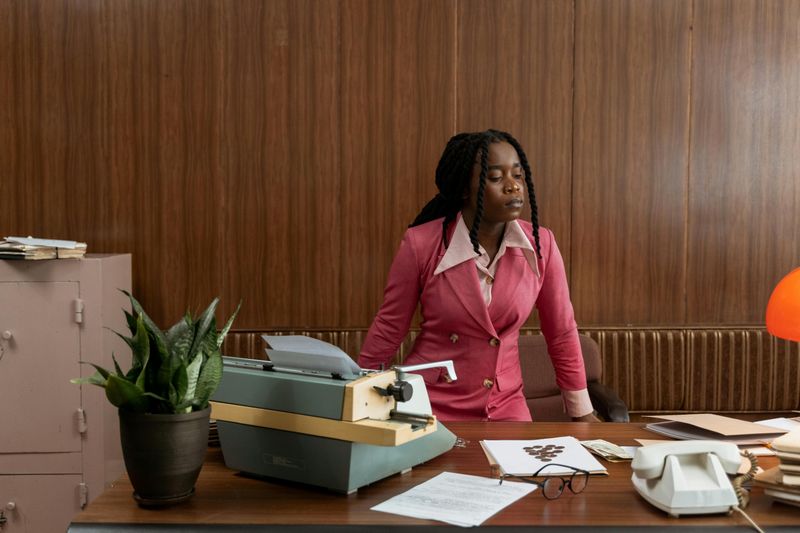
Here is a fact that still feels startling: many companies in the United States and United Kingdom had official policies requiring women to resign from their jobs upon getting married, well into the 1960s.
It was called the “marriage bar,” and it was completely legal and widely enforced.
The logic was that married women belonged at home and were taking jobs away from men who needed to support families.
Women who stayed employed after marriage often faced hostility from colleagues and management alike.
Today, dual-income households are the norm rather than the exception. The marriage bar was dismantled, and working mothers are simply called workers.
17. Using Birth Control Openly

Even discussing birth control publicly was illegal in the United States under the Comstock Laws of 1873, which classified contraceptive information as obscene material.
Activist Margaret Sanger was arrested multiple times simply for distributing pamphlets about reproductive health.
The Supreme Court did not rule that married couples had the right to use contraception until 1965, in Griswold v. Connecticut.
For unmarried individuals, that right came even later, in 1972. These dates are closer than most people realize.