What These Confusing Movie Endings Were Really Trying To Say
Some movies end and you just sit there staring at the screen, wondering if you missed something.
Was that real? Did that actually happen?
Great filmmakers sometimes wrap up their stories in ways that feel more like a riddle than a conclusion, and honestly, that is kind of the whole point.
Here is a breakdown of what those head-scratching final scenes were actually trying to tell you all along.
1. Inception: The Top Does Not Matter (Cobb Does)
Forget the top. Seriously, put it out of your mind for a second.
Christopher Nolan has said in interviews that the spinning top is not the real question the ending is asking.
The camera does not even stay on it long enough to give you a clean answer, and that is completely intentional.
What actually matters is Cobb walking away and choosing not to watch, he stops needing certainty. After years of guilt over his wife and obsession with getting home, he simply lets go.
2. No Country for Old Men: The Sheriff Admits He Lost
Most people walk out of this one genuinely confused, and that reaction is exactly what the Coen Brothers were going for.
Sheriff Bell’s final monologue about two dreams is not random rambling. It is a man quietly surrendering to the idea that the world has moved past what he understands.
Violence and chaos, represented by Anton Chigurh, cannot be stopped or fully explained.
Bell is not defeated by a villain. He is defeated by the realization that his entire worldview was built on something that no longer holds.
3. Shutter Island: Choosing Escape Over Truth
Here is the question the movie actually wants you to wrestle with: does Teddy Daniels snap back into delusion at the end, or does he fully understand reality and decide he cannot live with it?
That one line, about whether it is better to live as a monster or die as a good man, changes everything.
If he truly knows who he is, then his choice to go along with the lobotomy is an act of self-sacrifice rather than failure.
Director Martin Scorsese leaves both readings open on purpose. Sometimes guilt is heavier than any punishment a court could give.
4. The Thing: Paranoia Wins Before The Creature Does
John Carpenter has actually confirmed who is and who is not The Thing by the end of the film, but here is the twist: it almost does not matter.
MacReady and Childs sit in the freezing dark, neither fully trusting the other, and that image says everything.
The creature did not need to win outright. Paranoia already destroyed the team from the inside.
Carpenter built the whole film around the idea that distrust is its own kind of creature, one that does not need claws to finish you off.
5. Mulholland Drive: Fantasy Collapses Into Guilt
Trying to map out Mulholland Drive like a traditional plot is like trying to fold water.
David Lynch designed the film so that the first half is a wish-fulfillment fantasy and the second half is the brutal emotional reality underneath it. Once you feel that shift, everything clicks.
The real story is about jealousy, failure, and the crushing weight of a dream that did not come true. Diane invented a version of events where she was the hero.
The ending strips that away completely. Lynch has said the film is less about solving a mystery and more about feeling one.
6. Donnie Darko: Sacrifice Is The Whole Point
Donnie Darko is one of those films that rewards rewatching, because once you understand the ending, every earlier scene becomes something different.
The tangent universe is collapsing, and Donnie has the choice to reset the timeline by letting the jet engine kill him. He laughs, that laugh is everything.
How many teenagers in movies get to feel genuine peace at the moment of sacrifice? Director Richard Kelly built the whole story around a kid who finally understands his purpose.
7. 2001: A Space Odyssey: Evolution, Not Explanation
Stanley Kubrick was famously reluctant to explain the ending of 2001, and honestly, that restraint is part of what makes it legendary.
The Star Child is not a plot twist, it is a visual metaphor for humanity outgrowing its current form and moving into something entirely new.
Think of it like a caterpillar situation, except the butterfly is a cosmic being floating above Earth with zero interest in explaining itself.
Kubrick wanted audiences to experience the ending emotionally, not intellectually decode it.
8. The Prestige: Obsession Eats Everything
Both Angier and Borden spend the entire film destroying each other, and the ending reveals that neither of them actually won anything worth having.
Angier cloned himself repeatedly and drowned each copy. Borden split his entire identity and life in two.
The tricks were real, but the cost was everything human about them.
Christopher Nolan has said the film is really about the price of obsession, not the mechanics of magic. Every sacrifice seemed justified in the moment, until it was not.
9. Blade Runner: What Makes Someone Real?
Ridley Scott has said Deckard is a replicant. Harrison Ford has said he is not.
That disagreement between director and star has been running for decades now, and somehow it makes the film richer.
The ending is not really about settling that debate anyway.
Roy Batty passes away saving the man sent to end him. His final speech about memories being lost like tears in rain is one of cinema’s most unexpectedly beautiful moments.
If a replicant can show more compassion than the humans around him, then maybe the label does not mean much.
10. Annihilation: Change Is The Only Survivor

Annihilation does not end with a victory or a defeat, and that is completely by design. Lena walks out of Area X changed in ways she cannot fully describe.
Her alien double chose to become her rather than keep its original form. Neither version is quite what it started as.
Director Alex Garland has said the film is about self-destruction, both the kind we inflict on ourselves and the kind that quietly transforms us into something new.
The ending refuses to be comforting because transformation rarely is.
11. The Lobster: Love Under Impossible Pressure
This movie ends on one of cinema’s most deliberately unresolved notes, and director Yorgos Lanthimos has said that is entirely the point.
David is about to blind himself to match his partner’s disability so they can stay together under the rules of their world. The screen cuts before we see what he chooses.
That cut is the whole movie in one moment. When society demands that love fit a specific mold, it creates impossible pressure that warps genuine connection into something painful and performative.
12. Birdman: Ego Takes Flight (Or Falls)
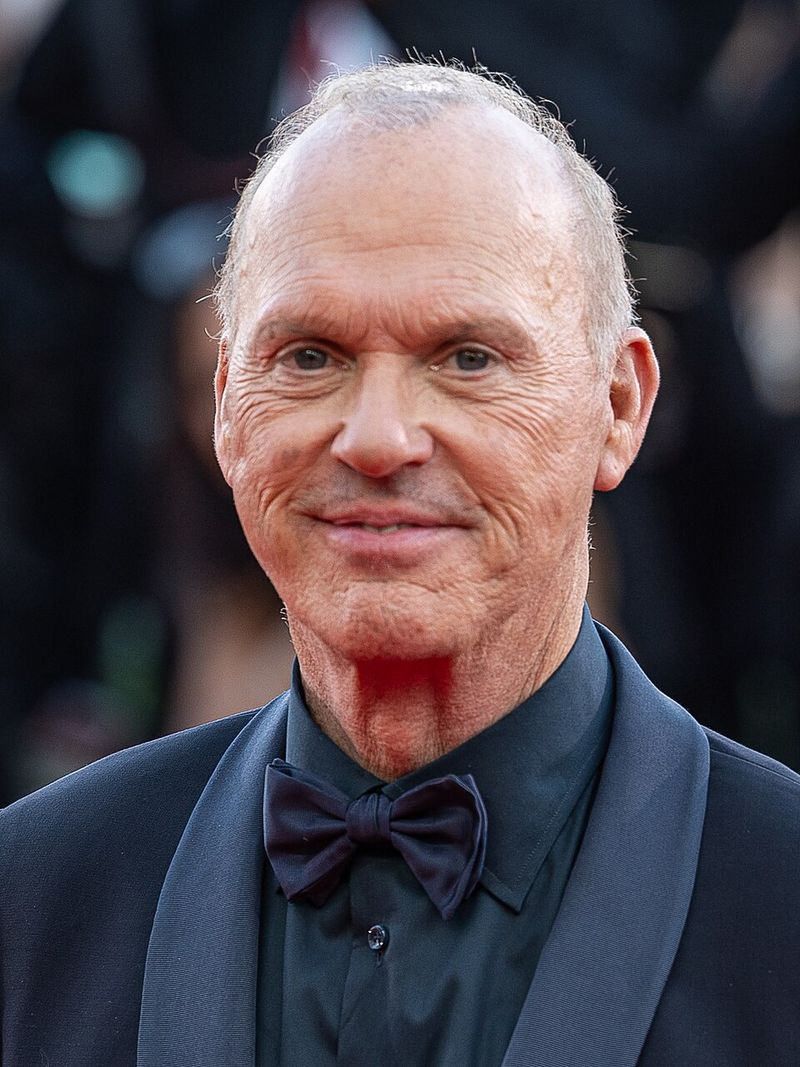
Riggan Thomson either jumps from a hospital window and passes, or he finally achieves the transcendence he spent the whole film desperately chasing.
His daughter looks up and smiles. Director Alejandro Inarritu has said both readings are valid, and that is not a cop-out. It is the point.
Birdman is about an aging actor who cannot separate his identity from his fame. The ending does not care whether the flight is real.
What matters is that Riggan finally escapes the suffocating weight of his own ego, at least in the version of events his daughter chooses to believe in.
13. La La Land: Love Can Be Real And Still Not Last

La La Land’s ending wrecked audiences who expected a traditional happy ending, and director Damien Chazelle has said that reaction was exactly what he was going for.
The fantasy sequence where Mia and Sebastian imagine the life they could have had is not meant to make you wish things turned out differently. It is meant to show you that what they had was genuinely real.
Their love helped both of them become who they needed to be.
The final glance between them says everything without a single word. That is not a sad ending, but a true one.