Most Memorable Filming Locations From All 50 States
Some filming locations do more than simply appear on screen – they stick, to the point where the place and the scene feel permanently linked.
A road can look ordinary until you recognize it, and then suddenly it carries a whole movie’s mood.
Part of the fun is how storytelling changes a real location’s reputation; a courthouse becomes iconic, a small-town street turns into a pop-culture postcard, and a stretch of landscape starts reading like a character.
Tracking memorable filming spots across all 50 states is also a reminder that movie magic isn’t limited to a few studio backlots.
America’s geography does a lot of heavy lifting, offering everything from cozy main streets to wide-open vistas that make a camera look brave.
1. USS Alabama, Mobile, Alabama

Anchored in Mobile Bay like a steel giant frozen in time, the USS Alabama is one of the most dramatic filming backdrops in the country.
This World War II battleship appeared in the 1992 action film Under Siege, starring Steven Seagal, and every rusted bolt tells a real story.
Visitors can actually tour the ship today, walking the same decks that once doubled as a Hollywood action set. How cool is that?
History and Hollywood rolled into one unforgettable experience right in Alabama.
2. Denali National Park, Alaska
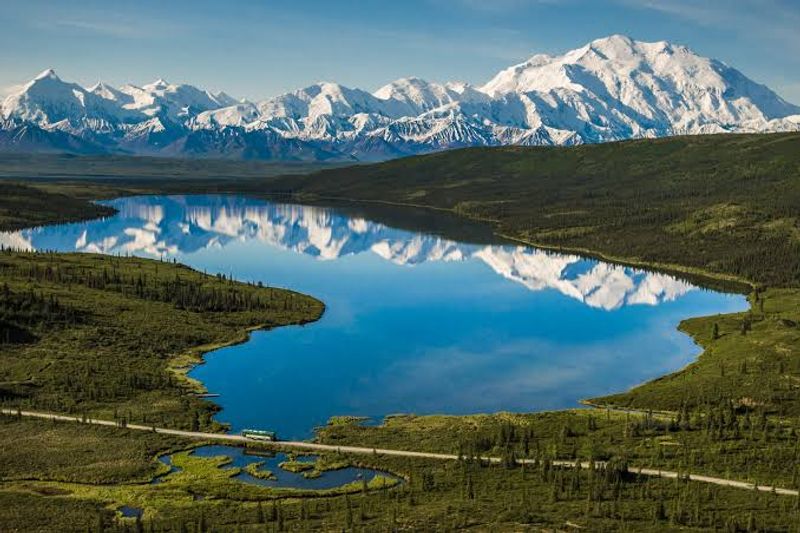
Few landscapes on Earth feel as raw and untamed as Denali National Park, and filmmakers have long known it.
The park’s endless wilderness served as a dramatic backdrop in Into the Wild (2007), a film about a young man who traded city life for Alaska’s brutal beauty.
If mountains could talk, Denali’s would have some serious stories to share.
Stretching across six million acres, this park makes every other outdoor location look like a backyard garden. No wonder directors keep coming back for more.
3. Monument Valley, Navajo Nation, Arizona
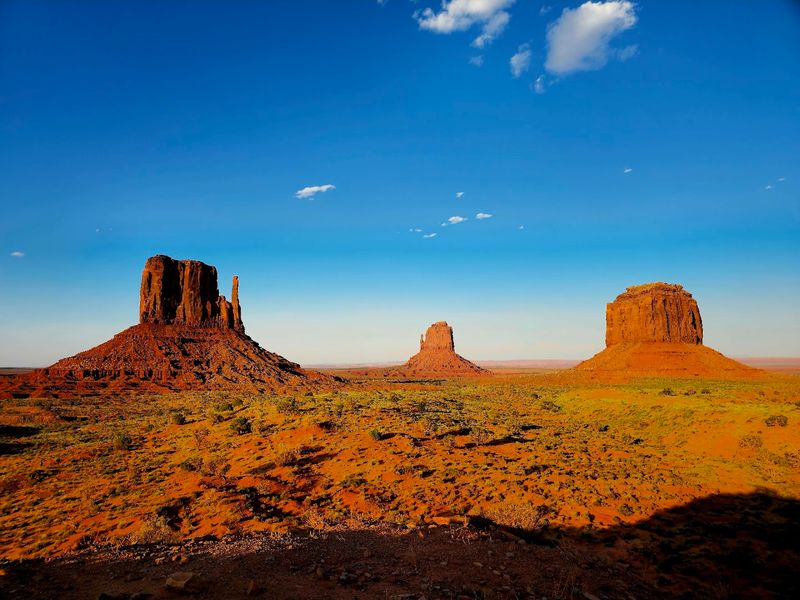
Those towering red sandstone buttes have appeared in so many Westerns that they practically invented the genre’s look.
John Ford filmed classics like Stagecoach (1939) here, and Monument Valley has been a Hollywood staple ever since. Even Forrest Gump ran through this landscape!
Standing on the valley floor and looking up at those massive formations feels like stepping onto a movie set, because honestly, you kind of are. Located on the Navajo Nation, this place deserves every dramatic close-up it has ever received.
4. Petit Jean State Park, Morrilton, Arkansas
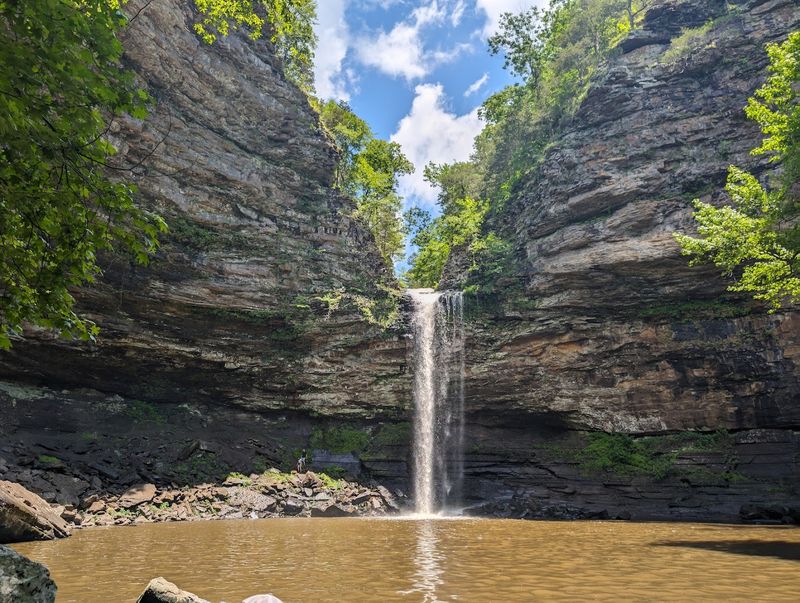
Tucked into the Arkansas River Valley, Petit Jean State Park is one of the South’s best-kept secrets, and filmmakers have noticed.
The park’s dramatic bluffs, cedar canyons, and waterfalls provided stunning scenery for productions that needed wild, unspoiled Southern landscapes.
Cedar Falls alone is worth the trip, dropping 95 feet into a gorgeous sandstone bowl. If you’ve ever watched a film and thought, where on earth did they film that gorgeous waterfall scene, there’s a decent chance the answer is right here in Arkansas.
5. Griffith Observatory, Los Angeles, California
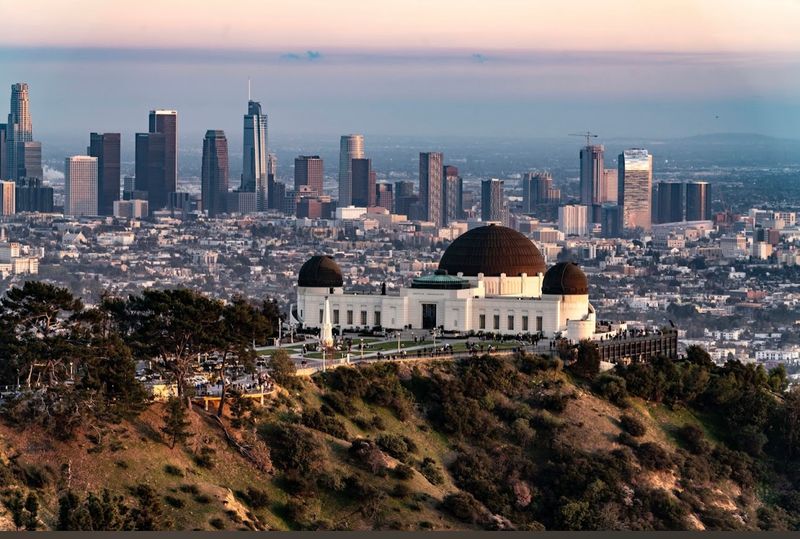
Perched high above Los Angeles like a crown on the city’s head, Griffith Observatory is one of the most filmed landmarks in all of California.
From the rebel showdown in Rebel Without a Cause (1955) to the dreamy dance sequence in La La Land (2016), this Art Deco gem has done it all.
Every time Ryan Gosling and Emma Stone waltzed under those stars on screen, millions of viewers immediately Googled directions to this spot. Can you blame them?
Some places just radiate cinematic magic.
6. The Stanley Hotel, Estes Park, Colorado
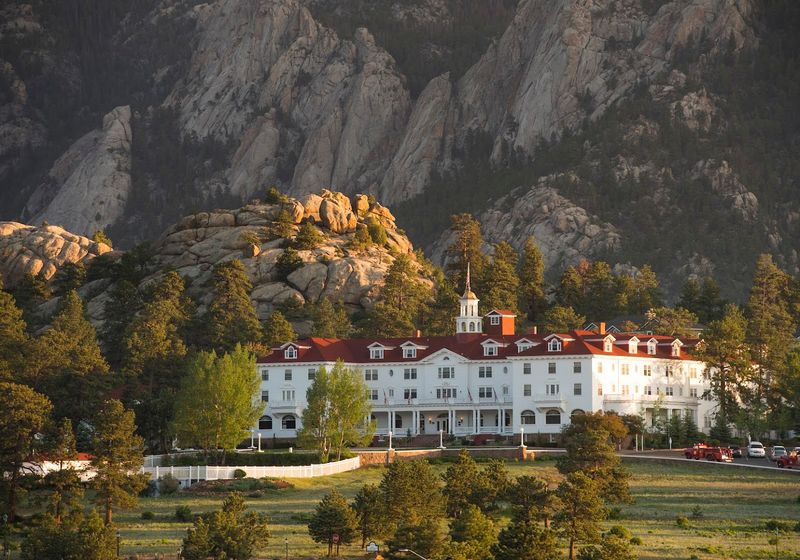
Stephen King stayed at the Stanley Hotel in 1974, had a nightmare, and the rest is horror history.
That spooky visit inspired The Shining, and the hotel itself later appeared in the 1997 TV miniseries adaptation of the novel. Talk about a place that earns its reputation!
Perched in the Rockies near Rocky Mountain National Park, the Stanley is gorgeous by day and genuinely creepy at night.
Ghost tours are a thing here, just saying. Whether you’re a horror fan or just love dramatic mountain architecture, this Colorado landmark delivers.
7. Mystic Seaport, Mystic, Connecticut
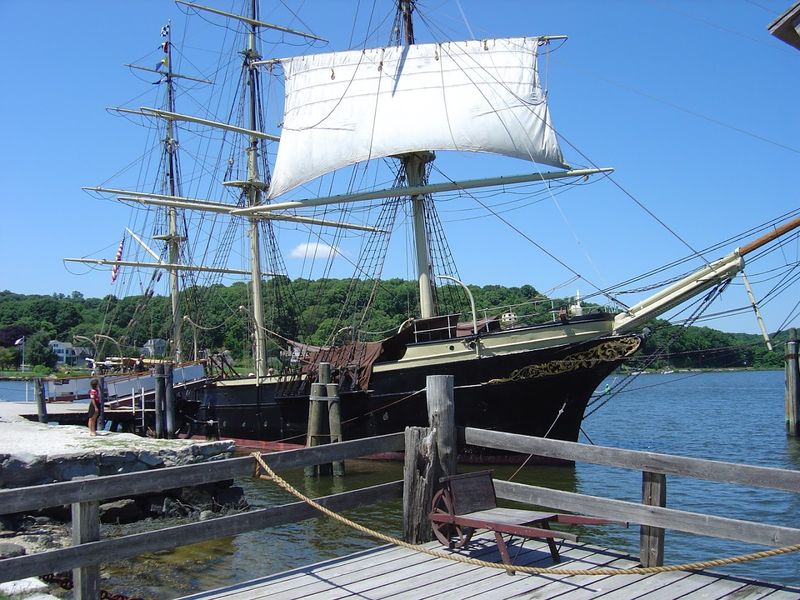
Mystic Seaport is basically a living, breathing museum of American maritime history, which makes it an irresistible backdrop for filmmakers.
The 1988 comedy Mystic Pizza, starring a then-unknown Julia Roberts, put this Connecticut coastal town on the pop-culture map in the best possible way.
Beyond the Julia Roberts connection, the seaport features authentic 19th-century ships and buildings that transport visitors straight back in time. Where else can you walk the deck of a real 19th-century whaling ship and feel like you belong in a movie?
8. St. Andrew’s School, Middletown, Delaware
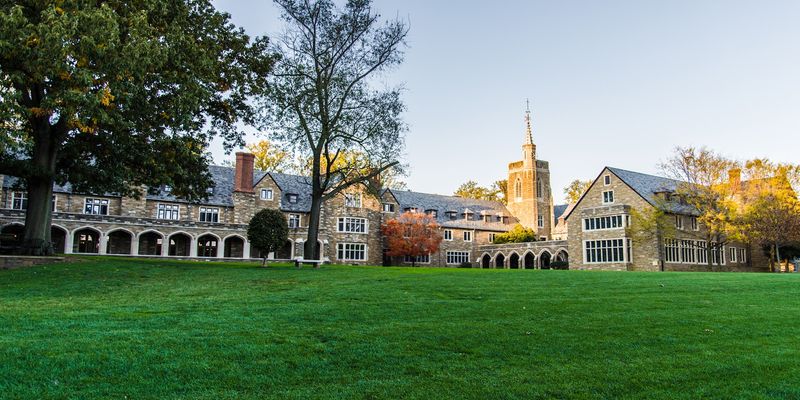
Hidden in the rolling countryside of Delaware, St. Andrew’s School looks like it was designed specifically to appear in a coming-of-age film.
That’s basically what happened when Dead Poets Society (1989) chose this stunning campus as its filming location, giving Robin Williams one of his most beloved roles.
O Captain, my Captain! Those words echo through every ivy-covered hallway of this school.
Even decades later, fans of the film make pilgrimages here to stand in the courtyard where that unforgettable final scene was shot.
9. Vizcaya Museum and Gardens, Miami, Florida
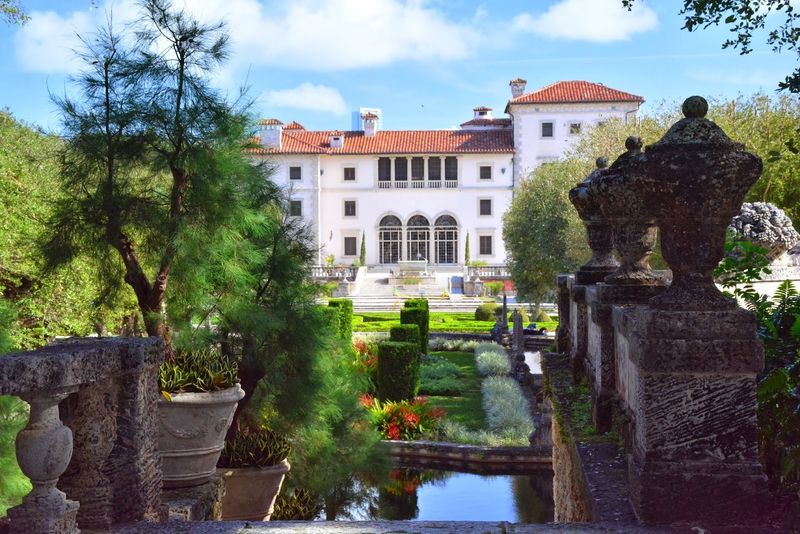
Vizcaya looks like it was airlifted from the Italian countryside and gently placed on the shores of Biscayne Bay, which is exactly why filmmakers adore it.
This stunning early 20th-century estate has appeared in Ace Ventura: Pet Detective (1994) and the James Bond film from 1989. Imagine James Bond strolling through those manicured gardens!
The estate’s European grandeur feels wildly out of place in sunny Miami, and that delightful contrast is pure cinematic gold.
10. Chippewa Square, Savannah, Georgia
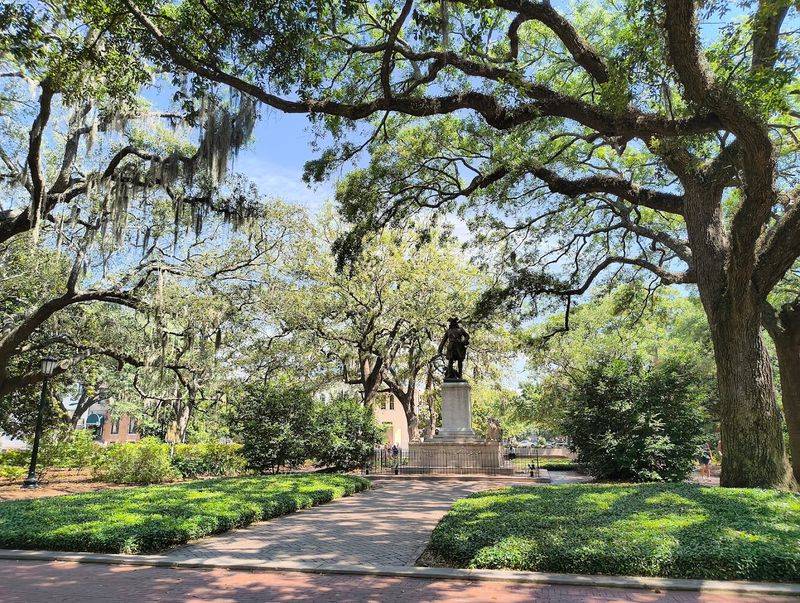
That iconic bench scene in Forrest Gump (1994), the one where Forrest tells strangers that life is like a box of chocolates, was filmed right here in Chippewa Square.
Tom Hanks sat on a bench in this beautiful Savannah square and delivered one of cinema’s most quoted lines.
Fun fact: the original bench is now in the Savannah History Museum because tourists kept sitting on it for photos. Totally understandable, honestly.
11. Kualoa Ranch, Oahu, Hawaii
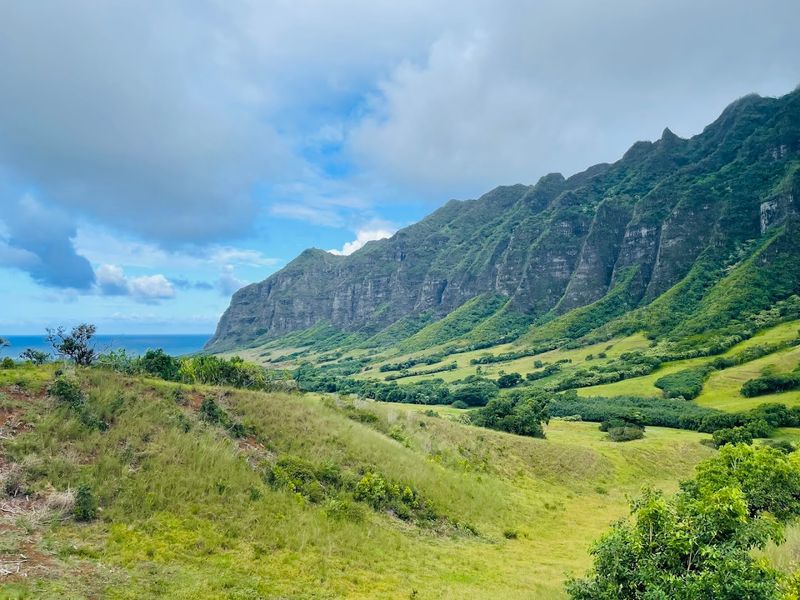
If you’ve ever watched Jurassic Park and thought those valleys looked impossibly beautiful, you were looking at Kualoa Ranch on Oahu.
This 4,000-acre private nature reserve has doubled as Jurassic Park’s dino territory, and it also appeared in Kong: Skull Island (2017) and the TV series Lost.
Basically, Kualoa Ranch is Hawaii’s most cinematic address. Visitors can take guided tours through the same valleys where dinosaurs once chased a Jeep on screen.
How many places let you literally walk through a blockbuster? This one absolutely does.
12. Wallace, Idaho
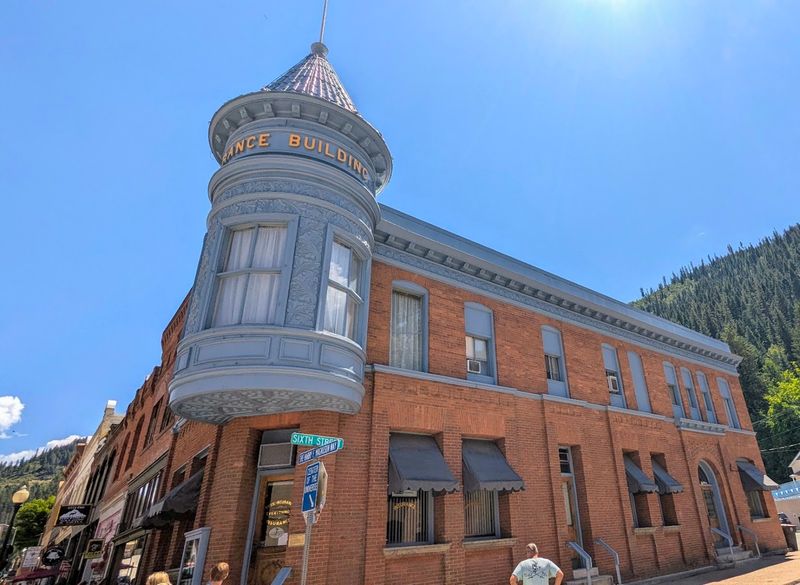
Wallace, Idaho, is a tiny silver-mining town with a giant claim to fame: it served as the filming location for Dante’s Peak (1997), the disaster film about a volcano threatening a small mountain community.
The whole town basically became a movie set, and locals still talk about it.
Beyond its Hollywood moment, Wallace has a fascinating history as a real silver-mining boomtown. The entire downtown is listed on the National Register of Historic Places, meaning those Victorian storefronts are the real deal.
Coming here feels like stepping into both a film and a history book simultaneously.
13. Wrigley Field, Chicago, Illinois
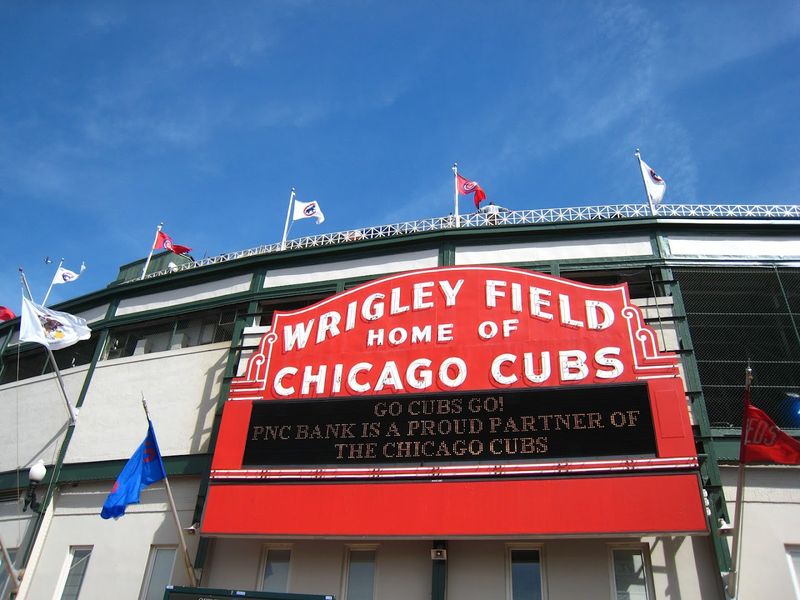
Wrigley Field is more than just a baseball stadium. It’s a century-old Chicago landmark that has appeared in films like Ferris Bueller’s Day Off (1986), where Ferris sneaks into a Cubs game during his legendary day of skipping school.
Built in 1914, Wrigley is one of the oldest ballparks in Major League Baseball, and those ivy-covered outfield walls are instantly recognizable on screen.
Whether you’re a baseball fan, a film nerd, or just someone who loves great architecture, Wrigley Field is a Chicago must-see.
14. Indiana University, Bloomington, Indiana
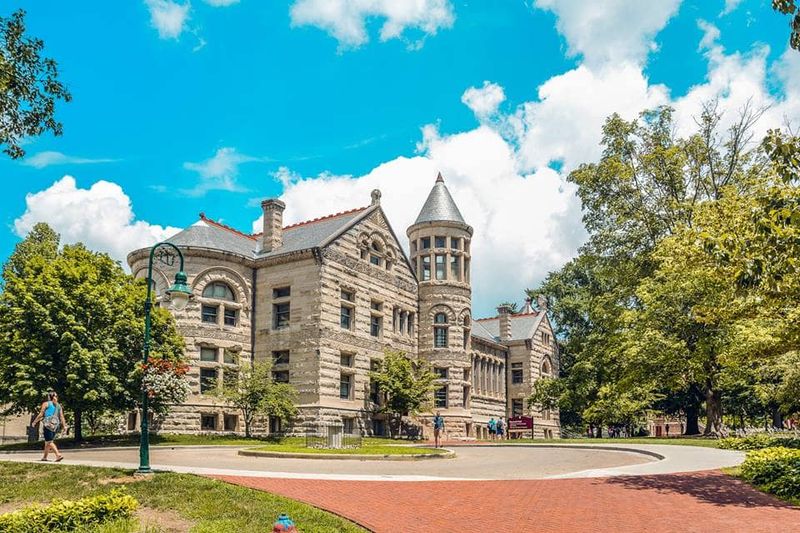
Indiana University’s gorgeous limestone campus in Bloomington starred alongside a cast of bicycles and local underdogs in Breaking Away (1979), a beloved coming-of-age film about a working-class teen who dreams of winning a famous cycling race.
The campus looks like it was carved straight out of a fairy tale, with honey-colored stone buildings and canopied walkways that glow in autumn light.
Even people who’ve never watched the film leave campus feeling like they’ve stepped onto a very charming movie set.
15. Field of Dreams Site, Dyersville, Iowa
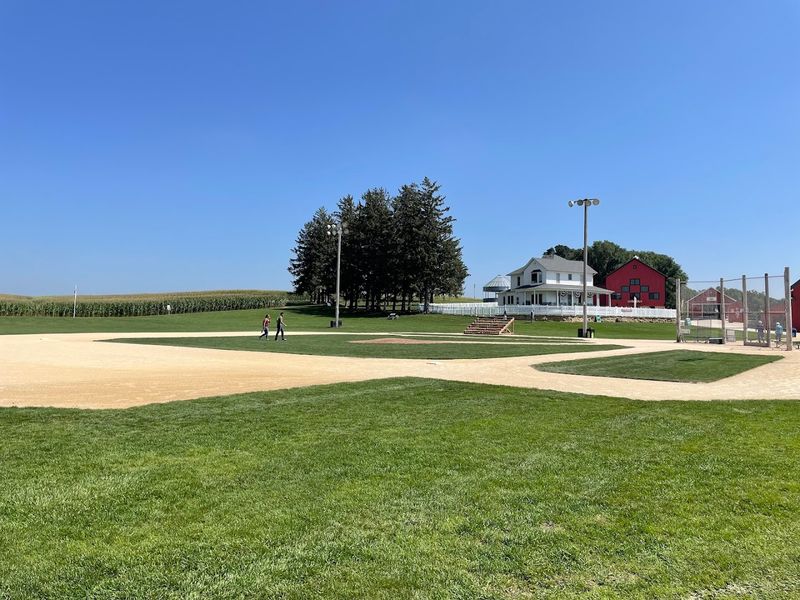
If you build it, they will come. That legendary line from Field of Dreams (1989) has been echoing across this Iowa cornfield for over three decades, and visitors still show up in droves to walk the diamond.
The actual baseball field from the movie still exists, perfectly maintained.
Standing at home plate surrounded by corn on all sides is a genuinely emotional experience, even if you’re not a baseball fan.
Kevin Costner filmed here, and the magic clearly soaked into the soil. Iowa doesn’t get flashier than this, and it doesn’t need to.
16. Monument Rocks, Gove County, Kansas
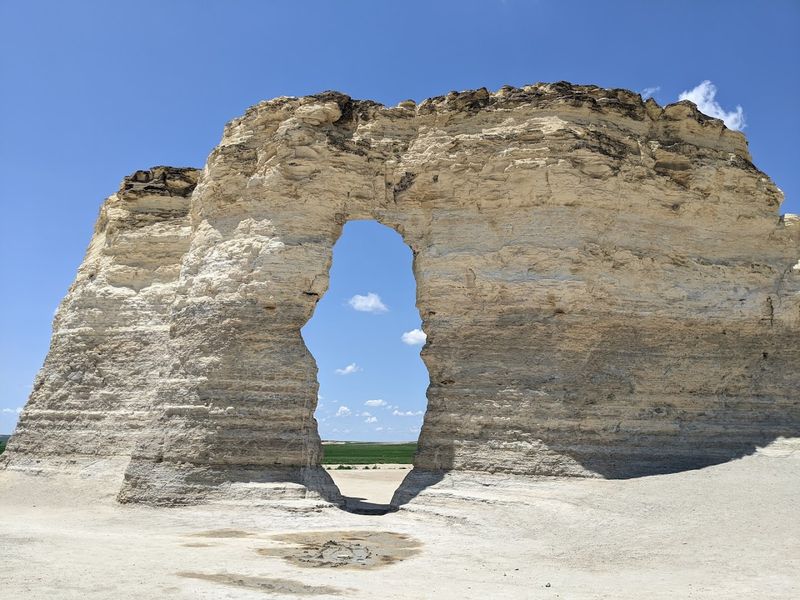
Rising straight up from the flat Kansas plains like ancient skyscrapers, Monument Rocks are a genuinely surreal sight.
These chalk formations, also called the Chalk Pyramids, are among the first National Natural Landmarks ever designated in the United States, and they’ve appeared in various films and commercials.
How does something this dramatic exist in the middle of the Great Plains? That’s exactly the question that keeps drawing filmmakers here.
Kansas has serious scenery credentials.
17. Churchill Downs, Louisville, Kentucky
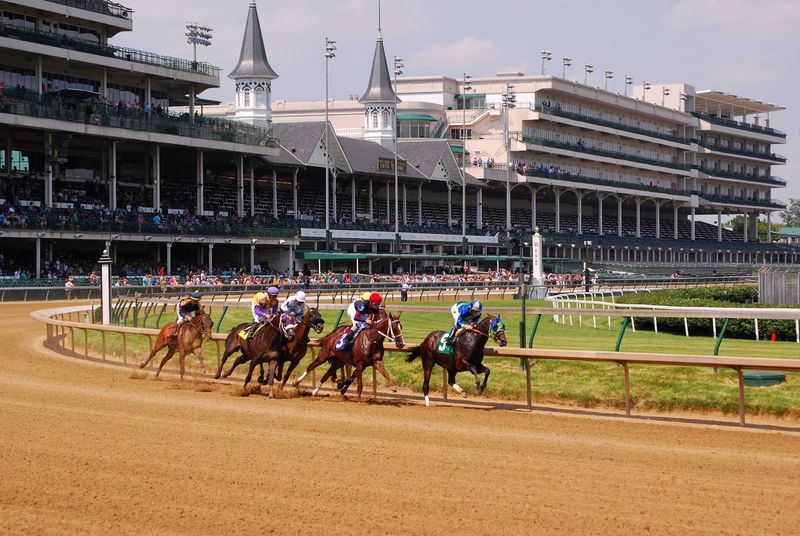
Home of the Kentucky Derby and those famous twin spires, Churchill Downs appeared in the 2010 Disney film Secretariat, which told the true story of the legendary racehorse who won the Triple Crown in 1973.
There’s something electric about Churchill Downs that even a camera lens can barely contain. The roar of the crowd, the thunder of hooves, the mint julep-scented air.
Whether it’s Derby Day or a regular race day, this Kentucky landmark feels like living cinema.
18. French Quarter, New Orleans, Louisiana
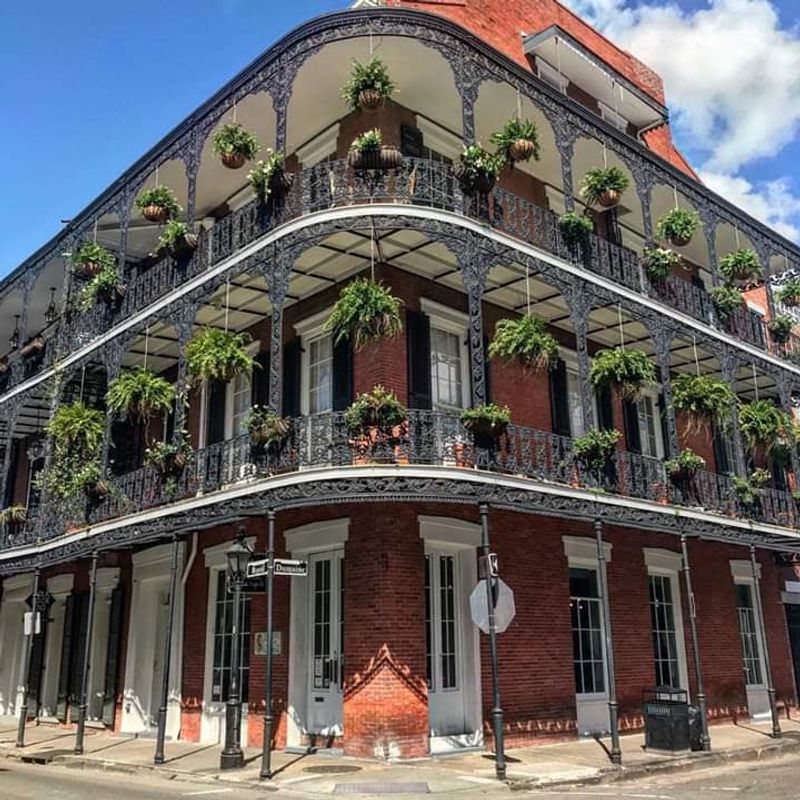
Few places on the planet ooze atmosphere quite like the French Quarter, which is why New Orleans has been a filmmaker’s playground for generations.
From the steamy drama of A Streetcar Named Desire (1951) to the supernatural action of Interview with the Vampire (1994), this neighborhood has played countless roles.
Those wrought-iron balconies and gas-lit streets practically beg to be filmed. Even just walking through the French Quarter feels like being inside a movie.
19. Rockland Harbor, Rockland, Maine
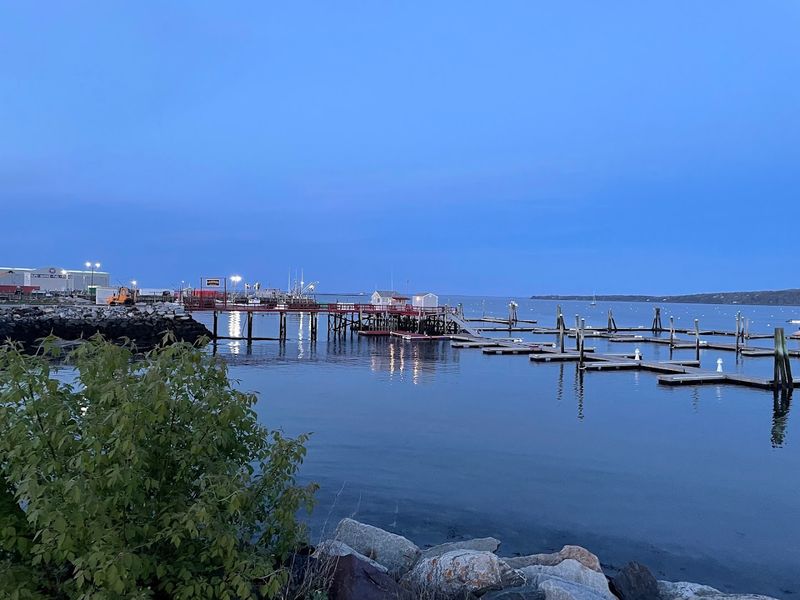
Maine’s rugged coastline has a brooding quality that filmmakers can’t resist, and Rockland Harbor captures that spirit perfectly.
The 1993 film Man Without a Face, directed by and starring Mel Gibson, used the scenic Maine coast around this area to create its moody, atmospheric backdrop.
Rockland itself is a working fishing harbor, full of lobster boats, salty air, and lighthouse views that look almost too picturesque to be real.
If you love dramatic coastal scenery that feels lived-in and authentic rather than polished, this Maine gem belongs on your travel list immediately.
20. Fort McHenry, Baltimore, Maryland
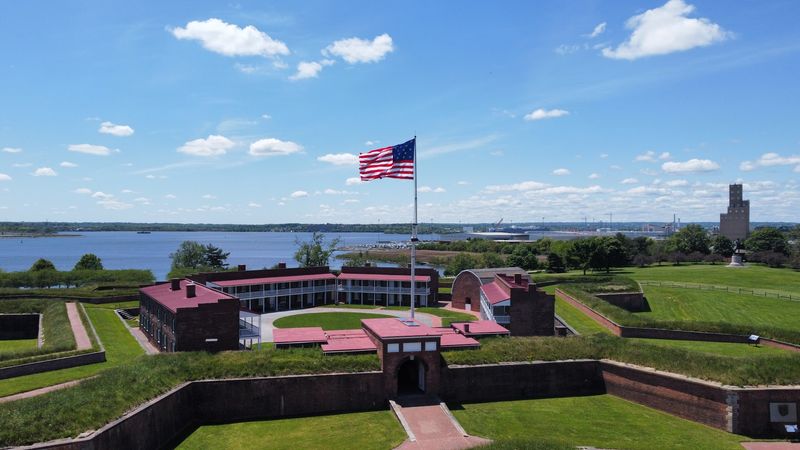
Francis Scott Key watched the British bombardment of this fort in 1814 and was so moved by the sight of the flag still flying that he wrote the poem that became The Star-Spangled Banner. That’s a pretty cinematic origin story.
The fort appeared in The Star-Spangled Banner (1917) and has since been featured in various documentaries and historical productions.
Standing inside those star-shaped walls with the massive flag snapping in the harbor breeze is a full-body patriotic experience that genuinely gives you chills.
21. Martha’s Vineyard, Massachusetts
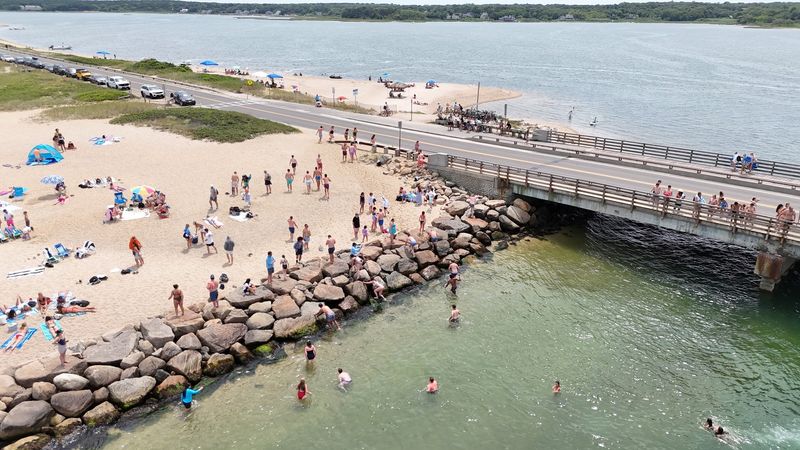
Martha’s Vineyard earned its place in film history as the stand-in for Amity Island in Steven Spielberg’s Jaws (1975), the movie that made an entire generation nervous about swimming in the ocean.
The film was shot almost entirely on location here, and the Vineyard’s charm is unmistakable on screen.
Even today, you can take Jaws-themed tours of the filming locations, including the famous bridge where the kids jump into the water.
Good luck not humming that iconic two-note theme the entire time.
22. Mackinac Island, Michigan
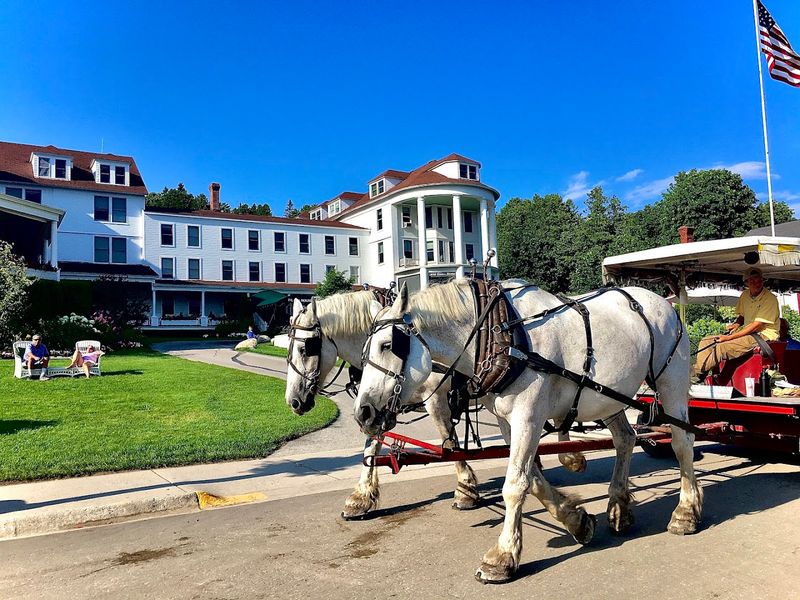
No cars are allowed on Mackinac Island, which means visitors get around by horse and buggy or bicycle, giving the whole place a wonderfully old-fashioned feel.
That timeless quality made it the perfect setting for the 1980 romantic fantasy film Somewhere in Time, starring Christopher Reeve and Jane Seymour.
The Grand Hotel’s famous 660-foot porch is one of the longest in the world, and it’s just as dreamy in real life as it looks on screen. Fans of the film still visit wearing period clothing to honor the movie’s romantic legacy.
23. Brainerd, Minnesota
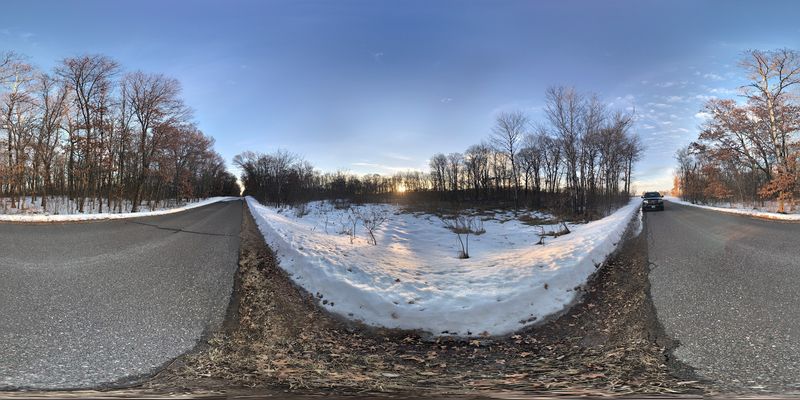
Brainerd, Minnesota, became famous far beyond its borders when the Coen Brothers set their darkly funny crime masterpiece Fargo (1996) in this snowy landscape.
Though some scenes were actually filmed in North Dakota, Brainerd and the surrounding Minnesota tundra defined the film’s chilling, desolate atmosphere.
The movie even inspired a hit TV series that kept returning to this frozen corner of the Midwest. There’s something both hilarious and unsettling about how ordinary Brainerd looks, which is exactly what makes it such perfect noir territory.
24. Natchez, Mississippi
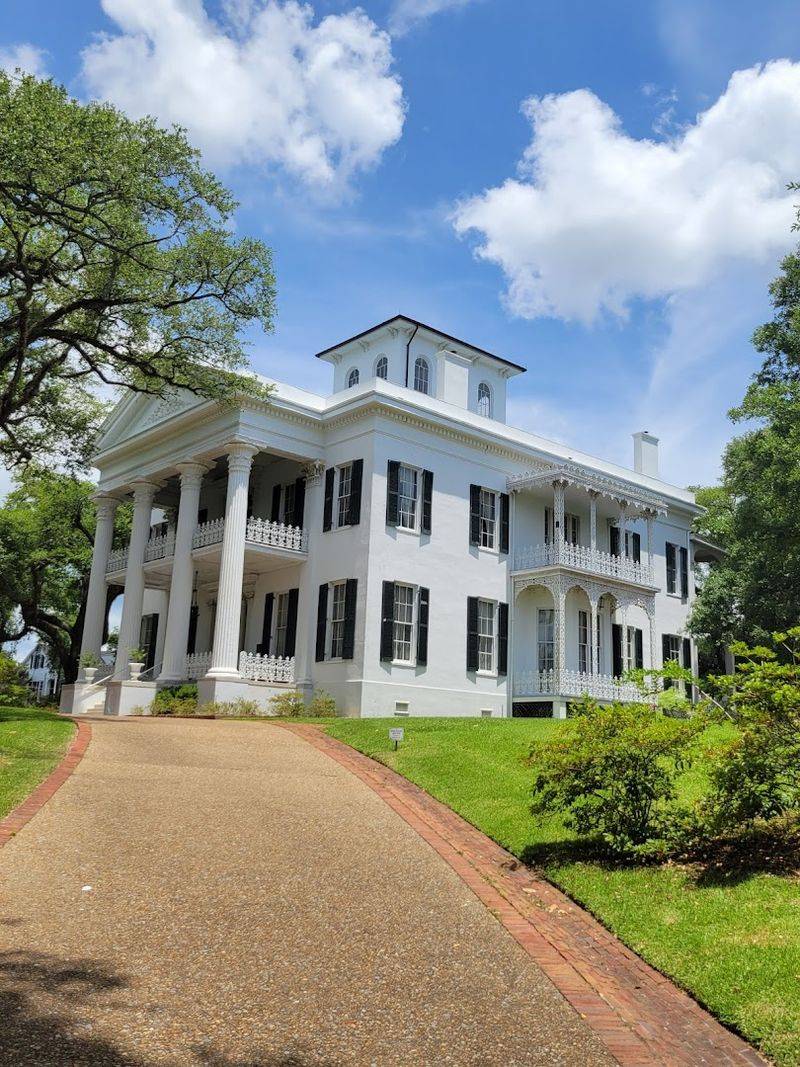
Natchez sits on the Mississippi River bluffs like a living history museum, its antebellum mansions and cobblestone streets making it an irresistible filming destination.
The town and surrounding area have appeared in productions like The Beguiled (2017) and various Civil War-era dramas that needed authentic Southern settings.
Walking through Natchez feels like the past and present coexisting in the same breath. Those grand plantation homes carry complicated histories that filmmakers have explored with increasing honesty.
25. Union Station, St. Louis, Missouri
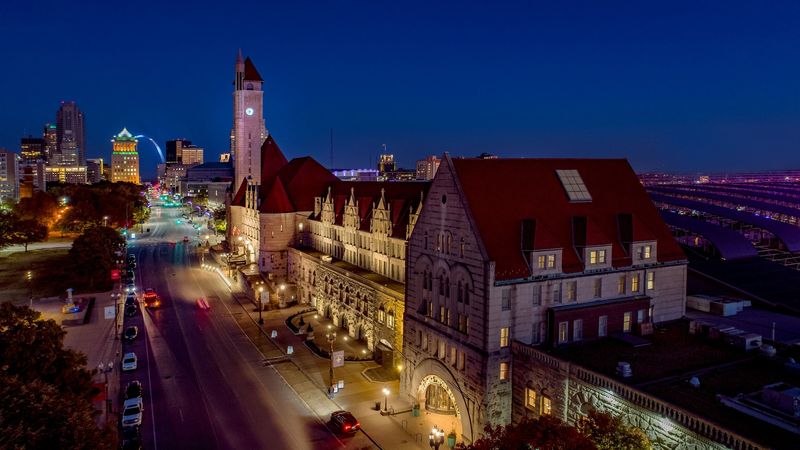
Built in 1894, Union Station in St. Louis is a cathedral of the railroad age, featuring a massive Romanesque stone headhouse that looks like it belongs in a fantasy novel.
The station appeared in the classic 1944 film Meet Me in St. Louis, starring Judy Garland, cementing its Hollywood legacy.
Today it functions as a hotel and entertainment complex, but the architecture is still absolutely jaw-dropping.
26. Glacier National Park, Montana
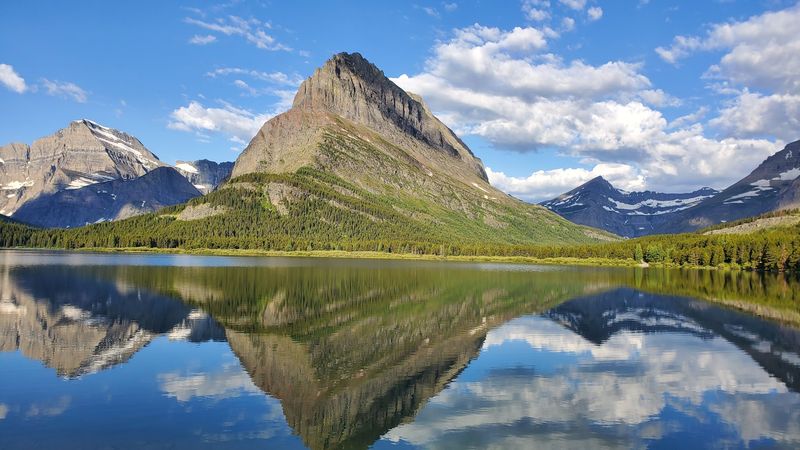
Its crystal-clear lakes, jagged peaks, and ancient glaciers have made it a favorite for filmmakers seeking landscapes that look otherworldly without any special effects required.
The Revenant (2015) used similar Montana wilderness to stunning effect.
Going-to-the-Sun Road alone is one of the most scenic drives anywhere on the continent, offering views that would make any cinematographer weep with joy.
Montana doesn’t need a Hollywood sign to be cinematic. The mountains take care of that all by themselves.
27. Scotts Bluff National Monument, Nebraska
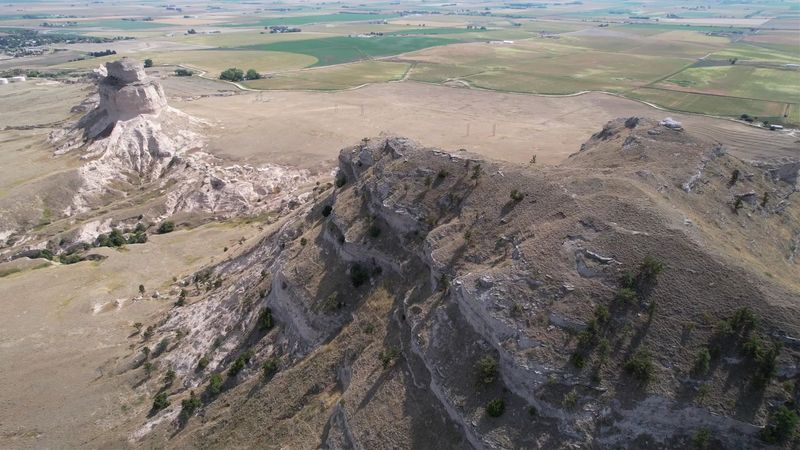
A landmark that Oregon Trail pioneers used to navigate the Great Plains in the 1800s, Scotts Bluff still stops people in their tracks today.
These dramatic sandstone bluffs rising from the flat Nebraska panhandle have appeared in Westerns and historical productions that needed authentic frontier scenery.
The monument offers hiking trails that lead to the summit, where you can see for miles across the same landscape those covered wagons crossed. Few places connect you to American history quite this viscerally.
28. Las Vegas Strip, Nevada
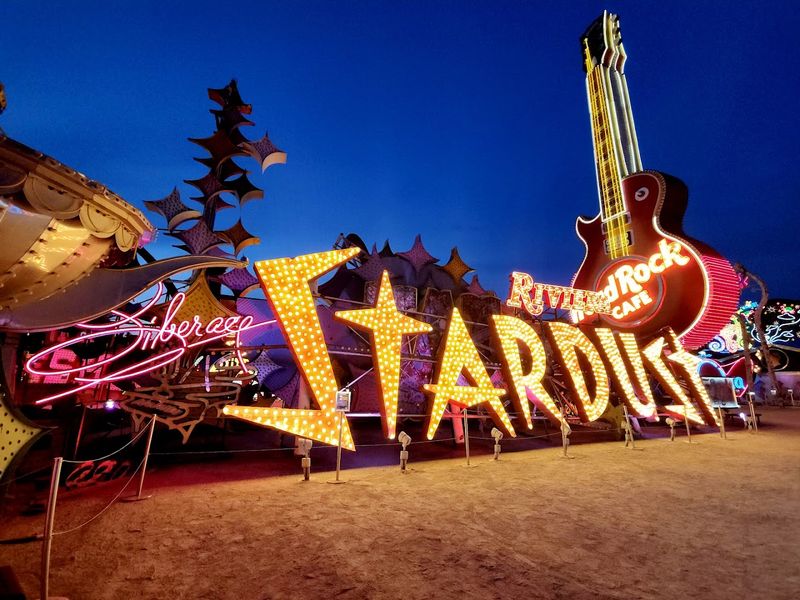
The Las Vegas Strip might be the most filmed street in America.
From the cool heist choreography of Ocean’s Eleven (2001) to the chaotic comedy of The Hangover (2009), Las Vegas has played itself in hundreds of movies, and it’s always a star.
What makes Vegas so irresistible on screen is its unapologetic excess. Everything is bigger, brighter, and louder than anywhere else, which translates beautifully to film.
29. Squam Lake, New Hampshire
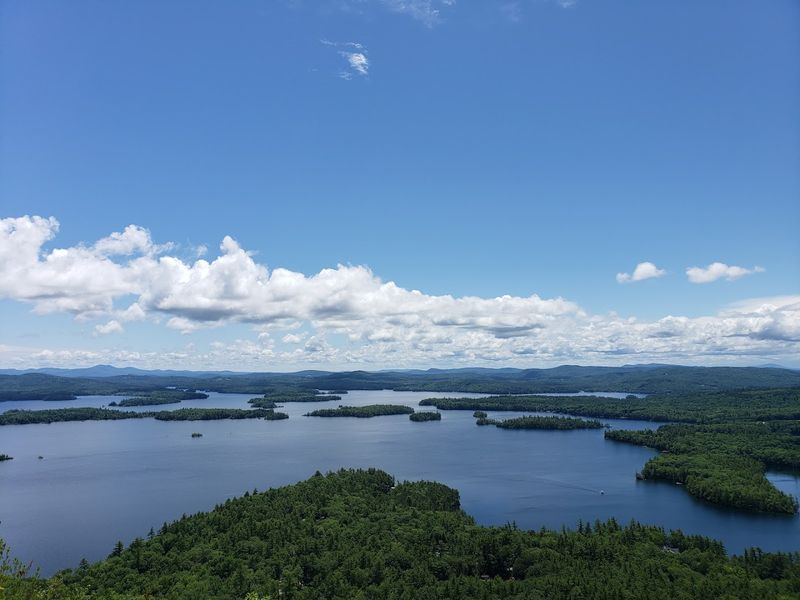
On Golden Pond, the 1981 film starring Henry Fonda and Katharine Hepburn, was filmed almost entirely on the shores of Squam Lake, and the result was one of the most emotionally resonant films of its decade.
Squam Lake’s quiet beauty, with its loon-filled mornings and forested shores, created the perfect backdrop for a story about family, aging, and reconciliation.
Visiting today feels almost sacred. You can take boat tours that pass the actual filming locations, which is a genuinely moving experience.
30. Asbury Park Boardwalk, New Jersey
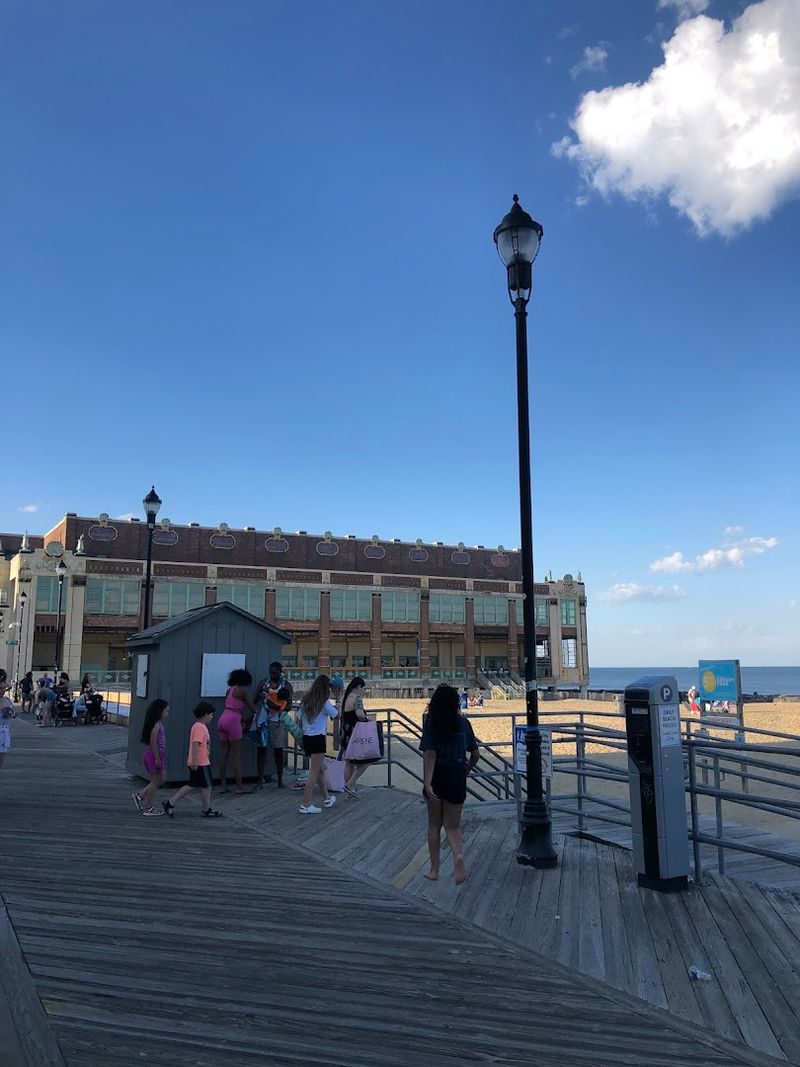
A gritty, romantic energy gives Asbury Park an atmosphere that’s impossible to fake, which is probably why it has remained a favorite filming destination for decades.
The boardwalk and its ornate Convention Hall appeared in films like Clerks II (2006) and various music videos and TV productions drawn to its weathered, soulful aesthetic.
This is also the city that launched Bruce Springsteen’s career, so the artistic credibility here runs deep.
31. Plaza Blanca, Abiquiu, New Mexico
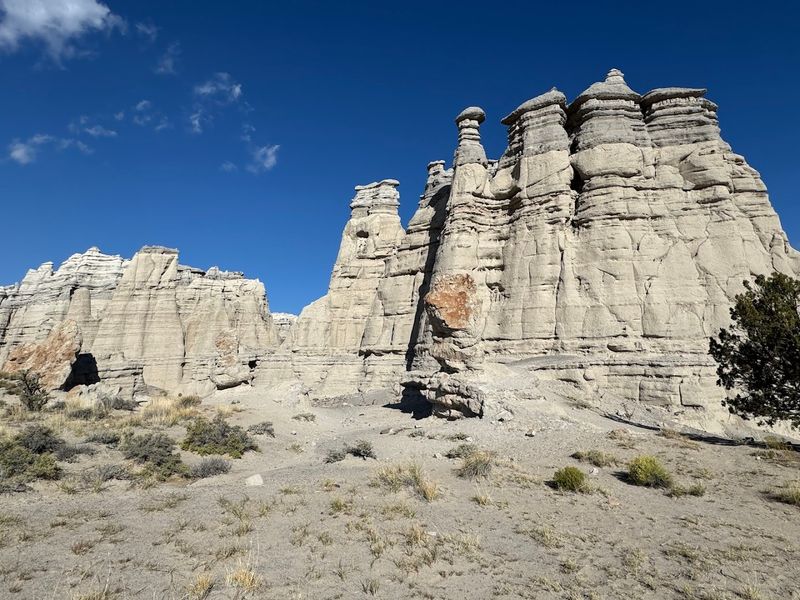
Plaza Blanca, also known as the White Place, is a landscape so otherworldly that Georgia O’Keeffe painted it repeatedly and filmmakers have been drawn here ever since.
These pale, eroded rock formations near Abiquiu look like they belong on another planet, which is exactly why they’ve appeared in sci-fi and fantasy productions.
The contrast between the blinding white rocks and the deep blue New Mexico sky is visually stunning in a way that photographs struggle to fully capture.
32. Katz’s Delicatessen, New York City, New York
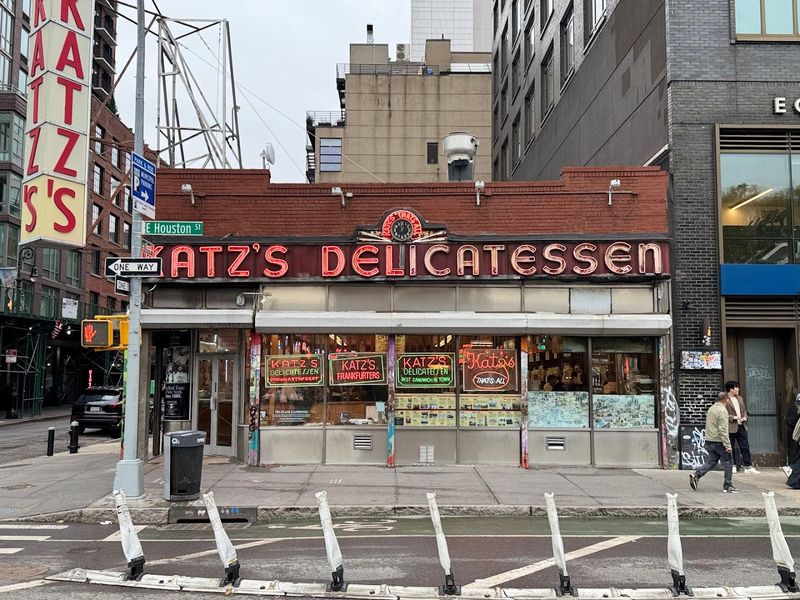
When Harry Met Sally has one of the most famous restaurant scenes in cinema history, and it happened right here at Katz’s Delicatessen on the Lower East Side.
Meg Ryan’s hilariously fake moment prompted a fellow diner to deliver the most quoted line in the film. You know the one.
Katz’s has been serving massive pastrami sandwiches since 1888, and the table where that scene was filmed is still marked with a sign. Ordering a sandwich and sitting at that table is basically a New York City rite of passage.
33. Biltmore Estate, Asheville, North Carolina
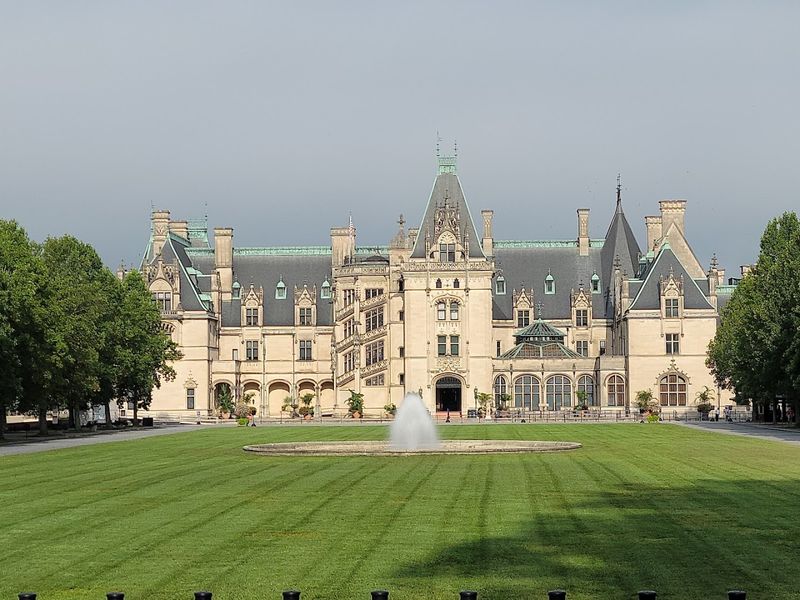
America’s largest privately owned home, the Biltmore Estate is a 178,926-square-foot French Renaissance chateau that looks like it was plucked from the Loire Valley and planted in the Blue Ridge Mountains.
Its jaw-dropping scale and grandeur made it the filming location for Richie Rich (1994) and Being There (1979).
Walking through the Biltmore’s 250 rooms is genuinely overwhelming in the best possible way. George Vanderbilt built this masterpiece in 1895, and every inch of it screams cinematic opulence.
34. Theodore Roosevelt National Park, North Dakota
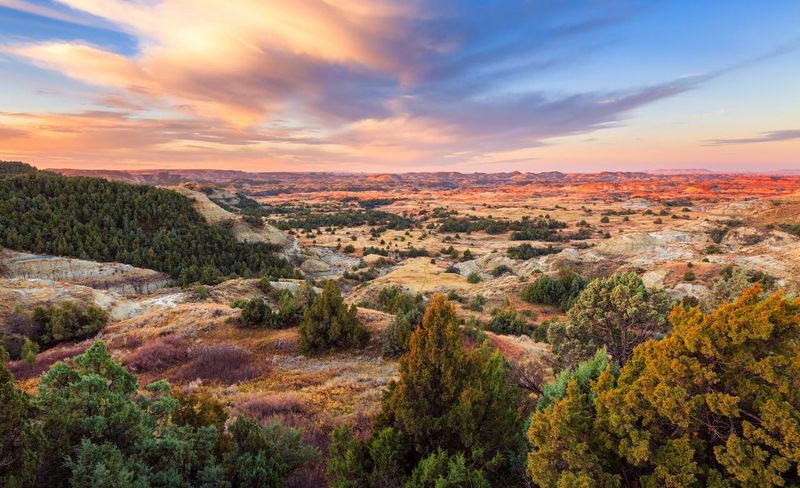
Theodore Roosevelt once said that North Dakota’s badlands were where the romance of his life began, and one look at this park explains exactly why.
The rugged, striped buttes and wild prairies have appeared in Westerns and nature documentaries that needed genuine, unfiltered American frontier scenery.
Wild bison still roam freely through this park, which adds a living, breathing authenticity that no studio can replicate.
35. Ohio State Reformatory, Mansfield, Ohio
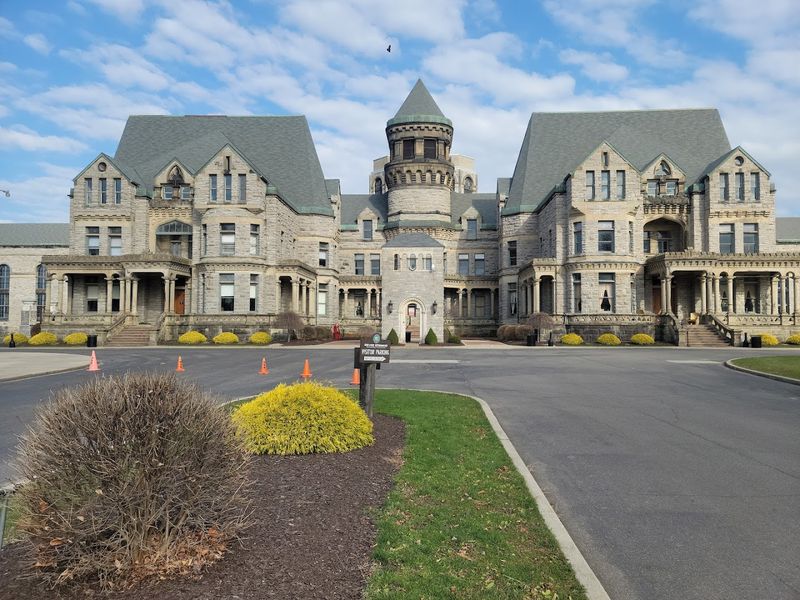
Few filming locations are as immediately recognizable as the Ohio State Reformatory in Mansfield, which served as Shawshank State Penitentiary in The Shawshank Redemption (1994).
That film is consistently ranked among the greatest movies ever made, and this Gothic Victorian prison is a huge part of why it feels so real.
The reformatory opened in 1896 and operated until 1990, and its towering stone architecture is genuinely breathtaking in a deeply unsettling way.
Guided tours let visitors walk the actual cellblocks where Tim Robbins and Morgan Freeman filmed their scenes.
36. Pawhuska, Oklahoma
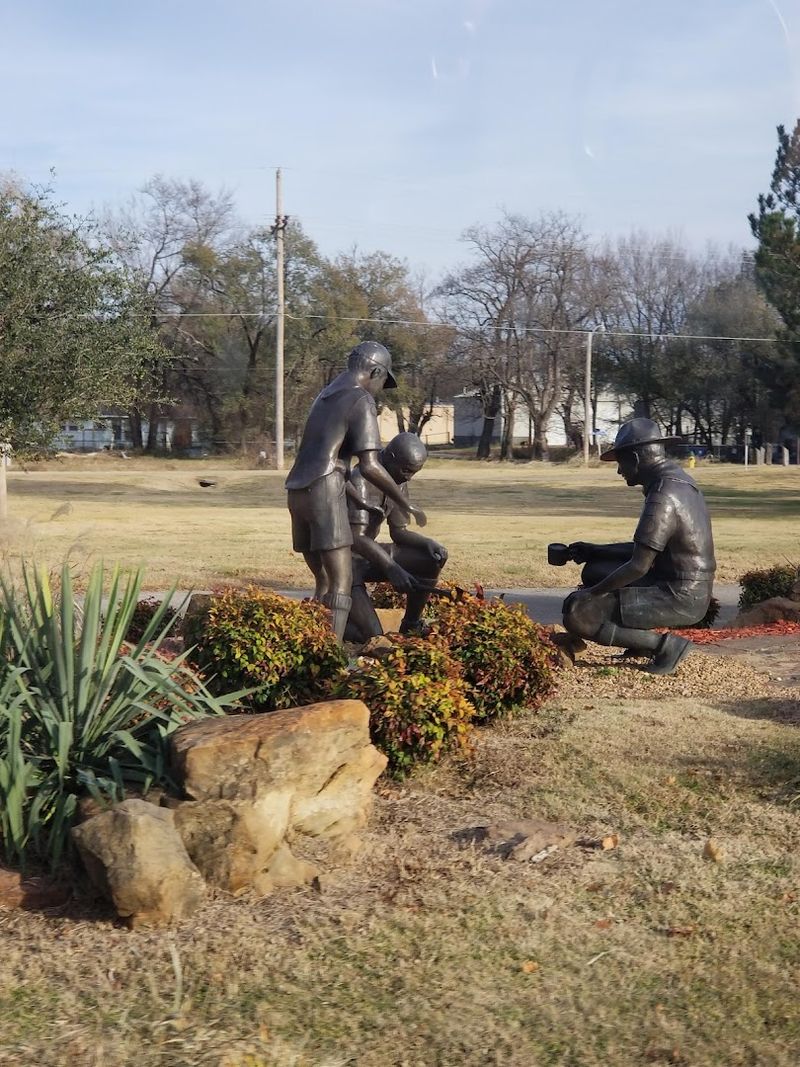
Pawhuska, the capital of the Osage Nation, stepped into the global spotlight when Martin Scorsese chose it as the primary filming location for his 2023 movie that starred Leonardo DiCaprio and Robert De Niro.
The movie is based on a true story and filming in the actual community where events occurred gave the production an emotional weight that could not have been manufactured elsewhere.
Pawhuska’s historic downtown and surrounding Osage hills look much as they did a century ago, making every frame feel like a page from a real history book.
37. Haystack Rock, Cannon Beach, Oregon
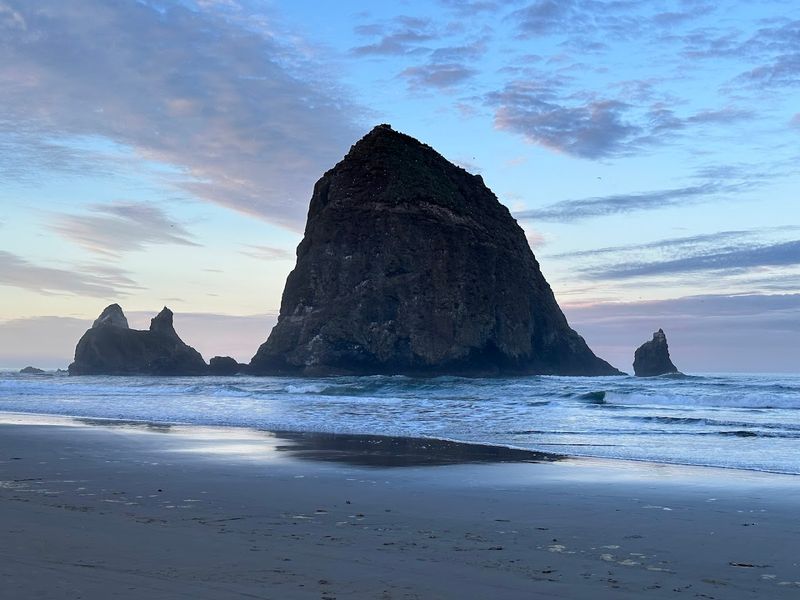
Standing 235 feet tall right on the beach, Haystack Rock is one of the largest coastal monoliths in the world and one of Oregon’s most recognizable landmarks.
It appeared in the beloved 1985 adventure film The Goonies, filmed largely in the nearby town of Astoria, making this whole stretch of Oregon coast legendary.
Hey you guys! If you grew up watching The Goonies, visiting Cannon Beach feels like completing a childhood quest.
38. Philadelphia Museum of Art Steps, Pennsylvania
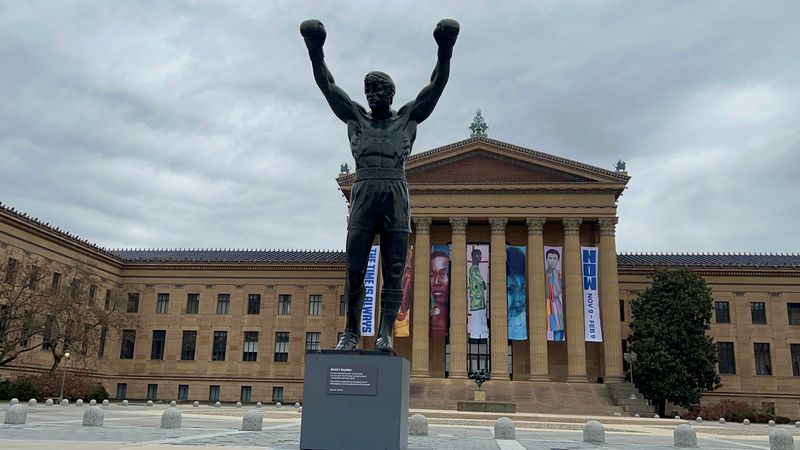
Rocky Balboa ran up 72 stone steps, threw his fists in the air, and made Philadelphia’s Museum of Art steps the most famous staircase in cinema history.
Rocky (1976) transformed this already-beautiful landmark into a symbol of determination that resonates with people around the world decades later.
A bronze statue of Rocky now stands at the base of those steps, and the tradition of running up them and striking the victory pose is practically a Philadelphia requirement.
39. Newport Mansions, Newport, Rhode Island
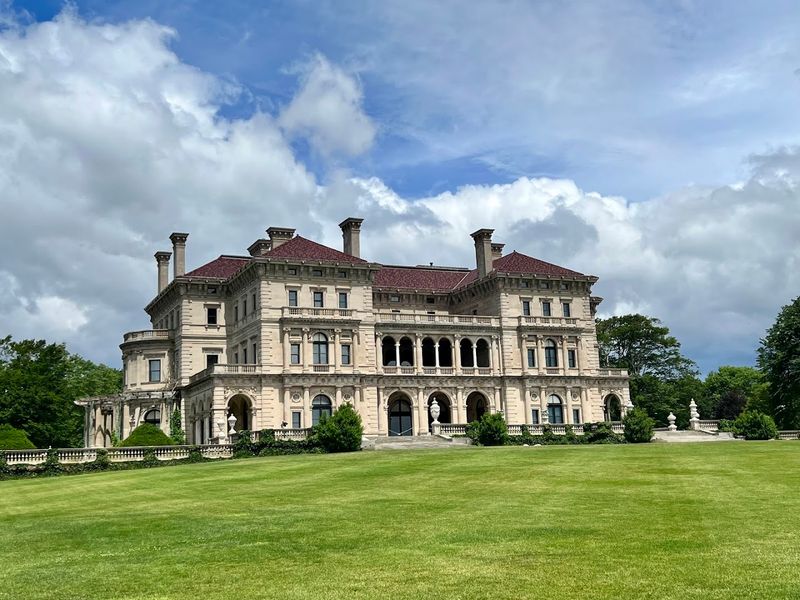
Newport’s Gilded Age mansions are so extravagant they make Biltmore look modest, which is saying something.
The Breakers, Marble House, and other Newport estates have appeared in films and TV shows including The Great Gatsby adaptations and 27 Dresses (2008), providing the kind of over-the-top opulence that cameras absolutely devour.
These summer cottages, and yes, their owners actually called them cottages, were built by America’s wealthiest families in the late 1800s as seasonal retreats.
40. Boone Hall Plantation, Mount Pleasant, South Carolina
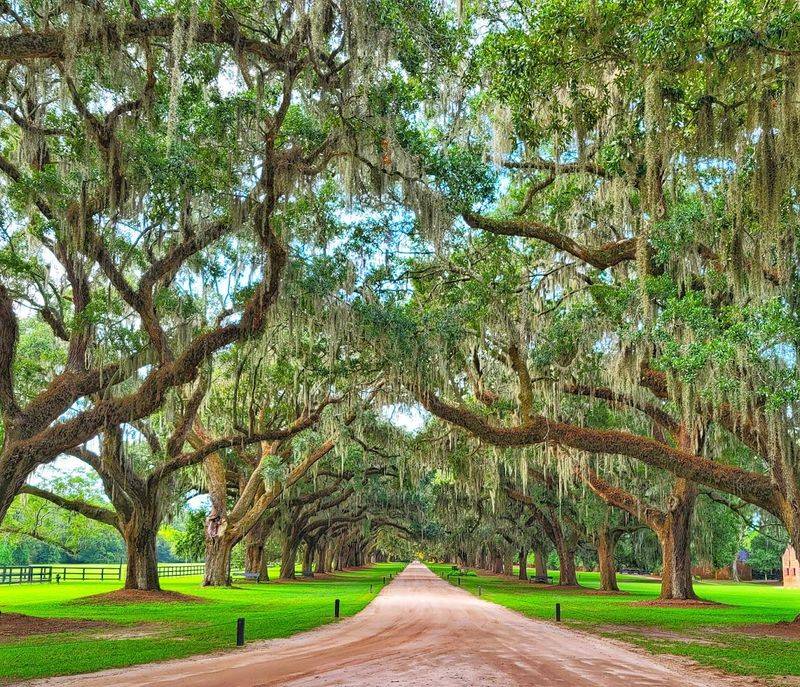
That breathtaking Avenue of Oaks, nearly a mile of ancient trees draped in Spanish moss forming a cathedral canopy over the driveway, has appeared in films and TV shows including North and South (1985) and The Notebook (2004).
Ryan Gosling and Rachel McAdams filmed scenes here, which explains why fans still flock to it.
Boone Hall is one of America’s oldest working plantations, dating to around 1681, and its history is as complex as it is long.
41. Mount Rushmore, South Dakota
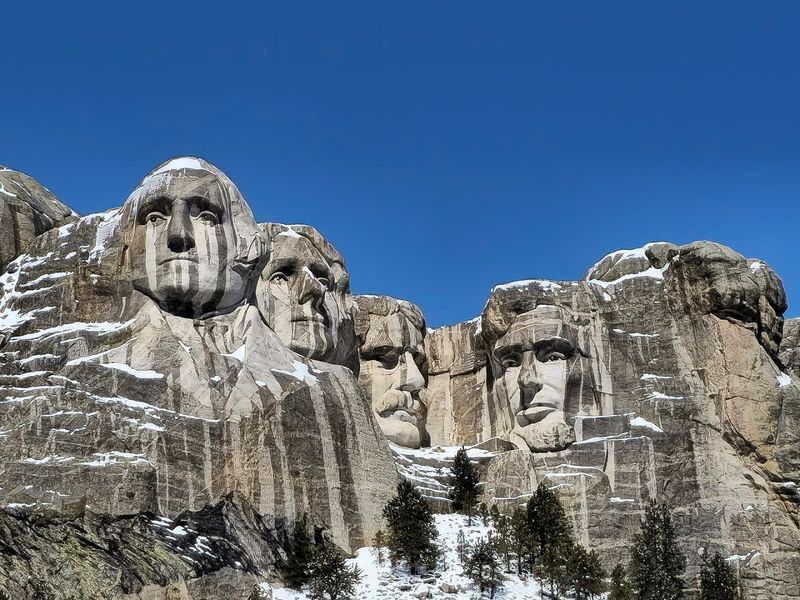
Four presidents carved into a granite mountain in the Black Hills of South Dakota is already cinematic before a single camera rolls.
Mount Rushmore’s most famous film moment came in Alfred Hitchcock’s North by Northwest (1959), when Cary Grant’s character was chased across the presidential faces in one of cinema’s most thrilling sequences.
Hitchcock wasn’t actually allowed to film on the monument itself, so he recreated it on a studio set, but the real thing is even more impressive.
42. Graceland, Memphis, Tennessee
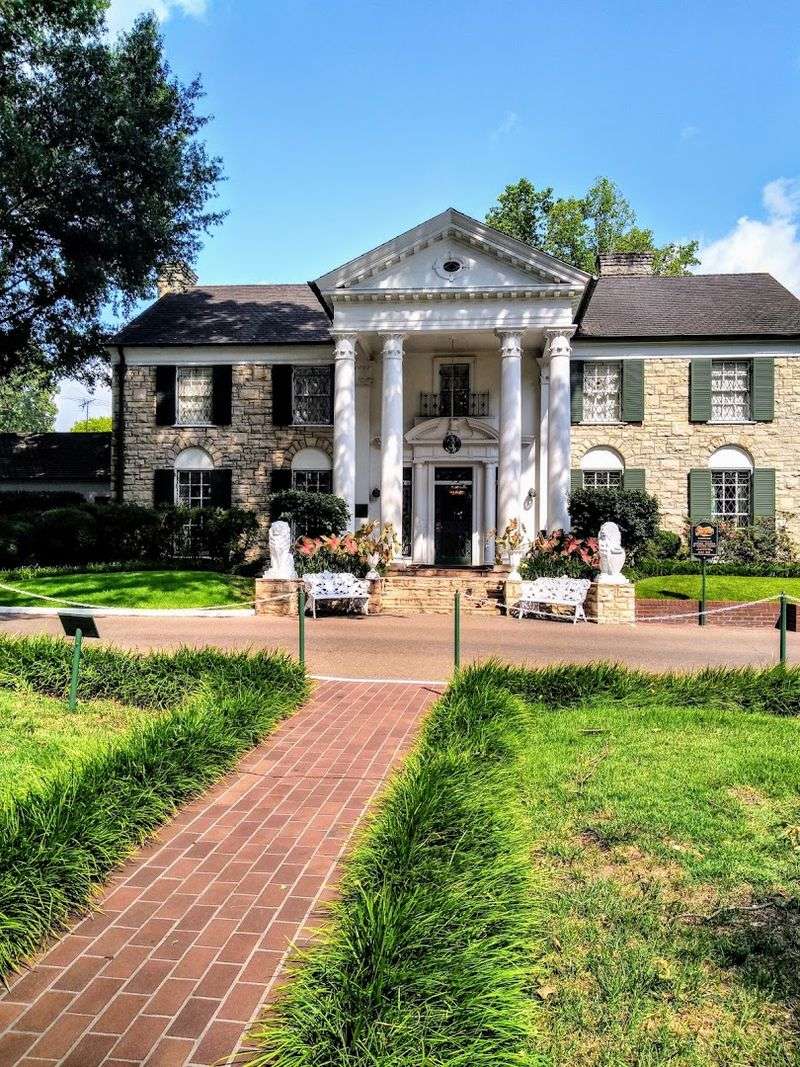
Graceland is more than Elvis Presley’s home. It’s a shrine, a museum, and a piece of American mythology all wrapped up in a surprisingly modest Memphis mansion.
The estate appeared in the 1988 Wim Wenders film Wings of Desire and has been featured in countless documentaries and music biopics exploring Elvis’s extraordinary legacy.
Over 600,000 visitors tour Graceland every year, making it one of the most visited private homes in America after the White House. The jungle room alone is worth the price of admission.
43. The Alamo, San Antonio, Texas
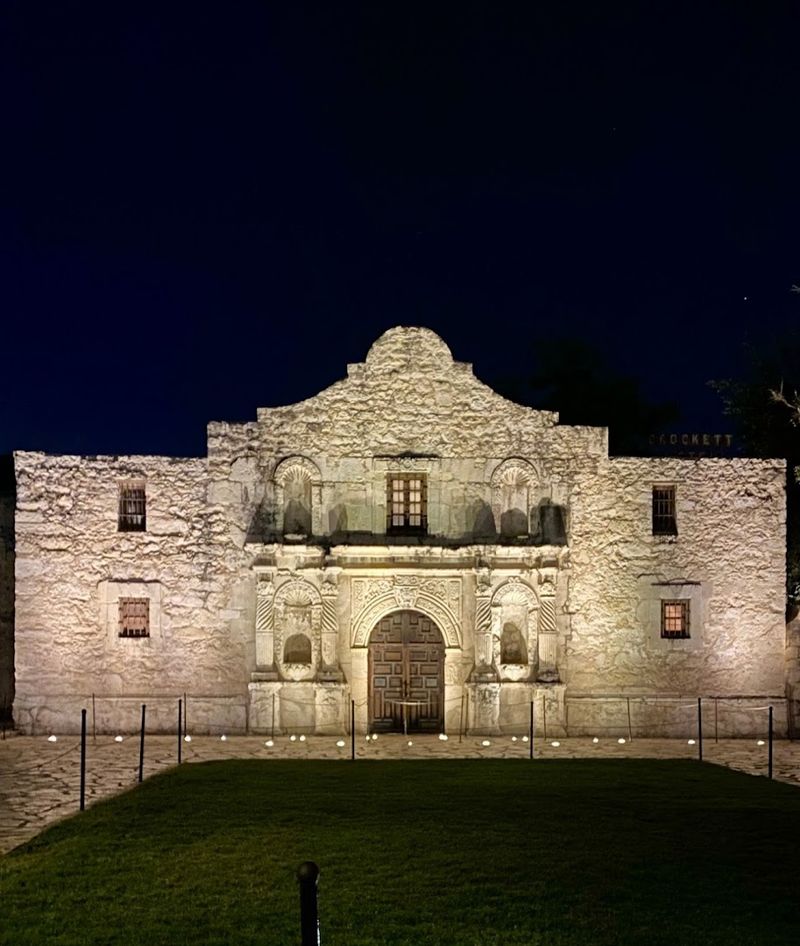
Remember the Alamo! That battle cry has echoed through American history since 1836, and Hollywood has been retelling the story ever since.
The 1960 epic The Alamo, starring and directed by John Wayne, brought the famous Texas mission to global attention, and the site has appeared in countless films and TV shows since.
Standing in front of the Alamo’s distinctive limestone facade in the middle of downtown San Antonio is a genuinely surreal experience. The building is smaller than most visitors expect, but its historical weight is enormous.
44. Dead Horse Point State Park, Utah
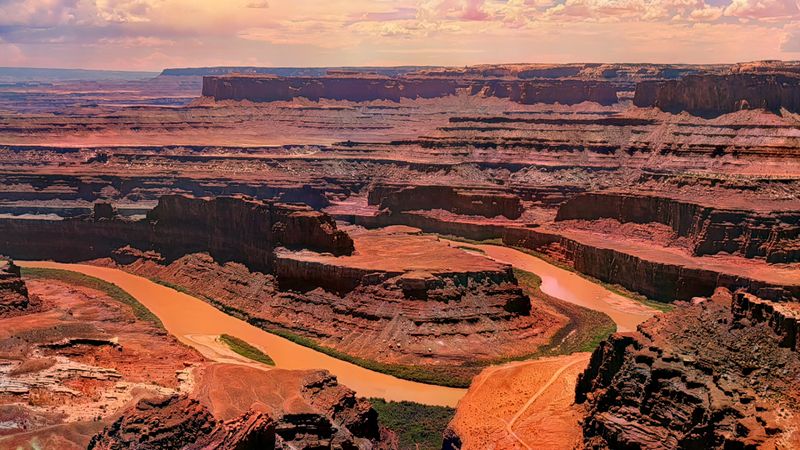
Dead Horse Point offers one of the most staggering views in the American Southwest, a 2,000-foot sheer drop down to the Colorado River snaking through crimson canyon walls.
That view appeared in the closing scene of Thelma and Louise (1991), when the two protagonists drove off the canyon edge in cinema’s most debated finale.
The park actually sits near Canyonlands National Park, and the surrounding Utah canyon country has appeared in dozens of films and car commercials.
45. Woodstock Village, Vermont
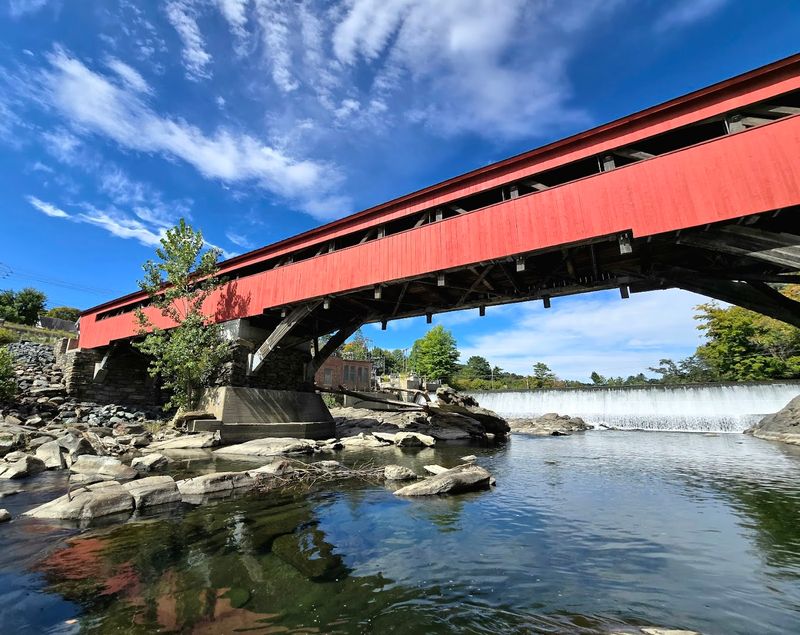
Woodstock, Vermont, looks so perfectly New England that it’s been called the most beautiful village in America, and filmmakers clearly agree.
The village’s covered bridges, white church steeples, and rolling green hills appeared in Funny Farm (1988) starring Chevy Chase, and the area has attracted productions seeking authentic small-town Americana.
Every season transforms Woodstock into something new and equally stunning, from spring blossoms to blazing autumn foliage to snow-dusted December charm.
46. Colonial Williamsburg, Virginia
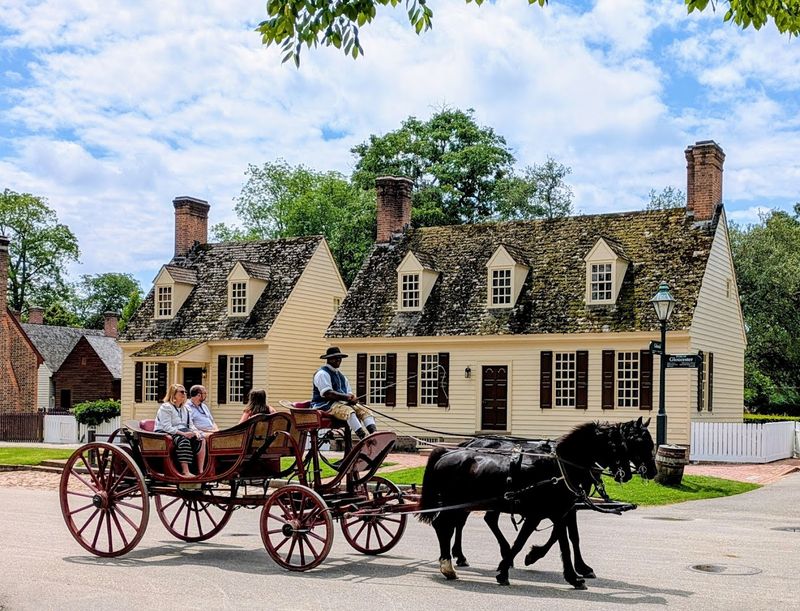
The site has appeared in numerous historical films and TV productions that needed authentic period settings without building sets from scratch.
Walking down Duke of Gloucester Street with horse-drawn carriages passing by and the smell of woodsmoke in the air is an immersive time-travel experience.
Virginia’s colonial past is preserved here with extraordinary care and detail. Few places in America blur the line between history and cinema quite so effectively or entertainingly.
47. La Push / First Beach, Washington
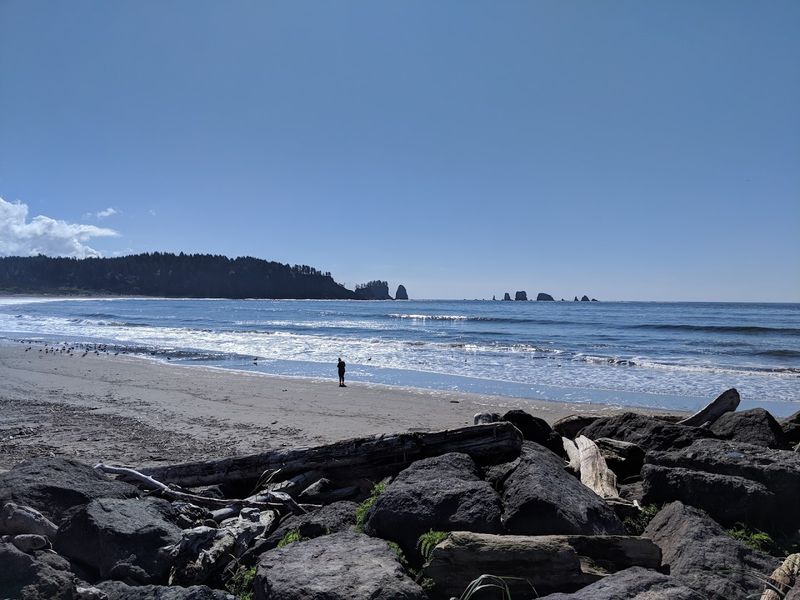
La Push, on the Olympic Peninsula of Washington State, is the ancestral home of the Quileute Tribe, and its moody, fog-draped First Beach became globally famous as the setting for the Twilight saga.
Those dramatic sea stacks rising from the Pacific and the perpetually overcast sky gave the films their brooding, supernatural atmosphere.
Team Jacob fans made pilgrimages here throughout the franchise’s peak years, and the landscape is genuinely as dramatic in real life as it appears on screen.
48. New River Gorge Bridge, West Virginia
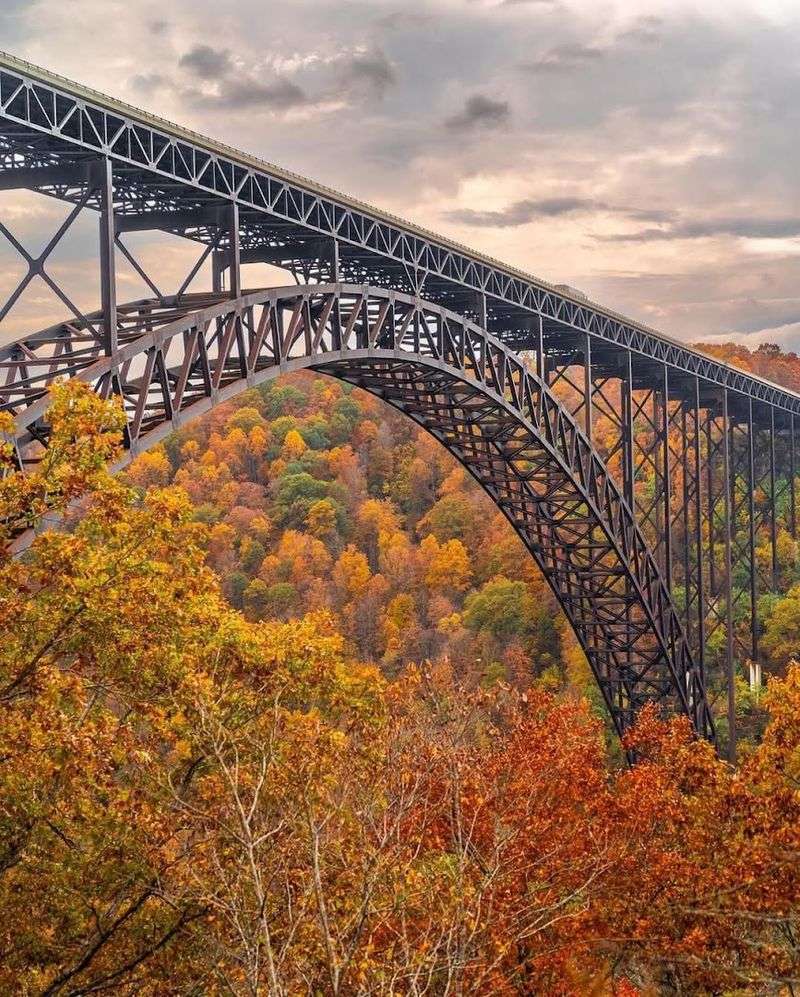
At 876 feet above the New River, the New River Gorge Bridge was the world’s longest steel arch bridge when it opened in 1977, and it’s still one of the most visually stunning structures in America.
The bridge and its surrounding gorge appeared in the action film The Mothman Prophecies (2002) and various adventure documentaries.
West Virginia became America’s 63rd National Park unit when New River Gorge was designated in 2020, bringing well-deserved attention to this dramatic landscape.
49. Milwaukee Art Museum, Wisconsin
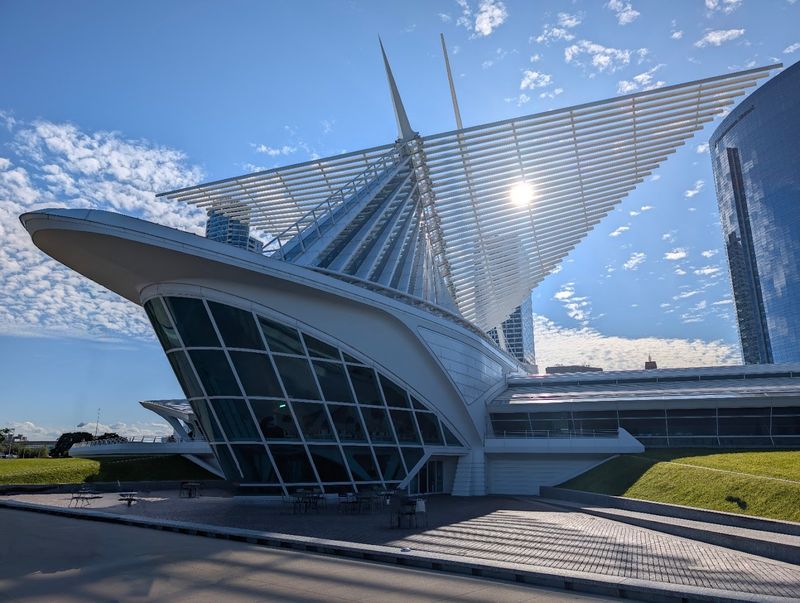
Designed by Santiago Calatrava and opened in 2001, the Milwaukee Art Museum’s Quadracci Pavilion features retractable white wings that open and close like a giant bird taking flight.
This architectural masterpiece has appeared in commercials, films, and television productions drawn to its genuinely futuristic appearance on the shores of Lake Michigan.
Watching the wings open at 10 AM every morning is one of Wisconsin’s most theatrical daily events. The building looks like something from a science fiction film, which means cameras love it unconditionally.
50. Devils Tower, Wyoming
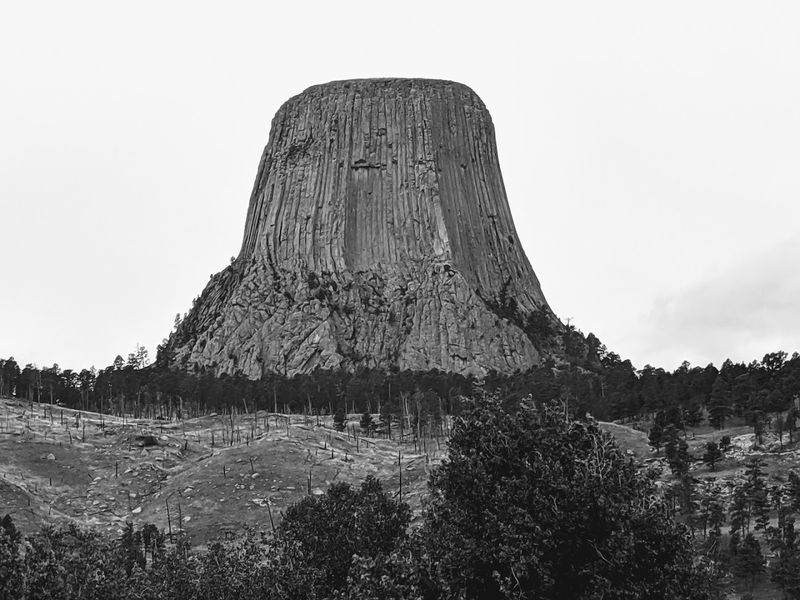
Rising 1,267 feet above the Belle Fourche River, Devils Tower is the most dramatic geological formation in the American Great Plains.
Steven Spielberg knew exactly what he was doing when he made it the alien rendezvous point in Close Encounters of the Third Kind (1977).
The tower’s mysterious fluted columns, formed by ancient volcanic activity, look genuinely otherworldly from every angle. Wyoming saved the most dramatic landmark for last, and it absolutely delivered on every level.