13 Historic U.S. Forts That Shaped America And Are Worth Visiting
America’s military forts tell stories that textbooks can barely capture. From the first shots of the Civil War to the defense of our national anthem, these stone and mortar structures witnessed moments that changed history forever.
Visiting them today means walking the same grounds where soldiers stood, strategized, and sometimes sacrificed everything for the nation we know now.
1. Fort Sumter, South Carolina
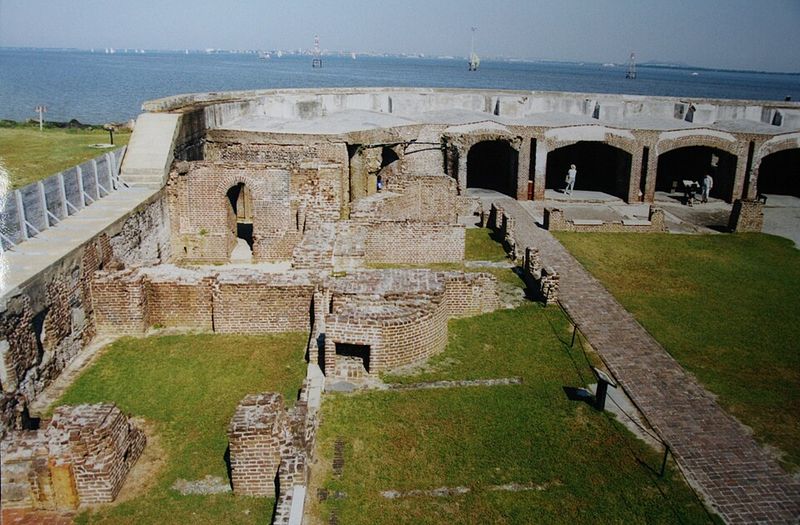
Charleston Harbor holds a fort where America tore itself apart. On April 12, 1861, Confederate artillery opened fire on this island stronghold, igniting four years of brutal civil war.
Walking through Fort Sumter today feels like stepping into a time capsule. The National Monument preserves the battered walls and tells the story of Major Robert Anderson’s garrison, who defended the fort despite impossible odds and dwindling supplies, ultimately surrendering after 34 hours of bombardment.
2. Fort Ticonderoga, New York
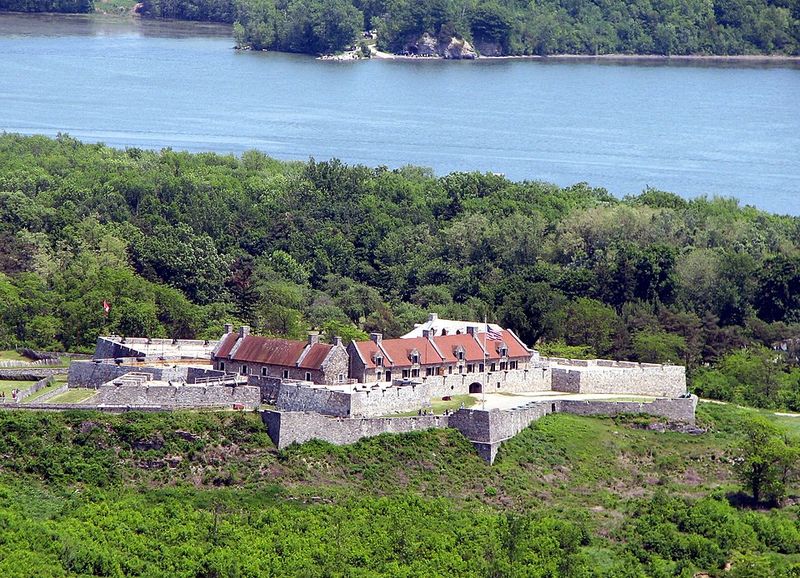
Picture a star-shaped fortress perched dramatically on Lake Champlain’s shores. Built by the French in 1755, this strategic stronghold changed hands multiple times during colonial conflicts.
Ethan Allen and the Green Mountain Boys captured it in 1775 during a daring raid, securing vital cannons that would later help liberate Boston. Today’s museum and research center brings Revolutionary War battles to life with reenactments, artillery demonstrations, and meticulously restored barracks showcasing 18th-century military life.
3. Fort McHenry, Maryland
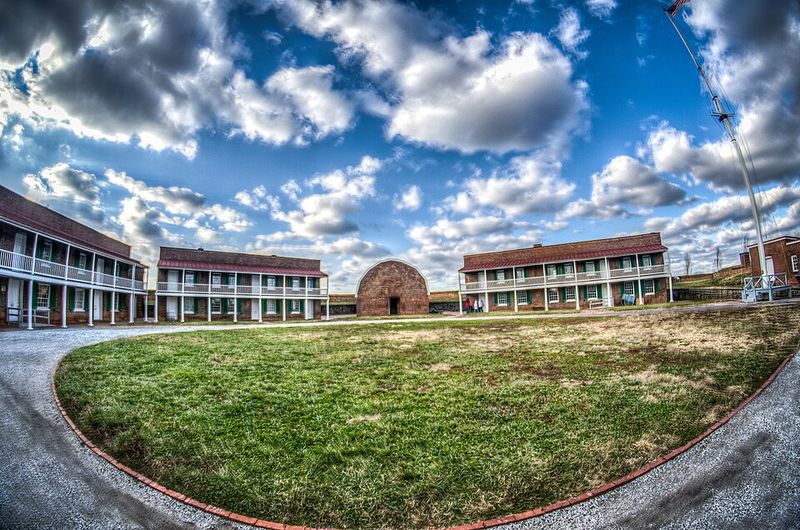
When British warships bombarded Baltimore’s harbor in 1814, one lawyer watched anxiously through the smoke and fire. Francis Scott Key witnessed Fort McHenry withstand 25 hours of relentless shelling, inspiring him to write words that became our national anthem.
The fort’s distinctive five-pointed star design helped defenders repel the attack successfully. Visitors can explore the same ramparts where soldiers stood firm, view the massive flag that flew defiantly through battle, and experience living history programs.
4. Castillo de San Marcos, Florida
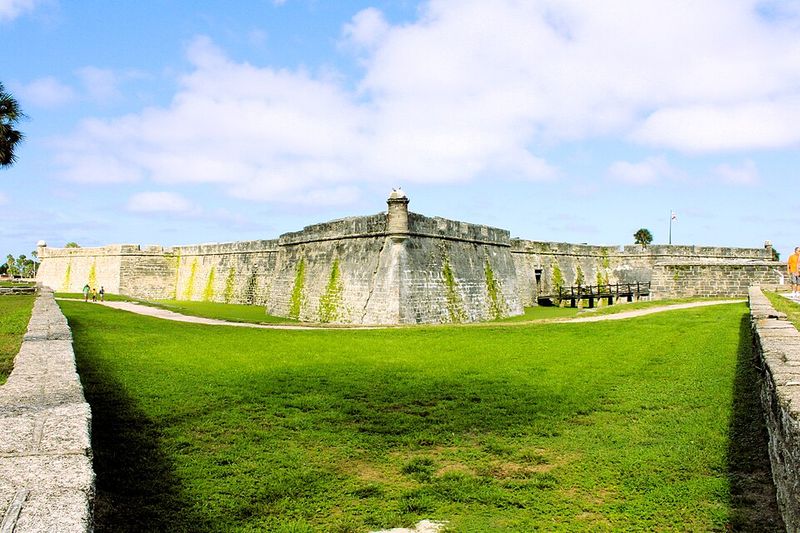
St. Augustine’s waterfront showcases something truly remarkable: the oldest masonry fort in the continental United States, built by Spanish colonists starting in 1672. Its coquina limestone walls, constructed from compressed seashells, could absorb cannonball impacts without shattering like traditional stone.
This architectural genius helped the fort survive multiple sieges over three centuries. Today, rangers demonstrate cannon firings, and visitors explore dungeons, watchtowers, and courtyards that witnessed Spanish, British, Confederate, and Union occupation throughout turbulent centuries.
5. Fort Moultrie, South Carolina
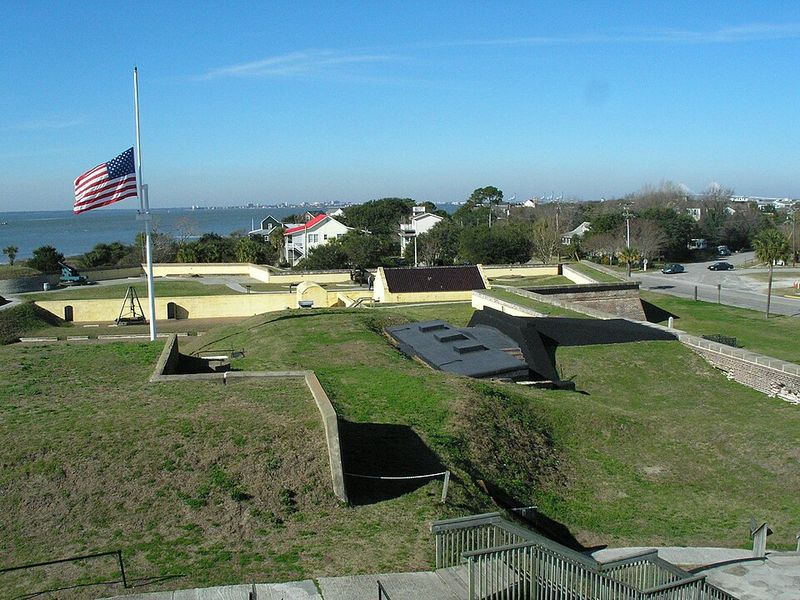
Sullivan’s Island witnessed a stunning American victory in 1776 when Colonel William Moultrie’s garrison repelled a British naval assault. The fort’s palmetto log walls absorbed cannonballs like sponges, earning South Carolina its nickname and state flag symbol.
Rebuilt multiple times, Fort Moultrie served through the Civil War and both World Wars. Preserved structures span nearly 200 years of coastal defense evolution, from Revolutionary earthworks to World War II concrete bunkers, creating a fascinating timeline of military architecture and strategy.
6. Fort Knox, Maine
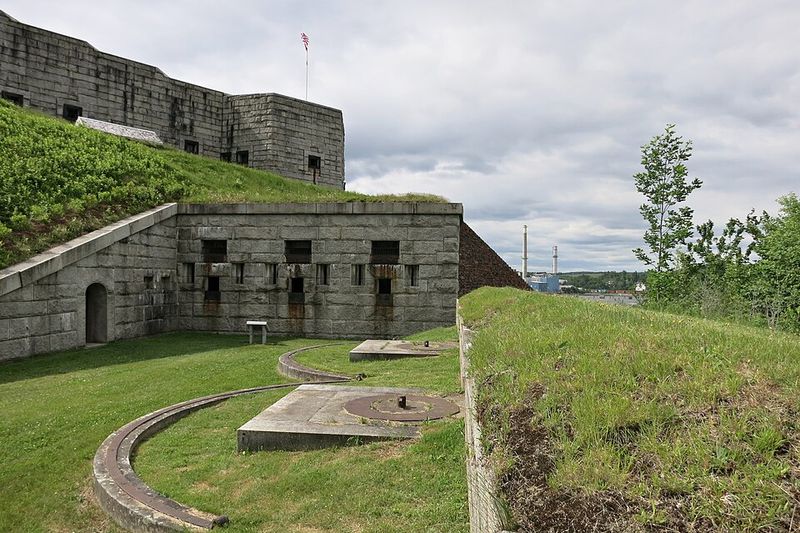
Not to be confused with Kentucky’s gold depository, Maine’s Fort Knox guards the Penobscot River with imposing granite walls built between 1844 and 1869. Though never attacked, its strategic position protected Bangor’s vital shipbuilding industry and lumber trade.
The fort’s remarkably preserved condition includes spiral staircases, vaulted corridors, and battery positions offering panoramic river views. Guided tours reveal hidden passages and engineering marvels, while summer events bring history alive through reenactments and candlelit explorations that thrill visitors of all ages.
7. Fort Wadsworth, New York
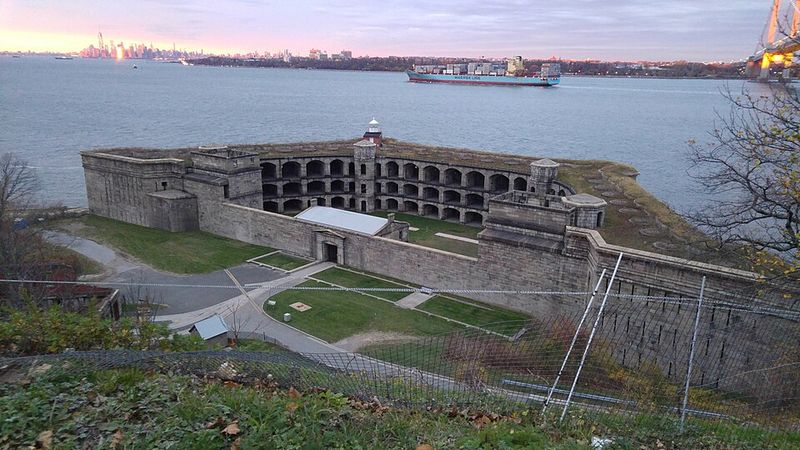
Staten Island’s Fort Wadsworth boasts military history stretching back to 1663, making it one of America’s longest continuously garrisoned posts. Its prime location at New York Harbor’s entrance made it essential for protecting the city through countless conflicts.
Battery Weed’s distinctive red brick architecture contrasts beautifully with sweeping harbor vistas. Visitors enjoy guided tours exploring fortifications that defended against threats from the Revolutionary War through the Cold War, plus breathtaking views of the Verrazano-Narrows Bridge and Manhattan skyline that make photography enthusiasts absolutely giddy.
8. Fort Union, New Mexico
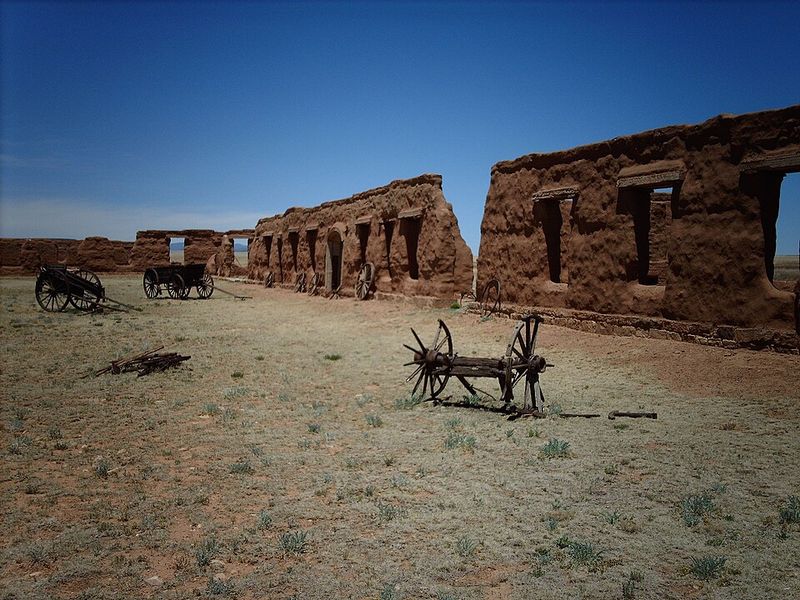
Where wagon trains rolled along the Santa Fe Trail, Fort Union served as the Southwest’s military powerhouse and supply depot from 1851 to 1891. Three successive forts occupied this windswept plain, each adapting to changing frontier needs.
Massive adobe ruins sprawl across the landscape today, preserved as a National Monument. Walking among crumbling walls and chimneys, visitors imagine thousands of soldiers, traders, and settlers who passed through.
Interpretive trails and exhibits explain how this remote outpost protected commerce and shaped territorial expansion throughout the turbulent 19th century.
9. Fort Pulaski, Georgia
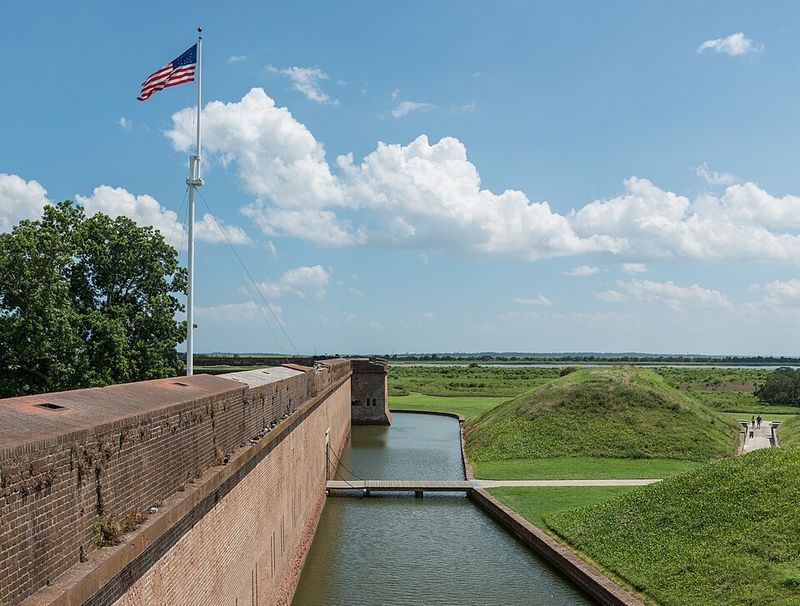
Savannah’s Fort Pulaski revolutionized warfare in 1862 when Union rifled cannons breached its supposedly impregnable walls in just 30 hours. This demonstration made traditional masonry fortifications instantly obsolete worldwide.
Built between 1829 and 1847 with 25 million bricks, the fort showcases stunning engineering with its moat, drawbridge, and precisely angled bastions. Today’s National Monument preserves battle damage alongside beautifully restored sections.
Nature trails wind through maritime forests where alligators sun themselves, blending military history with coastal Georgia’s wild beauty perfectly.
10. Fort Vancouver, Washington
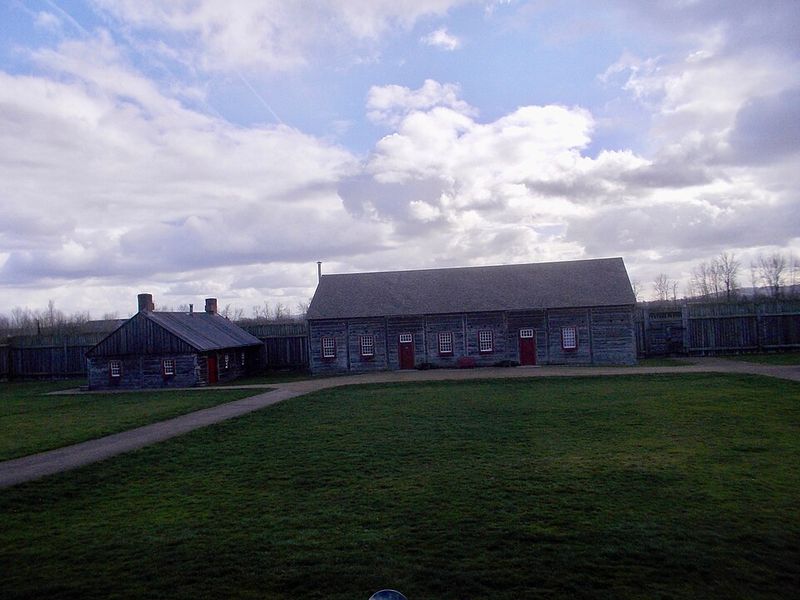
Hudson’s Bay Company established this Pacific Northwest hub in 1825, creating a bustling commercial center that attracted traders, settlers, and Native peoples. Chief Factor John McLoughlin ruled this fur-trading empire, welcoming American pioneers even while representing British interests.
Reconstructed buildings include the stockade, blacksmith shop, bakehouse, and Chief Factor’s residence, all furnished with period items. Costumed interpreters demonstrate 1840s crafts and daily activities.
The fort’s National Historic Site tells fascinating stories about cultural exchange, economic competition, and how commerce shaped territorial boundaries before the Oregon Treaty.
11. Fort Smith, Arkansas

Two forts occupied this strategic Arkansas River location, guarding the boundary between settled territories and Indian Territory. Thousands of Cherokee, Choctaw, Chickasaw, Creek, and Seminole peoples passed this point during forced removals along the Trail of Tears.
Later, Judge Isaac Parker’s federal court here became legendary, earning him the nickname “Hanging Judge” for executing 79 convicted criminals. The National Historic Site preserves the 1838 fort remains, reconstructed barracks, and the imposing courthouse.
Exhibits detail both tragic removal history and frontier justice’s harsh realities with sensitivity and historical accuracy.
12. Alamo Mission, Texas
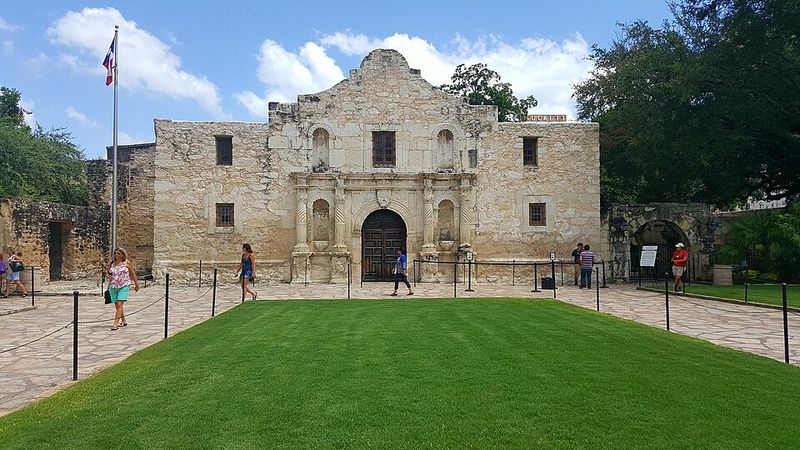
Remember the Alamo? Everyone knows this battle cry, but visiting the actual mission in San Antonio reveals layers beyond the famous 1836 siege.
Originally established as Mission San Antonio de Valero in 1718, Spanish priests converted Coahuiltecan peoples here for decades before secularization.
When 189 Texan defenders faced Santa Anna’s thousands, their 13-day stand became legendary. Though all perished, their sacrifice rallied Texas to independence.
Today’s shrine and museum complex honors their courage while exploring Spanish colonial missions’ broader cultural impact throughout the Southwest region.
13. Fort Monroe, Virginia
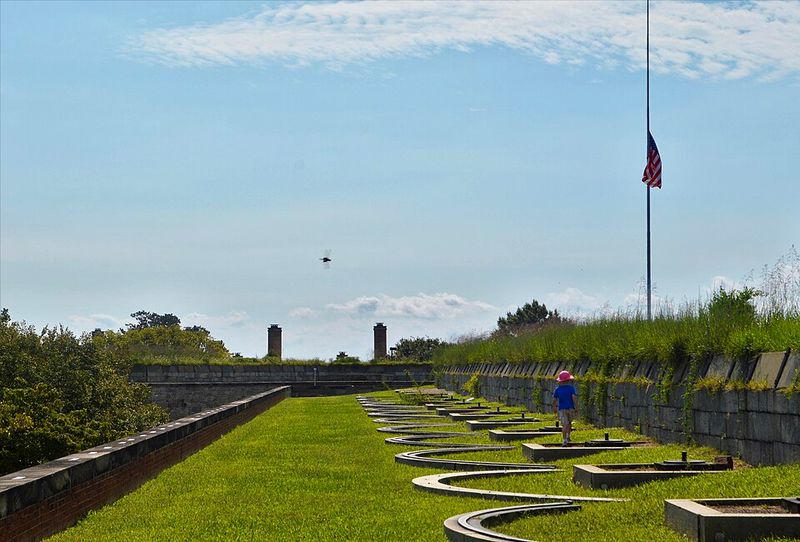
Hampton’s Fort Monroe holds the distinction of being the largest stone fort ever built in America, its massive walls enclosing 63 acres. Constructed between 1819 and 1834, this “Gibraltar of the Chesapeake” never fell to enemy forces throughout its active military service.
During the Civil War, Fort Monroe remained in Union hands, becoming a haven for escaped slaves declared “contraband of war” by General Benjamin Butler. President Lincoln met here with military advisors, and Jefferson Davis was imprisoned after the Confederacy’s collapse.
Today’s National Monument offers rich historical interpretation.