
12 Homemade Breads That Pair Well With Ramadan Dishes
Sunset arrives, the table fills up, and suddenly everyone becomes very serious about bread.
During Ramadan, iftar meals feel incomplete without warm, freshly baked loaves ready to scoop stews, cradle grilled meats, and swipe every last bit of dip from the plate.
Soft pillows of dough and crisp flatbreads bring comfort, flavor, and a little bit of joy to the table in ways store-bought bread simply cannot compete with.
Homemade breads turn the first bite after a long day of fasting into something truly worth savoring.
1. Pita
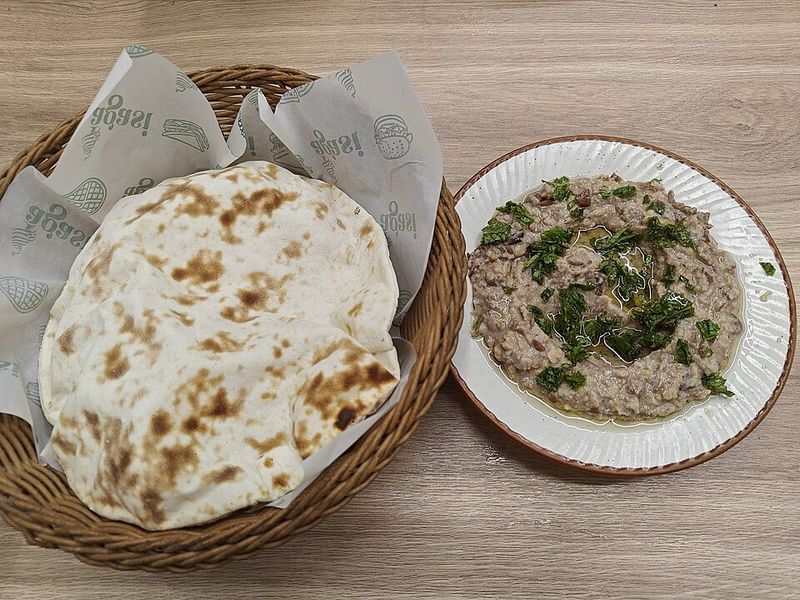
Evening settles in and the kitchen fills with the aroma of warm pita fresh from the oven. Soft flatbread earns its place on the table by holding everything from spiced lamb to creamy hummus without tearing or giving up halfway through a meal.
Signature air pocket opens almost magically, forming the perfect vessel for scooping thick stews and tangy yogurt sauces.
Edible bread doubles as delicious silverware, making weeknight iftars easier when grabbing, dipping, and enjoying every bite without juggling utensils. By morning, leftover pita often turns into crisp chips, showing its usefulness long after dinner ends.
2. Naan
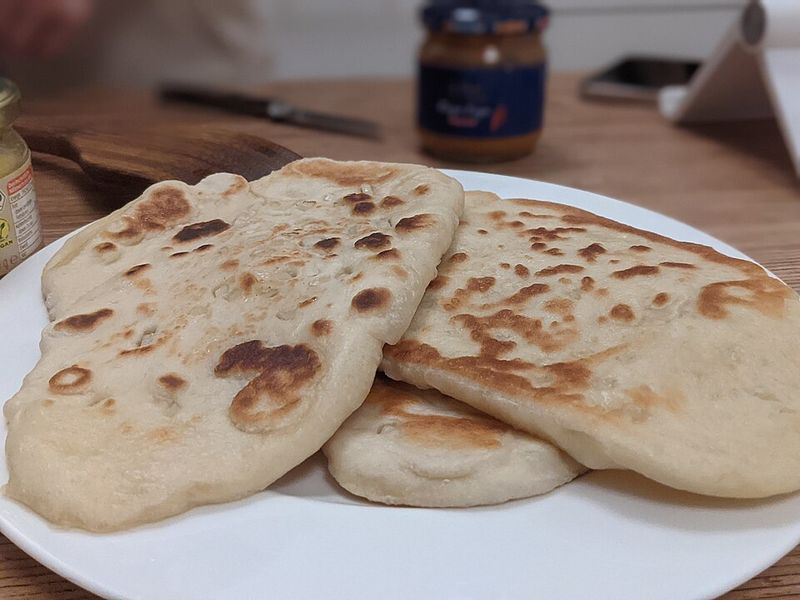
Warm steam curls upward from a basket of naan as a piece is torn away, butter catching the light across the surface.
Fingers sink into pillowy softness that nearly melts against the palm.
Tender texture paired with gentle chew gives naan the strength to scoop rich curries and thick lentil dishes without falling apart.
Garlic butter or a sprinkle of nigella seeds adds another layer of comfort to each bite. Weekend iftar spreads rarely feel complete without a tall stack of naan resting beside the main dishes.
3. Lavash
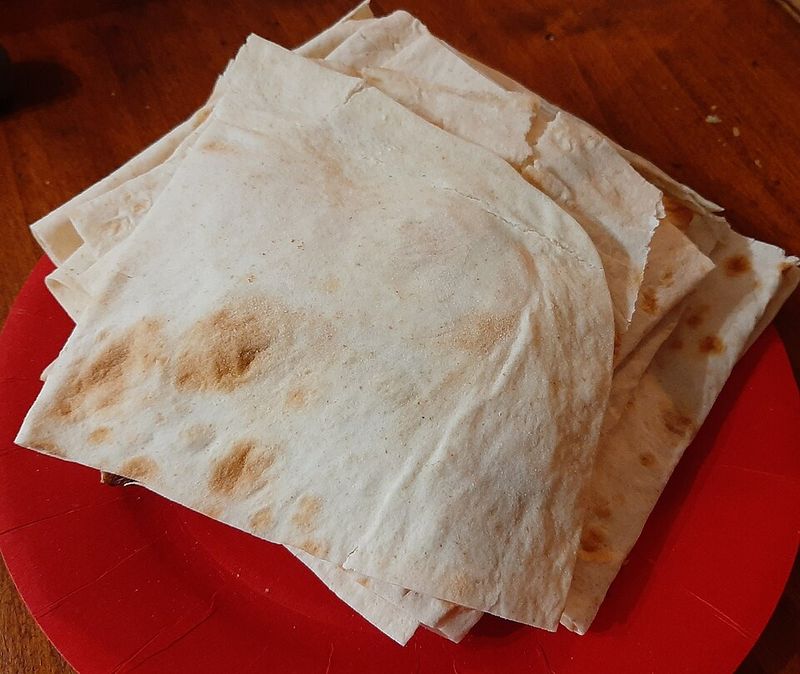
Gentle crackle from Lavash echoes like autumn leaves when a corner snaps away. Whisper-thin crunch pairs beautifully with creamy Baba ghanoush and tangy cheese spreads that would overpower thicker breads.
Remarkable lightness helps lavash stay crisp even after resting on the table for a while, avoiding the soggy fate of heavier flatbreads.
Wrapping sheets of lavash around grilled kebabs turns them into portable flavor-packed bites when conversation takes priority over careful plating.
Next-day snacks improve instantly when leftover lavash meets a spoonful of Labneh and a drizzle of olive oil.
4. Khubz
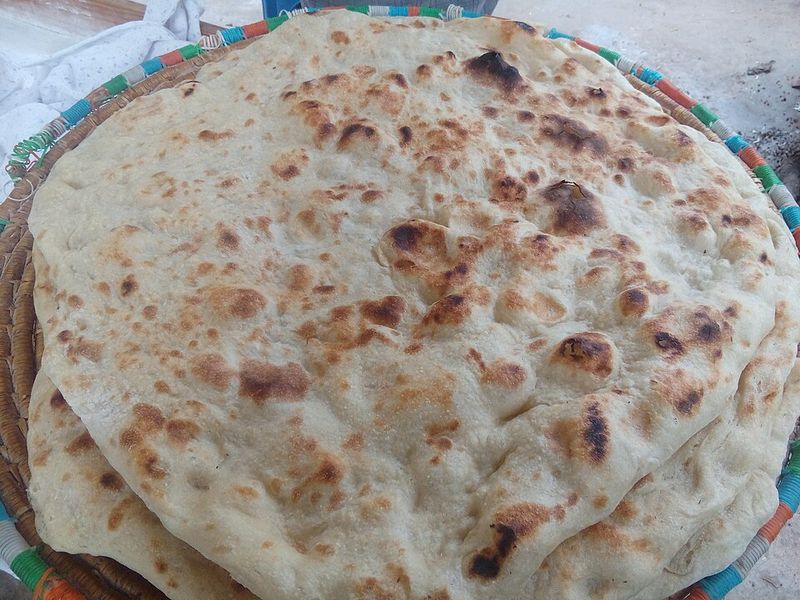
An inviting aroma fills the kitchen as khubz bakes, drifting through the house like a quiet dinner bell calling everyone to gather. At an iftar table, khubz earns quiet respect as the dependable companion that supports bold flavors without stealing the spotlight.
Soft enough to fold around falafel yet sturdy enough to scoop thick bean stews, the bread strikes a perfect balance between delicate and dependable.
Leftover pieces packed with za’atar can turn an ordinary weekday lunch into a tiny celebration inside a brown paper bag. In many ways, khubz feels like edible origami that also happens to taste incredible.
5. Barbari
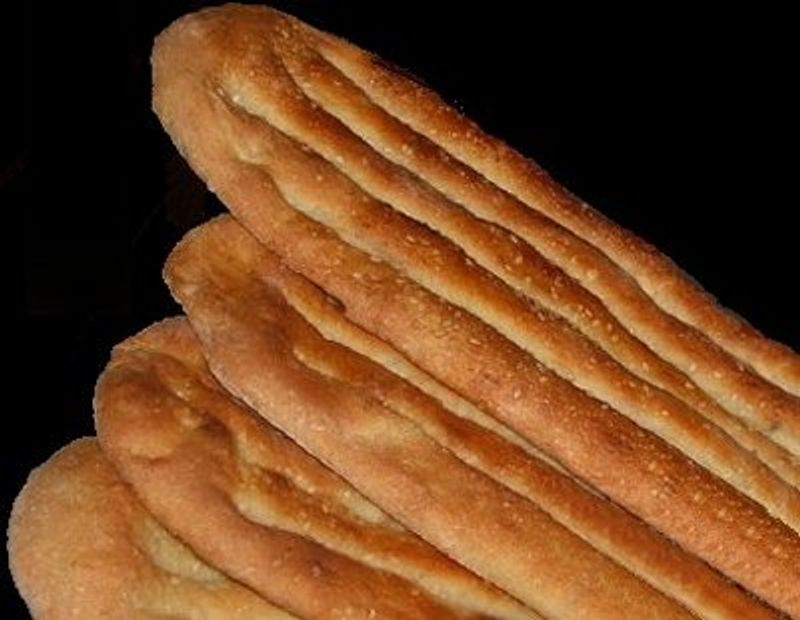
Sharp crack from Barbari bread signals the moment a knife breaks through its crust, revealing a soft interior that springs back under light pressure.
Textural contrast gives barbari its reputation, with crisp edges that shatter easily surrounding a tender center ready to absorb saffron-scented stews.
Long grooves across the surface serve more than decoration, forming small channels that catch olive oil and fragrant spice blends. Early suhoor feels far more inviting when warm barbari meets butter and honey in a quiet kitchen before dawn.
6. Sangak
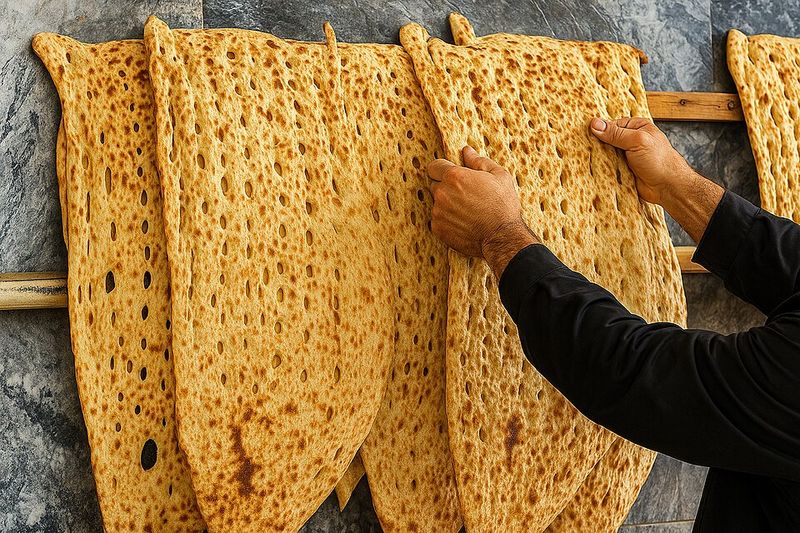
Sangak arrives at your table looking like it just completed an adventure, covered in dimples and craters from its journey across hot pebbles. The chewy texture gives your jaw a proper workout while delivering deep, nutty flavors that plain breads only dream about achieving.
Sangak earns respect by holding up against the heaviest, sauciest dishes without falling apart halfway through the meal.
Tearing off hunks of sangak with your hands feels deeply satisfying, like connecting with centuries of bakers who perfected this craft long before ovens came with digital timers. Cozy dinner gatherings hit differently when sangak anchors the spread.
7. Paratha
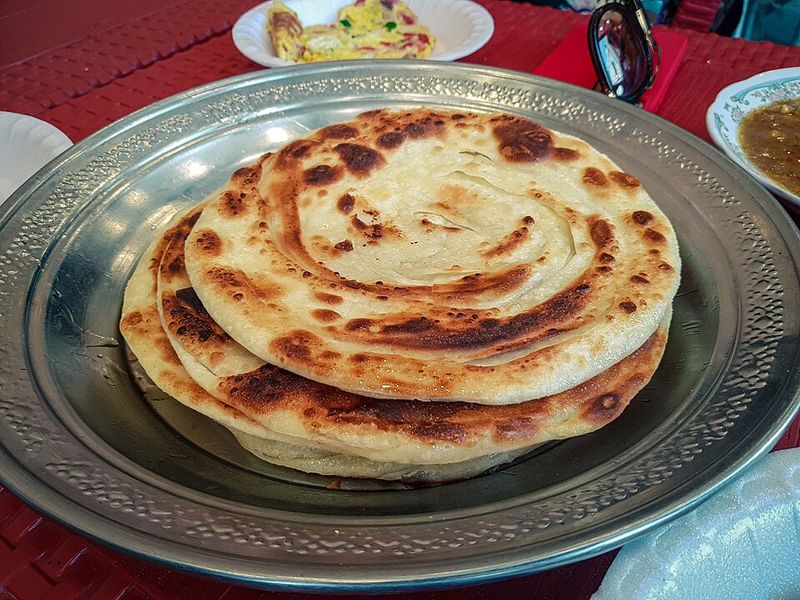
Golden layers of paratha separate under a fork like the pages of a buttery, edible book. Richness and satisfying substance help this bread turn simple meals into something special, especially beside cooling raita or lively chutneys.
Every flaky layer holds tiny pockets of air and ghee, creating a texture that shifts from crisp edges to soft centers with each bite.
Warm paratha paired with a cup of chai can turn an ordinary after-school pause into a small moment of comfort before homework begins. Few foods deliver warmth and satisfaction quite like paratha.
8. Roti
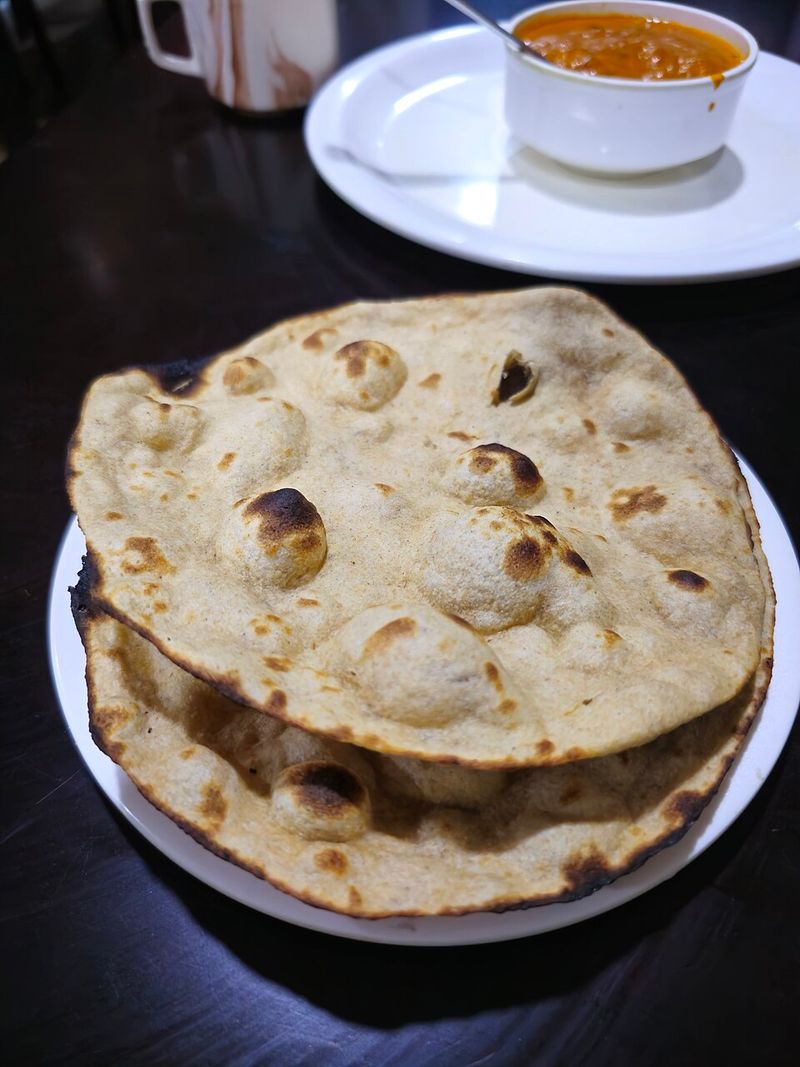
Warm Roti swells on the griddle like a small edible balloon, releasing steam when pressed lightly with a spatula. That gentle puff signals a perfect interior texture, soft enough to wrap around curries yet sturdy enough to hold generous fillings without tearing.
Dependable flatbread earns its place by quietly supporting a meal, offering comfort without demanding attention.
Weeknight dinners feel less hectic when roti pairs just as easily with elaborate feasts as with simple lentil dishes made in half an hour. Next morning often brings a second life for leftover roti, rolled around scrambled eggs as proof of its everyday versatility.
9. Turkish Pide
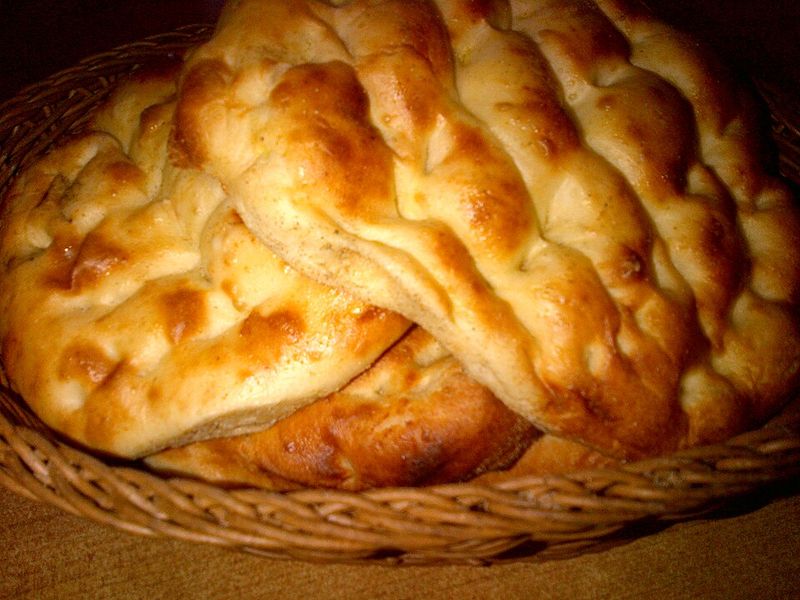
Fresh from the oven, Turkish pide arrives shaped like an edible canoe ready to carry whatever delicious toppings fill the center. Raised edges turn the bread into its own plate, holding ingredients in place while the base stays crisp and sturdy.
Weekend iftar tables gain extra flair when pide appears topped with spiced meat, melted cheese, or roasted vegetables.
Long before modern food trends celebrated edible serving dishes, pide was already doing the job beautifully.
10. Markook
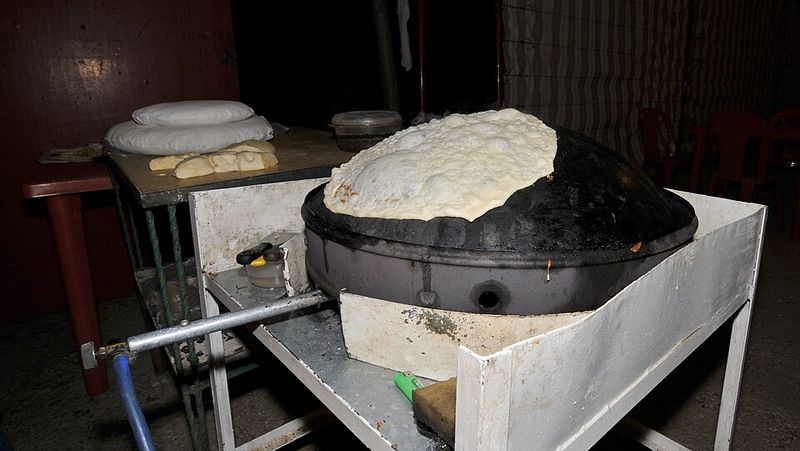
Markook stretches so thin you can almost see through it, like edible fabric woven from flour and water. Watching markook bake over a domed saj feels like witnessing culinary magic, the dough transforming from pale and floppy to golden and crisp in mere seconds.
Markook earns its place by being incredibly versatile, wrapping around everything from shawarma to simple cheese and za’atar combinations without overwhelming delicate flavors.
Late-night snack raids become instantly better when you discover leftover markook hiding in the fridge, ready to crisp up in minutes. That signature flexibility makes markook the yoga instructor of the bread world.
11. Msemmen
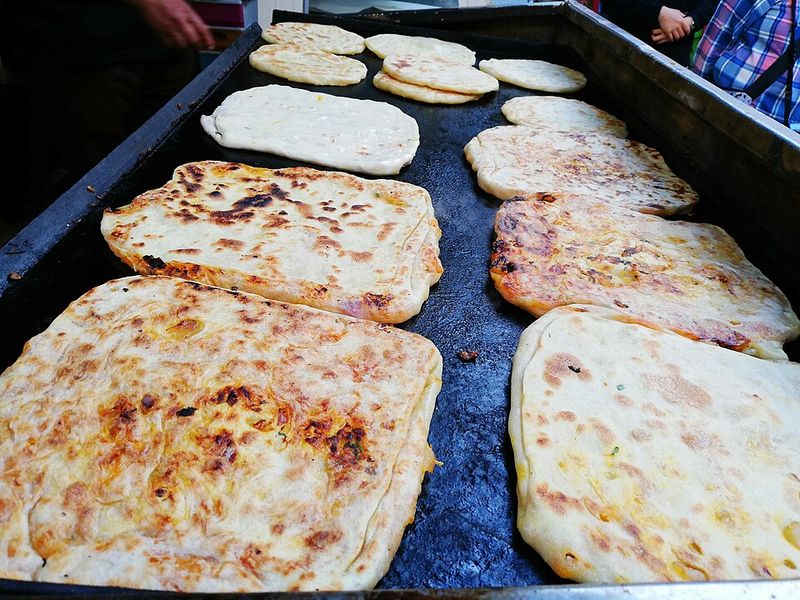
Golden layers of Msemen spread across the plate like a buttery map leading straight to satisfaction. Careful folding technique builds delicate sheets that crisp on the griddle, creating flaky layers that break apart with each bite.
Savory richness unfolds gradually as the layers release flavor.
Balance between bread and pastry gives msemmen a special place on the table, elegant enough for celebrations yet simple enough for everyday meals. Early suhoor becomes a treat when warm msemmen meets honey or jam.
Edible origami might be the most delicious kind of paper folding ever invented.
12. Bazlama
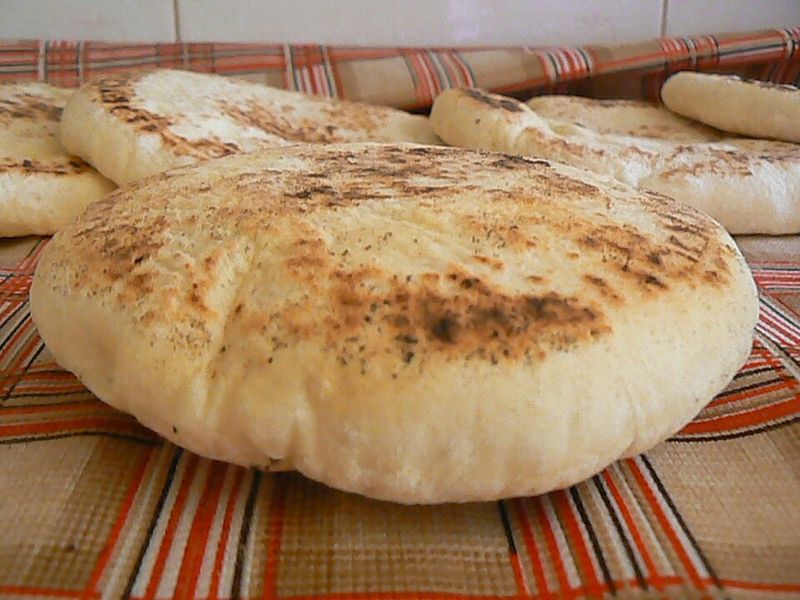
Gentle pressure on bazlama reveals its springy surface, hinting at clouds of soft dough beneath the lightly golden crust. Yogurt in the dough adds a subtle tang that gives the bread far more character than most plain varieties.
Forgiving dough makes bazlama especially welcoming for novice bakers while still impressing experienced bread makers with its tender crumb.
Mild flavor keeps the bread from competing with bold spices and rich sauces spread across the dinner table. Friendly versatility makes bazlama the kind of bread that fits comfortably into any meal.
Note: Bread traditions vary widely by region, household, and personal preference, and ingredient choices can be adapted to dietary needs and what’s available locally.
.jpg)


