19 Landmarks Across Mexico Worth Adding To The Itinerary
Travel across Mexico has a way of turning a simple itinerary into a running list of “wait, how is this real.” Landmarks show up with stories attached, and the best ones do more than look good in photos.
Stone cities can make modern life feel brand-new, murals can hold whole chapters of history in plain sight, and natural wonders can reset the mood in minutes.
Plenty of places also come with their own rhythm, so the experience isn’t just about arriving, snapping a shot, and moving on.
This lineup highlights landmarks across Mexico that earn a spot on the route for their beauty, cultural weight, and the kind of presence that lingers after the visit ends.
1. Chichén Itzá (Yucatán)
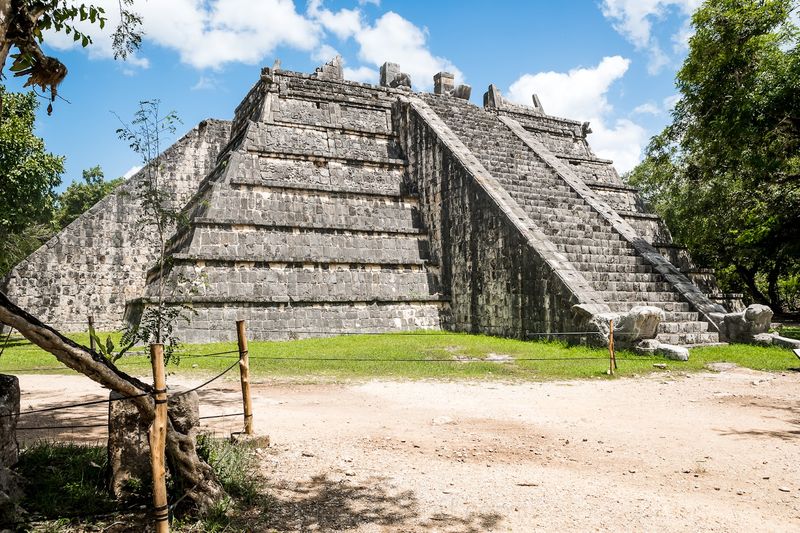
Stand before one of the New Seven Wonders of the World and feel history pulse through your veins.
El Castillo pyramid dominates this ancient Mayan city, its precise astronomical alignments showcasing the brilliance of a civilization that mapped the stars centuries ago.
During spring and autumn equinoxes, shadows create the illusion of a serpent slithering down the pyramid’s steps.
Sacred cenotes and the massive ball court reveal how the Maya lived, played, and worshipped in this magnificent complex that draws millions of visitors annually.
2. Monte Albán (Oaxaca)
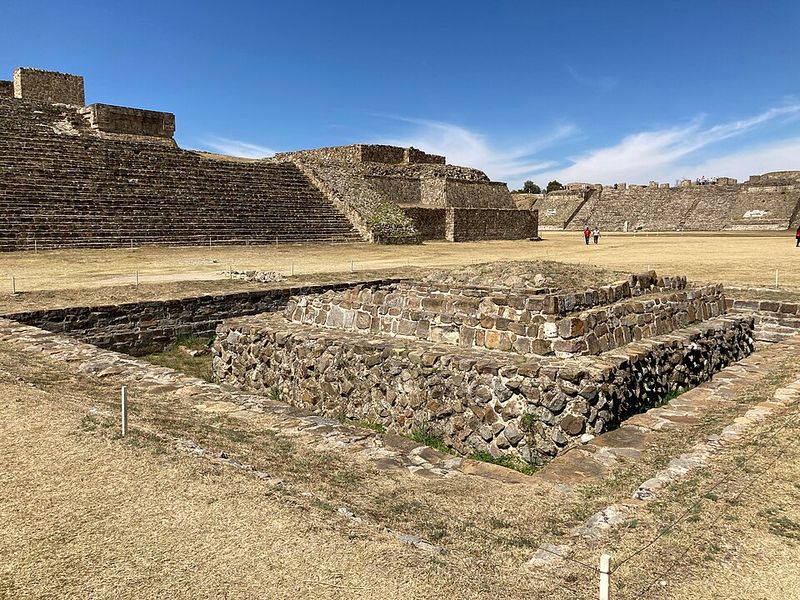
Perched high above the Oaxaca Valley, this Zapotec marvel commands views that stretch for miles in every direction.
The flattened mountaintop became home to one of Mesoamerica’s earliest cities, where intricate stone carvings depict conquered territories and astronomical observations.
Wander through the Great Plaza surrounded by temples, ball courts, and mysterious carved figures called Los Danzantes.
3. Palacio de Bellas Artes (CDMX)
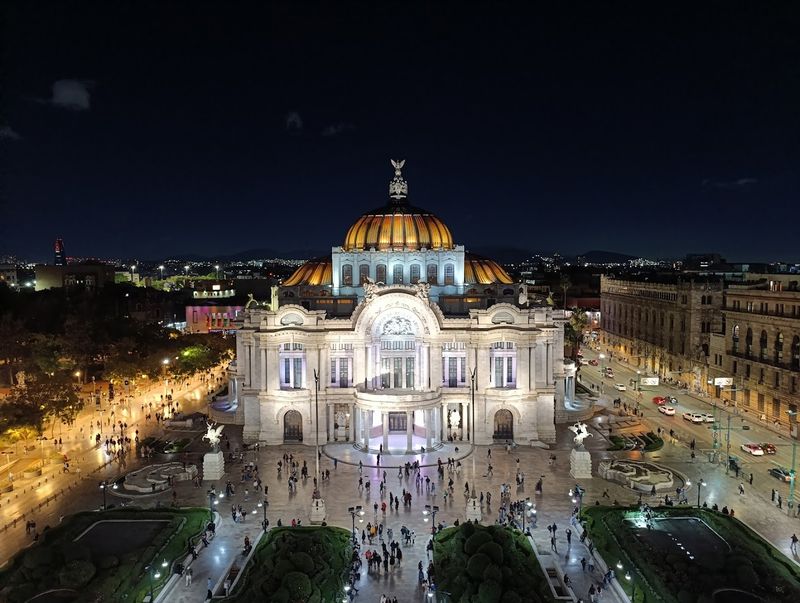
This architectural masterpiece gleams like a jewel box crafted from Carrara marble, its Art Nouveau exterior giving way to stunning Art Deco interiors.
The building itself weighs so much it’s slowly sinking into the soft lake bed beneath Mexico City.
Inside, murals by Mexico’s greatest artists including Rivera, Orozco, and Siqueiros cover the walls with powerful social commentary.
The curtain in the main theater, made from nearly one million pieces of colored glass, depicts the Valley of Mexico’s volcanoes in breathtaking detail that draws gasps when revealed.
4. Tulum Archaeological Zone (Quintana Roo)
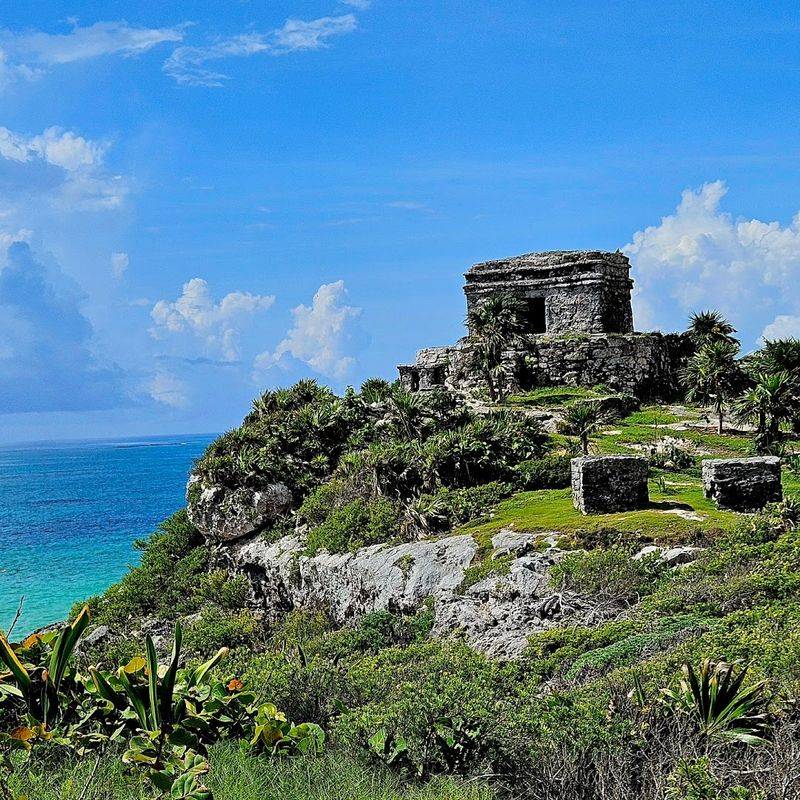
Imagine discovering ruins where ancient stone temples meet powder-white sand and impossibly turquoise waters.
Tulum stands as the only major Mayan city built directly on the coast, its walls protecting what was once a thriving port for jade and obsidian trade.
El Castillo temple crowns the cliff edge, offering views that blend archaeological wonder with Caribbean paradise.
Arrive early before crowds descend, when pelicans soar past weathered stones and you can almost hear the whispers of merchants who once navigated these shores centuries ago.
5. Chapultepec Castle (CDMX)
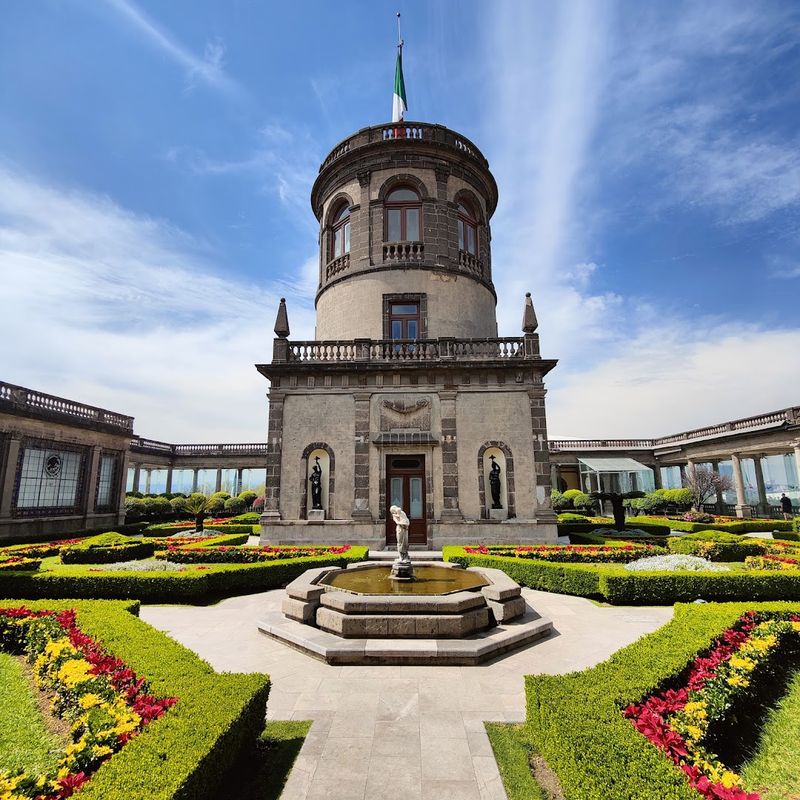
Crowning a rocky hill in the world’s largest urban park, this castle served as home to emperors, presidents, and even military cadets who became national heroes.
Emperor Maximilian and Empress Carlota transformed it into an opulent residence complete with European-style gardens and stunning architectural details.
Today’s National Museum of History houses artifacts spanning Mexico’s journey from conquest through revolution.
The rooftop terrace offers sweeping views across Mexico City, while elegant rooms preserve the grandeur of imperial Mexico frozen in time.
6. Teotihuacán (State of Mexico)
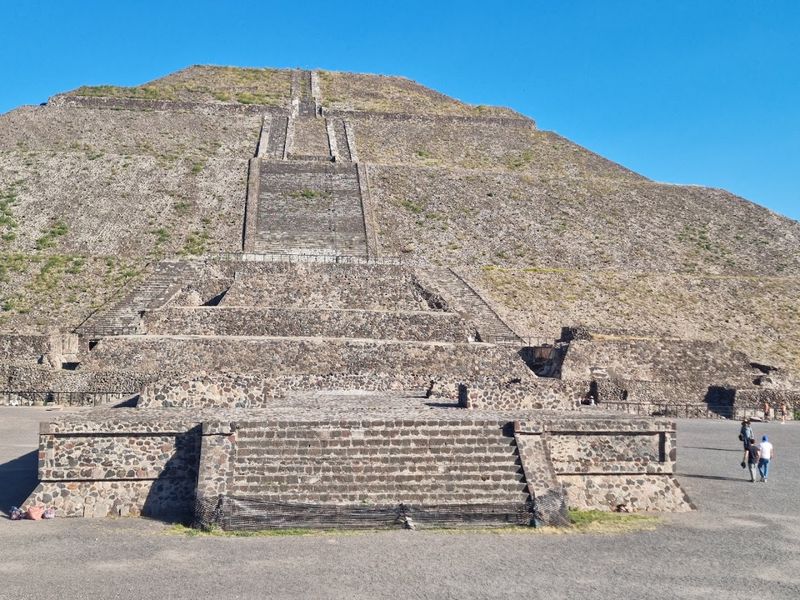
Climb the towering Pyramid of the Sun and gaze across an ancient metropolis that once housed over 100,000 people.
This mysterious city predates the Aztecs, yet nobody knows exactly who built these colossal structures that align perfectly with celestial events.
The vibrant murals still visible in residential compounds show scenes of daily life, while the smaller Pyramid of the Moon offers equally stunning views of this archaeological wonderland.
7. Historic Centre of Mexico City (CDMX)
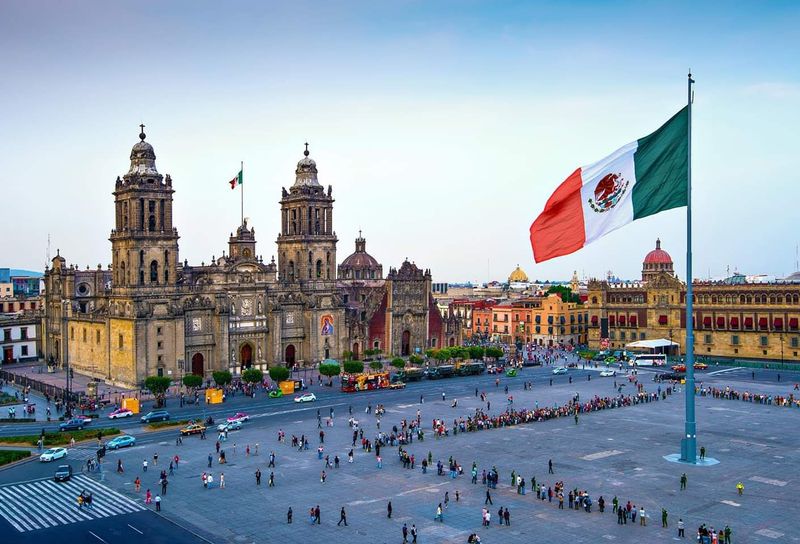
The beating heart of Mexico pulses through this UNESCO World Heritage site built atop the ancient Aztec capital of Tenochtitlan.
The massive Zócalo plaza ranks among the world’s largest public squares, flanked by the Metropolitan Cathedral and National Palace with Diego Rivera’s epic murals inside.
Every stone here tells layered stories spanning Aztec temples, Spanish conquest, and modern Mexican identity.
Underground Templo Mayor ruins reveal the sophisticated civilization that thrived here before European arrival, while colonial buildings showcase architectural splendor accumulated over five centuries.
8. Sumidero Canyon National Park (Chiapas)
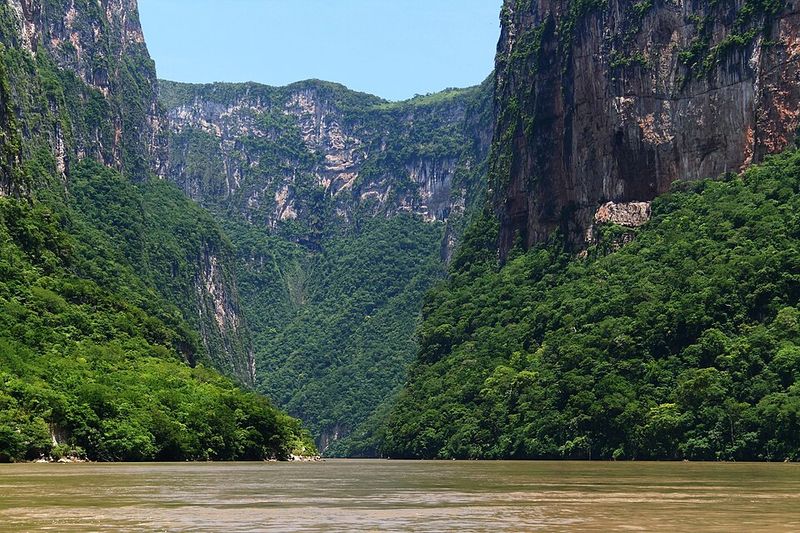
Sheer cliffs soar 3,000 feet straight up from the Grijalva River, creating walls so vertical they block sunlight for hours.
Boat tours navigate between these geological giants, passing waterfalls that cascade directly into the river and caves where spider monkeys swing through the canopy.
Christmas Tree waterfall gets its name from moss and minerals that create the illusion of evergreen branches.
9. Palenque (Chiapas)
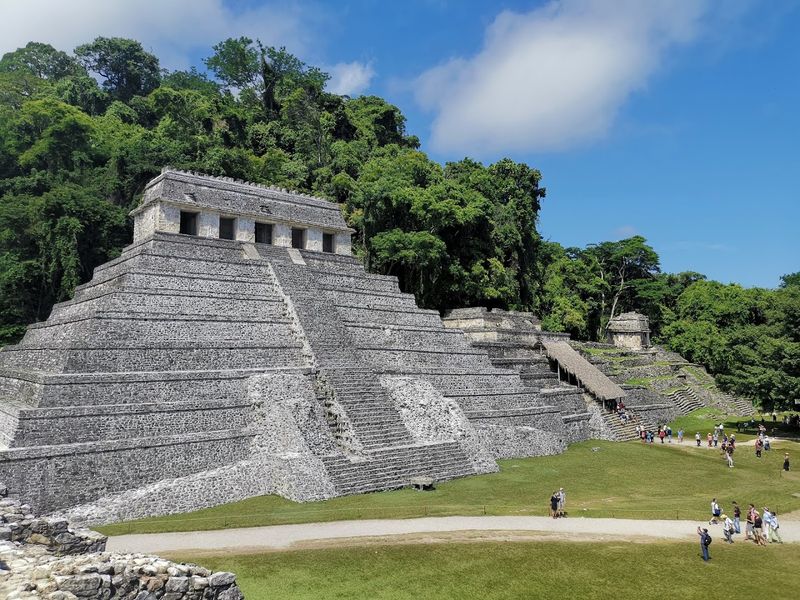
Emerald jungle wraps around limestone temples like nature reclaiming its throne.
The Temple of the Inscriptions holds the tomb of Pakal the Great, discovered deep within the pyramid with jade masks and treasures that stunned archaeologists worldwide.
Howler monkeys provide the soundtrack as you explore palaces adorned with some of the finest Mayan carvings ever discovered.
10. Basílica de Guadalupe (CDMX)
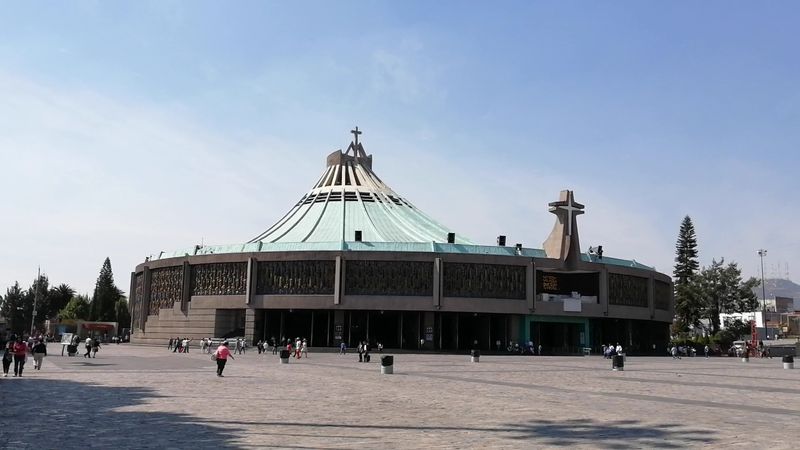
More pilgrims visit this sacred site annually than almost any other Catholic shrine worldwide.
The modern basilica’s circular design allows 10,000 worshippers to view the miraculous image of the Virgin of Guadalupe simultaneously, while moving walkways carry visitors past the sacred cloak bearing her image.
The old basilica next door tilts dramatically, sinking into the lakebed like many colonial structures throughout the city.
December 12th transforms the complex into a sea of roses and faithful travelers, some arriving on their knees after journeys spanning hundreds of miles.
11. Uxmal (Yucatán)
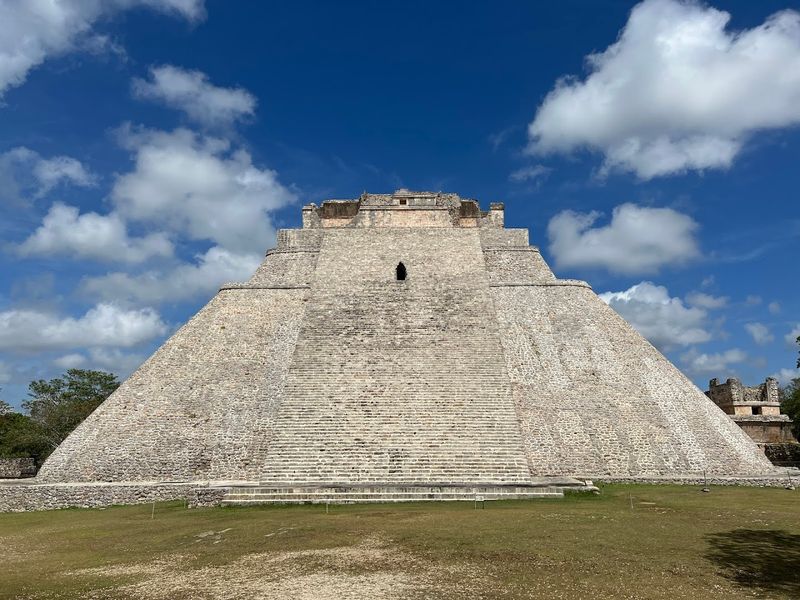
The Pyramid of the Magician rises with unusual rounded edges, defying the typical angular construction of other Mayan temples.
Legend claims a dwarf magician built it overnight, though the reality involves multiple construction phases spanning centuries of architectural evolution.
Intricate stone mosaics cover every surface, depicting rain god Chaac with his distinctive curved nose repeated thousands of times.
The Governor’s Palace showcases Puuc architectural style at its finest, with geometric patterns so precise they still amaze modern engineers trying to replicate these techniques.
12. Museo Nacional de Antropología (CDMX)
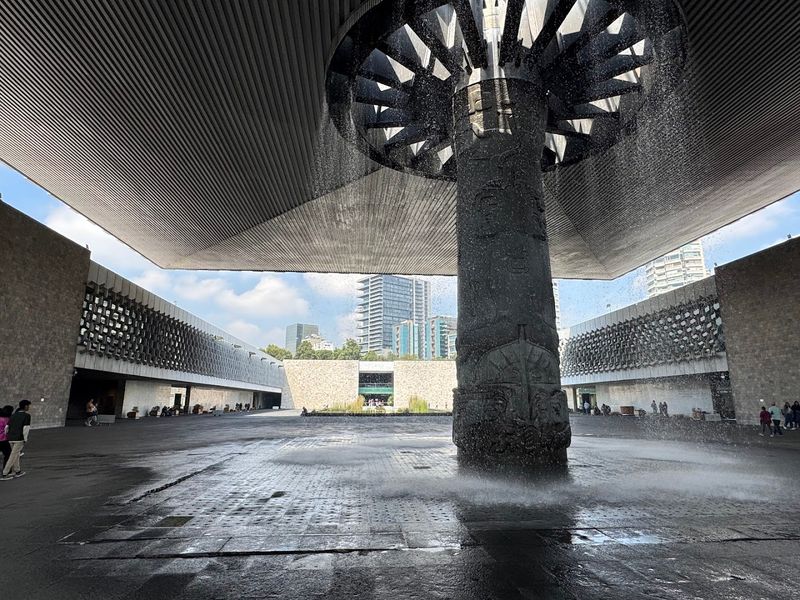
Prepare to lose entire days exploring one of the world’s finest anthropology museums.
The iconic umbrella fountain in the central courtyard creates a waterfall that sets the tone for the treasures within, including the massive Aztec Sun Stone weighing over 24 tons.
Each hall transports you through different Mesoamerican civilizations, from Olmec colossal heads to Maya jade masks and Aztec feathered headdresses.
The reconstructed Mayan tomb and scale models of archaeological sites help visitors understand the grandeur of cultures that flourished across Mexico for millennia.
13. Frida Kahlo Museum (Casa Azul) (CDMX)
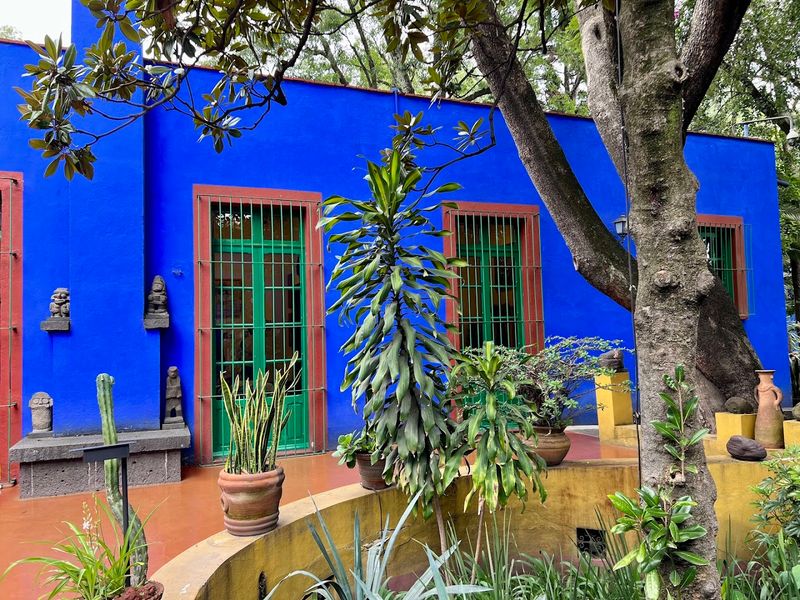
Vibrant cobalt blue walls surround the house where Frida Kahlo was born, lived, created her most powerful works, and eventually passed away.
Walking through these rooms feels intensely personal, with her wheelchair positioned at her easel, paint palettes still displaying dried colors, and her collection of traditional Tehuana dresses hanging as if waiting for her return.
The lush courtyard garden she loved features pre-Columbian sculptures and the pyramid Diego Rivera built.
Her bedroom displays the mirror installed above her bed after the accident that changed her life forever.
14. Historic Centre of Oaxaca (Oaxaca City)
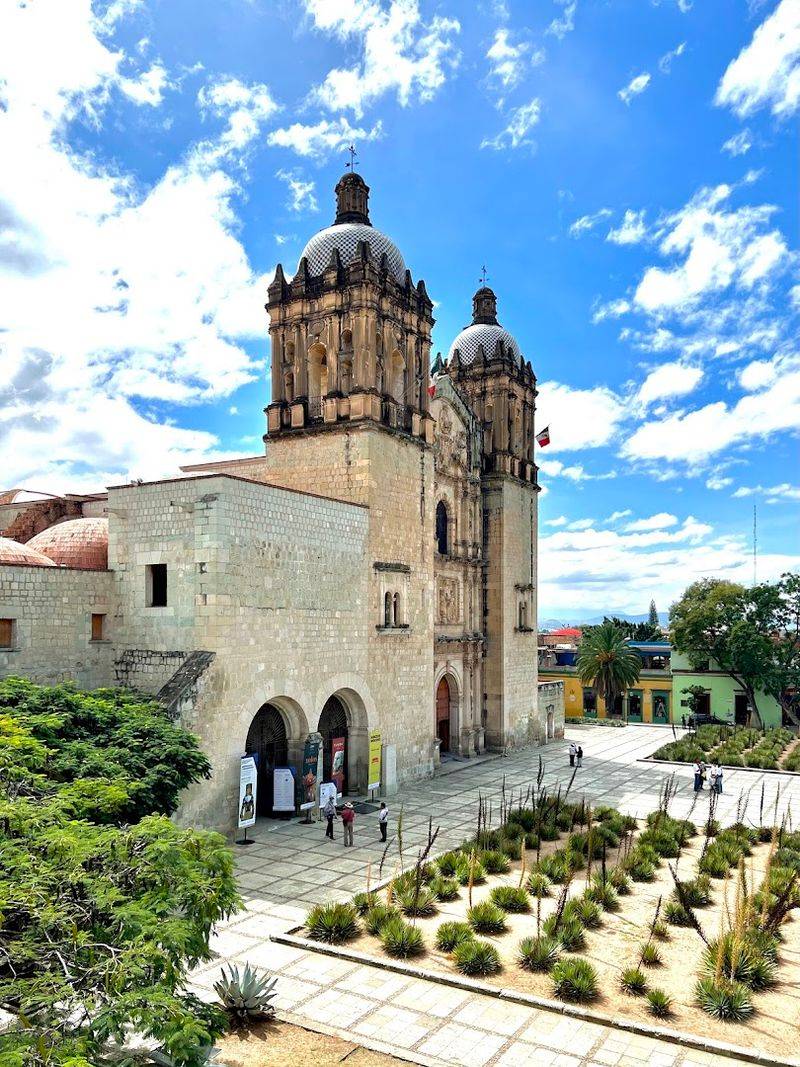
Wander streets where baroque churches share space with indigenous markets selling chapulines and mezcal.
The green volcanic stone cathedral anchors the zócalo, while Santo Domingo church dazzles visitors with gold-leafed interiors so ornate they seem to drip with precious metals.
Every corner reveals another colonial courtyard converted into galleries, cafes, or boutique hotels.
15. San Miguel de Allende Historic Centre (Guanajuato)
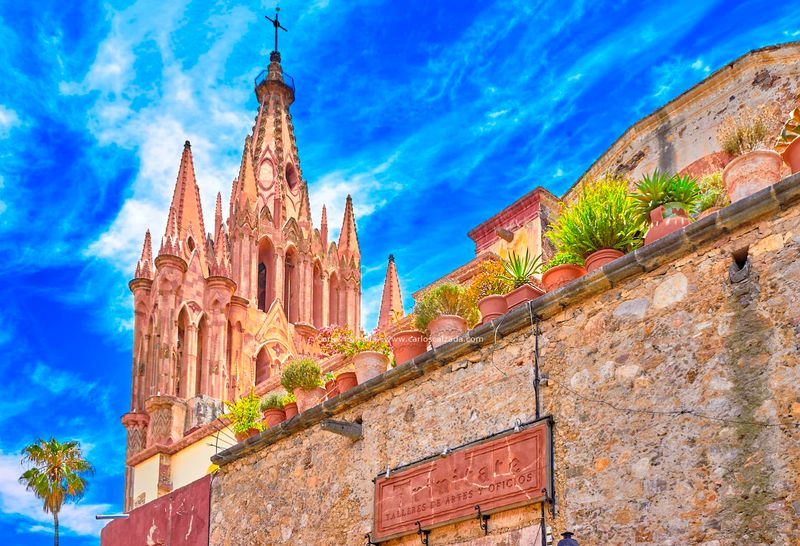
Gothic pink spires of La Parroquia pierce the sky above cobblestone streets where artists, expats, and locals mingle in perfect harmony.
This colonial gem has attracted creative souls for decades, transforming it into a cultural hotspot while miraculously preserving its authentic Mexican character.
Rooftop bars offer sunset views across terracotta rooftops toward distant mountains, while galleries showcase both traditional and contemporary Mexican art.
16. Historic Centre of Puebla (Puebla)
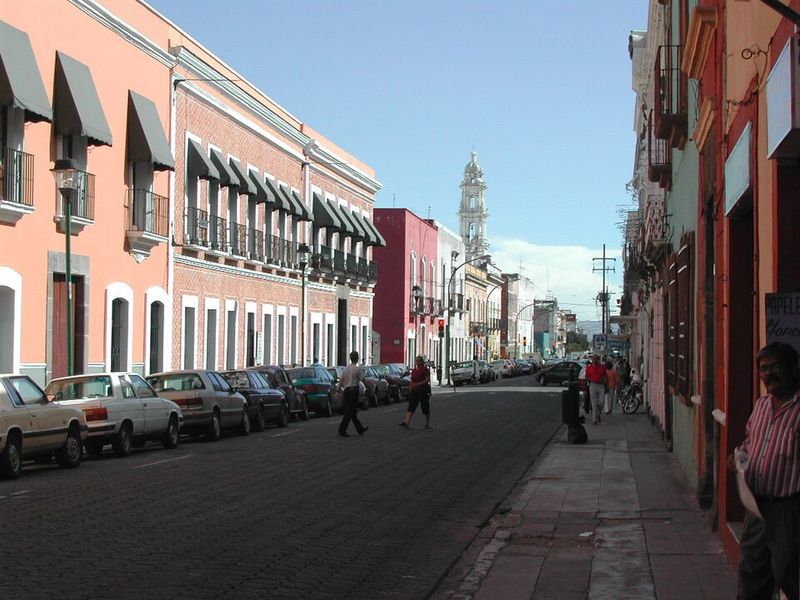
Over 5,000 buildings showcase Talavera tiles in patterns so intricate they transform entire facades into ceramic masterpieces.
The cathedral’s towering bell towers dominate the skyline, while the Rosary Chapel gleams with so much gold leaf it earned the nickname “the house of gold.”
Puebla claims to be the birthplace of mole poblano, and you haven’t truly tasted this complex sauce until you’ve tried it here.
17. Copper Canyon (Barrancas del Cobre) (Chihuahua)
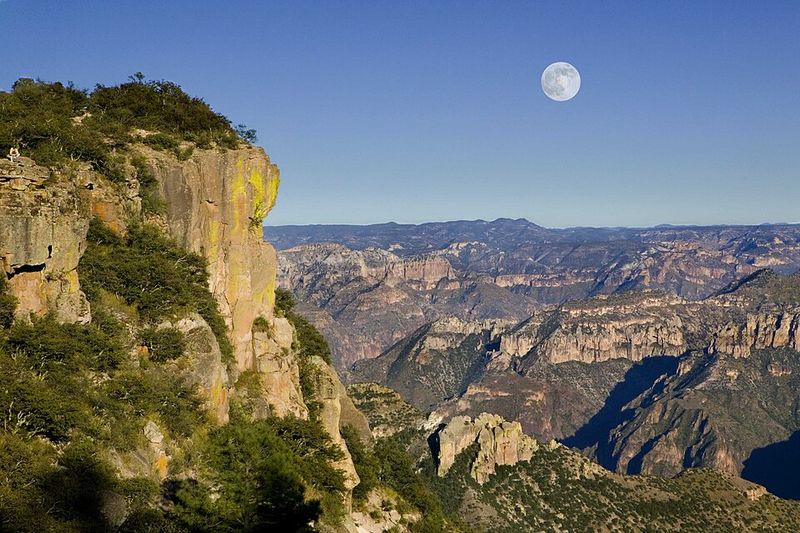
Four times larger than the Grand Canyon, this network of six interconnected canyons plunges to depths that make your stomach flip.
The Chepe train journey ranks among the world’s most spectacular rail rides, crossing 37 bridges and threading through 86 tunnels carved through the Sierra Madre.
Raramuri indigenous communities still inhabit these remote canyons, living much as their ancestors did centuries ago.
Adventurous travelers can zipline across gorges, hike to hidden waterfalls, or simply stand at viewpoints where condors soar below you through copper-colored rock formations.
18. Sian Ka’an Biosphere Reserve (Quintana Roo)
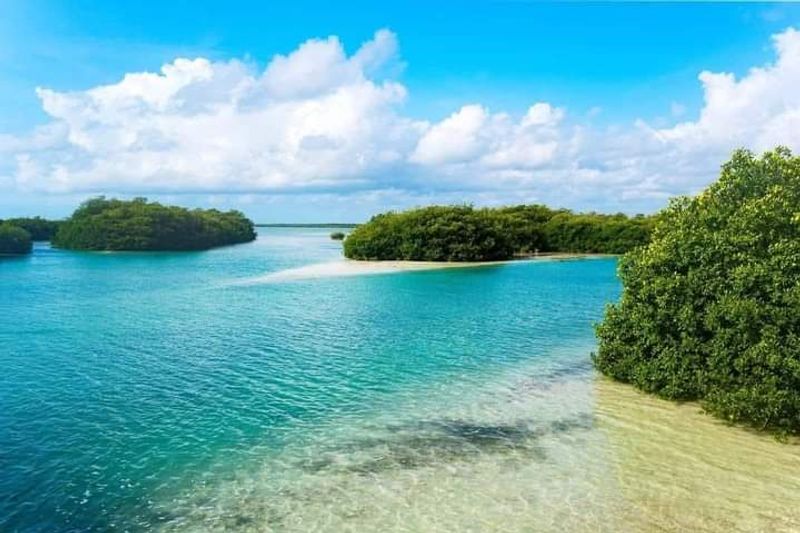
Where the sky is born, according to the Mayan name for this vast protected wilderness.
Over 1.3 million acres of pristine ecosystems range from Caribbean reef to mangrove forests, sheltering jaguars, manatees, and over 300 bird species in habitats largely untouched by development.
Float down lazy channels through mangrove tunnels where the only sounds are bird calls and water lapping against your boat.
Ancient Mayan canals still function as they did centuries ago, while dolphins play in crystal bays that remain blissfully free from resort development.
19. El Arco de Cabo San Lucas (Baja California Sur)
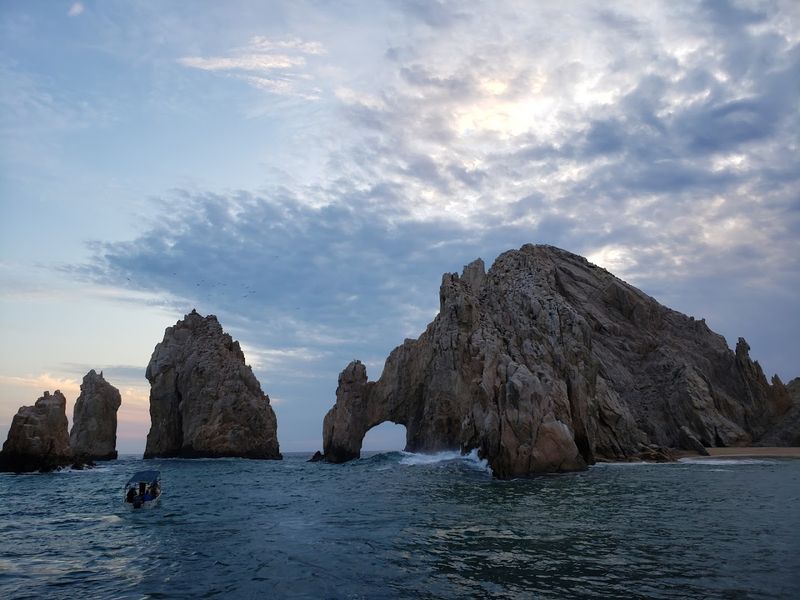
Where two seas collide, a magnificent granite arch rises from crashing waves like a gateway to another world.
One side faces the wild Pacific with its powerful surf, while the other overlooks the calm Sea of Cortez, creating a dramatic meeting point visible from boat tours that circle this iconic formation.
Sea lions bark from nearby rocks while pelicans dive for fish in the churning waters.
Snorkeling around the arch reveals tropical fish darting between underwater rock formations, making this natural wonder as spectacular below the surface as above it.