16 Legal Dramas That Changed How Courtroom Stories Were Told
Order in the court. After reviewing decades of legal drama evidence, this list finds itself on trial for being compelling, dramatic, and dangerously binge-worthy.
The prosecution submits gripping cases, unforgettable attorneys, and moral arguments that refuse to rest, while the defense rests on sharp writing and courtroom tension.
Having weighed the facts, reviewed the exhibits, and banged the gavel for emphasis, the court rules this lineup suitable for anyone ready to deliberate, object loudly, and celebrate a well-timed “sustained” at the screen. Case closed, snacks permitted.
Note: This feature highlights well-known films and TV series that influenced how legal dramas are structured, written, and received in popular culture.
1. 12 Angry Men (1957)
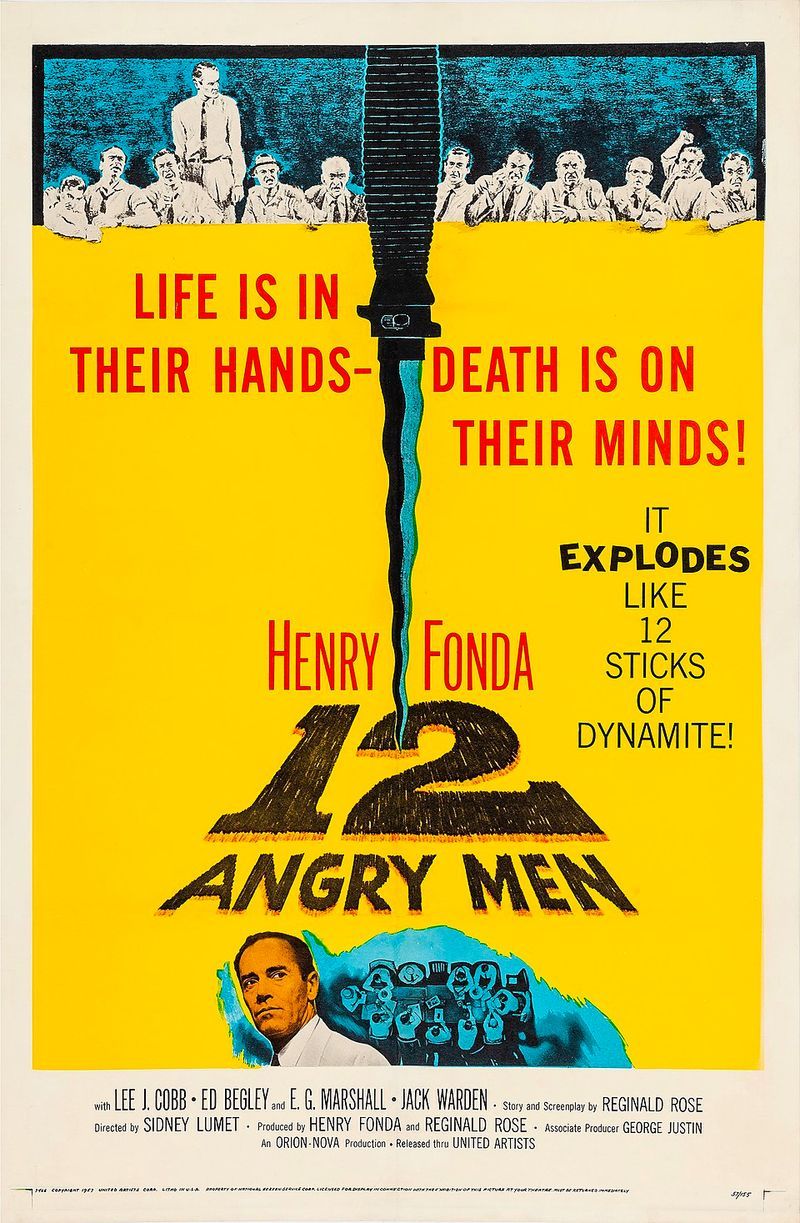
Claustrophobic tension fills the air as twelve strangers crowd into a stifling room, with patience thinning and tempers flaring alongside every relentless tick of the clock. Nearly the entire story of 12 Angry Men unfolds inside a single jury room, where one dissenting voice forces eleven others to reexamine a murder case that initially appears settled beyond doubt.
Camera movement tightens the space even further, drawing viewers into arguments fueled by reasonable doubt, buried prejudice, and simmering frustration.
Courtroom spectacle never takes center stage, leaving raw human conflict and the weight of one young man’s fate suspended in every exchange. Each argument strikes with the force of a gavel, underscoring how justice often depends on someone willing to stand alone when consensus feels easier.
2. To Kill A Mockingbird (1962)
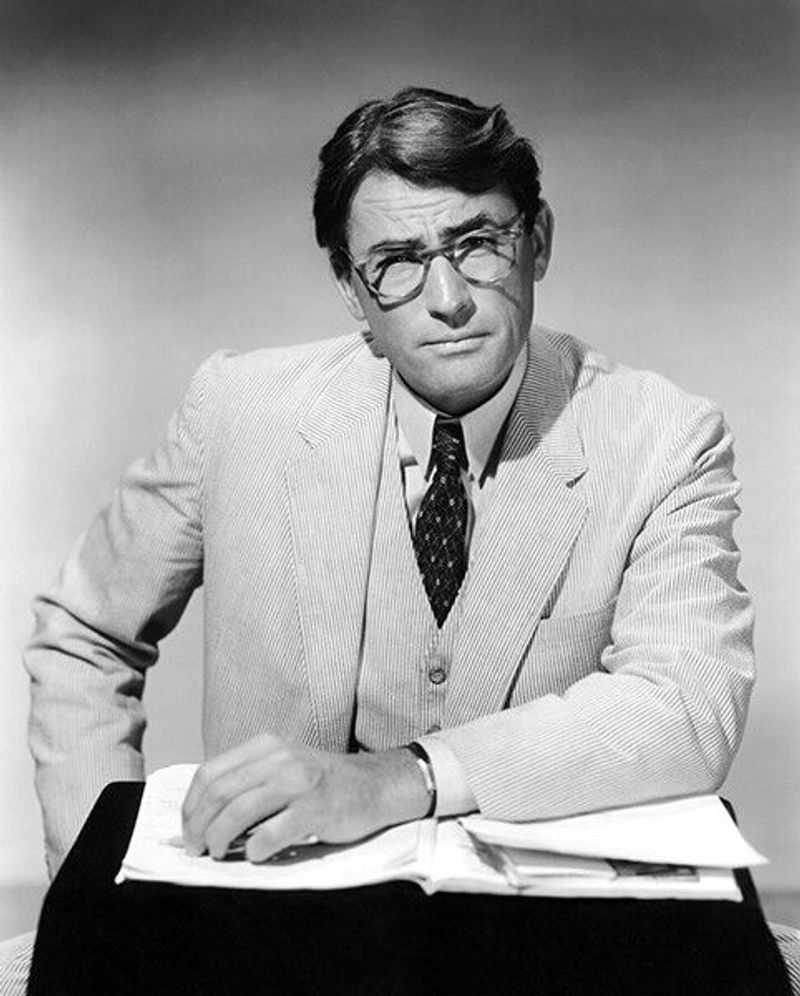
Small-town Alabama in the 1930s becomes the backdrop for one of cinema’s most powerful examinations of racial injustice and moral courage. A widowed lawyer defends a Black man accused of a serious crime, knowing the trial’s outcome before it even begins.
Through the eyes of his young daughter, we witness integrity tested against prejudice and hatred.
The courtroom scenes crackle with quiet dignity, showing that true heroism sometimes means fighting battles you cannot win. This film taught generations that standing up for what’s right matters more than any verdict.
3. Perry Mason (1957–1966)
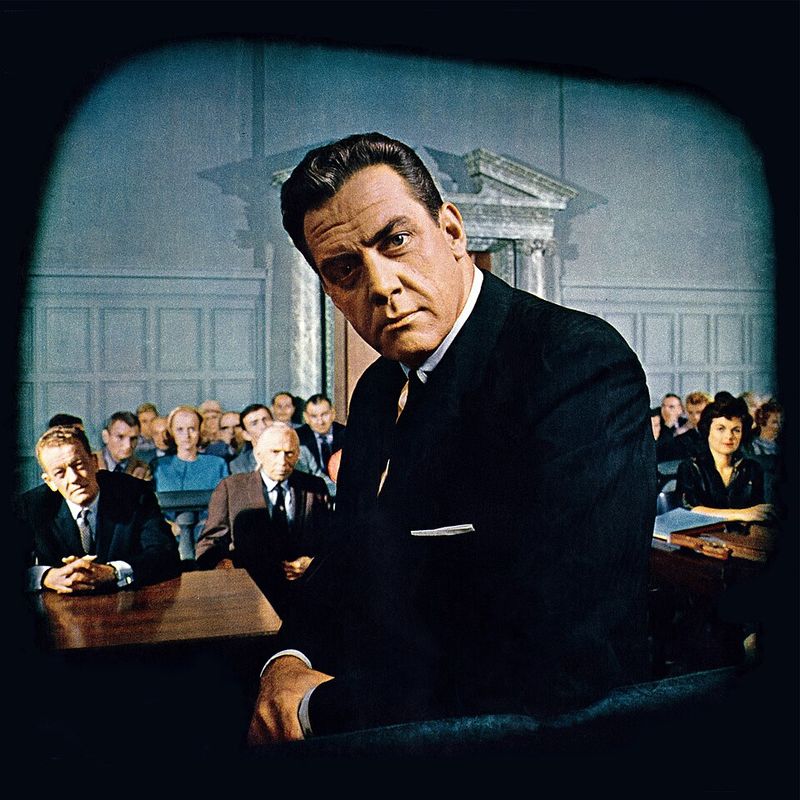
Saturday nights belonged to a defense attorney who almost never lost a case, turning courtroom procedure into must-see television. Each episode followed a formula that felt fresh every time: a client in trouble, a puzzle to solve, and a dramatic confession wrung from the real culprit on the witness stand.
The show made legal strategy look like detective work, with Perry Mason as both lawyer and sleuth.
Viewers learned about cross-examination techniques and reasonable doubt while being thoroughly entertained. This series proved that courtroom battles could be as thrilling as any car chase.
4. The Defenders (1961–1965)
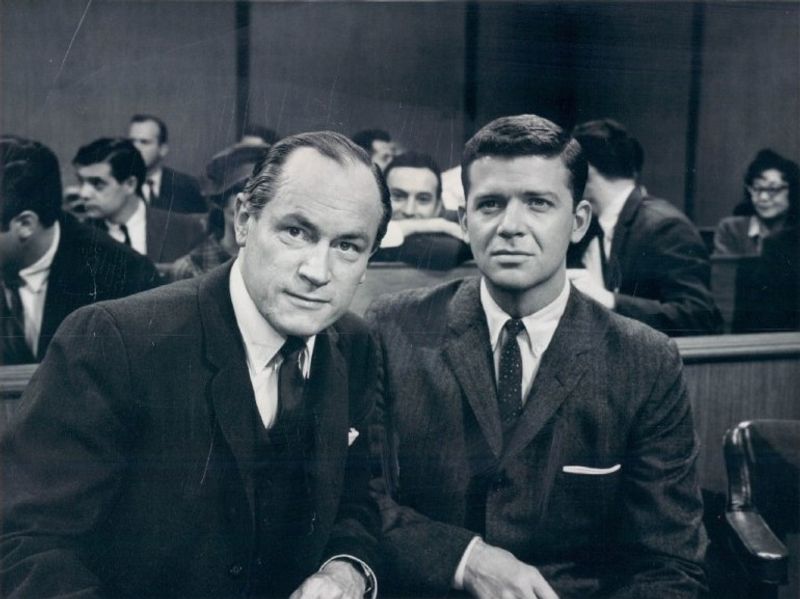
Uncomfortable conversations entered American living rooms as a father-and-son defense team tackled cases designed to make primetime audiences squirm rather than relax. Bold storytelling defined The Defenders, confronting abortion, euthanasia, and civil rights at a time when most television avoided controversy and stayed safely neutral.
Headlines still unfolding in newspapers found their way into weekly episodes, with the Prestons arguing cases that mirrored real national debates rather than fictional distractions.
Courtroom scenes played out more like civic lessons than spectacle, pressing viewers to examine personal beliefs instead of rooting for easy victories.
Lasting impact came from proving legal dramas could ignite national conversations and cultural reflection, not just offer escapism at the end of a long day.
5. L.A. Law (1986–1994)
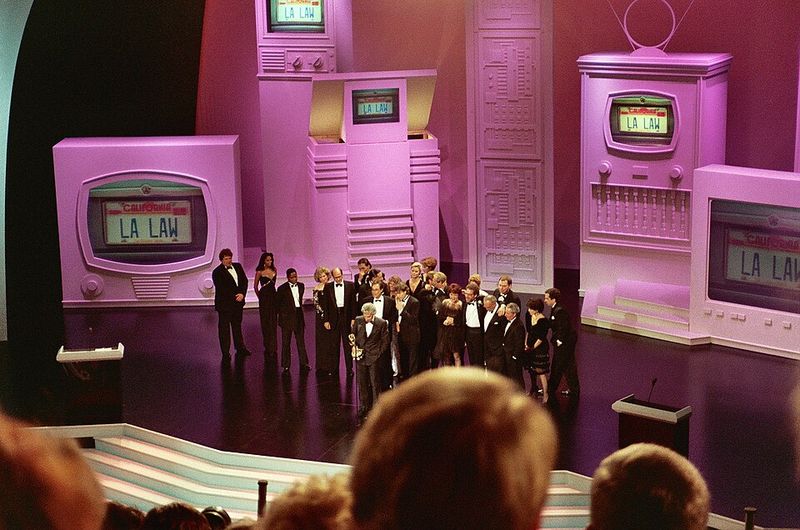
Suddenly, lawyers had personal lives as complicated as their cases.
This ensemble drama followed a prestigious Los Angeles firm where professional victories came with personal costs, and office romances collided with ethical dilemmas. The show balanced courtroom drama with workplace dynamics, showing attorneys as flawed humans rather than legal superheroes.
Story arcs stretched across multiple episodes, rewarding loyal viewers who remembered every plot twist and character betrayal. It transformed the legal drama into something closer to a nighttime soap opera with subpoenas, proving that lawyers could be just as messy as their clients.
6. Law & Order (1990–2010; 2022–Present)

Dual rhythms define the experience, opening with meticulous investigation before pivoting into courtroom prosecution to complete a single, tightly structured story. Law & Order popularized a two-part format that many later procedurals echoed, multiple spinoffs, and a cultural shorthand few shows ever achieve.
Pop culture recognition arrived through the unmistakable “dun-dun” sound, instantly signaling a ripped-from-the-headlines case ready to unfold.
Cast members rotated over the years, yet the structure never wavered, proving procedural storytelling could endure beyond any individual star.
7. Law & Order: Special Victims Unit (1999–Present)
Certain crimes demand investigators who read emotional damage as carefully as physical clues, shifting the work beyond routine procedure. Unflinching focus defines Law & Order: Special Victims Unit, centering on sensitive, high-impact crimes handled by a dedicated unit while approaching difficult material with a level of sensitivity rarely seen on network television.
Emotional weight settled into the partnership between Benson and Stabler, revealing how deep personal investment can strengthen the pursuit of justice while quietly draining those tasked with delivering it.
Closure often stayed out of reach as episodes ended without neat resolutions, mirroring the unresolved nature of many real-world cases.
8. The Practice (1997–2004)

Everyday financial stress grounded the drama as defense attorneys worried about rent checks and office bills while trying to practice law with some measure of integrity.
Working-class realism defined The Practice, centering on a Boston firm that accepted guilty clients, morally tangled cases, and defendants other shows preferred to ignore.
Cramped offices amplified tension as lawyers argued loudly, bent ethical lines, and watched cases slip away despite effort and skill. Lasting impact came from proving legal dramas could feel gritty and authentic while maintaining emotional weight and dramatic force.
9. Boston Legal (2004–2008)

What happens when you give brilliant lawyers permission to be completely ridiculous?
This spinoff from The Practice leaned into absurdist humor while still tackling serious legal and political issues. The friendship between Alan Shore and Denny Crane became the show’s emotional anchor, two eccentric attorneys closing many episodes with balcony conversations that became a signature ritual.
Courtroom speeches turned into comedic rants or passionate political manifestos, sometimes within the same scene. The series proved legal dramas could be laugh-out-loud funny while still making sharp points about justice and American politics.
10. Ally McBeal (1997–2002)

Inner thoughts spilled onto the screen through dancing babies, looping theme songs, and fantasies audible only to a young attorney navigating work and romance at once.
Genre lines blurred as Ally McBeal blended courtroom cases with love lives and surreal sequences that visualized anxiety, desire, and self-doubt in ways legal television had rarely attempted. Emotional vulnerability earned equal footing with trial strategy, opening space for neuroses, insecurity, and introspection inside a professional setting.
Unisex bathrooms turned into unexpected confessionals, hosting some of television’s most candid conversations about ambition, relationships, and workplace pressure.
11. JAG (1995–2005)

Military justice operates under different rules, and this series made that world accessible to civilian audiences.
Navy lawyers investigated crimes and prosecuted cases within the Uniform Code of Military Justice, where honor and duty carried as much weight as evidence. The show blended legal drama with military action, giving viewers courtroom battles and aircraft carrier landings in the same episode.
Characters wore uniforms instead of power suits, saluted superior officers, and navigated a justice system most Americans never see. It carved out a unique niche by proving that legal dramas didn’t need to take place in civilian courts to captivate audiences.
12. Damages (2007–2012)

Relentless ambition reshaped expectations as a ruthless litigator dismantled opponents with icy precision, redefining how dangerous a legal thriller could feel. A shocking opening image sets the stakes early, and only later does Damages reveal how a promising associate reached that point through fractured timelines and withheld truths.
Psychological warfare dominates the story through Patty Hewes, whose manipulation of everyone around her forces viewers to question whether victory still matters once morality erodes completely.
Dark cinematography and layered plotting push the experience closer to prestige cinema than standard network television.
13. The Good Wife (2009–2016)

A political scandal forces a wife and mother back into the workforce after years away, and suddenly she’s navigating office politics and courtroom strategy simultaneously.
This series explored how personal betrayal and professional ambition can coexist, as Alicia Florrick rebuilt her legal career while her husband served time for corruption. Cases of the week intersected with serialized storylines about technology, politics, and power in the internet age.
The show tackled how social media and online culture were changing legal practice, keeping the courtroom drama feeling contemporary and relevant throughout its run.
14. Suits (2011–2019)

Unlikely circumstances ignite tension when a college dropout with a photographic memory begins practicing law without a degree, turning secrecy into the engine driving every episode.
Glamour coats corporate conflict as Suits presents designer-clad attorneys sealing deals inside glass-walled Manhattan offices that feel closer to fashion spreads than courtrooms.
Emotional stakes deepen through the mentor-protégé bond between Harvey and Mike, anchoring the story even as cases escalate and consequences grow sharper. Witty banter takes precedence over courtroom monologues, transforming contract negotiations and office power plays into edge-of-your-seat drama powered by charisma and style.
15. Better Call Saul (2015–2022)

Before he became a criminal lawyer, Jimmy McGill was just a guy trying to make it in his brother’s shadow.
This prequel to Breaking Bad showed the gradual transformation of a small-time attorney into the morally flexible Saul Goodman. Courtroom scenes were rare, replaced by elaborate cons, elder law practice, and the slow erosion of ethical boundaries.
The cinematography rivaled feature films, making even mundane legal tasks look visually stunning. It redefined what a legal drama could be by focusing less on trials and more on how desperation and ambition can corrupt even good intentions.
16. The People V. O. J. Simpson: American Crime Story (2016)

Familiar headlines took on new weight once dramatization added distance and hindsight, exposing how media spectacle and racial tension often drowned out the legal mechanics themselves.
National obsession comes into focus in The People v. O. J. Simpson: American Crime Story, where celebrity, race, and nonstop coverage reshape a murder trial into something closer to cultural theater than courtroom procedure.
Cameras matter almost as much as verdicts, turning the courtroom into a stage where lawyers perform simultaneously for jurors and an audience watching from home.
Revisiting events millions once followed in real time shows how legal dramas can reopen famous cases, uncovering angles and consequences that daily news coverage never fully explored.