LGBTQ+ Anime Worth Noting In 2026
Nothing says “I will be fine” like pressing play on cute anime and ending up emotionally unemployed twenty minutes later.
LGBTQ+ anime has a way of combining tender romance, questions of identity, and coming-of-age uncertainty with unusual precision. New fan or seasoned watcher, this list is full of series and films that earn your attention fast.
1. Bloom Into You (2018)

Few series capture emotional uncertainty as delicately as Bloom Into You does.
At the center is Yuu Koito, who worries something is missing in her because romance never seems to affect her the way it does everyone else around her. Enter Touko Nanami, the student council president who develops feelings for her, and the story slowly opens into something thoughtful, layered, and deeply personal.
Reading someone’s feelings over and over in silence is exactly the mood here.
2. Given (2019)

Music carries the emotional weight in Given, and the series knows exactly how to use that to its advantage.
Mafuyu Sato drifts into a band led by Ritsuka Uenoyama, and what begins with borrowed instruments and practice sessions gradually becomes something much more personal.
Rather than pushing for loud drama at every turn, the story builds its relationships through grief, tenderness, and the kind of honesty that arrives almost by surprise. Bus rides with headphones on suddenly feel a lot more dramatic after this one.
3. Yuri!!! On Ice (2016)

Competition and emotion glide side by side in Yuri!!! on Ice. After a painful setback, skater Yuri Katsuki gets an unexpected second chance when the celebrated Victor Nikiforov steps in as his coach.
Their connection develops inside a sports story that is exciting on its own, one of the main reasons the show lasts in people’s minds is the way it made queer romance feel visible and emotionally central in a mainstream sports anime.
Plenty of fans still treat that ring moment like a holiday.
4. Revolutionary Girl Utena (1997)

Style, symbolism, and gender rebellion all crash together in Revolutionary Girl Utena.
Rather than accepting the role expected of her, Utena Tenjou wants to be a prince, and that idea becomes the starting point for a series packed with surreal imagery, duels, and layered questions about power and identity. Nearly every episode offers something open to interpretation, which is part of why the show keeps inspiring analysis decades after it first aired.
Very few anime from that era still feel this sharp.
5. Sweet Blue Flowers / Aoi Hana (2009)

Softness is one of the great strengths of Sweet Blue Flowers.
Fumi Manjoume moves through school life with a sensitive heart, and her reunion with childhood friend Akira becomes part of a story shaped by awkward feelings, shifting friendships, and quiet emotional growth.
Nothing gets rushed, which gives the series room to breathe and lets its moments of confusion or warmth feel especially believable. Rainy afternoons and warm drinks fit this one perfectly.
6. Sasaki And Miyano (2022)

Books start the connection in Sasaki and Miyano, but affection is never far behind.
Miyano, a fan of BL manga, ends up lending titles to the older and more easygoing Sasaki, and that exchange slowly turns into something real.
Gentle pacing, light humor, and a surprisingly natural emotional rhythm give the series a comfort level that makes it easy to settle into from the first episode. Weekend-morning energy runs through the whole thing in the best way.
7. Citrus (2018)

Drama arrives quickly in Citrus, and the series never pretends otherwise.
Yuzu Aihara enters a new school already off balance, only to find herself dealing with an unfamiliar environment and an unexpectedly complicated stepsister in Mei.
Tension, attraction, and emotional messiness push the story forward, giving it a much sharper edge than gentler yuri titles tend to have. Plenty of romance anime flirt with conflict, but this one fully commits.
8. Kase-san And Morning Glories (2018)

Morning glories bloom fast, and so does the sweet romance at the center of this warm yuri OVA.
Yamada tends the school garden with quiet dedication, and Kase-san, the track star, keeps finding reasons to stop by. The OVA packs genuine emotional payoff into a short runtime, with animation that makes every sunlit scene feel like a postcard.
Think of it as a playlist of your favorite three songs, short but completely satisfying.
9. Fragtime (2019)

Time-stopping powers give Fragtime its hook, but vulnerability is what gives it heart.
Misuzu Moritani uses her ability to pause the world for three minutes each day as a way to retreat from it, until Haruka Murakami unexpectedly remains aware inside the freeze.
From there, the story leans into discomfort, intimacy, and the fear that comes with letting another person truly see you. Science fiction sits on the surface, while the feelings do the real work underneath.
10. Whispered Words / Sasameki Koto (2009)

Sumika Murasame is tall, capable, and completely head over heels for her best friend Ushio, who unfortunately only notices cute, petite girls.
The quiet ache of loving someone who cannot see you is the engine that drives Sasameki Koto, and it handles that feeling with surprising warmth and humor. There is real comedy here alongside the longing, which keeps things from feeling heavy.
A gentle underdog of the yuri genre, worth every episode.
11. Strawberry Panic! (2006)

Roses, school uniforms, and dramatic declarations are all part of the appeal in Strawberry Panic!. Nagisa Aoi transfers into an all-girls school environment full of hierarchy, admiration, and emotional intensity, then quickly finds herself pulled toward the elegant and famously admired Shizuma Hanazono.
Classic yuri influences are everywhere, and the series wears them proudly rather than trying to modernize or downplay them.
Tracing the genre’s roots gets easier once this one enters the picture.
12. Sakura Trick (2014)
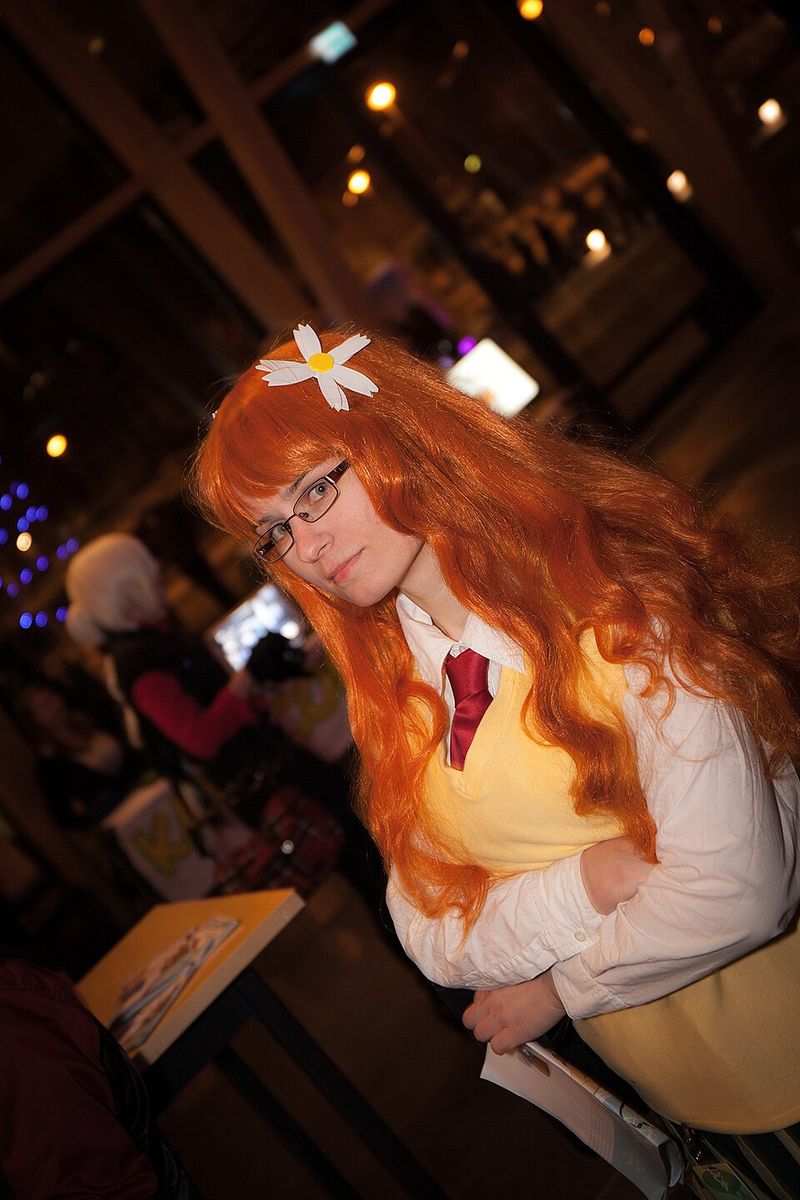
Lightness gives Sakura Trick much of its charm.
With graduation approaching, Haruka wants to preserve the special closeness she shares with Yuu, and romance becomes part of that effort almost immediately.
The show leans into affection with an easy confidence that makes it feel breezy, playful, and refreshingly open about letting two girls simply care for each other without turning the story into a burden. Happiness gets to stay on screen here, which matters more than it should.
13. Sarazanmai (2019)

Nothing else on this list really moves like Sarazanmai. Middle schoolers become kappa-like beings and must reveal their deepest secrets to protect the world, which already sounds like enough to scare off anyone who wants tidy realism.
Under all that weirdness, director Kunihiko Ikuhara builds a story full of explicitly queer themes tied to desire, shame, loneliness, and the longing to connect.
Strange, emotional, and completely committed, it never tries to be ordinary.
14. Princess Knight (1967-1968)

Princess Knight belongs here less as a modern LGBTQ+ title and more as an important historical precursor in anime conversations about gender.
Sapphire, a royal child said to possess both a boy’s heart and a girl’s heart, lives in a kingdom determined to sort everything into neat categories. Created by Osamu Tezuka, the series helped establish a long tradition of androgynous heroines and stories interested in gender roles and identity.
Long before the topic was common, Sapphire was already there.
Note: This article highlights anime frequently discussed in relation to queer romance, gender identity, and LGBTQ+ representation, while recognizing that not every title approaches those themes in the same way or with the same level of explicitness.
Some entries are celebrated for direct romantic storytelling, while others are included for their historical importance or lasting influence on how gender and queerness are read in anime. The piece is intended as an entertainment-focused guide for viewers exploring LGBTQ+ themes in animation, not as a definitive academic classification of every title listed.