Memorable And Less-Remembered Moments From The Beatles’ Solo Work
Four lads, four roads, and a whole lot of tunes waiting to be born. After the split, each Beatle wandered off with fresh sounds, odd ideas, and melodies that popped up when you least expected them.
Some songs soared straight to the top, others took the scenic route and grew on folks over time.
Turns out, the magic did not vanish with the band – it just started playing in four different keys.
Disclaimer: This article reflects publicly available information and widely documented release history for Beatles solo-era songs, films, and major live events, presented for general informational and entertainment purposes. Interpretations of cultural impact, legacy, and “most remembered” moments are inherently subjective and may vary by listener, region, and era.
1. Imagine Era Spotlight For John Lennon
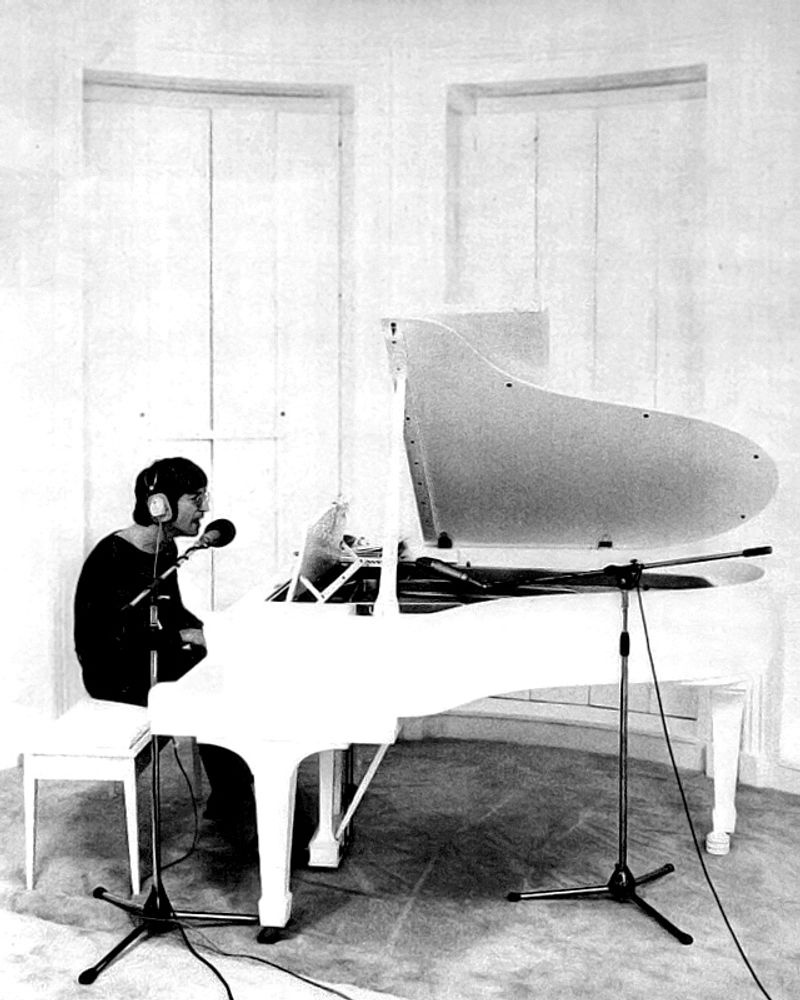
The ‘Imagine’ film’s white piano scene became one of the clearest visual symbols of Lennon’s early solo message.
“Imagine” turned into more than a song. It became a mission statement, a bumper sticker, and a song used at memorials and reflection moments all rolled into one three-minute package.
That 1971 session gave the world a new kind of Lennon, trading guitar snarl for piano simplicity. The melody stuck because it asked big questions in the smallest possible words.
Plenty of peace rallies and tributes have echoed its message ever since.
2. Walls And Bridges Press-Kit Lennon
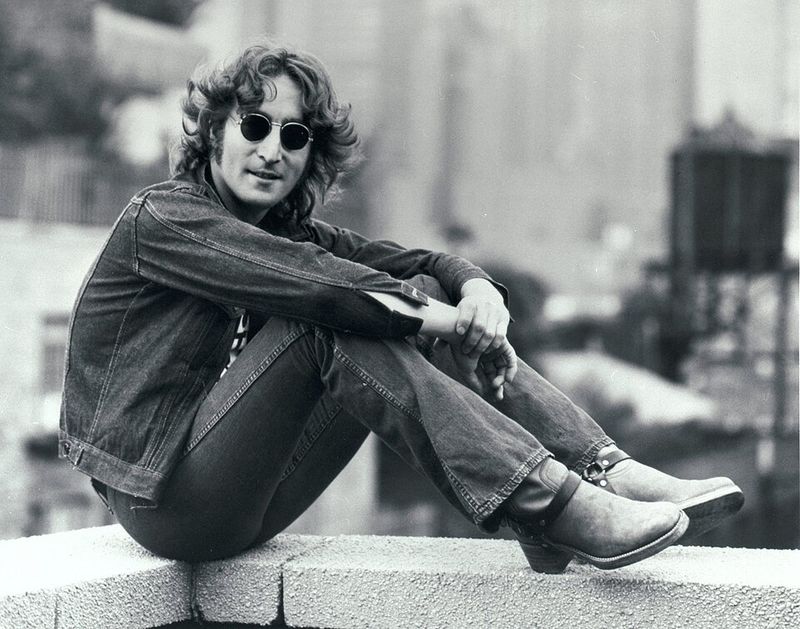
Most people skip straight from “Imagine” to Double Fantasy, but 1974 held its own weird magic. The “Walls and Bridges” snapshot catches Lennon mid-pivot, hair a little longer, smile a little tighter.
This was that mid-1970s transition period, when the headlines got messy and the music got rawer.
“Whatever Gets You Thru the Night” and “#9 Dream” both came from Walls and Bridges. The press kit tried to sell optimism, but the eyes told a different story.
3. Paul McCartney And Linda McCartney At The Oscars Live And Let Die Moment
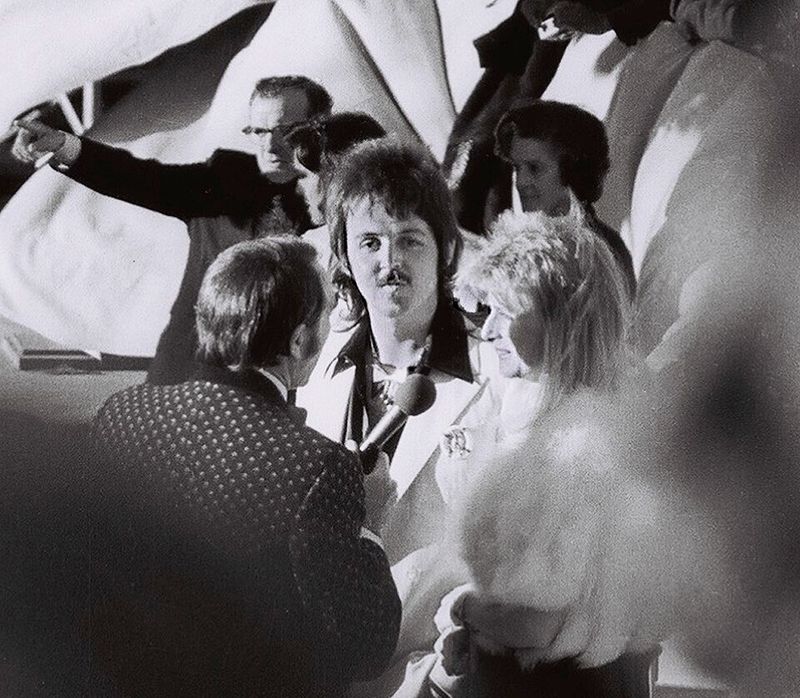
Sudden Bond theme success pushed Paul McCartney back into tuxedo territory with Wings.
“Live and Let Die” scored an Oscar nomination in 1974, placing Paul and Linda McCartney on a stage where old Hollywood tradition still ruled. Victory never came, yet the nod proved a former Beatle could craft a theme for James Bond and make it last.
One foot stayed planted in sweaty rock venues while the other stepped confidently into black tie ballrooms.
Pulling off that balancing act looked effortless, which only made observers even more suspicious of how easily he moved between worlds.
4. McCartney In 1980, Portrait-Style
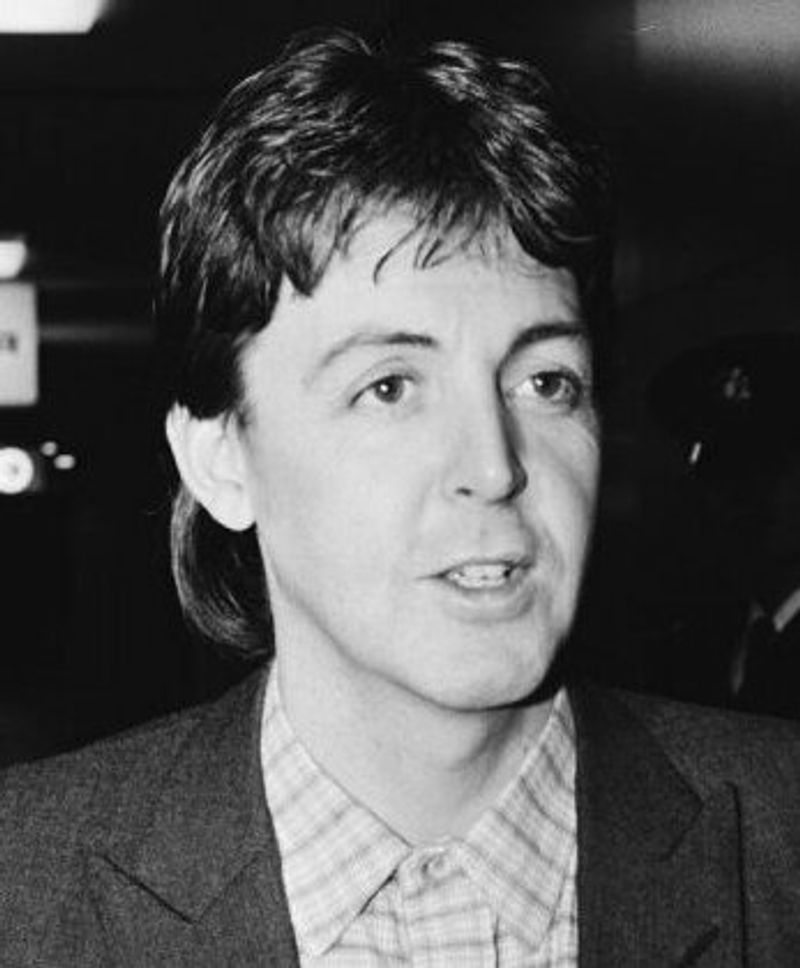
Shifting into the early eighties came with a wardrobe refresh and a subtly updated public image.
Captured in this portrait, Paul McCartney moves away from Wings era scruff toward a neater, more tailored look, just before releasing McCartney II and surprising listeners with synth driven experiments.
Balanced on the edge of two decades, the moment suggests one foot still in a seventies groove while the other steps into unfamiliar sonic territory.
Restless creative spirit shows clearly, revealing an artist who refuses to stay still even as the calendar turns.
5. George Harrison And The Bangla Desh Push
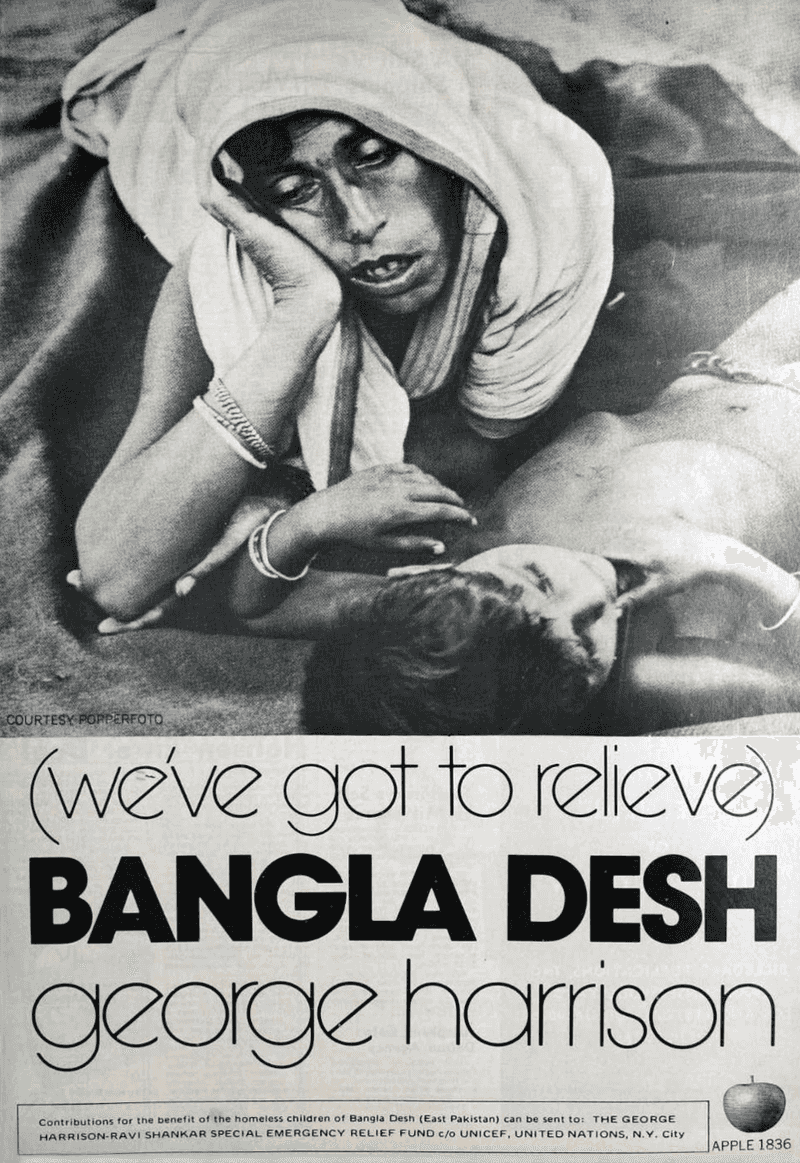
A friend’s urgent plea inspired George Harrison to help launch one of the first major rock benefit efforts that truly made an impact. The Concert for Bangladesh was staged at Madison Square Garden on August 1, 1971, organized by George Harrison and Ravi Shankar, and featured an all-star lineup that included Eric Clapton and Bob Dylan.
That moment showed a former Beatle could still rally enormous support when a cause truly mattered.
6. Concert For Bangladesh Frame, The Cause Becomes The Headline
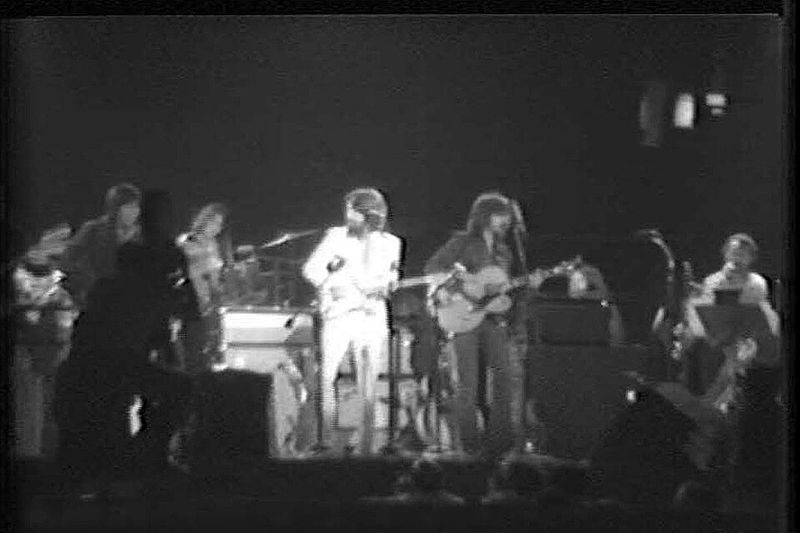
One night at Madison Square Garden changed expectations for what a rock concert could achieve.
Footage from the Concert for Bangladesh captures a rare moment when music, money, and conscience collided in real time and somehow aligned. Instead of staging a simple benefit, George Harrison helped create a blueprint later echoed by countless telethons and awareness campaigns.
Grainy film texture adds to the mystique, making the event feel like history unfolding through an old home movie reel.
7. Harrison On Stage At The Prince’s Trust Rock Gala In 1987
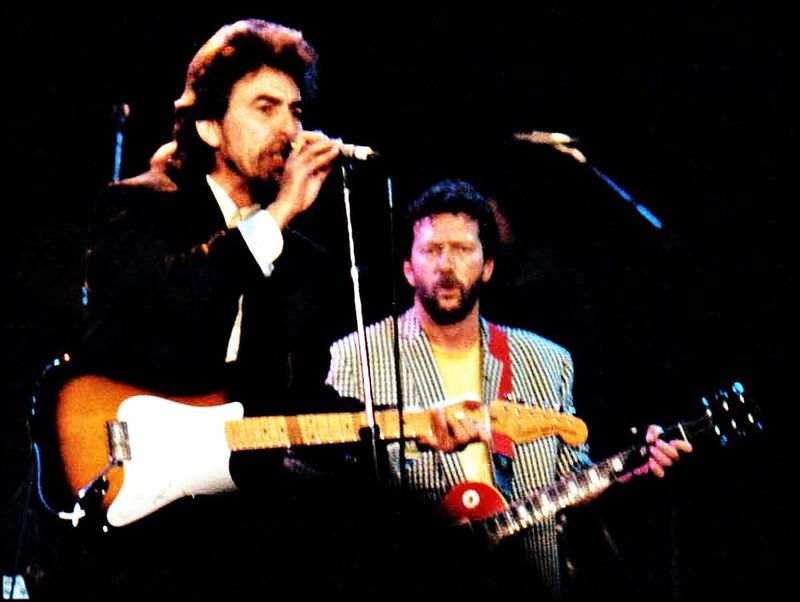
The later solo years saw Harrison step back into the spotlight less often, which made each appearance feel like a minor event.
The Prince’s Trust gig put him alongside Clapton again, proving their musical friendship outlasted every trend shift and lineup change. This wasn’t the young Beatle chasing screams; it was a seasoned player reminding everyone why the guitar mattered in the first place.
The performance didn’t chase headlines, and that’s exactly why it still resonates.
8. Ringo Starr Trade-Ad Single Moment, 1975
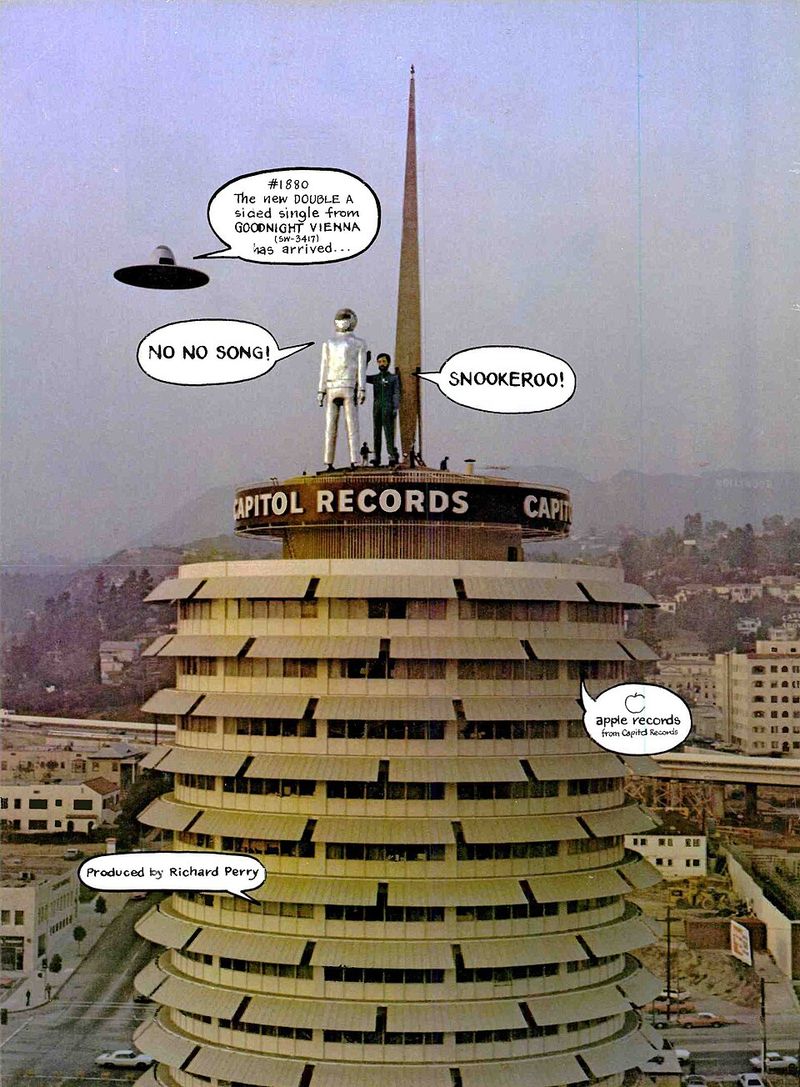
Solo years brought Ringo Starr a stream of delightfully odd promotional moments, and a 1975 trade ad ranks high among them. Instead of landing on a Rolling Stone cover or a prime time television special, the piece worked as a one page pitch aimed at radio programmers.
Playful tone invited them to spin his latest single with the same easygoing charm he carried into every project.
Bold fonts, bright colors, and a total lack of pretension capture the mid seventies spirit perfectly.
All of it feels like pure Ringo energy pressed flat onto newsprint.
9. Ringo On A Film Set In 1975
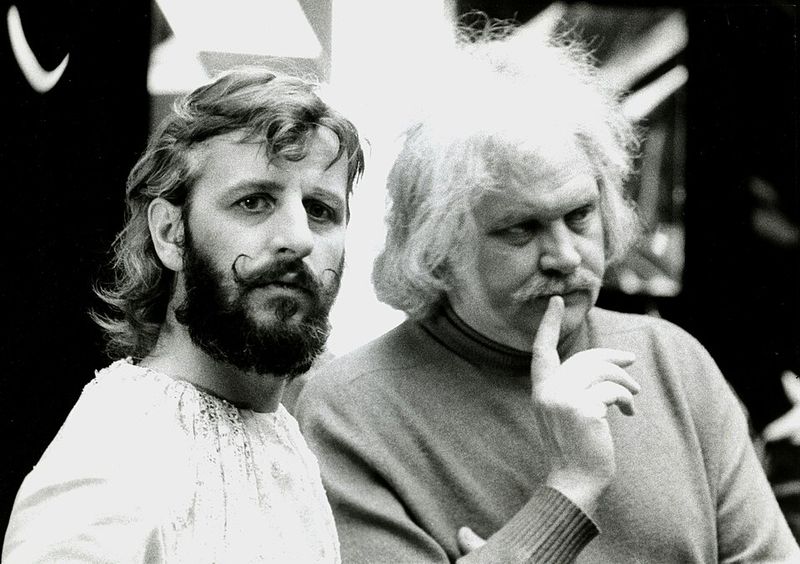
The solo years meant side quests, and Ringo’s included a string of acting gigs that ranged from charming to baffling.
The Lisztomania set photo shows Ringo Starr with director Ken Russell during the 1975 production, proof that post-Beatles life could include avant-garde cinema alongside the pop singles. Ringo never pretended to be Olivier, but he showed up, hit his marks, and added a little stardust to projects that might not have earned a second glance otherwise.
That willingness to try anything kept his solo story interesting.
10. Ringo In Print, 1970 Magazine Cover
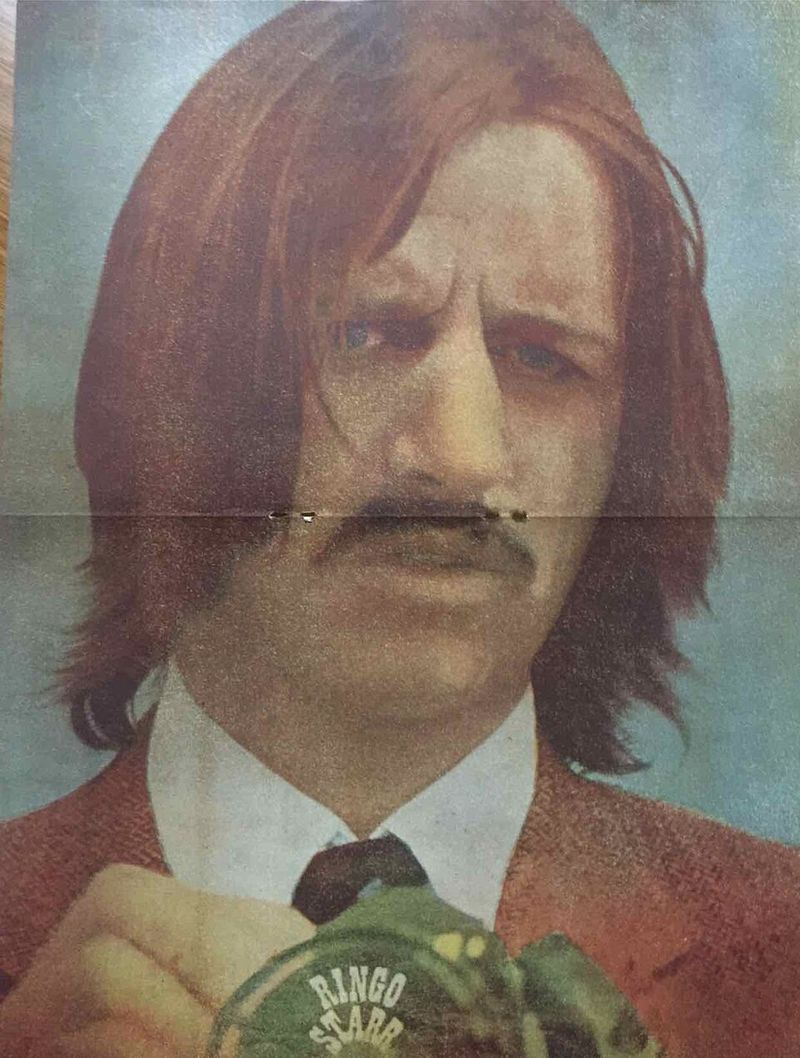
A 1970 Indonesian Aktuil magazine cover image featuring Ringo Starr reflects how quickly his solo-era visibility traveled internationally. Seeing the band’s drummer command international attention on his own highlighted how much weight each former member still carried.
Small piece of print history captures a turning point when one legendary group became four separate stories, and the world kept watching every step.