13 Mount Rushmore Facts That Go Beyond The Monument
Four giant faces in a mountain sounds calm until the backstory starts acting like a full documentary with surprising turns. Plans got bigger, ideas got wilder, and somehow this turned into presidents casually staring over the hills like they booked the best seat in the country.
Behind those 60-foot faces is a mix of bold choices, near misses, and details that feel way too dramatic for something that looks so still.
1. Tourism Sparked The Whole Idea
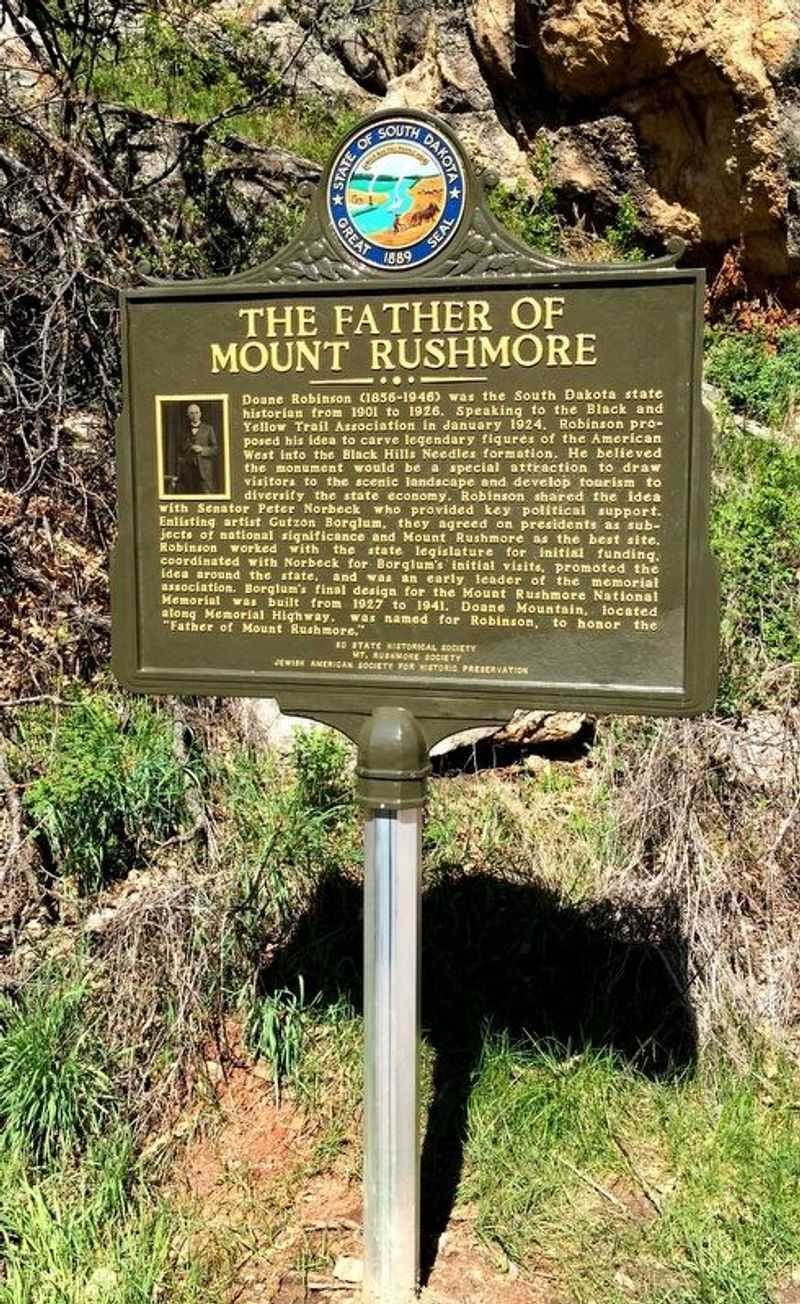
Imagination lands on a state historian flipping through tourism numbers and deciding something bigger is needed. Back in 1923, Doane Robinson proposed the monument to draw visitors into the Black Hills, originally picturing Western figures like Buffalo Bill instead of presidents.
Creative direction shifted when Gutzon Borglum stepped in, pushing for a national focus built around four U.S. presidents.
What began as a tourism idea gradually turned into a national monument.
2. Carving Officially Kicked Off In 1927
An August 1927 dedication ceremony set the stage, yet the real rock-busting work did not begin until October 4, 1927. That gap catches people off guard almost every time.
Across fourteen years, the project pushed forward through the Great Depression and constant funding headaches.
Through it all, drills kept running under Gutzon Borglum, slowly turning a granite peak into something the whole country would later recognize on a coffee mug.
3. Nearly 400 Workers Showed Up
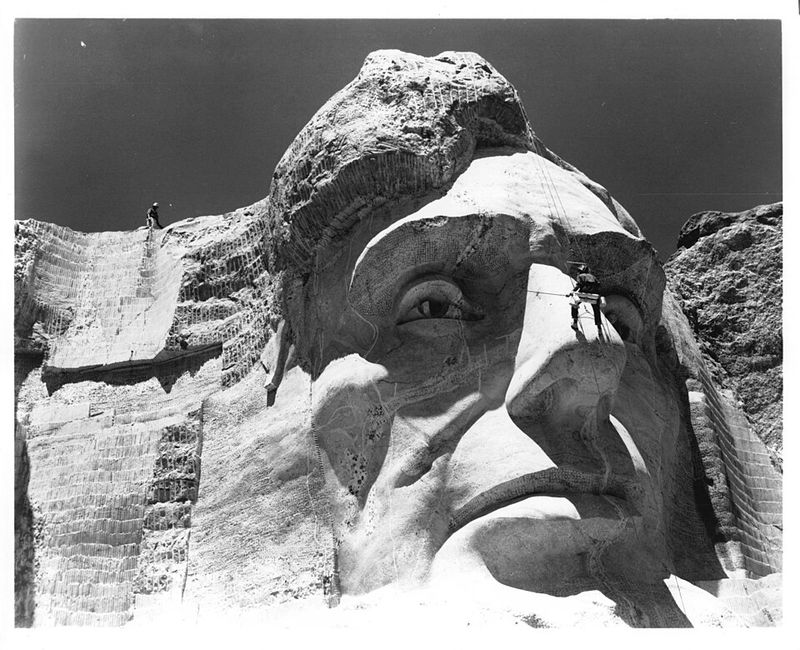
Nearly 400 workers took part in the carving between 1927 and 1941.
Work involved drillers, skilled crew members handling rock removal, and carvers suspended in harnesses hundreds of feet above the ground. No single massive construction company oversaw the effort, with the workforce shifting in size and structure as funding changed.
The workers are today recognized at the memorial itself.
4. Zero Fatalities On The Job
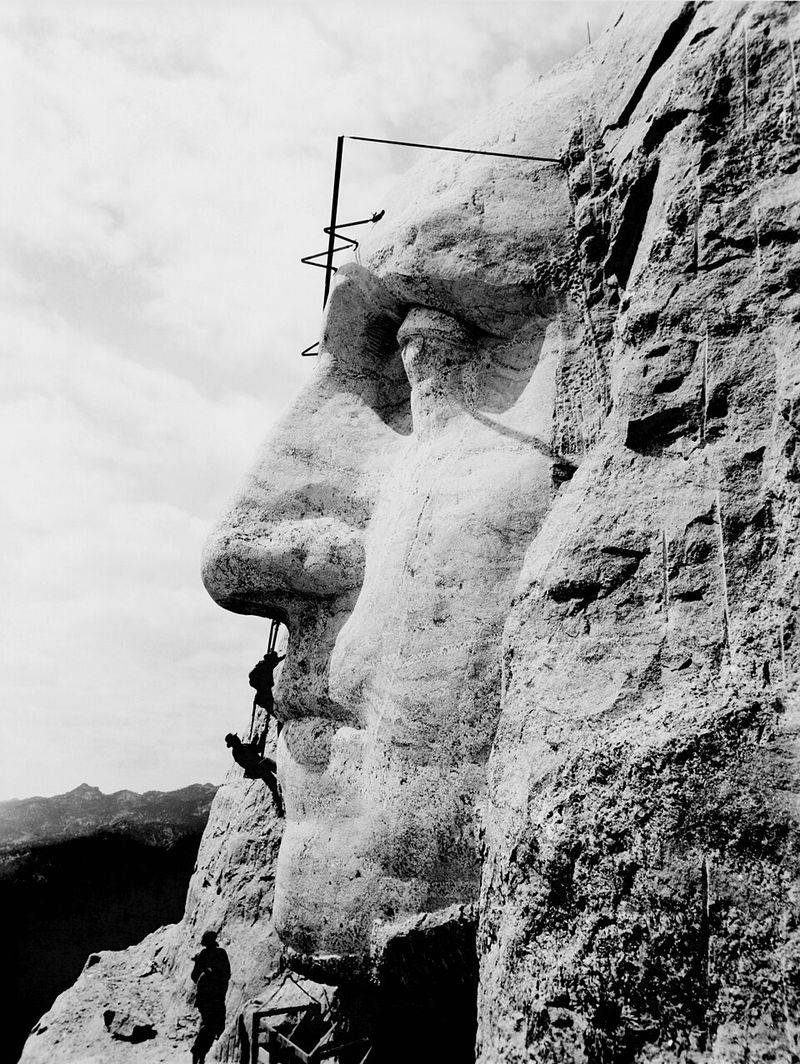
Heights, heavy-duty tools, swinging cable harnesses, and granite dust thick enough to chew made the whole job sound like a recipe for disaster. Against all expectations, not a single worker died during the actual carving of Mount Rushmore, according to the National Park Service.
Even now, the record still surprises safety engineers. One of the monument’s most unexpected facts is still its no-fatality record.
5. Driving Force Did 90 Percent Of The Work
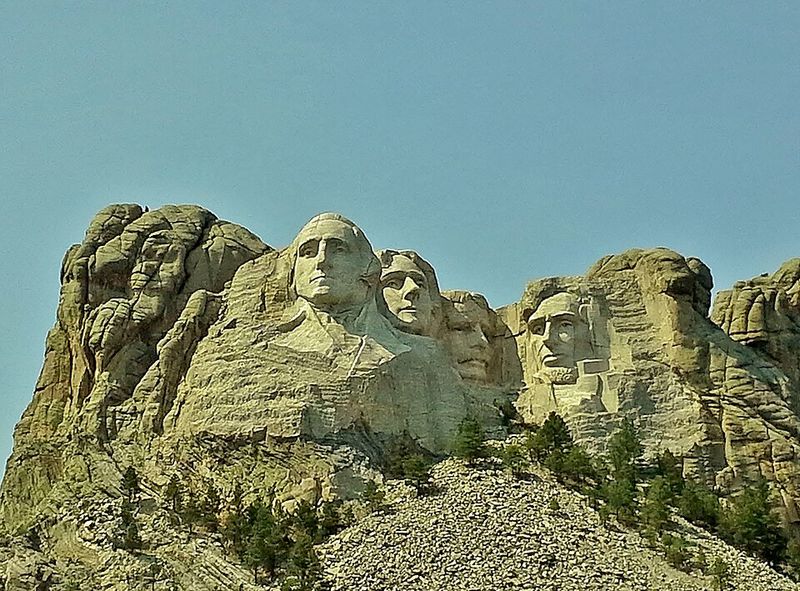
Romantic images of chisels and brushwork fade quickly when the real workhorse turns out to be d*namite.
Roughly 90 percent of the granite came off through controlled blasting before any fine detail carving even began.
Workers known as bumpers handled the charges, setting them in place and moving fast to safety before the mountain shook. Comparison lands somewhere between brute force and careful craft, like rough-drafting an essay with a sledgehammer before refining it with a pen, loud, dusty, and surprisingly precise.
6. Jefferson Got Carved Twice
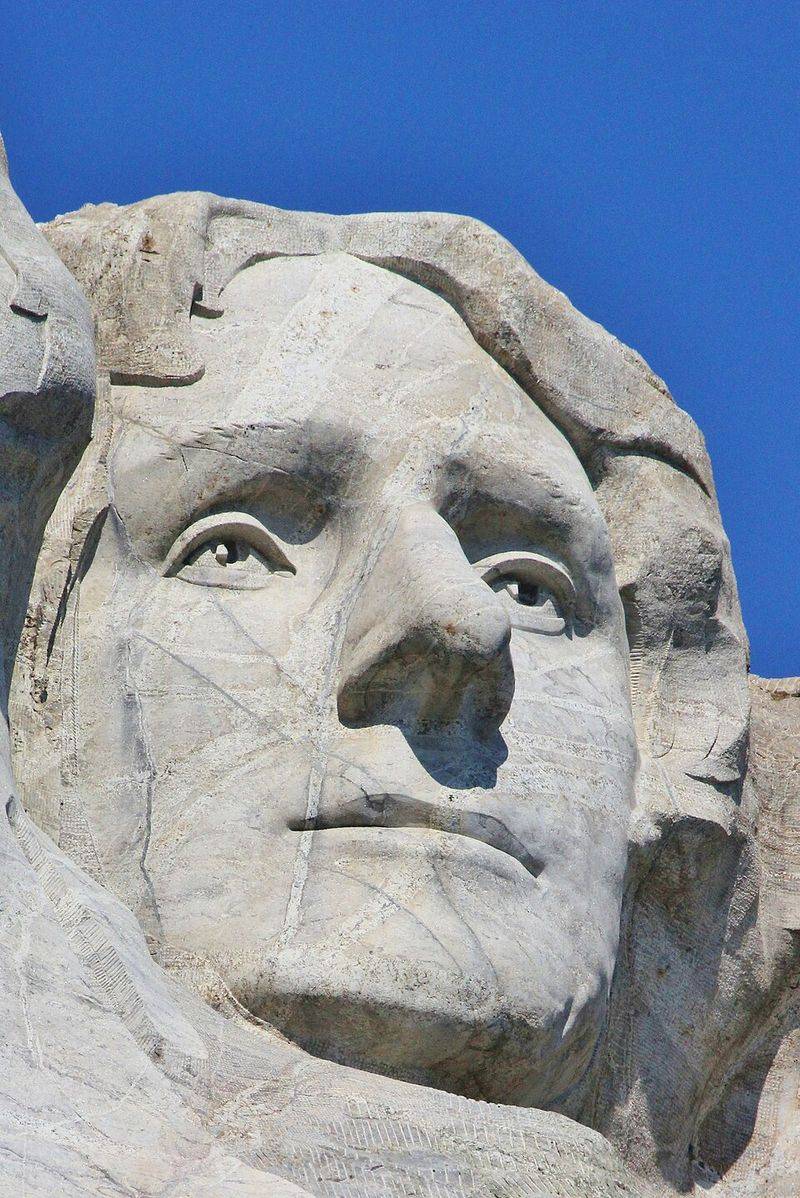
Work began with Thomas Jefferson placed on George Washington’s right side, then progress ran straight into a wall, literally.
Poor rock quality forced the entire figure to be scrapped and restarted on Washington’s left side in 1934. The abandoned version was blasted away until no trace remained.
Jefferson ended up in the stronger position anyway, so the rocky detour worked out in the end. Sometimes a do-over really is the smarter move.
7. Each Face Stands About 60 Feet Tall
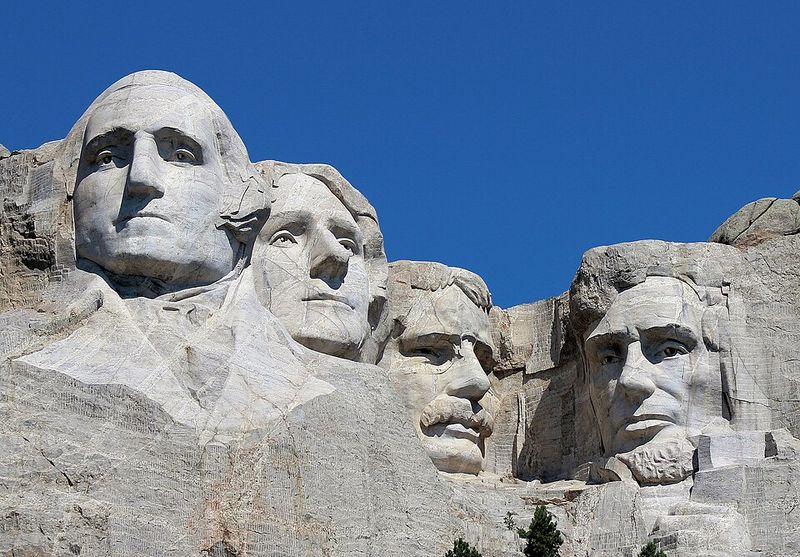
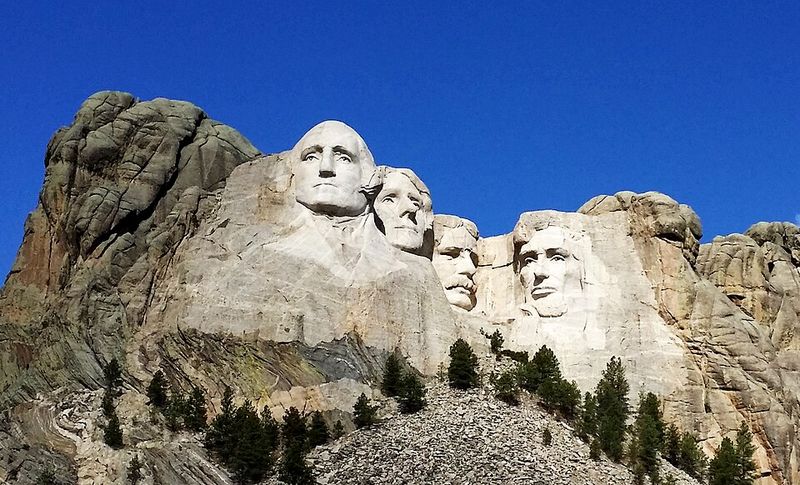
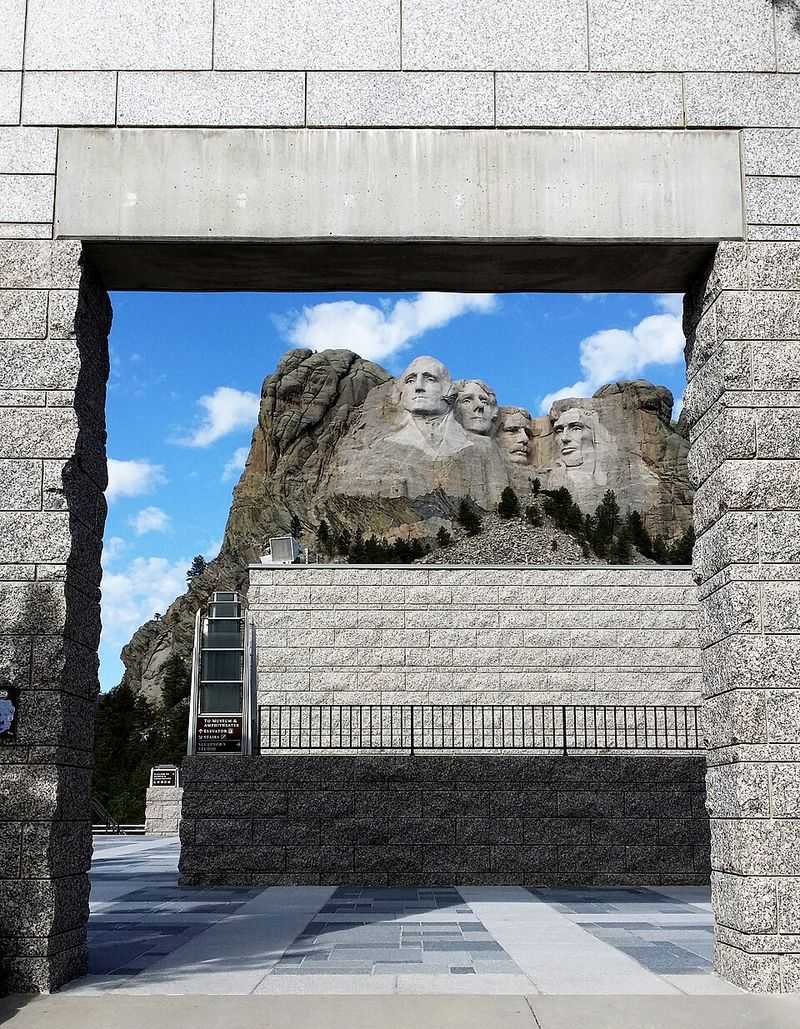
Scale hits immediately when looking up at George Washington, with a face measuring about 60 feet high, and the others carved in that same staggering range.
Even the nose alone reaches around 20 feet long. Standing at the base and craning your neck upward makes the size feel almost unreal.
Comparison writes itself in the funniest way, a school ID photo fits on a keychain, while these figures claimed an entire mountain.
8. A Lawyer Named The Mountain In 1885
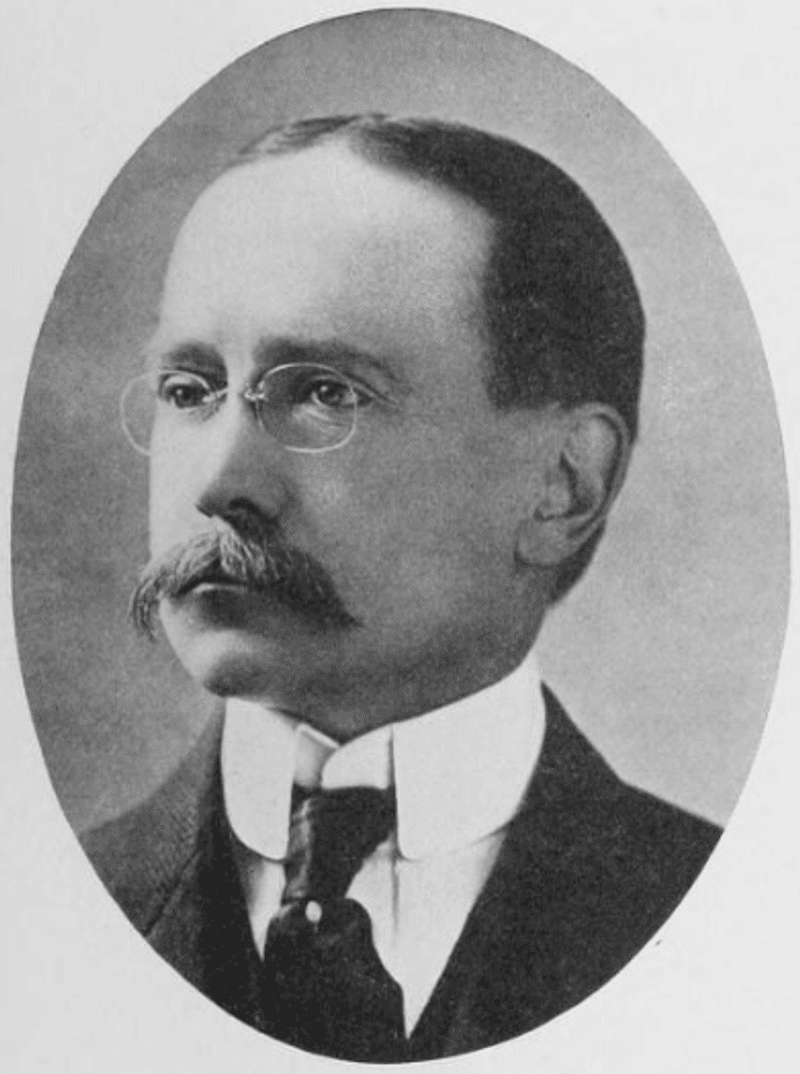
New York attorney Charles E. Rushmore visited the Black Hills in 1885 and casually asked a local what the mountain was called.
Nobody had a solid answer, so the name “Rushmore” stuck to it right then and there, according to the National Park Service. A lawyer on a business trip accidentally named one of America’s most iconic landmarks.
Not exactly carved in stone at first, but eventually, well, it was.
9. The Lakota Called It The Six Grandfathers
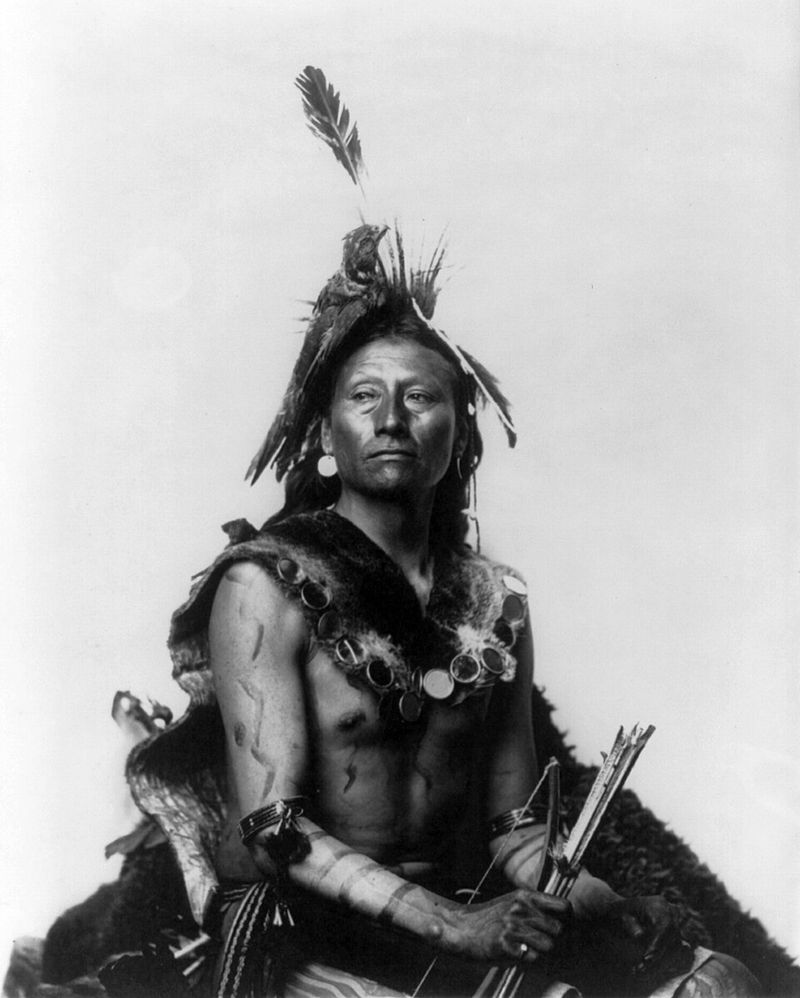
Long before any sculptor arrived with a blueprint, the Lakota Sioux held the mountain as deeply sacred. Known as the Six Grandfathers, the site carried spiritual meaning tied closely to identity and tradition.
During the 1870s, the Black Hills were taken from the Sioux Nation, leaving a wound that has never fully healed.
In 1980, the Supreme Court upheld compensation for the taking of the Black Hills, but many Sioux have refused the money and continued to argue for land return instead.
10. Borglum Dreamed Way Bigger Than Four Faces
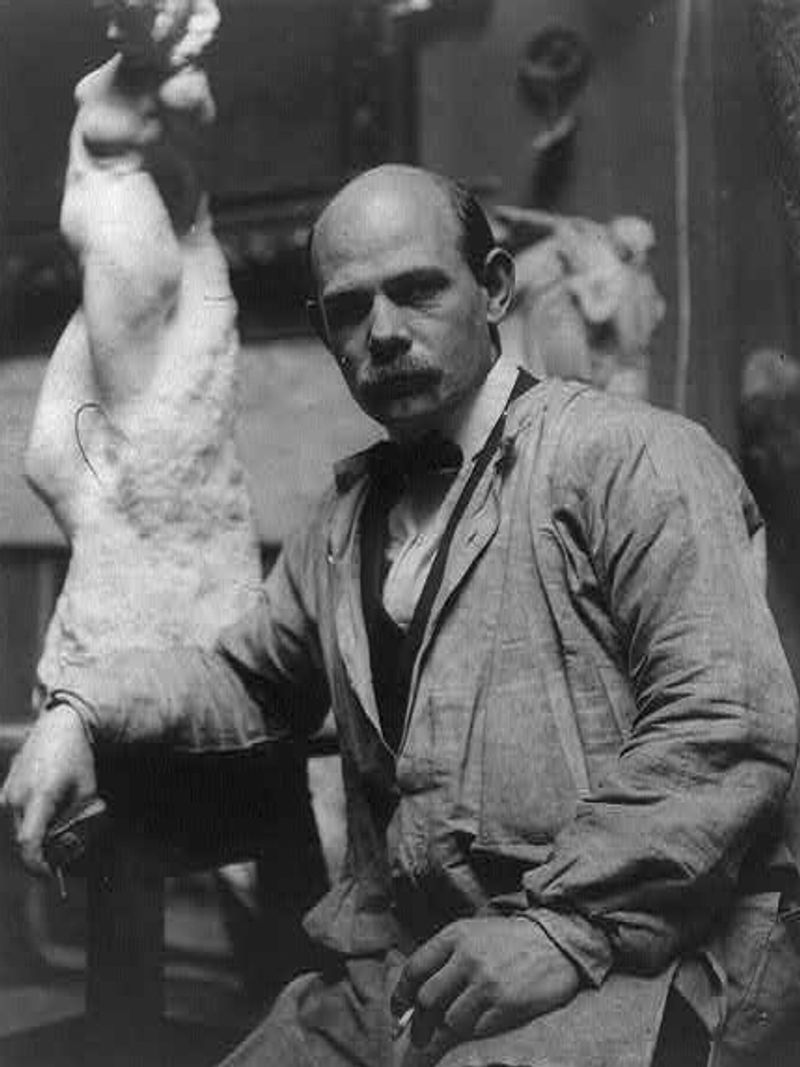
Ambition pushed far beyond four presidential faces in the plans of Gutzon Borglum, making the final result feel almost like a rough draft of something even larger. Original designs included a massive inscription known as the entablature, intended to tell the story of American history directly on the granite wall.
Practical limits stepped in when engineers determined the carved text would be unreadable from the ground, forcing the idea to be abandoned.
Big ideas shaped every stage of the process, and even with scaled-back plans, the result became something recognized around the world before breakfast.
11. The Hall Of Records Was Started But Abandoned
Behind Lincoln’s head, a tunnel was carved into the mountain with plans far bigger than the sculpture itself.
Inside that space, Borglum imagined a chamber filled with key American documents, portraits, and historical records meant for future generations to discover.
Funding and time stopped the project before the chamber could be fully realized. Today, the unfinished room remains quiet and dark, feeling like a chapter closed before its time. Unfinished, but not forgotten.
12. A Vault Was Finally Sealed There In 1998
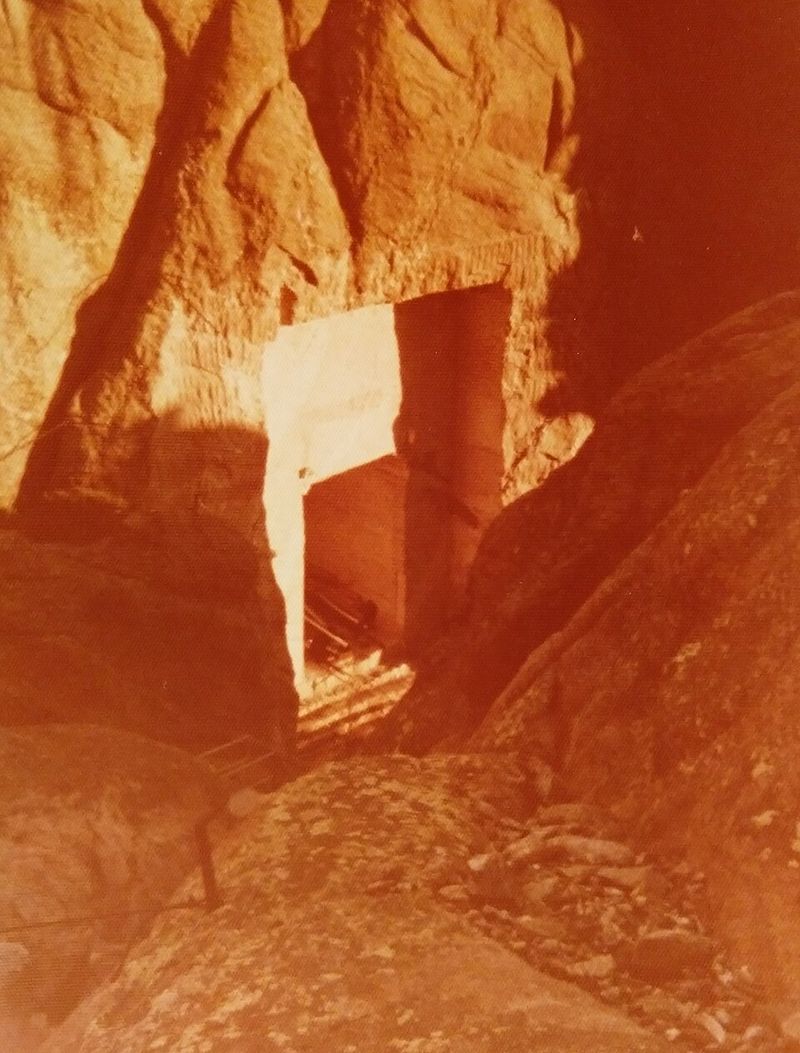
Decades after Borglum’s dream stalled, a small but meaningful step happened on August 9, 1998.
A teakwood box tucked inside a titanium vault was installed at the hall’s entry and sealed beneath a granite capstone, according to the National Park Service. The repository contains porcelain enamel panels explaining why the monument was carved, who carved it, and the history it was meant to represent.
Not quite the grand museum Borglum imagined, but a time capsule sealed with real intention. The mountain finally kept its promise, sort of.
13. The Avenue Of Flags Rounds Out The Memorial
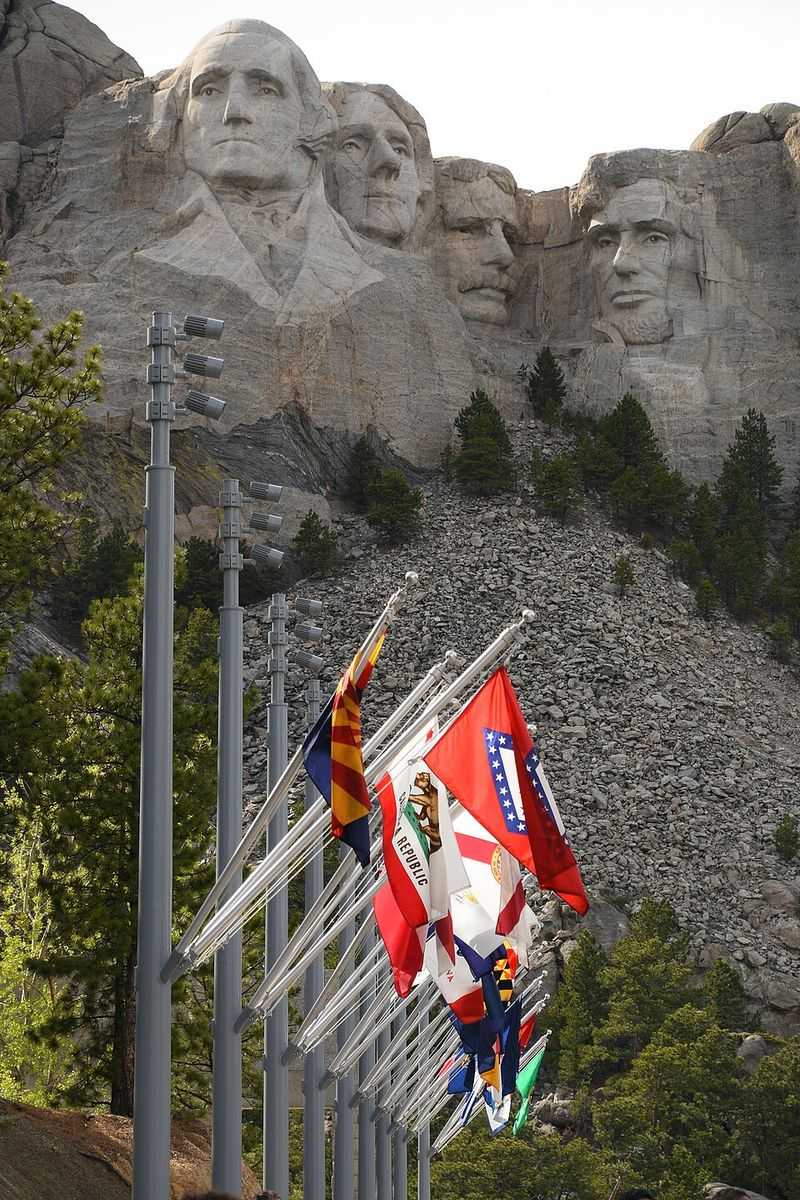
Approach unfolds through a corridor of color long before the granite comes into focus.
All 50 states, the District of Columbia, three territories, and two commonwealths are represented by banners along the Avenue of Flags.
Installation arrived during the United States Bicentennial, adding a layer of meaning to the walk. Movement along the path turns into a quiet geography lesson, with each flag telling its own story while the mountain behind them carries thirteen more.
Important: This article is provided for general informational and entertainment purposes and is based on publicly available historical and National Park Service sources available at the time of writing.