16 Odd Foods That Americans Usually Avoid
Food is one of the most personal things in the world, and every culture has dishes that make outsiders raise an eyebrow. American cuisine offers plenty of surprises.
Across the United States, certain foods carry deep roots in history, regional pride, and comfort, yet many Americans refuse to try them. Some look unusual, some smell even stranger, and a few sound more like a dare than a meal.
Still, curiosity remains the best seasoning. Dishes avoided by millions often turn out to be unexpectedly delicious, revealing flavors and textures that challenge assumptions and expand taste horizons.
Exploring these foods offers a glimpse into local traditions, forgotten recipes, and inventive culinary ideas that rarely appear in mainstream menus. The American food scene proves wilder, weirder, and more wonderful than most people imagine.
Sixteen remarkable dishes await discovery, each daring even the bravest eaters to pick up a fork and embrace adventure.
1. Grits
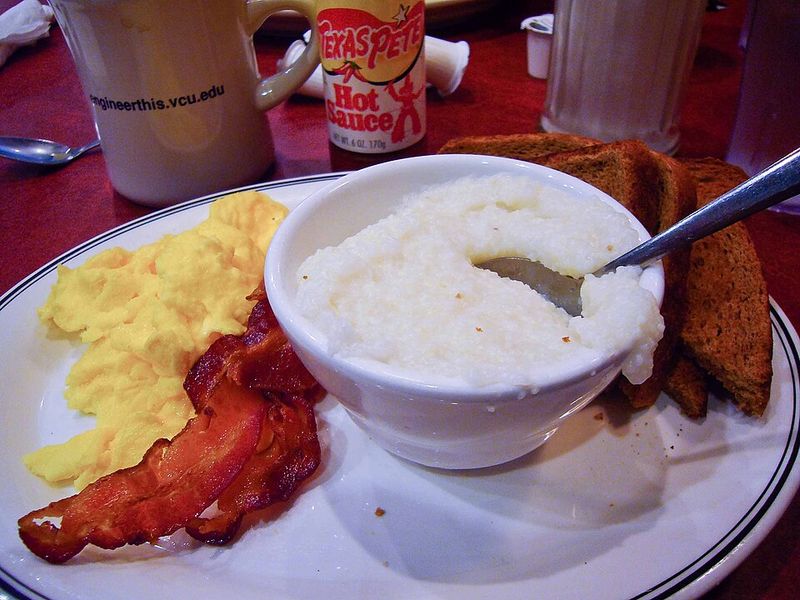
Corn has been feeding people for thousands of years, but few dishes divide Americans quite like grits. Ground from dried hominy corn, grits cook into a thick, creamy porridge loved across the South but often ignored everywhere else.
Northerners especially tend to squint at a bowl and ask, “Is it supposed to look like that?”
However, once butter and cheddar cheese get involved, most skeptics go quiet fast. Grits can be savory or sweet, smooth or chunky.
Shrimp and grits is practically a Southern legend. If a food has survived centuries of American cooking, it probably deserves at least one honest bite.
2. Scrapple
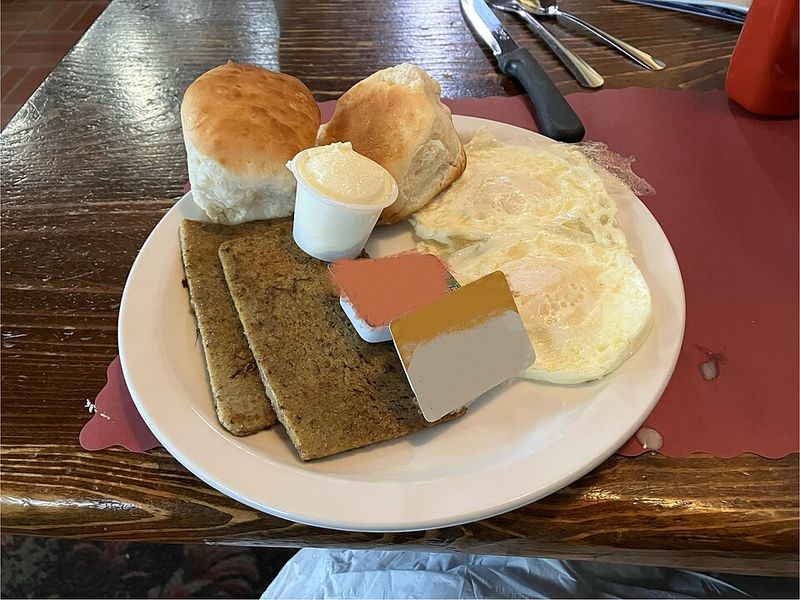
If you grew up in Pennsylvania Dutch country, scrapple is just Tuesday morning. For everyone else, learning what goes into it tends to end the conversation quickly.
Pork scraps, cornmeal, and spices are cooked together into a loaf, then sliced and pan-fried until crispy. It is nose-to-tail eating at its most practical.
Many Americans outside the Mid-Atlantic region have never even heard of scrapple, and those who have often prefer to keep their distance. However, a perfectly fried slice, golden and crunchy outside with a soft center, actually tastes incredible.
Waste-free cooking has been trendy lately, so scrapple is basically ahead of its time.
3. Chitlins
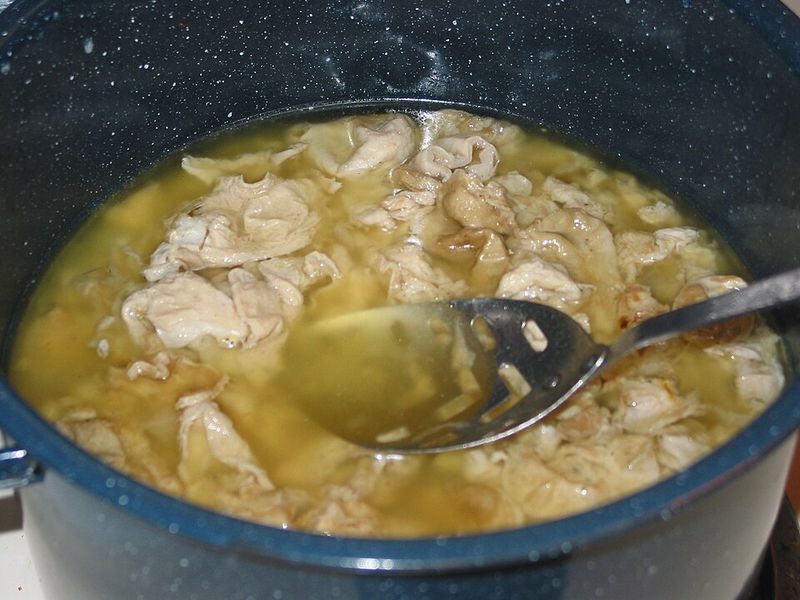
Few dishes carry as much cultural weight and culinary controversy as chitlins. Short for chitterlings, these are slow-cooked pig intestines, deeply rooted in African American Southern cooking.
Enslaved people historically received the least desirable cuts of meat and transformed them into something meaningful and delicious through generations of skill.
The smell during cooking is famously intense, and many Americans refuse to get anywhere near a pot of chitlins. However, seasoned properly and cooked low and slow, the flavor is rich and deeply satisfying.
Chitlin festivals still draw massive crowds across the South every year. Respect for the history makes every bite taste even better.
4. Lutefisk
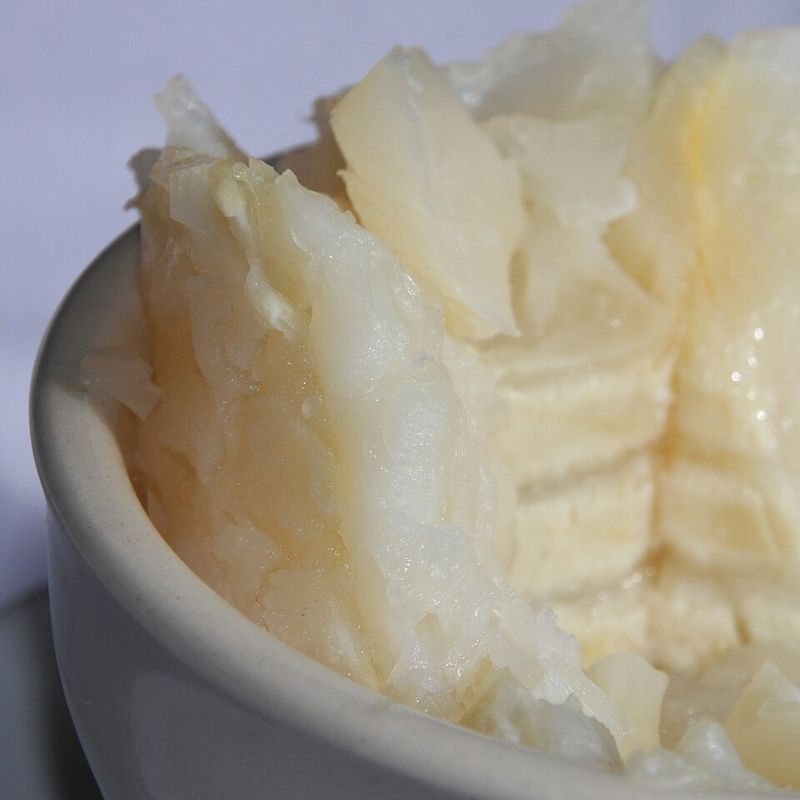
Lutefisk has exactly two types of fans: proud Norwegian-Americans in Minnesota and Wisconsin who eat it every holiday season, and everyone else who runs in the opposite direction. Dried whitefish soaked in lye until it becomes a wobbly, jelly-like mass does not exactly sound like a five-star meal.
How did anyone decide that soaking fish in a caustic solution was a good plan? History suggests it was likely accidental, but Scandinavian immigrants kept the tradition alive in America for centuries.
The smell is powerful, the texture is slippery, and the flavor is mild. Drown it in butter and cream sauce, though, and some people find it oddly comforting.
Truly an acquired taste.
5. Headcheese
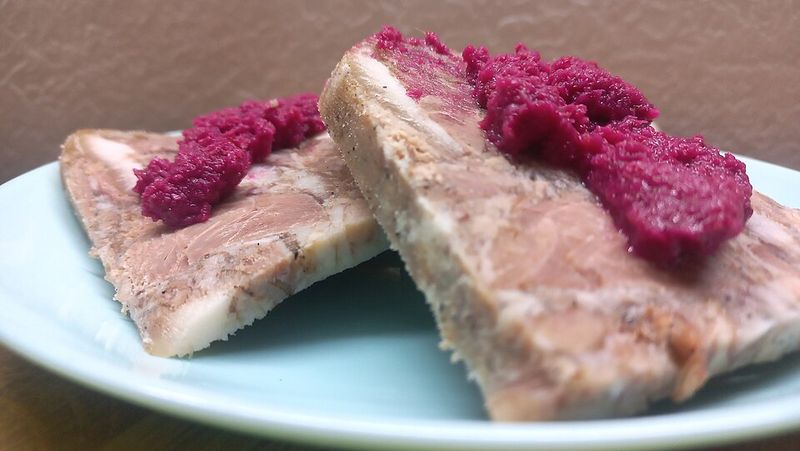
Despite the name, headcheese contains absolutely zero dairy. A cold-cut terrine made by simmering a pig or calf head until the meat falls off, then pressing everything together in its own gelatin, headcheese has been a European and American deli staple for centuries.
Old-world butchers wasted nothing.
Telling someone what headcheese actually is usually results in a polite “no, thank you” and a rapid subject change. The combination of gelatinous texture and mystery meat vibes makes most modern American eaters deeply uncomfortable.
However, sliced thin on rye bread with sharp mustard, it is bold, savory, and surprisingly satisfying. Adventurous eaters who try it rarely forget the experience.
6. Rocky Mountain Oysters
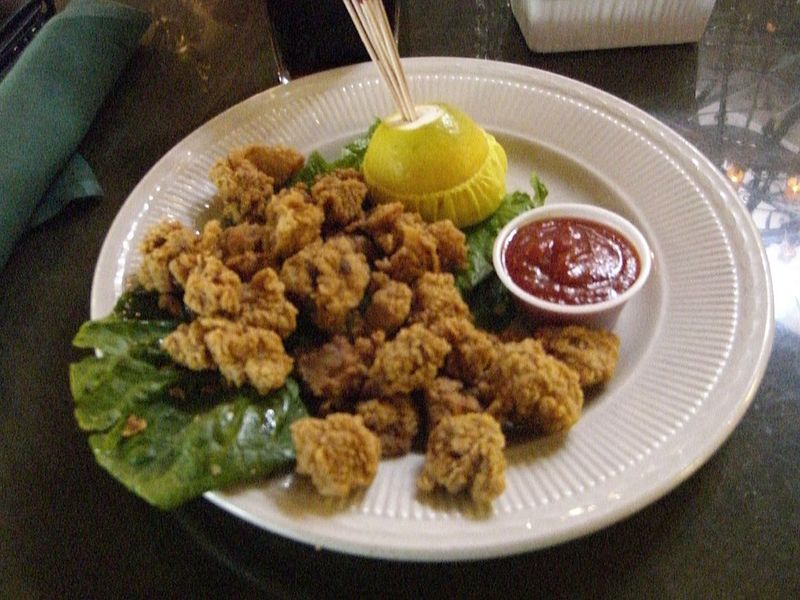
Rocky Mountain oysters have absolutely nothing to do with the ocean. A Western American delicacy, these are actually deep-fried bull… well, round thingies, and yes, people order them proudly at festivals across Colorado, Montana, and Wyoming.
Ranchers historically wasted nothing during cattle castration season, and frying everything in batter made perfect practical sense.
Most Americans outside the Rocky Mountain region react to the reveal with wide eyes and a firm refusal. However, the flavor is mild, slightly gamey, and honestly not far off from other fried proteins once seasoned well.
Festivals draw thousands of curious visitors every year. Sometimes bravery at the dinner table leads to the best food stories ever told.
7. Poke Sallet
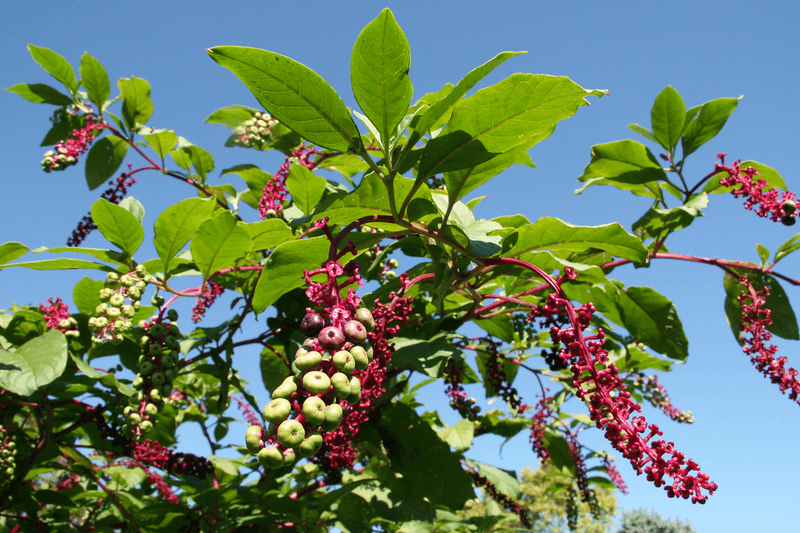
Poke sallet sounds like a trendy salad bar option, but it is actually a wild plant called pokeweed, cooked carefully to remove its natural toxins before eating. Appalachian and Southern communities have foraged and prepared it for generations, boiling the leaves multiple times to make the greens safe and tender.
Most Americans have never heard of poke sallet, and food safety concerns keep many curious people from ever trying it. Skip a boiling step and the plant becomes dangerously poisonous.
However, cooked correctly, the greens taste similar to spinach and carry a deep, earthy flavor. Tony Joe White even wrote a famous song about it in 1969, proving poke sallet has serious cultural roots.
8. Pickled Pigs Feet
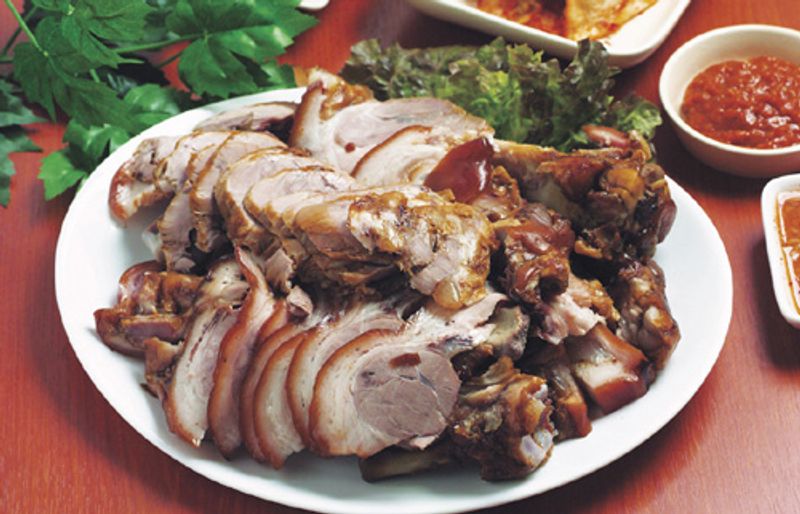
Image Credit: Korea.net / Korean Culture and Information Service, licensed under CC BY-SA 2.0. Via Wikimedia Commons.
Sitting in big glass jars on gas station and deli counters across the South and Midwest, pickled pigs feet are one of America’s most visually intimidating snack foods. Pork feet are cleaned, cooked, then submerged in a tangy vinegar brine for days until fully preserved and flavored.
Simple, cheap, and surprisingly protein-rich.
Spotting a jar of cloudy brine holding pale, wrinkly pork feet tends to send most people straight past the snack aisle. Texture is the real hurdle here since the collagen-rich meat is soft and gelatinous.
However, fans swear the vinegary, savory bite is addictive once you get past the appearance. Old-school snacking has never looked stranger or tasted bolder.
9. Liverwurst

Liverwurst is basically the underdog of the deli case. A smooth, spreadable sausage made primarily from pork liver, liverwurst has a rich, earthy flavor that German immigrants brought to America and that older generations absolutely adored.
Spread on dark rye bread, it was lunch perfection for decades.
Younger Americans, however, often cannot get past the word “liver” in the name. Organ meats carry a reputation problem in modern food culture, and liverwurst suffers for it constantly.
However, the flavor is bold and savory, not bitter, when made well. Nutritionally it is packed with iron and vitamin B12.
Sometimes the most overlooked item in the deli case turns out to be a hidden gem.
10. Fried Okra
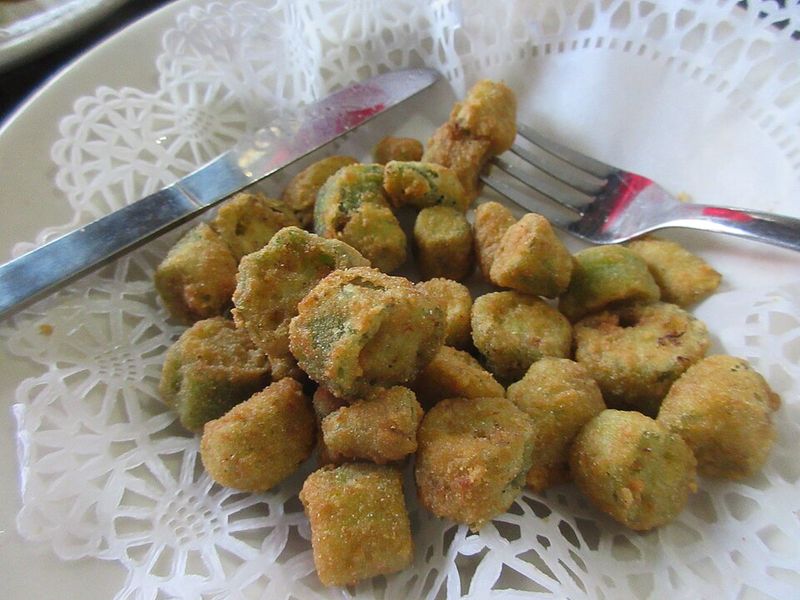
Okra is one of those vegetables that inspires strong opinions on both sides. In the American South, battered and deep-fried okra is a beloved side dish, crunchy on the outside and tender inside.
It is a staple at summer cookouts, church suppers, and soul food restaurants across the region.
Outside the South, many Americans wrinkle their noses at okra entirely. Raw or boiled, the vegetable releases a thick, slimy substance that has a way of ending food adventures abruptly.
However, frying okra eliminates most of the sliminess and replaces it with satisfying crunch. Seasoned cornmeal coating does serious work here.
If you have only experienced sad, soggy okra, fried okra is a completely different universe.
11. Boiled Peanuts
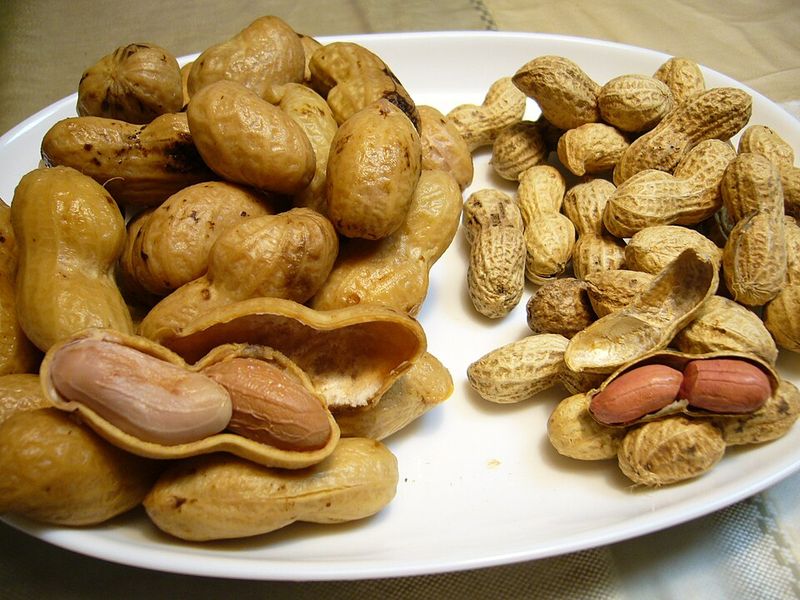
Roadside signs advertising boiled peanuts are a beloved sight across Georgia, South Carolina, and the broader Deep South. Raw peanuts are simmered for hours in heavily salted water until the shells soften and the peanuts inside become tender, almost bean-like in texture.
It is snacking at its most patient.
For anyone raised on dry-roasted peanuts, the first encounter with a boiled peanut can feel deeply wrong. Wet shells, soft interiors, and salty brine soaking through everything?
Confusing is an understatement. However, the flavor is nutty, salty, and satisfying in a completely unique way.
Cajun-spiced boiled peanuts add serious heat to the equation. Once you crack one open on a summer road trip, the addiction starts immediately.
12. Geoduck Clam

Few seafood items in America cause as much initial shock as the geoduck clam. Native to the Pacific Northwest, it is the largest burrowing clam in the world, and its extremely long siphon neck makes it look like something straight out of a science fiction movie.
Pronunciation is a bonus puzzle: it is said “gooey-duck.”
Most Americans have never encountered a geoduck, and those who see one for the first time often have a lot of feelings. However, the flavor is sweet, clean, and oceanic, prized in Japanese and Chinese cuisine for generations.
Sliced thin and served raw or lightly seared, geoduck is genuinely delicious. Pacific Northwest seafood lovers guard their geoduck recipes like treasure maps.
13. Menudo
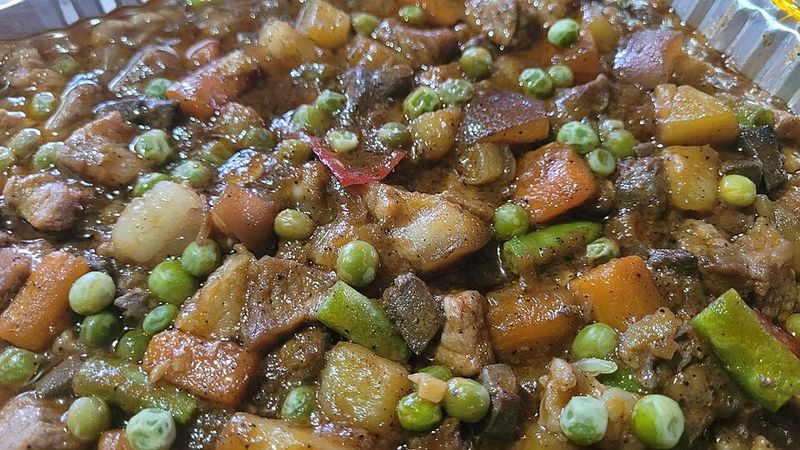
Sunday mornings in many Mexican-American households mean one thing: a big pot of menudo simmering on the stove. Beef tripe slow-cooked in a rich red chile broth, served alongside hominy, lime, and oregano, menudo is deeply comforting and culturally significant across the Southwest and beyond.
However, the star ingredient, tripe, is the rubbery stomach lining of a cow, and that detail alone stops most Americans cold. The chewy, honeycomb texture requires serious cooking time before it softens properly.
Many people who grew up outside the tradition simply cannot get past the idea of eating stomach. Still, the broth is incredibly flavorful.
A bowl of menudo on a cold morning hits differently once you give it a real chance.
14. Spam Musubi
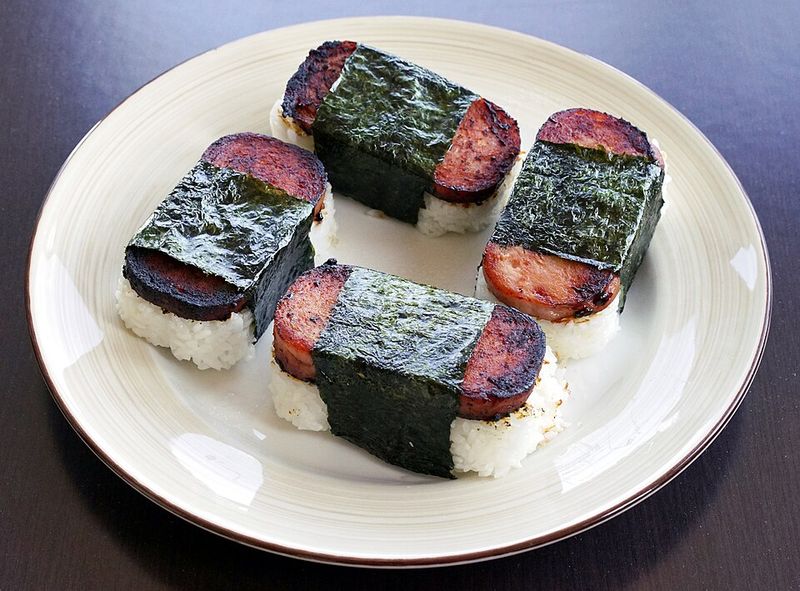
Hawaii has one of the most unique food cultures in the United States, and Spam musubi sits right at the center of it. A slice of grilled Spam placed on a block of seasoned rice and wrapped in a strip of nori seaweed, it looks like a thick, meaty sushi roll and sells everywhere from convenience stores to school cafeterias.
Mainland Americans often raise an eyebrow at canned meat on rice wrapped in seaweed. Spam itself carries a reputation for being low-quality, processed food.
However, in Hawaii, Spam is genuinely beloved, a legacy of World War II military supply chains. Grilled until slightly caramelized, it becomes savory and satisfying.
Spam musubi is proof that context and culture transform ingredients completely.
15. Sweetbreads
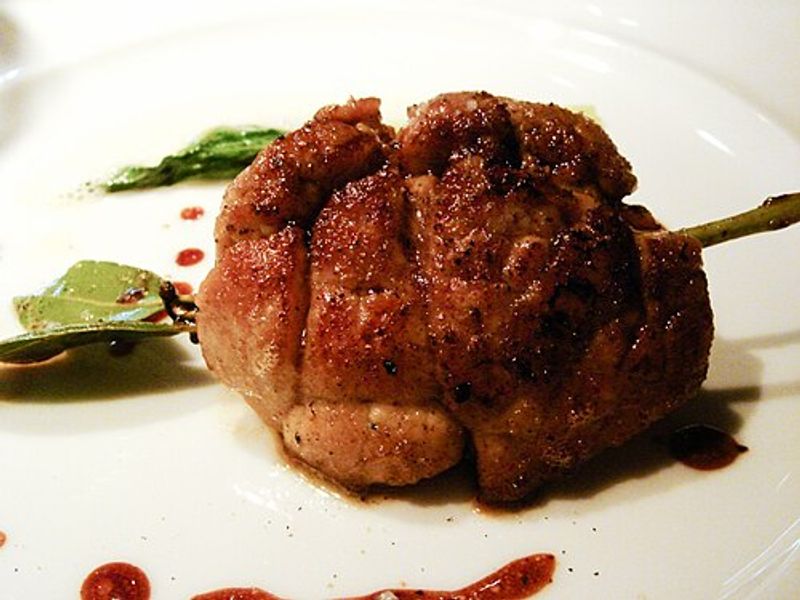
Sweetbreads sound like a delightful bakery item, which makes the reveal all the more startling. Actually the thymus gland or pancreas of a calf or lamb, sweetbreads are a classic fine-dining delicacy served at upscale American restaurants for well over a century.
Seared golden brown, the outside crisps beautifully while the inside stays creamy.
Most Americans, once informed of what sweetbreads actually are, immediately change their order. Organ meats carry a social stigma in modern American food culture, even when chefs prepare them brilliantly.
However, the flavor is rich, buttery, and mild, nothing like what the name or origin suggests. European and Latin American cuisines have celebrated sweetbreads for centuries.
Honestly, the name does most of the heavy lifting in scaring people away.
16. Haggis
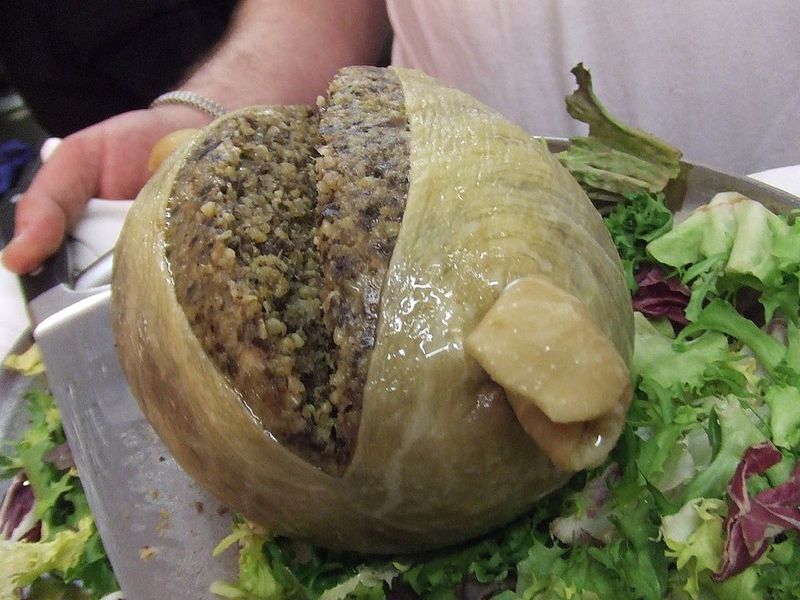
Haggis might be Scotland’s national dish, but Scottish-American communities across states like North Carolina and Virginia have kept the tradition alive for generations. Minced sheep heart, liver, and lung mixed with oatmeal, onions, and spices, traditionally cooked inside a stomach lining, haggis is a dish built entirely on bold culinary courage.
Most Americans hear the ingredient list and immediately file haggis under “absolutely not.” The combination of organ meats and oatmeal inside an animal stomach is a lot to process before dinner. However, the flavor is hearty, peppery, and warming, far more approachable than the description suggests.
Burns Night celebrations every January 25th keep haggis on American tables proudly. Sometimes the most intimidating dishes carry the most satisfying surprises.