16 Opening Lines In Literature Everyone Knows
Some sentences stick with you forever, like a catchy song you can’t shake from your brain.
Opening lines in books have this magical power to grab readers by the collar and pull them into entire worlds with just a few words.
Regardless of if you’ve read these novels or just saw people quote them, these iconic first sentences have become part of our cultural DNA, proving that sometimes the beginning really is everything.
Disclaimer: This article reflects subjective editorial perspectives on well-known literary opening lines and should not be interpreted as definitive fact or universal consensus.
1. “It Was The Best Of Times, it was the worst of time” from A Tale of Two Cities

Charles Dickens basically invented the literary mic drop with this opening in 1859.
He captures the wild contradictions of the French Revolution era in one beautifully balanced sentence that keeps going and going.
Readers get hit with paradox after paradox, wisdom and foolishness, light and darkness, all swirling together.
Teachers love assigning this because it shows how one sentence can contain an entire world of meaning and set the mood for hundreds of pages.
2. “All happy families resemble one another, each unhappy family is unhappy in its own way” from Anna Karenina

Leo Tolstoy opened his 1877 masterpiece with a truth bomb about family dysfunction.
This line suggests that while boring happy families blend together, each miserable family has its own special brand of chaos.
Psychologists and therapists still quote this opener because it nails something universal about human relationships.
Before reality TV made family drama mainstream, Tolstoy was serving up the original hot take on why unhappy households make better stories than peaceful ones.
3. “It was a bright cold day in April, and the clocks were striking thirteen” from 1984

George Orwell’s 1949 dystopian nightmare begins with something immediately wrong.
Clocks striking thirteen?
That tiny detail instantly tells readers they’ve entered a world where normal rules don’t apply.
Big Brother is watching, language is twisted, and even time itself has been messed with by the totalitarian government.
This opener has become so iconic that people reference it whenever discussing government surveillance or authoritarian overreach in modern society.
4. “It is a truth universally acknowledged, that a single man in possession of a good fortune, must be in want of a wife” from Pride and Prejudice

Jane Austen served up delicious irony in 1813 with this legendary opener.
She’s totally mocking the marriage-obsessed society of her time while pretending to state a serious universal truth.
Austen’s wit shines through immediately, setting the tone for a novel that’s both romantic comedy and sharp social commentary wrapped in bonnet-wearing elegance.
5. “It was a pleasure to burn” from Fahrenheit 451

Ray Bradbury flipped the script on firefighters in 1953 with this disturbing opener.
Instead of saving things from flames, his protagonist loves destroying books by burning them to ashes.
Four words immediately establish a world where knowledge is dangerous and censorship rules with an iron fist.
Readers instantly know they’re entering a nightmare society where thinking for yourself could get you in serious trouble, making this opening both chilling and unforgettable for generations of students.
6. “In a hole in the ground there lived a hobbit” from The Hobbit
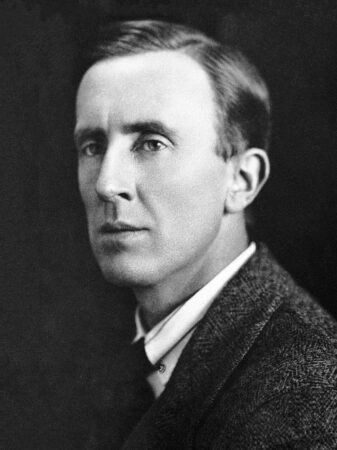
J.R.R. Tolkien opens his 1937 adventure with a sentence that sounds plain, then turns instantly enchanting.
A hole in the ground could mean misery, danger, or decay, so the line quietly dares you to keep reading.
Within a few beats, it becomes clear that the story is about comfort, curiosity, and the moment a quiet life gets interrupted.
That opener has stuck around because it feels like a campfire invitation, simple words that somehow unlock a whole world.
7. “I am an invisible man” from Invisible Man

Ralph Ellison’s 1952 masterpiece opens with a metaphor that punches you right in the heart.
His narrator isn’t literally invisible, but society refuses to truly see him as a complete human being.
Racism renders him unseen, ignored, and dismissed despite standing right in front of people.
This opening line captures the African American experience during Jim Crow era so perfectly that it still resonates today whenever people discuss being marginalized or overlooked by society.
8. “All children, except one, grow up” from Peter Pan

J.M. Barrie opened his 1911 fantasy with a line that’s both magical and heartbreaking.
Everyone grows up eventually, facing adult responsibilities and losing childhood wonder, except for one special boy.
Peter Pan gets to stay young forever, which sounds amazing until you think about what he’s missing.
Parents reading this to kids often feel a little emotional because it captures something bittersweet about watching children grow, change, and eventually leave their carefree days behind them.
9. “It was a dark and stormy night…” from Paul Clifford

Edward Bulwer-Lytton wrote this in 1830, accidentally creating literature’s most mocked opening line.
Writers now avoid this phrase like spoiled milk because it’s become shorthand for overdramatic, cliché storytelling.
There’s even a yearly bad writing contest named after Bulwer-Lytton celebrating hilariously terrible prose.
Yet somehow, this opener remains famous precisely because it’s so ridiculously dramatic.
10. The man in black fled across the desert, and the gunslinger followed” from The Gunslinger

Stephen King launched his Dark Tower series in 1982 with pure cinematic action.
One sentence drops you into a chase across a wasteland, no explanation needed or given to confused readers.
Who’s the man in black?
Why is the gunslinger chasing him?
King refuses to answer immediately, forcing you to keep reading to solve the mystery.
11. “It was love at first sight” from Catch-22

Joseph Heller opened his 1961 war satire with a romantic line that immediately gets twisted.
Readers expect a love story, but Heller’s talking about a character’s absurd infatuation with military bureaucracy.
The whole novel plays with expectations like this, using humor to expose the insanity of war logic.
12. “Someone must have slandered Josef K., for one morning, without having done anything truly wrong, he was arrested” from The Trial

Franz Kafka invented a whole new type of nightmare with this 1925 opener.
Josef K. wakes up arrested for crimes nobody will explain to him, facing a justice system that makes zero sense.
The word Kafkaesque literally comes from this novel’s absurd, frustrating, bureaucratic horror.
Anyone who’s ever dealt with confusing paperwork or been blamed for something they didn’t do immediately understands the anxiety Kafka captures in this opening about being trapped in systems beyond comprehension.
13. “There was a boy called Eustace Clarence Scrubb, and he almost deserved it” from The Voyage Of The Dawn Treader

C.S. Lewis roasted his own character in the very first sentence of this 1952 Narnia adventure.
Imagine being introduced with the author saying you almost deserve your terrible name!
Poor Eustace starts as the worst, most annoying brat imaginable before his magical transformation.
Lewis’s humor shines immediately, promising readers that this journey will change Eustace completely.
14. “They shoot the white girl first” from Paradise

Toni Morrison opened her 1997 novel with a shocking, brutal sentence that demands attention.
Violence erupts immediately, but Morrison keeps crucial details mysterious throughout the entire book.
Which white girl?
Why?
Who’s shooting?
The novel circles back to this moment repeatedly, examining race, community, and violence from multiple angles.
15. “In my younger and more vulnerable years my father gave me some advice…” from The Great Gatsby

F. Scott Fitzgerald opened his 1925 Jazz Age masterpiece with Nick Carraway reflecting on his father’s advice.
The wisdom?
Not everyone has had your advantages, so reserve judgment when criticizing others.
Nick claims he’s learned to be less judgmental, then proceeds to judge literally everyone he meets throughout the novel.
This ironic opener sets up Gatsby’s tragic story while establishing Nick as an unreliable narrator who thinks he’s better than he actually is at following his own advice.
16. “Mother died today. Or maybe yesterday, I don’t know” from The Stranger

Albert Camus opened his 1942 existentialist classic with chilling emotional detachment.
Meursault can’t even remember which day his mother died, showing his complete disconnect from normal human feelings.
This unsettling indifference sets the tone for a novel about a man who refuses to pretend he feels emotions society expects.
Philosophy students debate whether Meursault is honest or monstrous, making this opener a perfect entry into existentialism’s uncomfortable questions.