7 Rare Italian Meats That Belong On Your Plate
Italy has been crafting incredible cured and cooked meats for thousands of years, and most people only scratch the surface of what exists. Sure, prosciutto, salami, and mortadella are familiar, but the real magic hides deeper in the pantry, waiting for curious palates.
Across mountain villages, misty river valleys, and sun-drenched countryside farms, rare Italian meats carry stories as rich as their flavors. Each cut, carefully cured or slow-cooked, reflects a region’s soul, climate, centuries-old traditions, and the pride of the artisans who prepare it.
Hard-to-find specialties reveal unique textures, subtle spices, and a depth that instantly elevates a meal. Enthusiasts around the world are discovering just how extraordinary these hidden meats truly are.
Every bite immerses the senses, offering a taste of history, craftsmanship, and local culture. Taste buds are about to encounter an adventure worth savoring, and plates are about to be transformed into celebrations of flavor and heritage.
1. Culatello di Zibello
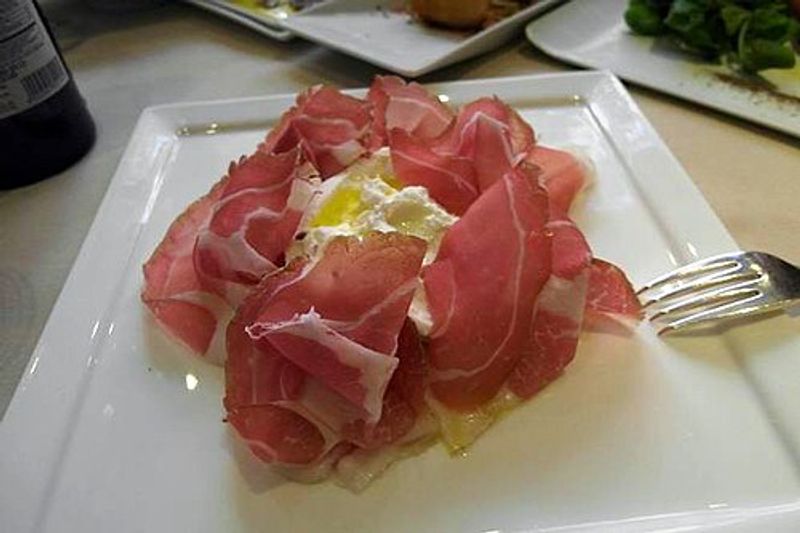
Crowned the king of Italian cured meats by food lovers and chefs alike, Culatello di Zibello earns every bit of royal treatment. Crafted from the muscular heart of a pig’s hind leg, it undergoes a slow aging process of at least 12 months inside the misty Po Valley of Parma.
How does fog make meat taste better? Surprisingly, the humid microclimate is essential to developing its silky, sweet, almost buttery flavor.
Production is strictly limited, making each slice genuinely precious. If you ever spot it at a specialty deli, grab it without hesitation because opportunities like this are rare gold.
2. Mortadella di Campotosto
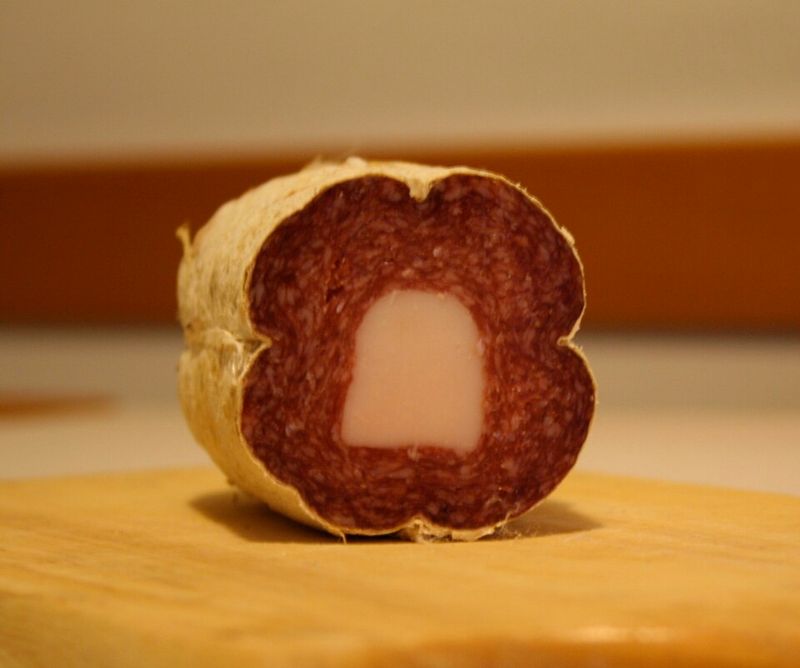
Shaped like a small football and hiding a secret inside, Mortadella di Campotosto is one of Italy’s most fascinating charcuterie surprises. Produced exclusively in the Monti della Laga mountains of Abruzzo, it uses pork raised in those specific highlands, giving it a clean, earthy depth unlike anything mass-produced.
Here’s the coolest part: a cylinder of pure white lard runs straight through the center like a flavor trophy waiting to be discovered. Fine-grained, firm, and deeply savory, every slice delivers layers of complexity.
Limited batches mean foodies sometimes wait months to get hold of a link worth celebrating.
3. Bollito Misto
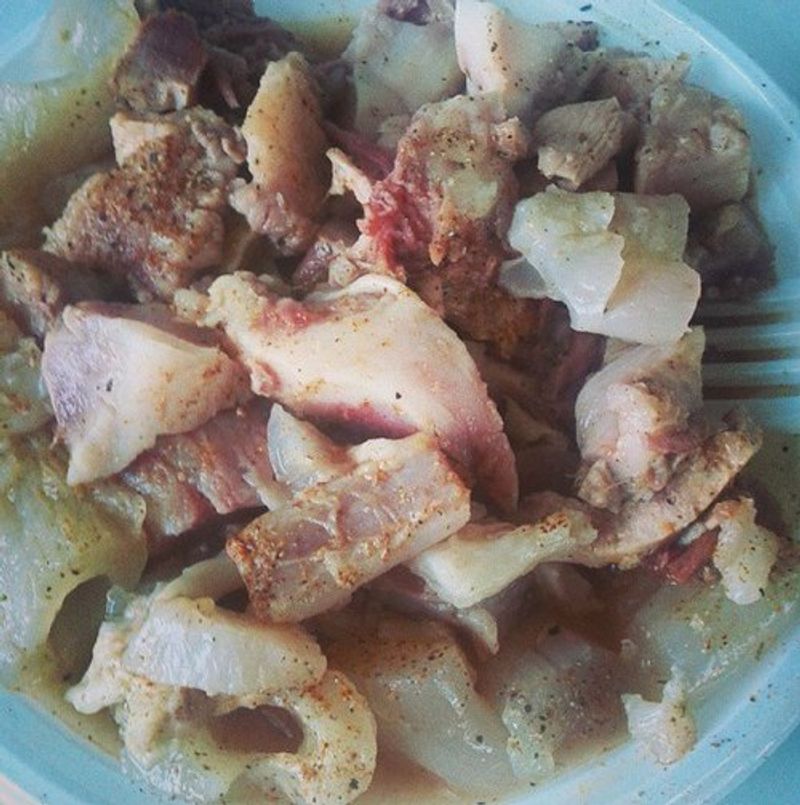
Slow-cooked to soul-warming perfection, Bollito Misto is the Italian Sunday dinner that legends are made of. Various cuts of beef, veal, cotechino sausage, and sometimes poultry all simmer together in a fragrant vegetable broth until everything melts into tender, deeply satisfying harmony.
No two regions make it exactly alike, which keeps every version exciting.
Piedmont adds its own herbs, Lombardy stirs in extra sausage, and Emilia-Romagna serves it alongside bold green sauces. It’s a communal, generous dish built for long tables and loud laughter.
Rare in modern restaurant menus, Bollito Misto rewards anyone lucky enough to find an authentic version.
4. Guanciale
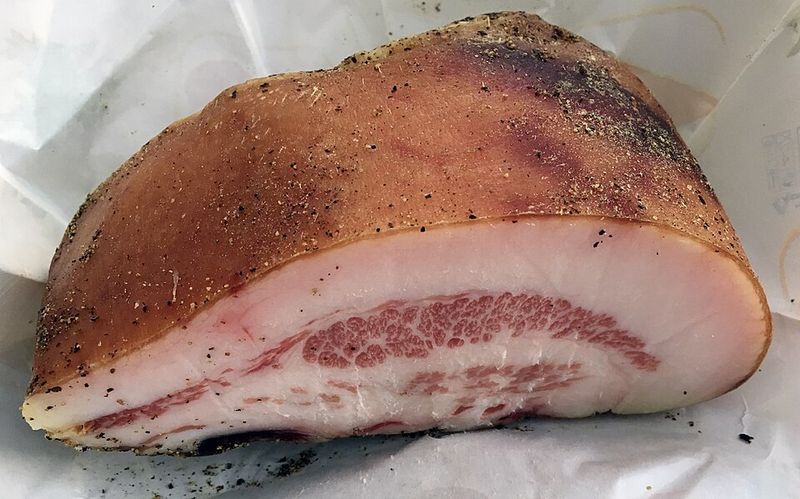
Made strictly from the jowl or cheek of the pig, Guanciale carries a richness that pancetta simply cannot match. Its fat-to-meat ratio is gloriously generous, creating an almost creamy melt when cooked low and slow in a pan.
Roman chefs swear by it as the non-negotiable backbone of authentic pasta alla carbonara and amatriciana.
Substitute it and Romans will politely but firmly disagree. Aged for at least three months, sometimes rubbed in black pepper or chili, the cured exterior gives way to incredibly fragrant, porky depth.
Hard to find outside specialty shops, Guanciale rewards every curious cook bold enough to seek it out.
5. Salame Ticinese
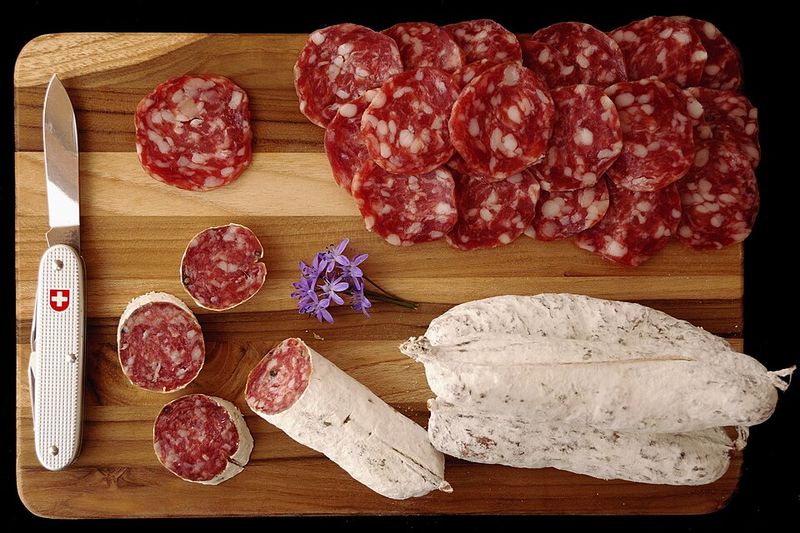
Hailing from the Ticino region, a cultural crossroads where Italian and Swiss traditions blend beautifully, Salame Ticinese stands apart for its boldly coarse grind. Unlike smoother, finer-textured salami varieties, each bite here has real chew and hearty character.
It’s often shaped into smaller sausages called salametti, perfect for snacking straight off a charcuterie board.
Regional pride runs deep in every link, reflecting centuries of mountain craftsmanship and local pork-raising traditions. How rare is it outside its home region?
Extremely. Specialty Italian delis occasionally stock it, but finding a truly authentic version means you’ve genuinely uncovered something extraordinary worth sharing at every dinner party.
6. Lardo di Colonnata
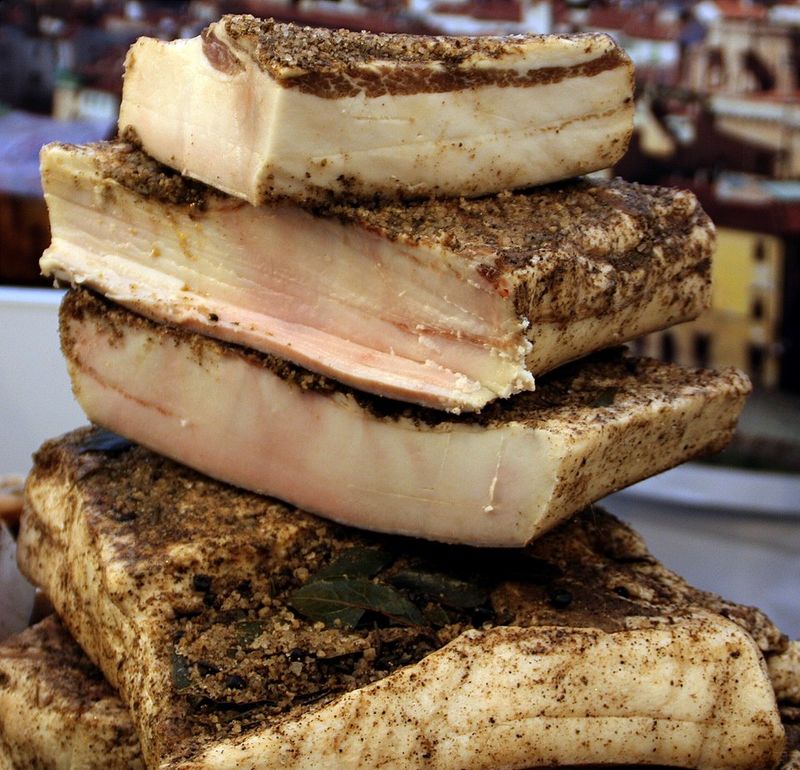
Aged inside carved marble basins in the mountain village of Colonnata, Lardo di Colonnata turns something as humble as pork fatback into an extraordinary delicacy. The marble basins are rubbed with garlic, then layered with the fat alongside rosemary, black pepper, cinnamon, and sea salt.
The result after six months of curing is silky, melt-on-your-tongue perfection.
Locals have been making this since Roman times, and the Apuan Alps air plays a real role in shaping its flavor. Serve it draped over warm toasted bread and watch it slowly melt.
One bite explains why this tiny village has world-famous status.
7. Coppa di Testa
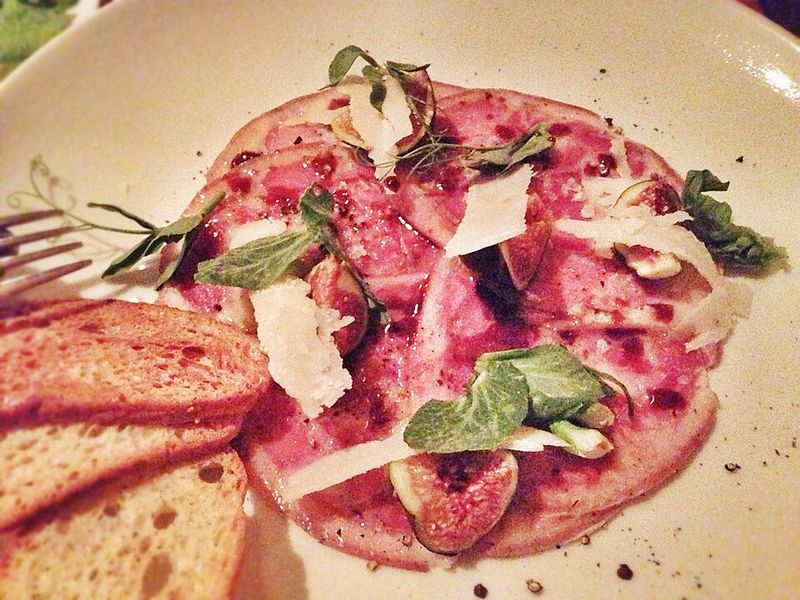
Not for the faint of heart, Coppa di Testa is Italy’s bold answer to head cheese, made by slow-cooking an entire pig’s head and pressing the meat into a terrine-style loaf. Every region in Italy has its own version, seasoned with orange zest, cloves, pistachios, or chilies depending on local tradition.
The texture is tender and gelatinous, packed with rich, savory flavor that pairs beautifully with sharp pickles and crusty bread. Street markets and old-school salumerias are your best bet for finding an authentic slice.
It rewards adventurous eaters with a deeply satisfying taste of old-world Italian craft.