10 Science Fiction Books For Readers Still Thinking About Project Hail Mary
Finished Project Hail Mary, closed the book, and just, stared at nothing for a while.
Brain tries to move on, but nope, it is still up there in space solving problems and thinking about that ending like it has unfinished business.
Good news, that same mix of science, surprises, and emotional “oh wow” moments is not a one-time experience.
1. The Martian By Andy Weir
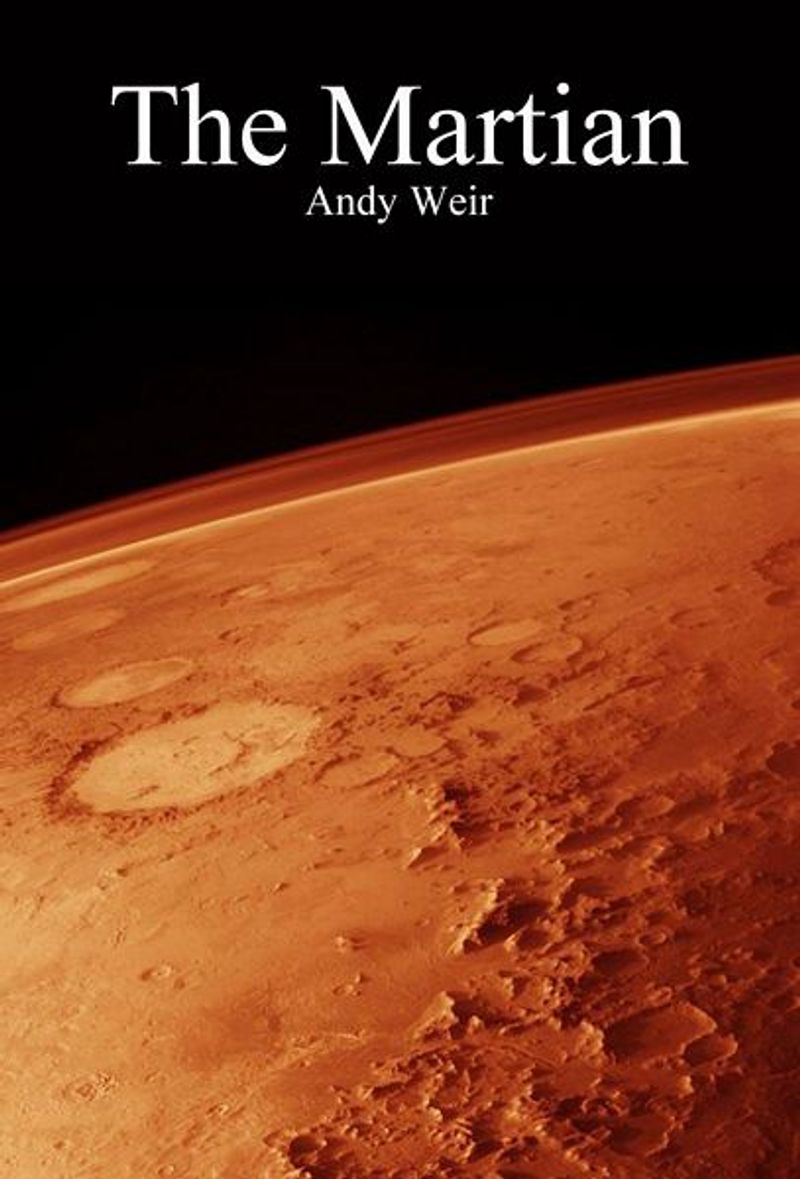
Stranded on Mars with nothing but potatoes, duct tape, and sheer stubbornness keeps the situation feeling oddly manageable. The Martian reads like Project Hail Mary’s first cousin, twice removed and just as brilliant.
Mark Watney builds his survival one clever workaround at a time, and the steady problem-solving rhythm turns everything into a puzzle worth cracking.
Andy Weir brings the same readable hard-science style to every page. Comfort food for the brain arrives dressed in a spacesuit.
2. Rendezvous With Rama By Arthur C. Clarke
Massive, silent cylinder drifts into our solar system, and nobody knows what it is.
That sense of cosmic awe, paired with the feeling of standing at the edge of something enormous and unknowable, is exactly what Clarke does better than almost anyone.
If the alien-encounter angle of Project Hail Mary kept you up past midnight, Rama delivers that same wonder in a more concentrated form.
Classic status comes easily here. Genuinely unforgettable.
3. Seveneves By Neal Stephenson
The moon breaks apart at the very start of the novel. Yes, really, that is the opening move, and Stephenson never eases up from there.
Seveneves unfolds as orbital engineering on a civilizational scale, packed with scientific detail that rewards patient readers.
Survival problem-solving feels enormous and urgent, like Project Hail Mary turned up to eleven with a full orchestra. Better keep a bookmark nearby and maybe even a spreadsheet.
4. Children Of Time By Adrian Tchaikovsky

Intelligent spiders building a civilization is either deeply fascinating or a little unsettling, depending on the reader. Tchaikovsky leans into that tension and turns it into something completely gripping.
Perspective shifts away from anything familiar, creating a form of intelligence that feels truly alien while still carrying that same curiosity and discovery energy that made Rocky stand out in Project Hail Mary.
Evolutionary biology drives the story forward like a suspense novel, and somehow it all clicks effortlessly.
5. The Three-Body Problem By Liu Cixin

Two stars are already complicated. Three make physics cry in the corner.
Liu Cixin takes the first-contact question and stretches it into something vast, cold, and genuinely unsettling, a universe where the stakes of alien communication are not warmth and wonder but survival at a civilizational level. The cosmic-science ambition here dwarfs most everything on this list.
Readers who want the bigger, darker version of that first-contact spark will find it here.
6. Contact By Carl Sagan
The question of whether anyone else is out there drives everything, with Contact wrapping it in its most compelling form. Deep-space signal changes everything at once, pulling the world into immediate arguments over what comes next.
Moments of reaching toward something larger and stranger than humanity itself echo what made Project Hail Mary so gripping.
Hope shows up through science. Quiet depth lingers, leaving behind something genuinely beautiful.
7. The Calculating Stars By Mary Robinette Kowal

Sharp competence defines a mathematician and pilot whose presence makes every room feel smaller, turning a fight to become an astronaut in an alternate 1950s America into something deeply satisfying to follow.
Pressure builds from every direction, while accessible science, real mission-driven momentum, and grounded emotional stakes keep everything personal.
Focus stays closer to human grit than any deep-space quest. Relief lands in that same satisfying exhale when the math finally works out.
8. The Andromeda Strain By Michael Crichton

A satellite lands near a small Arizona town, and the discovery triggers an urgent scientific investigation, setting the stage for one of the most methodical scientific investigations in thriller fiction.
What follows unfolds with precise control, focusing on process instead of spectacle, with each step building tension in a steady, deliberate way.
Careful, step-by-step problem-solving mirrors the same rhythm that makes Project Hail Mary so satisfying to read, driven by smart people facing an unknown biological danger with no margin for error. Procedural science fiction operates at its sharpest here.
9. Blindsight By Peter Watts
Fair warning: Blindsight is not a warm hug. It is a cold, brilliant, deeply disorienting examination of consciousness, identity, and what intelligence might actually look like when it has nothing in common with us.
Watts handles first contact with maximum scientific and philosophical intensity, and the questions it leaves behind are the uncomfortable kind that sit with you for weeks.
Darker than Hail Mary. Equally impossible to forget.
10. The Sparrow By Mary Doria Russell

First human mission to another star unfolds under the guidance of a Jesuit priest, which already signals something far from a typical first-contact adventure.
Careful attention to language and culture shapes the alien world, while the emotional aftermath of first contact lingers in a way few science fiction novels manage.
Focus shifts away from engineering puzzles and settles into the human cost. Lingering ache returns if Project Hail Mary left one behind, and The Sparrow deepens it beautifully.
Disclaimer: This article is provided for general informational and entertainment purposes and is based on publicly available publisher descriptions and bibliographic records at the time of writing.