Spanakopita, A Golden Legacy Of Comfort And Tradition In A Greek Kitchen
There is something magical about watching phyllo dough transform in the oven, shifting from translucent sheets into a golden, crackling masterpiece that shatters at the slightest touch.
Spanakopita: a must when the weather becomes gloomy and your soul aches for comfort.
1. What Makes Spanakopita Special
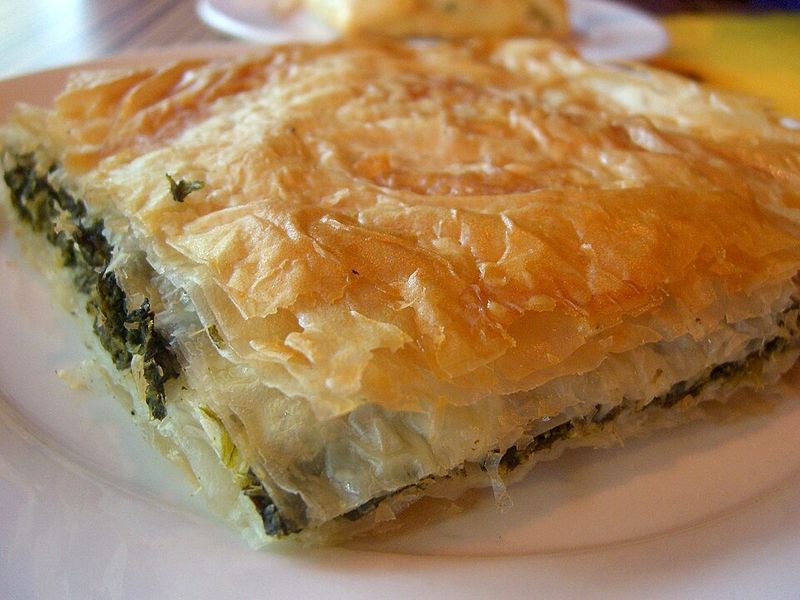
Spanakopita carries centuries of Mediterranean tradition in every bite, a dish so beloved across Greece that its name simply combines the words for spinach and pie, as if nothing more needs to be said.
The beauty of this savory creation lies in its deceptive simplicity: wilted spinach mingling with crumbled feta and ricotta, brightened by fresh herbs and lemon zest, all encased in paper-thin pastry that becomes impossibly crisp.
2. Building The Perfect Filling
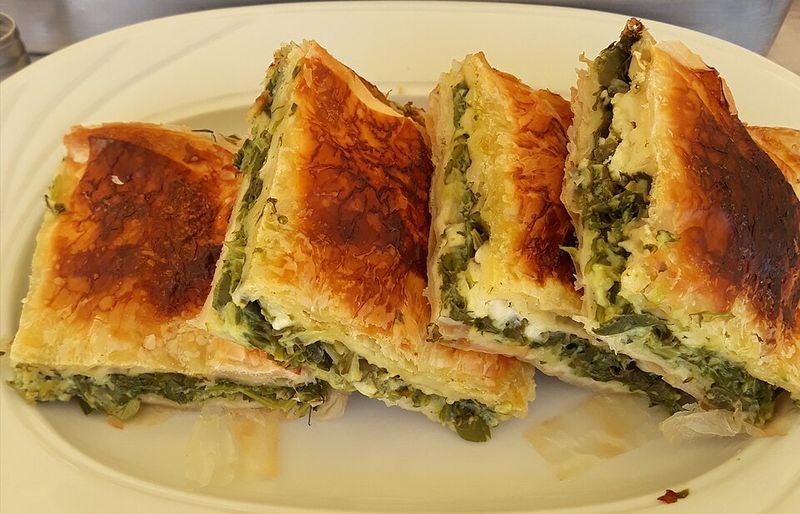
Start by coaxing chopped onions into golden sweetness in a heated pan, then add roughly two pounds of fresh spinach and watch it collapse into a fraction of its original volume within minutes.
The key is draining away every drop of excess moisture, squeezing the cooked greens until they’re almost dry, because water is the enemy of crispy phyllo.
In a large bowl, break apart twelve ounces each of feta and ricotta with your hands, letting the cheeses crumble into irregular chunks that will create pockets of creaminess throughout the filling.
Fold in your drained spinach along with chopped spring onions, fresh parsley, dill, and the fragrant zest of one lemon, seasoning with salt, pepper, nutmeg, and dried oregano until the mixture smells like a Greek grandmother’s kitchen.
3. The Art Of Layering Phyllo

Now comes the meditation of layering—brush your baking dish with olive oil, then gently lay down a sheet of phyllo, letting the edges drape over the sides like a tablecloth.
Paint each layer with more olive oil using a soft brush, working quickly but carefully since these sheets tear more easily than tissue paper.
Build your base with three or four layers, then spread your spinach mixture evenly across the surface, smoothing it into every corner.
Cover your filling with three more sheets of phyllo, again brushing oil between each one, then fold those overhanging edges back over the top to seal everything inside.
Take your sharpest knife and score the surface into portions before baking—trying to cut through baked phyllo often results in an explosion of flaky shards across your kitchen.
4. From Oven To Table

Slide the dish into a preheated oven at 350 degrees and wait forty-five minutes while your house fills with the scent of butter and herbs and possibility.
The finished pie emerges bronze and gleaming, its surface crackled like ancient pottery, and it demands fifteen minutes of patience before you can cut into it without everything falling apart.
Spanakopita doesn’t need to be piping hot to be perfect—it’s equally delicious at room temperature, making it ideal for gatherings where food sits out for hours.
5. Making It Your Own
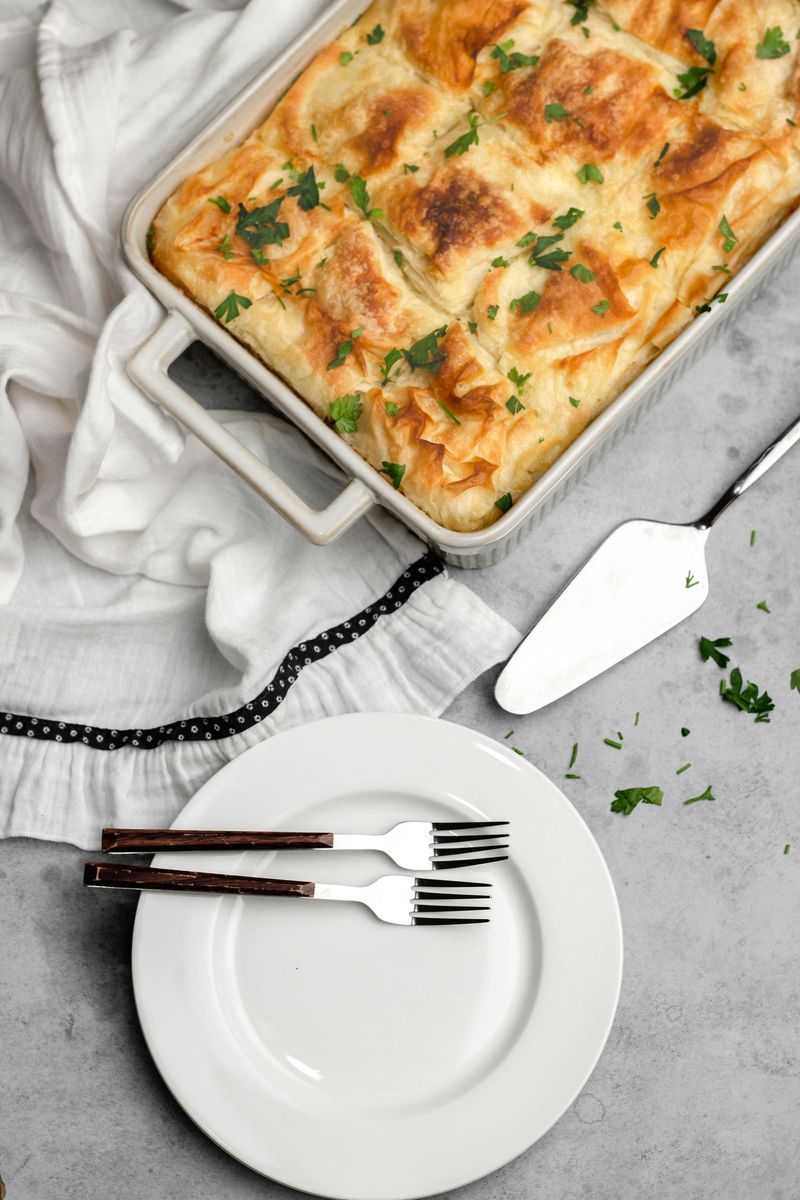
You can assemble the entire thing a day ahead and keep it refrigerated until guests arrive, or bake it that morning and serve it alongside tzatziki, Greek salad, or roasted vegetables.
Leftovers keep for three days in the fridge, though the phyllo softens overnight and might need a few minutes in a hot oven to regain its snap.
For those who want to experiment, the filling welcomes additions like sautéed leeks, roasted red peppers, or even ground meat for heartier appetites.
During Greek Lent, traditional cooks make a dairy-free version using only spinach, onions, and herbs, proving that sometimes the simplest combinations are the most satisfying.
6. Why This Dish Endures

If phyllo intimidates you, puff pastry makes an acceptable substitute, though purists might protest that it’s not quite the same experience.
The real secret is confidence—phyllo forgives imperfection, and patched-together sheets bake up just as beautifully as pristine ones.
This is food meant for sharing, for breaking bread with people you love, for celebrating the way Greeks have celebrated for generations around tables laden with simple, perfect things.