The Best Meats To Order At Korean Barbecue And How To Cook Them
Korean barbecue turns every meal into a sizzling adventure where you control the grill and create flavors that dance on your tongue.
Choosing the right meat makes all the difference between a good meal and an unforgettable feast.
This article offers general culinary information about Korean barbecue traditions, ingredients, and cooking methods. Individual preparation results may vary based on equipment, ingredient quality, and personal technique. Readers should follow safe food-handling practices and adjust cooking times to ensure meats are fully and safely cooked.
1. Marinated Beef Short Ribs (Galbi, 갈비)

Galbi uses cross-cut beef short ribs soaked in a sweet soy, garlic, and fruit-based marinade until every piece smells rich and savory.
Lay slices on medium-high heat, let the sugar caramelize, then flip often so the edges char gently without burning.
Cut with scissors into bite-size pieces on the grill and eat right away in lettuce wraps with rice and condiments.
2. Marinated Beef Slices (Bulgogi, 불고기)
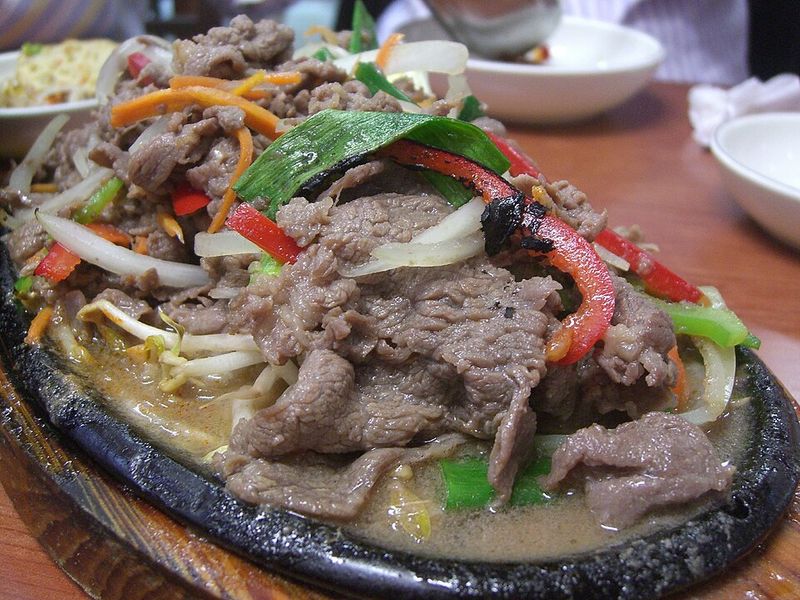
Bulgogi features ultra-thin beef, usually ribeye or sirloin, marinated in soy sauce, pear or apple, garlic, sesame oil, and a touch of sweetness.
Spread the slices in a single layer on a hot grill or grill pan, letting them sizzle just until browned and glossy, then flip quickly because they cook in seconds.
Pull pieces off as soon as the pink fades so the meat stays tender instead of drying out.
3. Pork Belly Strips (Samgyeopsal, 삼겹살)
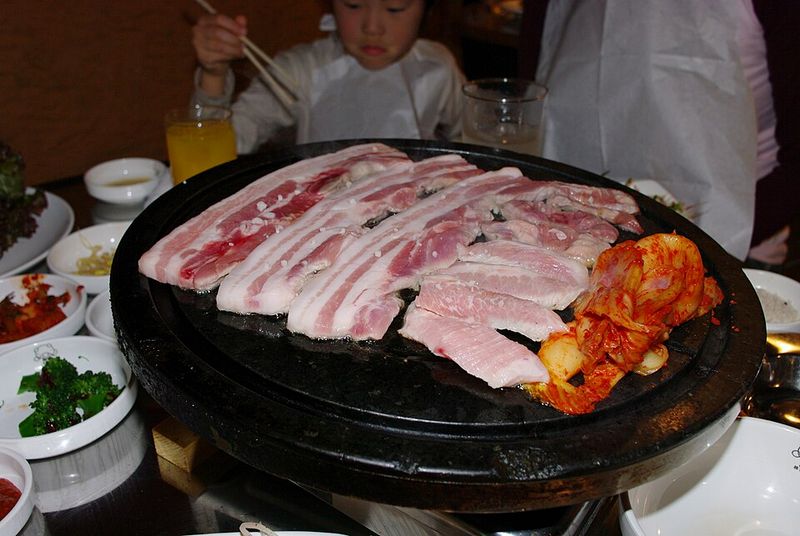
Samgyeopsal comes as thick, fatty pork belly slices that need no marinade at all.
Place strips on a hot grate, render the fat until it smells toasty, and wait for the surface to turn golden and crisp before cutting into bite-size pieces.
Keep flipping so both sides get crunchy edges, then dunk in sauce and wrap with lettuce and kimchi for a perfect bite.
4. Grilled Pork Shoulder (Moksal-gui, 목살구이)
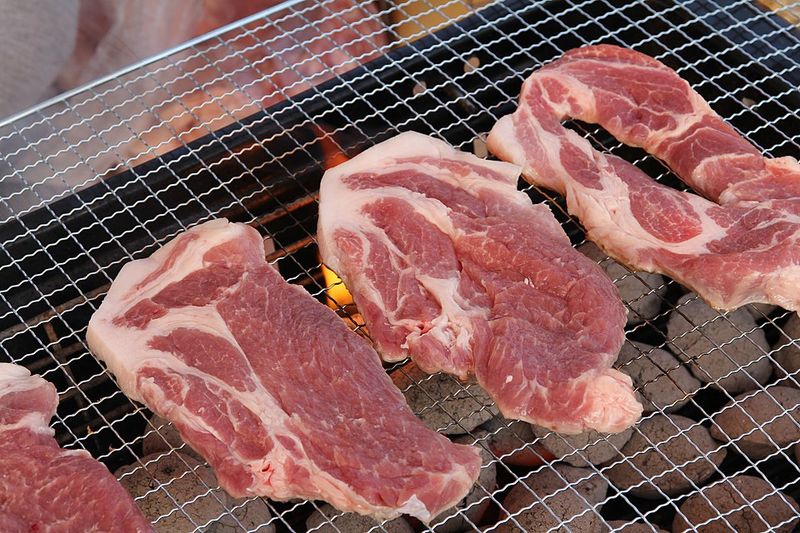
Moksal-gui uses pork shoulder, which has a bit more chew and lean meat than belly, often sliced into thick slabs.
Season simply with salt, pepper, or a light marinade, then grill over medium to medium-high heat so the outside browns while the inside stays juicy.
Turn the slices a few times and cut into strips once the center is no longer raw and the surface looks nicely seared.
5. Grilled Beef Sirloin Or Ribeye (Deungsim-gui, 등심구이)
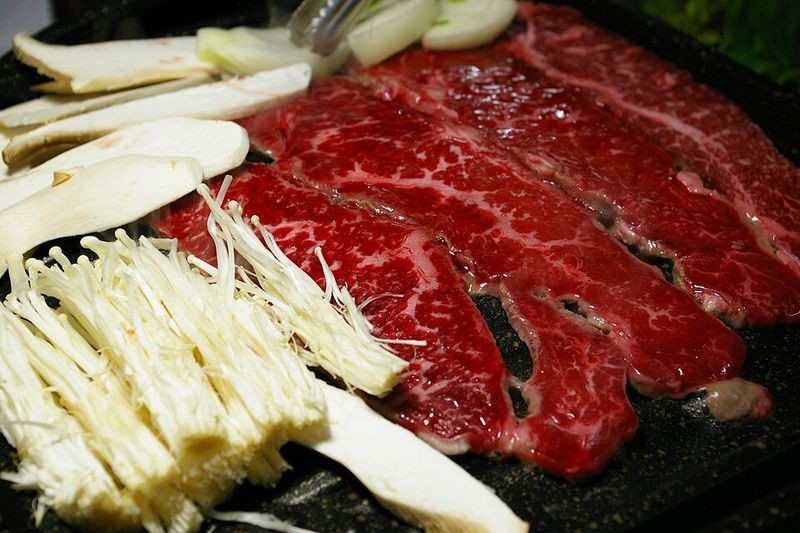
Deungsim-gui focuses on quality beef like sirloin or ribeye, often just seasoned with salt so the natural flavor stands out.
Start with a very hot grill, sear each side until a brown crust forms, then move the meat to a slightly cooler spot to finish to your preferred doneness.
Slice across the grain into thin strips right on the grill plate so every piece feels tender and rich.
6. Beef Small Intestines (Gopchang-Gui, 곱창구이)
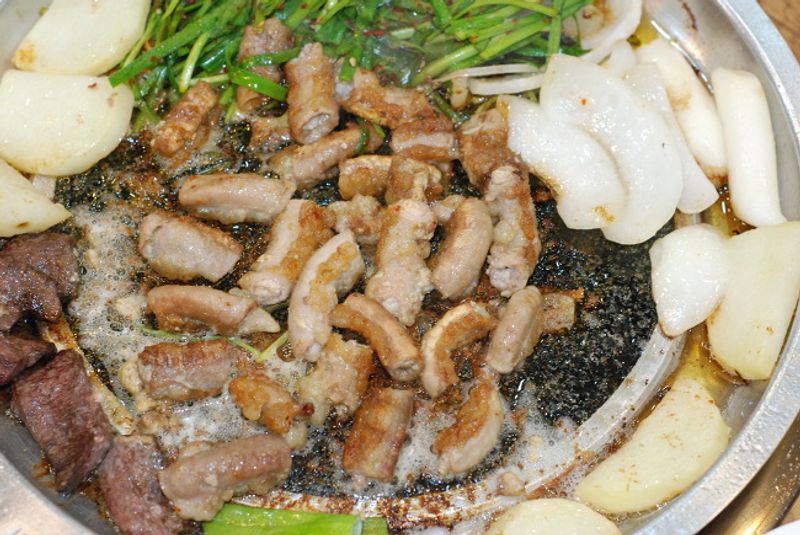
Gopchang-gui uses beef small intestines that are cleaned and often parboiled before grilling, giving off a deep, toasty aroma as the fat renders.
Arrange pieces on the grill and cook over medium heat until the outer surface turns browned and crisp, with a slightly bouncy center.
Turn frequently so the fat doesn’t flare too hard and keep going until everything is cooked through and glistening.
7. Pork Large Intestines (Makchang-Gui, 막창구이)

Makchang-gui features thick pork intestines that bring a smoky, chewy bite when properly prepared and grilled.
Cook pieces slowly over medium heat so excess fat renders and the outside gradually turns golden and slightly crisp.
Keep turning and let the pieces stay on the grill a bit longer than other meats so they are thoroughly cooked and firm with a pleasant chew.