The Deli Rules That Set Jewish Delis Apart
Step inside, don’t be shy. If the door sticks a little, that just means it’s been opened a million times by people who knew where the good stuff lives.
We move fast, we talk loud, and we pile it high. That’s not chaos, that’s tradition.
You’ll hear a little teasing at the counter, maybe a debate about who slices it thinner, but it’s all love.
Pull up a chair and settle into the rhythm of the room. One bite can make the place feel familiar fast.
Treat The Sandwich As Set
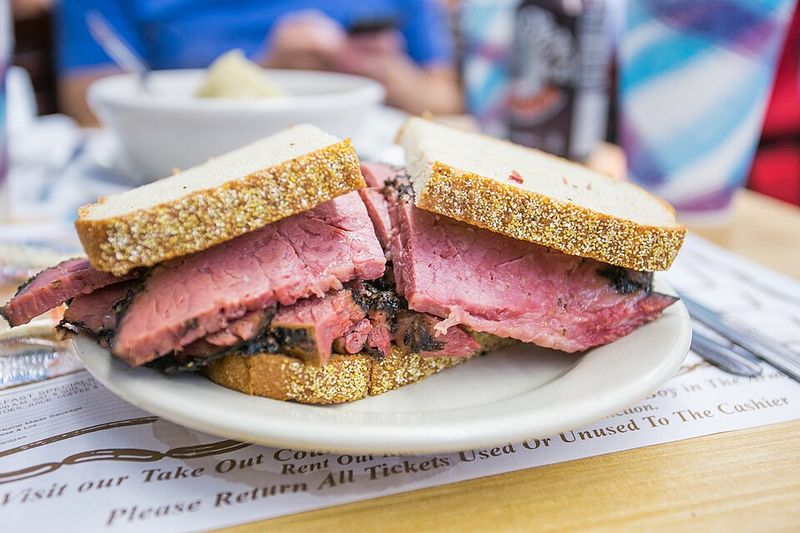
After five long minutes studying the menu board, you finally step up to the counter. Behind the glass, the deli worker is already slicing pastrami before a word leaves your mouth.
Requesting white bread instead of rye or trading mustard for mayo can clash with the house tradition.
Generations refined those sandwiches into what they are today, and altering them can feel like tinkering with a guarded family recipe.
Confidence in the deli’s craft reveals why regulars rarely ask for substitutions.
Rye Is The Default
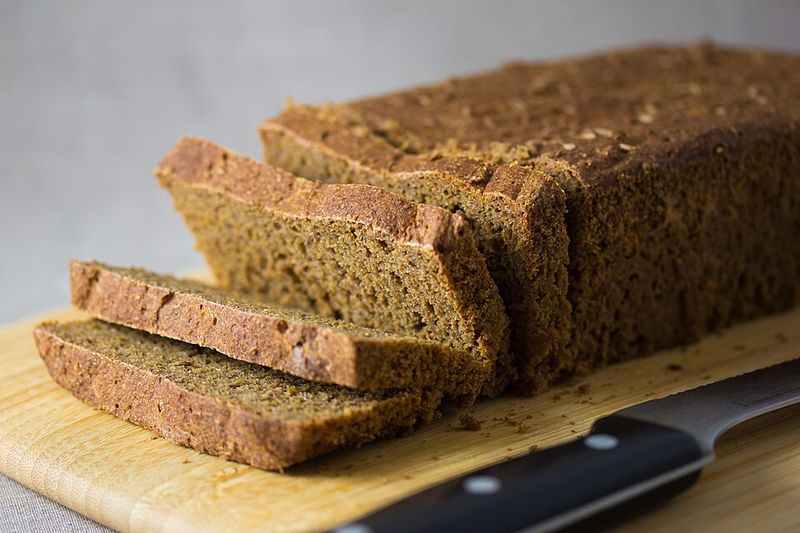
The bread matters more than most people think. Rye has that slightly sour tang and dense chew that holds up to thick-cut meat without turning soggy.
Caraway seeds add a little bite that cuts through the richness.
Switching breads changes the balance and takes it further from the classic deli style. It’s like ordering pizza without cheese – technically possible, but why?
Mustard Belongs There
Spicy brown mustard stands as the only condiment that truly belongs here. Sharp heat slices cleanly through the richness of pastrami or corned beef.
Mayo weighs everything down and dulls the flavor. Ketchup is uncommon in this context.
For a sandwich that tastes the way it should, allow the mustard to work without distraction.
Cheese Is Conditional

Some delis serve cheese on sandwiches.
Some don’t, often because the deli keeps kosher rules about separating meat and dairy. Kosher law says you can’t mix meat and dairy, so a pastrami sandwich with Swiss cheese isn’t happening at a kosher spot.
If the deli isn’t kosher, cheese might be an option, but even then, purists skip it. Know the rules before you ask.
Go With The Flow Of The Room

Control is not the currency inside a traditional deli. Seats are assigned as space opens up, sometimes placing you beside complete strangers.
Service can feel brisk, playful, or briefly inattentive, depending on the moment.
Resistance to that tempo only turns a simple meal into an unnecessary struggle.
Ease into the routine, place the order, enjoy the food, and allow the place to operate as it always has.
Tongue Is Worth A Try
Beef tongue may sound unusual at first mention. Flavor turns out to be tender and rich, with a surprisingly mild profile and a texture that sits between brisket and pot roast.
Generations of delis have kept it on the menu, making each bite part of a long culinary tradition. Ordering only pastrami each visit means overlooking a large portion of what is offered.
Next time at the counter, consider stepping beyond the usual choice and giving it a try.
Pastrami On Rye

First visit to a Jewish deli calls for pastrami on rye. Signature order sets the standard and introduces everything people rave about.
At kosher-style delis, a Reuben often shows up as a popular menu staple, even though the classic version isn’t kosher because it combines meat and cheese. Either option delivers a satisfying, authentic experience without unnecessary complication.
Exploration of more adventurous choices can wait for a second round once the classics have made their impression.
Pickles Aren’t Extra
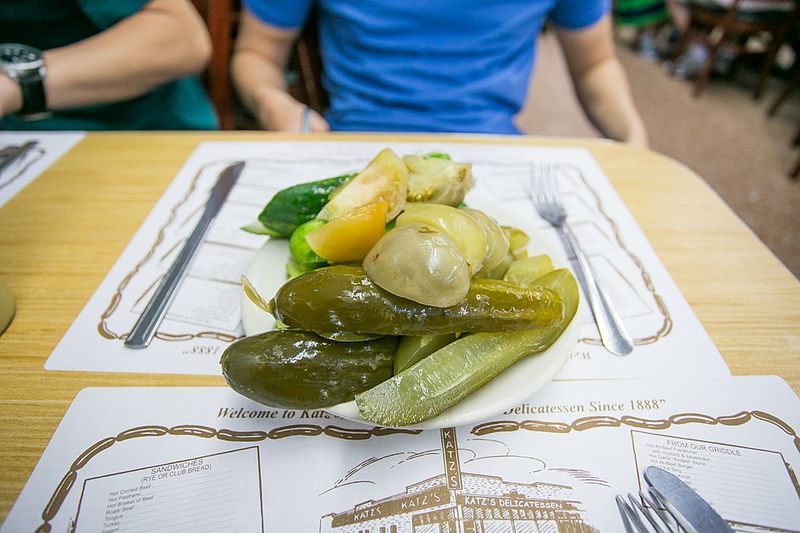
Pickles arrive at the table without a request, and that detail carries meaning.
Rather than serving as a simple side, they play an active role in balancing the meal. Sharp brine cuts through rich flavors and refreshes the palate between bites.
Half-sours and full-sours each bring a different snap, and plenty of counters rotate in other briny surprises.
Before leaving, make space for dessert, because rugelach or a classic black-and-white cookie completes the experience.
Important: This article describes commonly discussed customs and ordering norms associated with Jewish delis and kosher-style delicatessens, along with a brief note on kosher dietary rules where relevant.
Practices can vary by region, ownership, and whether a deli is strictly kosher or primarily “kosher-style,” so individual menus and house traditions may differ.