The World’s Most Ancient Sites Still Welcoming Visitors Today
Standing in locations shaped by human hands long before written history changes how the past feels under your feet.
Ancient communities lived, worshiped, and engineered remarkable structures that reveal just how inventive early societies truly were.
Stone circles, subterranean temples, and enduring monuments have survived conflict, climate, and centuries of change.
Exploring these sites turns distant history into something tangible, vivid, and impossible to forget.
Disclaimer: This article is intended for general informational and educational purposes. Interpretations of ancient sites may evolve as new archaeological research emerges, and visitor access or conditions may change over time.
1. Göbekli Tepe, Şanlıurfa Province, Türkiye
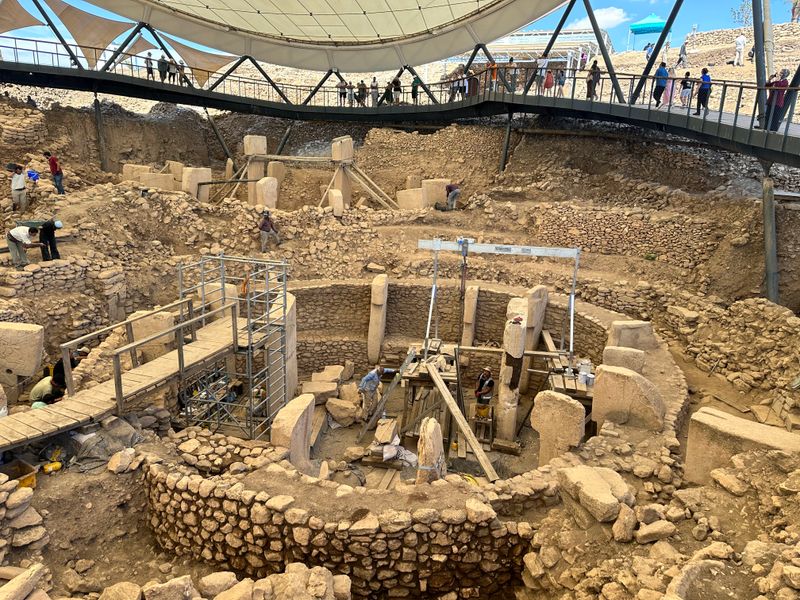
Carved stone pillars stand in circles, decorated with animals like foxes and scorpions, waiting to tell stories from over 11,000 years ago.
Before farming villages existed, hunter-gatherers built this sacred place on a hilltop, making it older than pottery or writing.
Walking among these T-shaped stones feels like stepping into a forgotten world where rituals and gatherings shaped early civilization.
Maybe our ancestors celebrated harvests or honored the stars here, creating humanity’s first known temple complex.
Göbekli Tepe is located at Göbeklitepe Örenyeri, Örencik Köyü Mevkii, Haliliye, Şanlıurfa, Türkiye.
2. Ancient Jericho, Tell Es-Sultan, West Bank
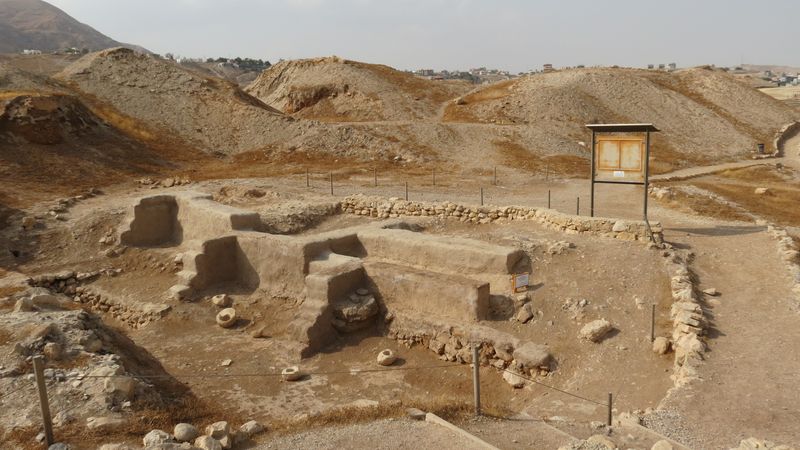
If walls could talk, the ones at Jericho would have 11,000 years of gossip to share about being one of Earth’s oldest continuously inhabited cities.
Archaeologists discovered a stone tower here that predates the invention of writing, pottery, and even the wheel by thousands of years.
Visitors climb the ancient mound where generations built homes on top of older homes, creating layers of history like a giant archaeological cake.
Honestly, standing where humans first experimented with settled life makes you appreciate your own neighborhood’s history.
Ancient Jericho is located at Tell es-Sultan (Ancient Jericho), Ein as-Sultan, Jericho, West Bank, Palestine.
3. Çatalhöyük, Konya Province, Türkiye
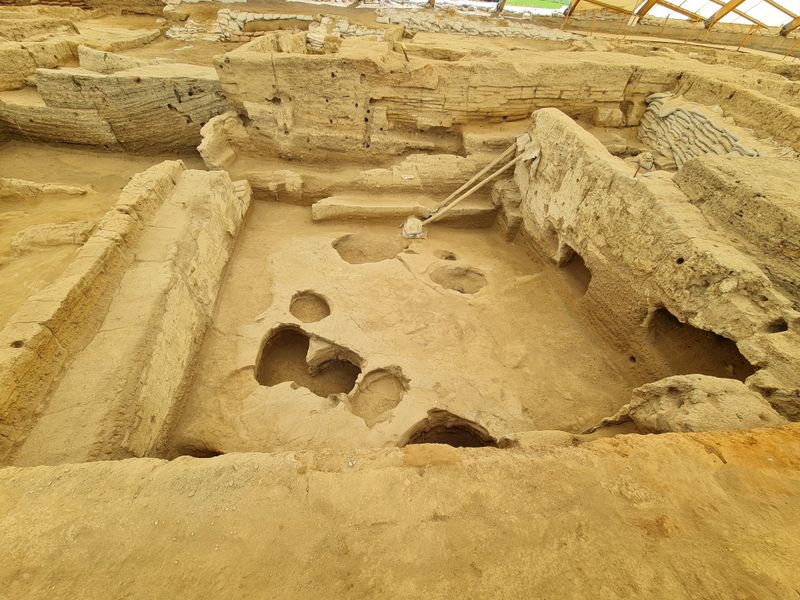
Picture a town where nobody used doors because everyone climbed through holes in their roofs to get home after a long day of early farming.
This 9,000-year-old settlement packed houses together so tightly that rooftops became the neighborhood streets where kids probably played and adults chatted.
Wall paintings inside show hunting scenes and geometric patterns that reveal how Stone Age families decorated their living spaces.
Personally, imagining life without front doors makes our modern homes seem pretty convenient by comparison.
Çatalhöyük is located at Çatalhöyük Neolithic Site, Küçükköy Mahallesi, Çatalhöyük Yolu, 42500 Çumra/Konya, Türkiye.
4. Carnac Standing Stones, Brittany, France
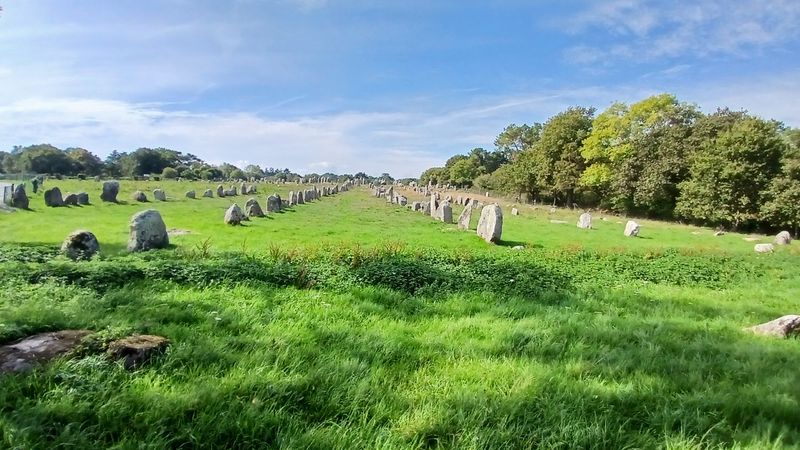
Thousands of massive stones march across French fields in perfectly straight lines, arranged by people who lived roughly 6,500 years ago.
Nobody knows exactly why these megalithic rows were created, though theories range from astronomical calendars to sacred pathways for mysterious ceremonies.
Walking between the Kerlescan alignment stones feels like wandering through a prehistoric outdoor cathedral built by determined communities without modern tools.
Curiously, moving these multi-ton rocks without cranes or trucks required serious teamwork and planning that would impress any modern construction crew.
The Carnac Standing Stones are accessed via Maison des Mégalithes, Route du Ménec, 56340 Carnac, France.
5. Ħaġar Qim, Malta
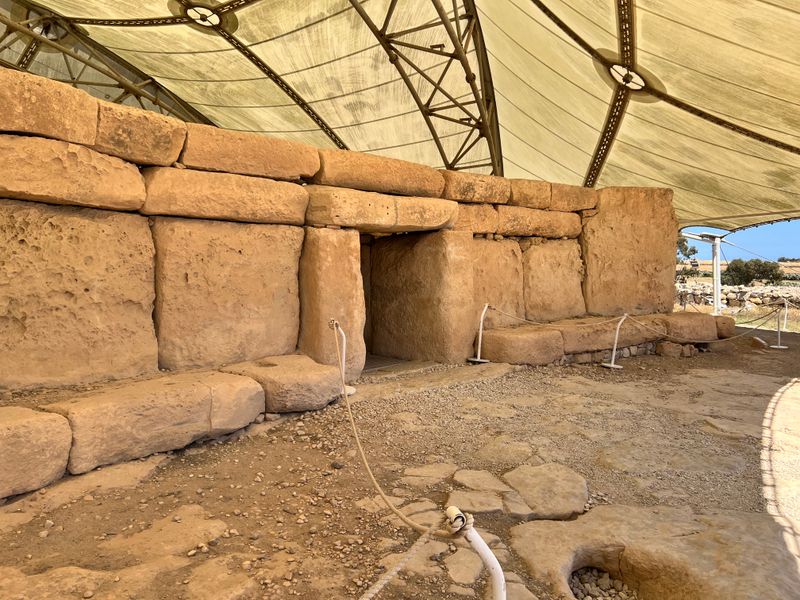
Massive limestone blocks fit together like a giant puzzle to form temples older than Stonehenge, built by islanders who clearly took their sacred spaces seriously.
These 5,600-year-old structures feature doorways, altars, and decorative carvings that show sophisticated architectural planning from the Neolithic period.
Visitors often feel amazed by how prehistoric builders moved stones weighing several tons across the rugged Maltese landscape without wheels or metal tools.
Essentially, this UNESCO World Heritage Site proves that ancient communities created masterpieces long before history books began recording their achievements.
Ħaġar Qim is located at Ħaġar Qim Temples, Triq Ħaġar Qim, Qrendi QRD 2501, Malta.
6. Hypogeum Of Ħal Saflieni, Paola, Malta
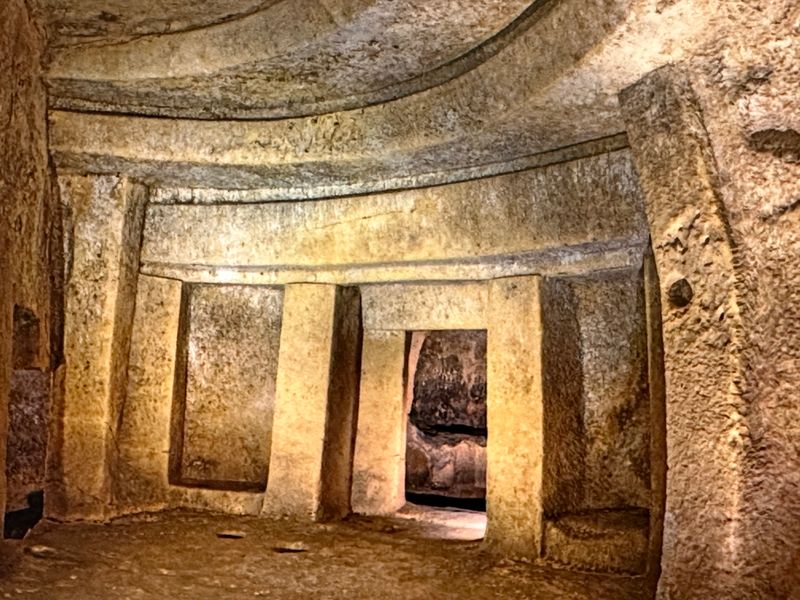
Carved entirely from solid limestone, this underground labyrinth served as both tomb and temple for Malta’s prehistoric inhabitants around 6,000 years ago.
Spiraling down through three levels, the chambers feature red ochre paintings and a special room where voices echo in haunting, musical tones.
Because preserving this fragile site matters, only a handful of visitors enter daily, making reservations essential for anyone hoping to explore its mysteries.
Surprisingly, ancient engineers created acoustic effects and artistic details underground that modern architects still study and admire today.
The Hypogeum of Ħal Saflieni is located at Ħal Saflieni Hypogeum, Triq Ic-Cimiterju, Paola PLA 1116, Malta.
7. Newgrange, County Meath, Ireland
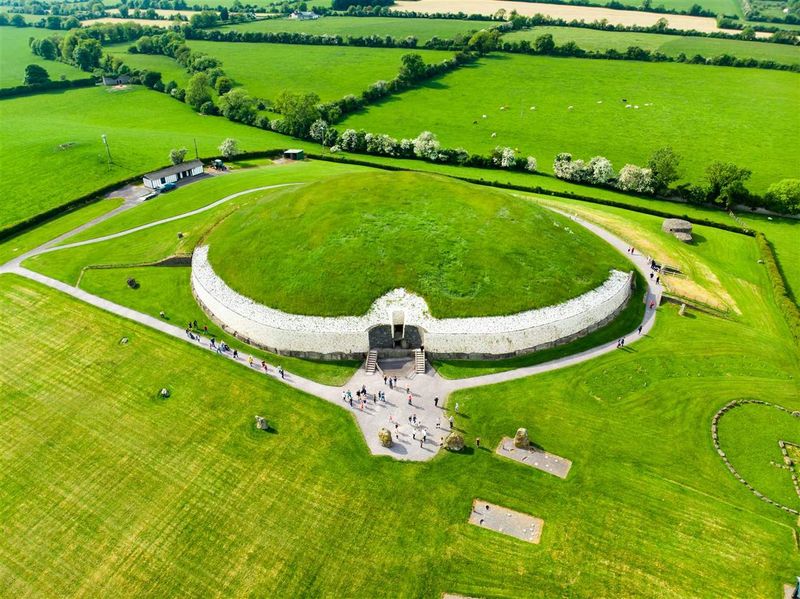
Every winter solstice, sunlight creeps through a specially designed opening and illuminates the inner chamber for exactly seventeen magical minutes.
Built around 5,200 years ago, this passage tomb with its gleaming white quartz facade predates both Stonehenge and the Egyptian pyramids by centuries.
Visitors marvel at the engineering genius required to align the structure so precisely with the sun’s movements using only Stone Age technology.
Traditionally, thousands enter a lottery each year hoping to witness the solstice sunrise inside, making it Ireland’s most sought-after ancient light show.
Newgrange is accessed via Brú na Bóinne Visitor Centre, Donore, County Meath, A92 EH5C, Ireland.
8. Stonehenge, Wiltshire, England

Massive sarsen stones topped with horizontal lintels create Britain’s most famous prehistoric monument, standing proud on Salisbury Plain for approximately 5,000 years.
Archaeologists continue debating whether this stone circle served as an astronomical observatory, healing temple, or ceremonial gathering place for ancient communities.
Builders transported bluestones from Wales over 150 miles away, demonstrating dedication and organizational skills that seem almost superhuman for the Bronze Age.
Fortunately, modern visitors can walk around this UNESCO site and ponder the same mysteries that have puzzled historians for generations.
Stonehenge is accessed via Stonehenge Visitor Centre, near Amesbury, Wiltshire SP4 7DE, United Kingdom.
9. Great Pyramid Of Giza, Giza, Egypt
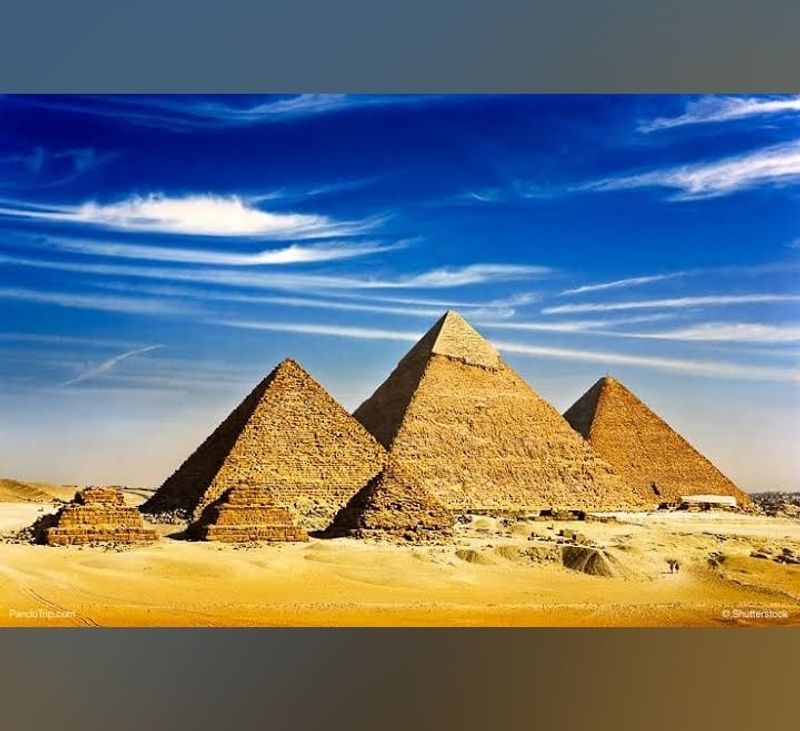
Towering 481 feet high, this architectural marvel served as Pharaoh Khufu’s tomb and remained the world’s tallest human-made structure for nearly 4,000 years.
Constructed around 4,580 years ago using roughly 2.3 million limestone blocks, it showcases ancient Egyptian engineering that still baffles modern scientists and historians.
Visitors can actually enter narrow passages leading to the King’s Chamber, experiencing firsthand what workers built with incredible precision and astronomical alignment.
Absolutely, standing beside this wonder makes you realize that ancient civilizations achieved extraordinary feats without computers, cranes, or modern mathematics.
The Great Pyramid of Giza is located at the Giza Pyramid Complex, Al Haram, Nazlet El-Semman, Giza Governorate 3512201, Egypt.
10. Mohenjo-Daro, Sindh, Pakistan
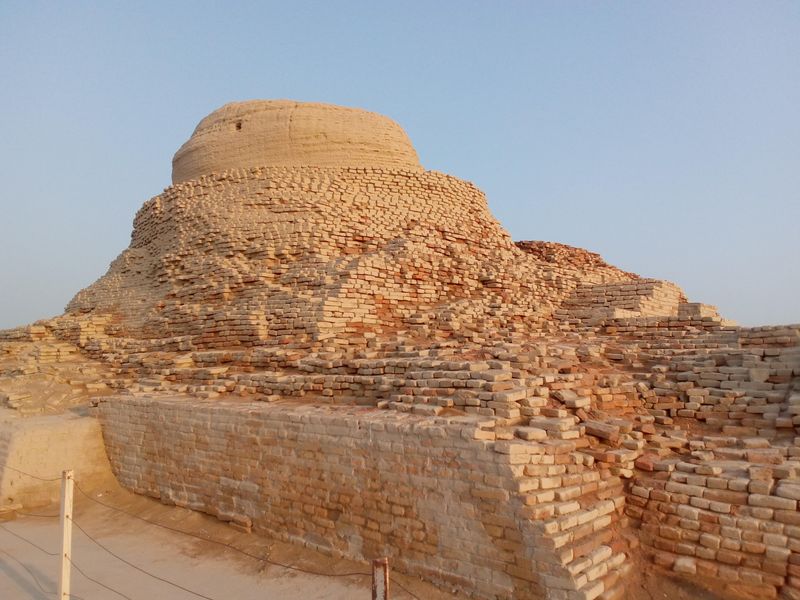
Advanced urban planning gave this 4,500-year-old city covered drains, public baths, and grid-pattern streets that rival modern town designs for efficiency and cleanliness.
Belonging to the sophisticated Indus Valley Civilization, Mohenjo-daro featured standardized bricks, weights, and measures that reveal remarkable organizational skills.
Visitors explore the Great Bath, residential areas, and granaries while imagining daily life in one of humanity’s earliest metropolitan centers.
Naturally, discovering that ancient people enjoyed organized cities with plumbing systems makes our own infrastructure seem less revolutionary than we might think.
Mohenjo-daro is located at Mohen-Jo-Daro Rd, Larkana 77371, Sindh, Pakistan.