15 Tuscan Dishes With Big Flavor And Generational Roots
Mamma mia, Tuscany doesn’t fool around with food.
Think stale bread transformed into something memorable, beans given star treatment, and olive oil woven into nearly every course. Fifteen rustic classics with deep flavor and generations of kitchen history behind them.
1. Ribollita
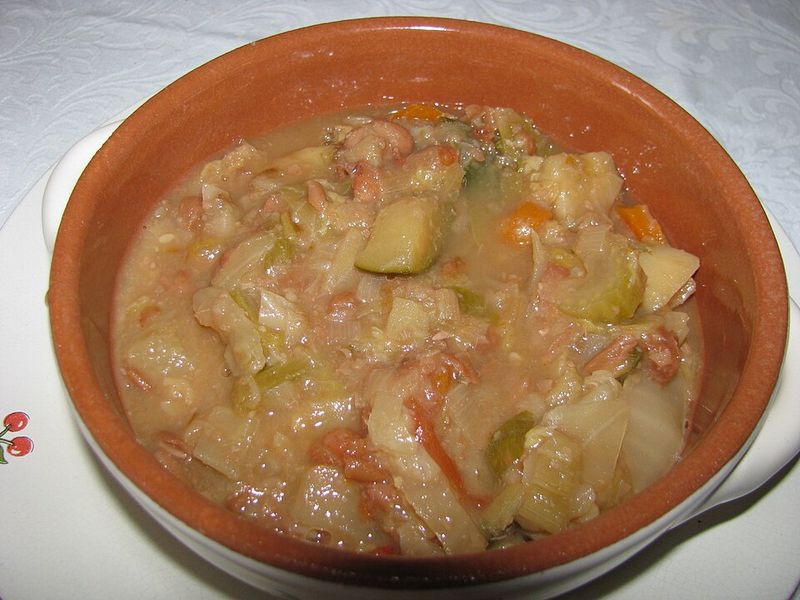
Cold tile underfoot, kettle clicking off, and a pot of ribollita bubbling on the stove set a quiet Tuscan Tuesday. Name literally means “reboiled,” since the soup was cooked twice, growing thicker and bolder each time.
Stale bread, cavolo nero, cannellini beans, and whatever vegetables the garden offered went into the pot with zero waste and maximum heart.
Ribollita stands as comfort food built from leftovers that end up stealing the show.
2. Pappa Al Pomodoro
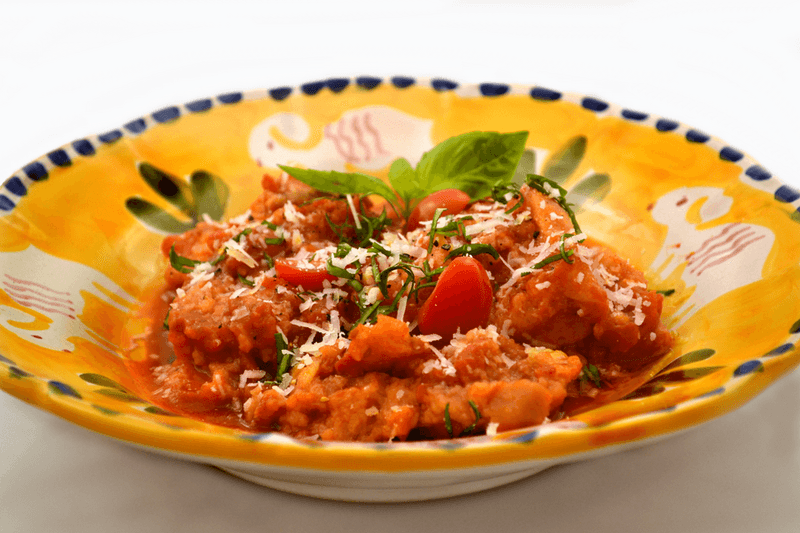
Stale bread and overripe tomatoes turned from kitchen problems into opportunity once Tuscan cooks saw potential in Pappa al pomodoro.
Gloriously thick texture lands somewhere between soup and porridge, formed as old bread melts into slow-cooked tomatoes with garlic and generous olive oil, with every Tuscan grandmother holding the “correct” version.
Served warm in winter or left at room temperature in summer, the dish settles comfortably into any season and any mood on the calendar.
3. Panzanella
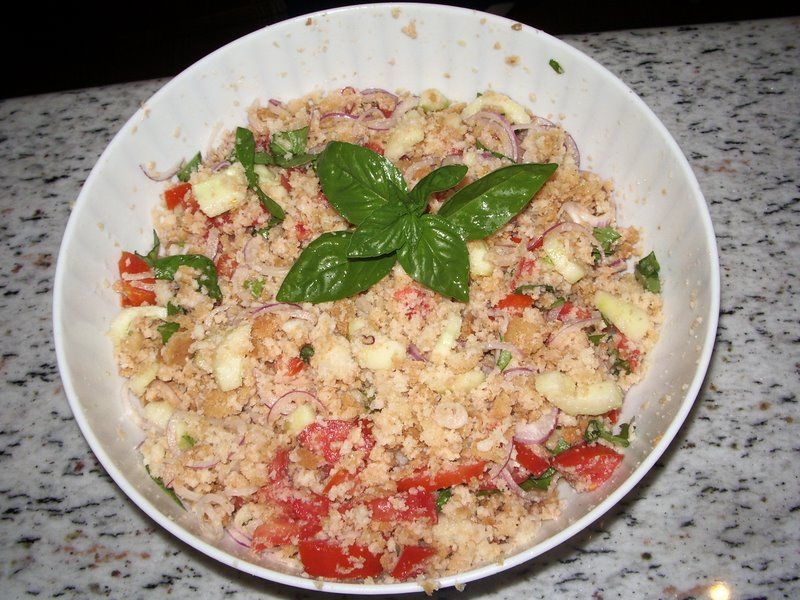
Summer in Florence hits like an open oven door, and panzanella is the answer.
Soaked stale bread, ripe tomatoes, red onion, cucumber, and basil come together in a bowl that looks like a painting and tastes like the best version of a picnic. The bread soaks up the tomato juices and vinegar dressing until every bite is soft, tangy, and deeply satisfying.
No heat required, no fuss needed. Panzanella is basically Tuscany’s love letter to summer lunches.
4. Bistecca Alla Fiorentina
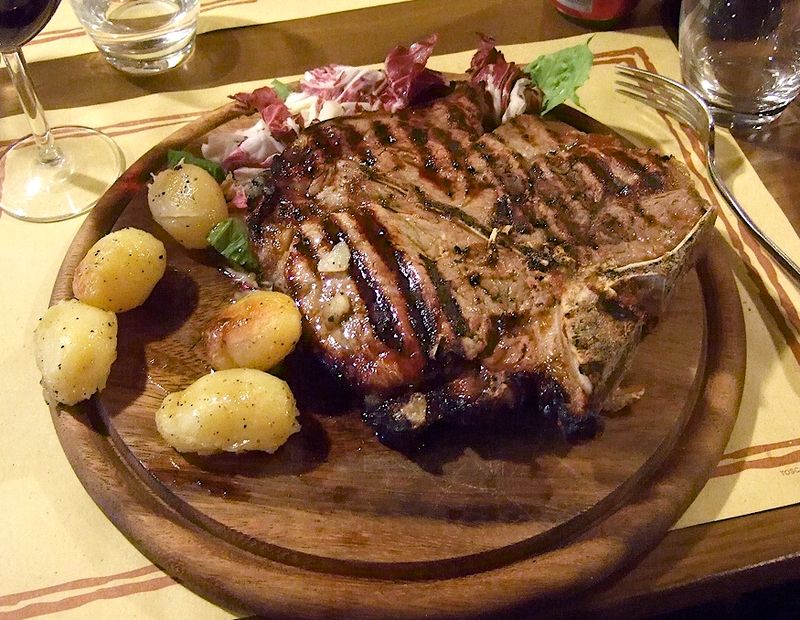
Two kilograms of T-bone landing on the table can instantly command a dining room.
Bistecca alla fiorentina comes from the Chianina breed, grilled over blazing hardwood coals and served rare, since locals traditionally prefer it served very rare.
Salt, a squeeze of lemon, maybe a drizzle of olive oil, and the recipe is complete. Order one for the table, argue over the last slice, and set a reminder to come back next year.
5. Lampredotto
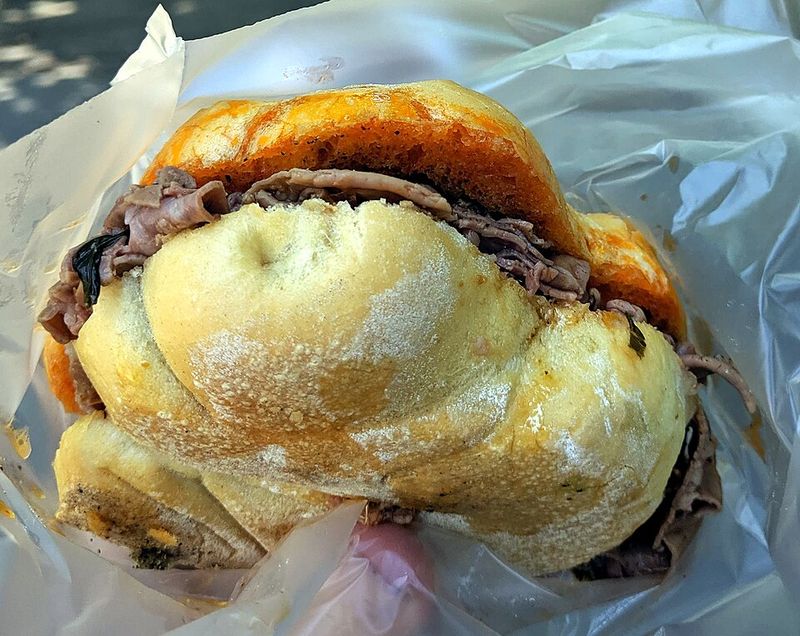
Florence skips pizza-by-the-slice expectations and heads straight for Lampredotto, served from carts since the Middle Ages. Slow-cooked fourth stomach of cattle simmers in broth with tomato, onion, and celery until tender.
Piled meat lands inside a crusty semelle roll dipped in the cooking liquid, finished with salsa verde and a splash of hot chili sauce.
One bun captures the city completely, bold, messy, and entirely unforgettable.
6. Trippa Alla Fiorentina
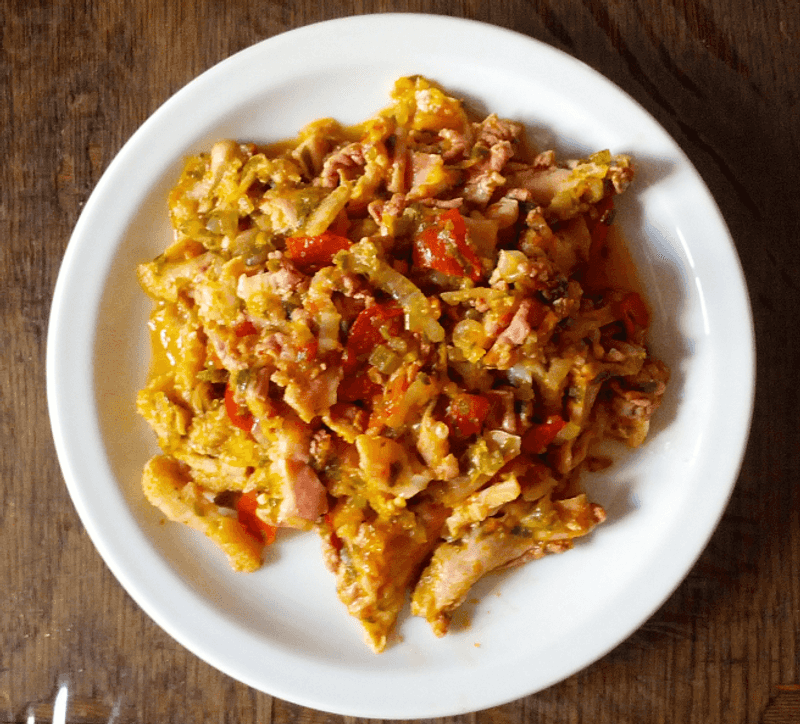
Trattoria tables in Florence have been serving trippa alla fiorentina for centuries, and the recipe has barely changed.
Honeycomb tripe is braised low and slow in a tomato sauce seasoned with onion, celery, carrot, and herbs until it becomes tender and deeply savory. A generous shower of Parmigiano-Reggiano goes on top right before serving.
Every working-class neighborhood in Florence claimed a version of this dish. Honest, nourishing, and the kind of meal that keeps you warm on a gray afternoon.
7. Cacciucco
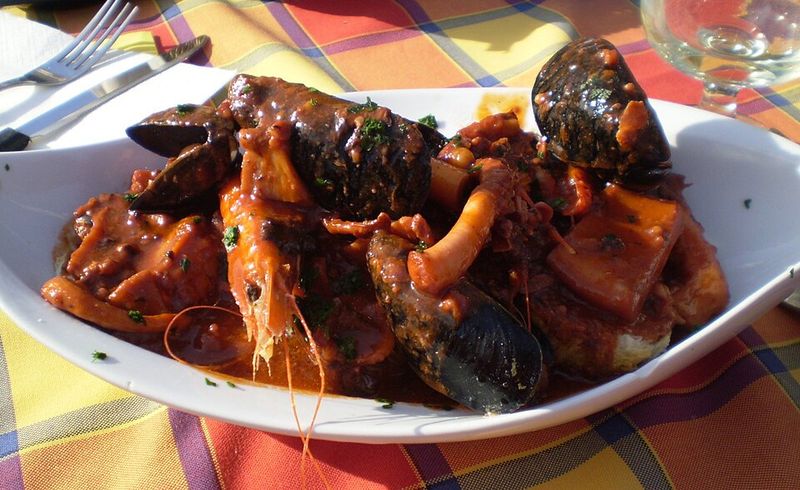
Traditionally, cacciucco is often said to include at least five different kinds of seafood. Port city of Livorno gave rise to the stew, originally built from whatever the nets brought in that did not sell at market.
Squid, mussels, clams, scorpionfish, and more simmer in a spiced tomato broth until everything melds into something spectacular.
Ladled over garlicky toasted bread, cacciucco brings the Tuscan coast into a bowl, bold, briny, and absolutely alive.
8. Acquacotta
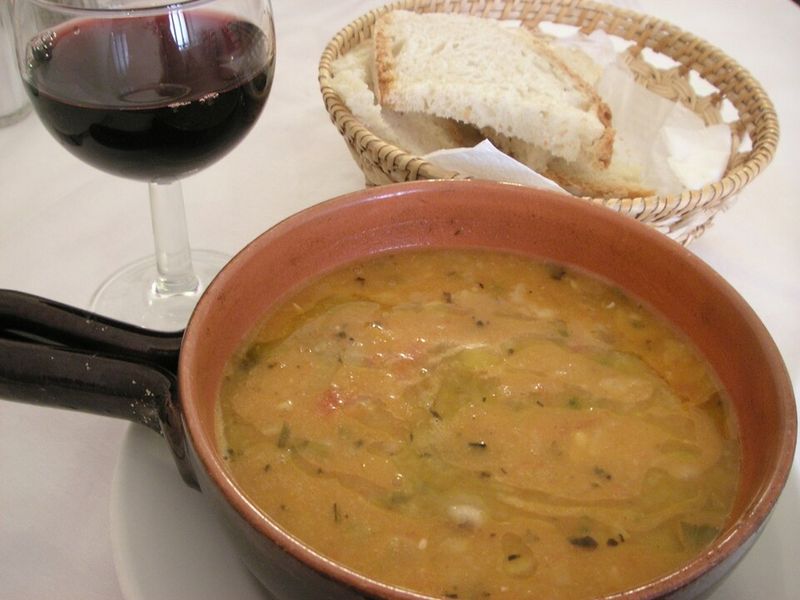
Traveling light shaped meals in the Maremma, where shepherds relied on wild herbs, onion, stale bread, and water. Those sparse ingredients became Acquacotta, simmered over open fire and poured over toasted bread in the bowl.
Poached egg on top counted as the big-day upgrade, turning humble broth into something richer.
Centuries of survival and ingenuity live in each spoonful, proving simple never means small.
9. Crostini Neri Toscani
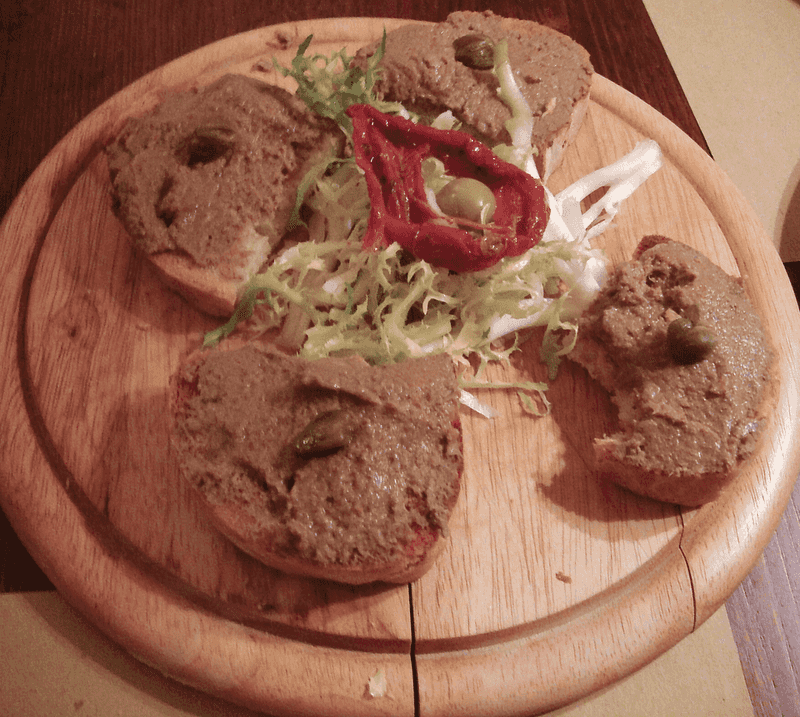
Every Tuscan dinner worth attending starts with a board of crostini neri, and the dark spread on top is the reason people arrive early.
Chicken livers are sauteed with onion, capers, anchovies, and a splash of vin santo, then blended into a rich, savory pate that gets spooned onto toasted Tuscan bread. The flavor is deep, complex, and completely addictive from the first bite.
Crostini neri are the handshake of Tuscan hospitality, the first thing on the table and the last thing forgotten.
10. Pappardelle Al Cinghiale
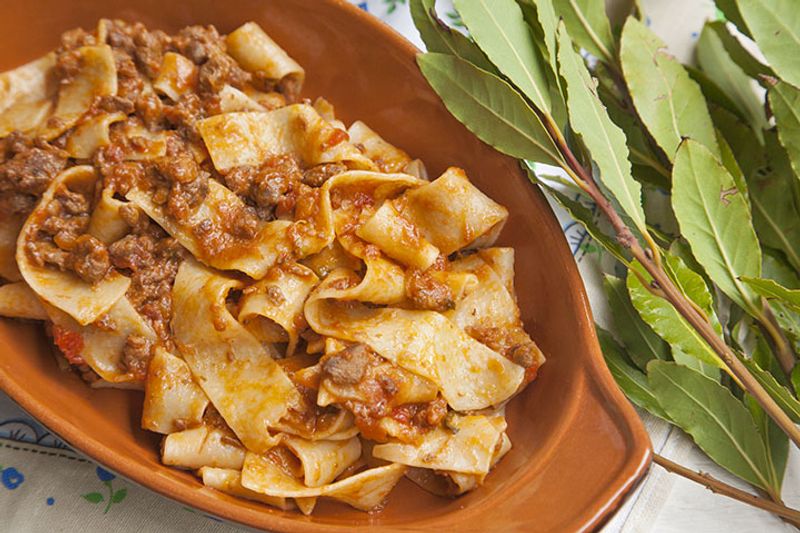
Wide ribbons of fresh egg pasta paired with a ragù simmering since morning define the promise of pappardelle al cinghiale.
Wild boar slow-cooks with red wine, juniper berries, rosemary, and tomato until the meat collapses into a sauce rich enough to cling to every fold.
Maremma region forests full of cinghiale helped shape the dish into a local signature. Fork twirled, glass raised, and afternoon plans suddenly feel optional.
11. Fagioli All’Uccelletto
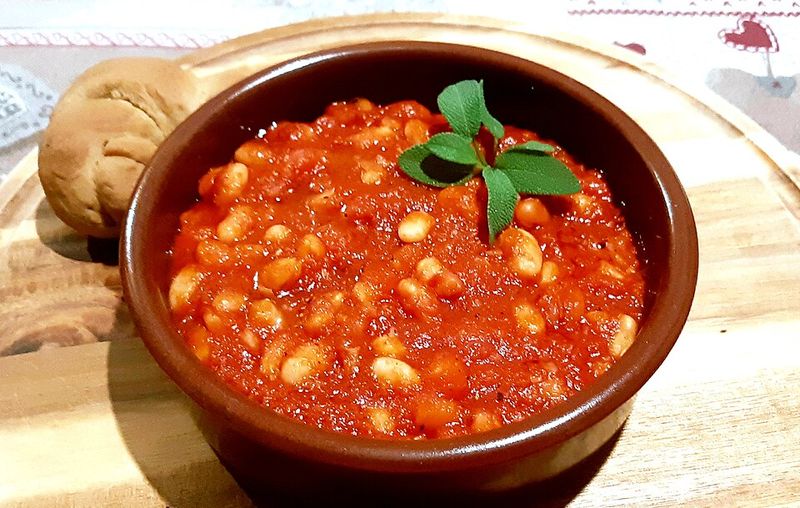
Florentine kitchens have long relied on Fagioli all’uccelletto, built from beans simmered with sage, garlic, tomato, and olive oil.
Name comes from the herb seasoning once used for roasting small birds, uccelli, across Tuscany.
Cannellini beans cook gently in the sauce until creamy inside and lightly coated in a glossy, fragrant tomato base. Quiet workhorse of the Tuscan table appears as side or main, dependable, comforting, and always welcome.
12. Lardo Di Colonnata
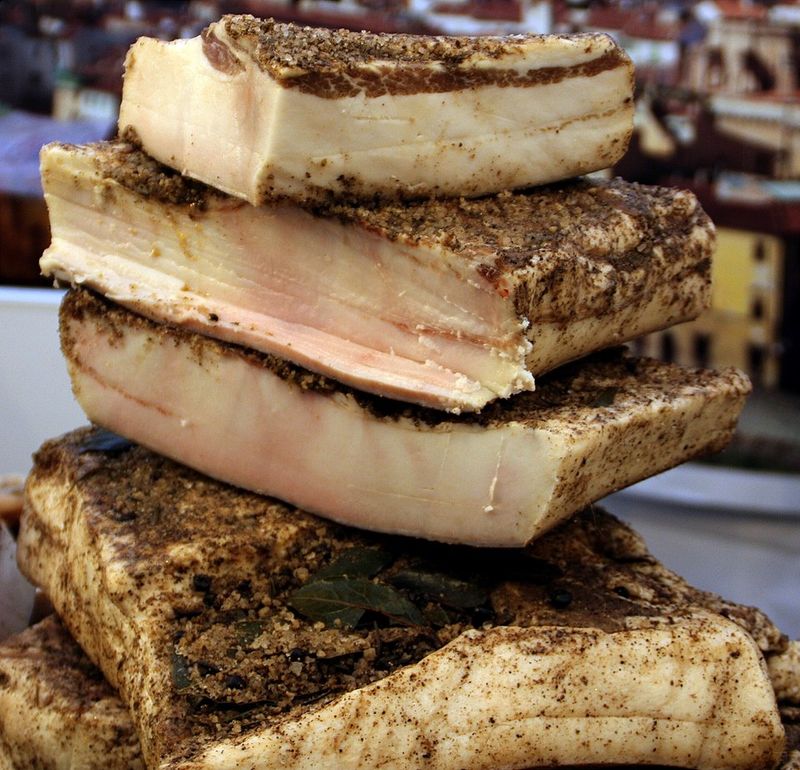
Marble basins carved from Carrara stone, packed with fatback, rosemary, garlic, and sea salt. That is where lardo di Colonnata begins its slow transformation.
Aged for at least six months in the cool mountain air of Colonnata, a tiny village above the marble quarries, the lardo develops a silky texture and an herbaceous, almost floral flavor that surprises everyone who tries it for the first time.
Draped over warm bread, it melts on contact. A heritage food with real character.
13. Cantuccini
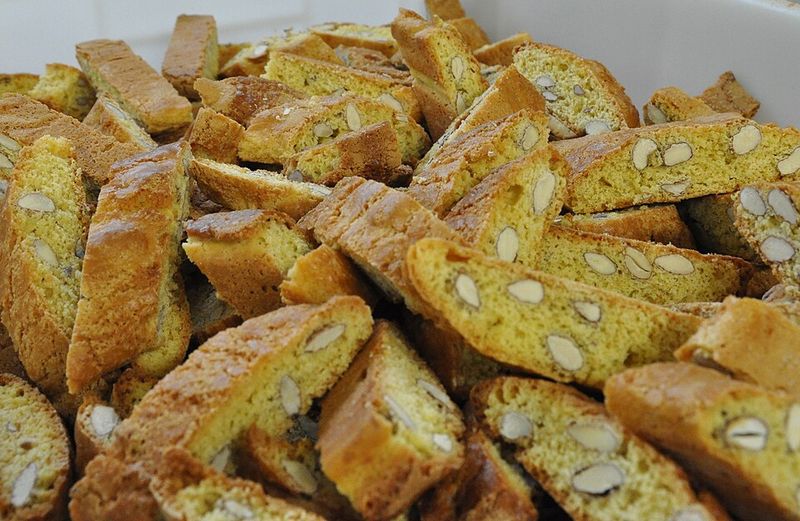
Twice-baked crunch signals the non-negotiable finale to a Tuscan meal. Cantuccini from Prato come studded with whole almonds, baked until golden, sliced, then baked again for that signature snap.
Proper move involves dunking them into a small glass of vin santo, softening the biscuit and turning a simple snack into a ritual.
They also make one of Tuscany’s easiest and most traditional edible souvenirs.
14. Castagnaccio
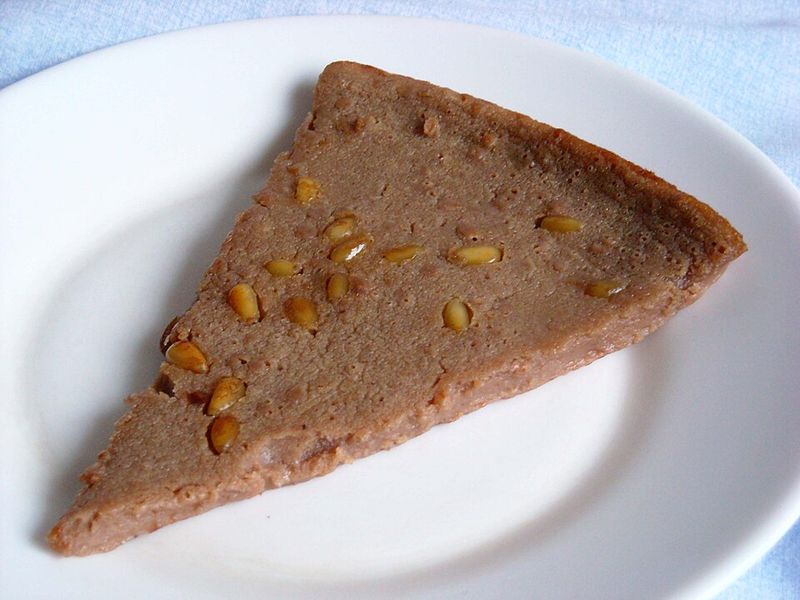
When chestnuts fell in autumn, Tuscan families got to work. Castagnaccio was how the harvest became a meal.
Chestnut flour, water, olive oil, rosemary, pine nuts, raisins, and sometimes orange zest go into a thin cake that bakes into something earthy, slightly bitter, and wonderfully aromatic. No sugar is added, which surprises people expecting something sweet.
Castagnaccio is an acquired taste and a proud one. Rural Tuscany built winters around it, and the recipe has not needed changing since.
15. Schiacciata Con l’Uva
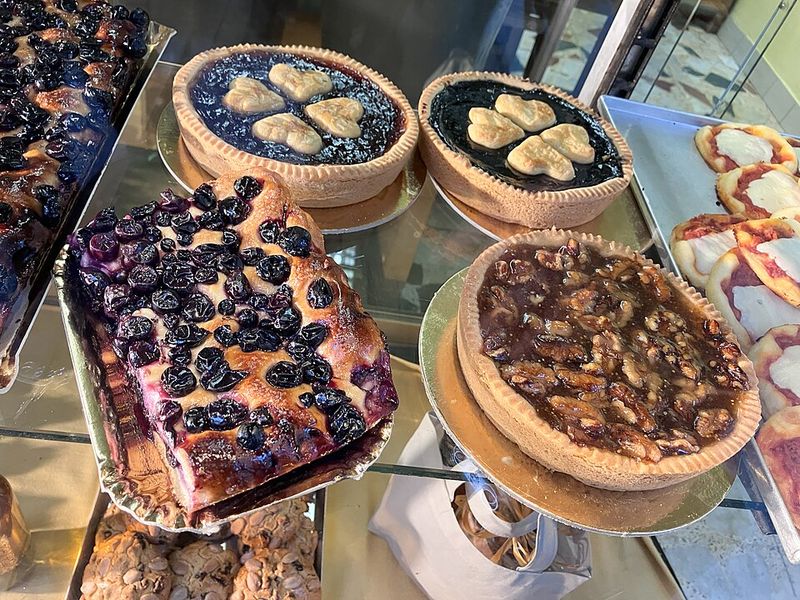
Grape harvest season in Tuscany brings bakery windows filled with Schiacciata con l’uva once each year. Soft focaccia-style dough gets layered with wine grapes, sugar, olive oil, and sometimes rosemary.
Oven heat bursts the grapes into jammy purple pockets that caramelize across the golden crust, while Florence and Prato both claim the tradition fiercely.
Seasonal and fleeting nature makes it worth planning around, since missing the harvest means waiting another year.
Note: Traditional dish descriptions, ingredient details, and regional references in this article were reviewed against reputable Italian food sources available at the time of writing.