
17 Films That Shaped Elizabeth Taylor’s Hollywood Stardom
Elizabeth Taylor wasn’t just a movie star. She was a force of nature who commanded the screen from childhood through adulthood, building a legacy that still sparkles today.
Training a horse for the Grand National and later embodying Cleopatra show the kind of range she brought to the screen, pairing courage with a magnetic presence that made audiences lean forward.
Let us revisit the films that shaped her reign, charting how one actress transformed talent, ambition, and spectacle into a cinematic legacy worthy of legend.
1. Lassie Come Home (1943)
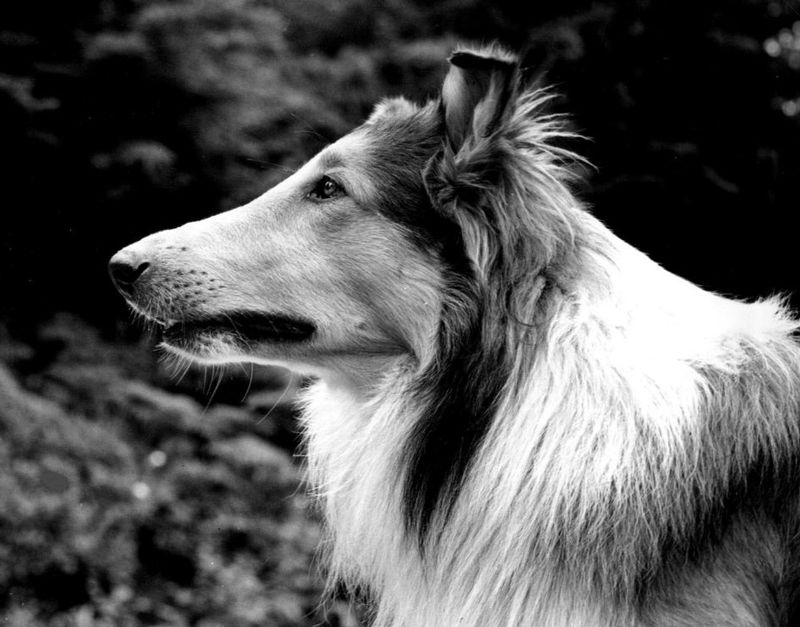
Early audiences first met a young performer with unforgettable violet eyes through a collie’s journey home.
Elizabeth Taylor was only eleven when she appeared in that wartime story centered on loyalty and devotion.
Her role as Priscilla revealed a natural screen presence that felt effortless and instinctive. Success of the film quickly turned it into her Hollywood calling card.
Studio executives noticed how naturally the camera favored her, even in moments meant to highlight the dog.
2. Courage Of Lassie (1946)
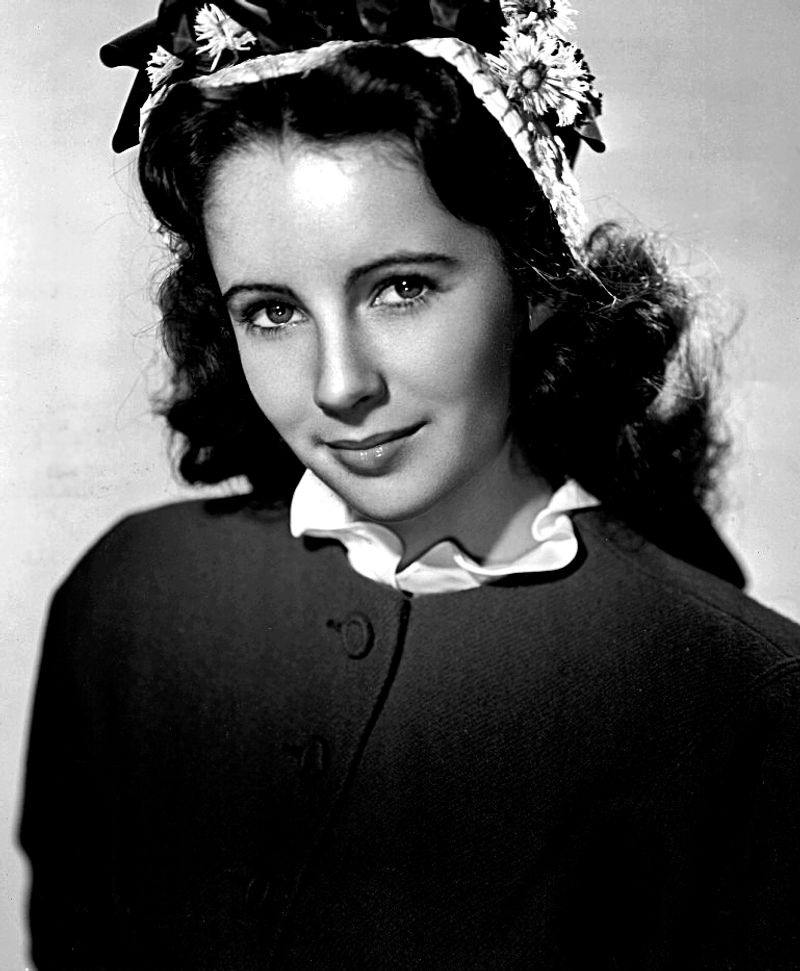
Reuniting with her four-legged co-star a few years later, Taylor stepped into another adventure already changed by experience.
Confidence had grown by then, allowing her to carry emotional weight on screen alongside the canine hero with natural ease. Across the film, a maturing talent became impossible to miss.
Gradually, audiences watched her evolve from a child performer into a teenage leading lady.
Behind studio doors, MGM recognized they had someone truly special under contract and began building a future around her rising star power.
3. National Velvet (1944)
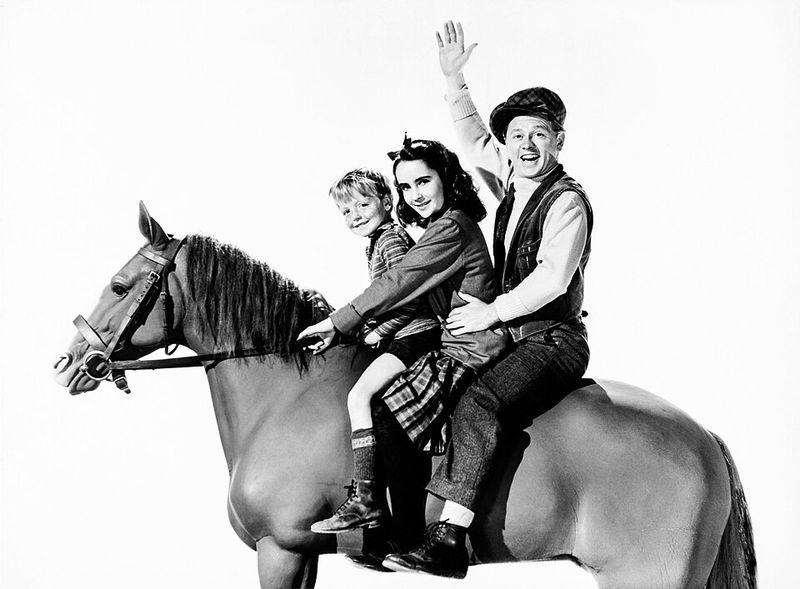
Determination drives a twelve-year-old girl to train a horse for the Grand National.
Elizabeth Taylor’s portrayal of Velvet Brown became the role that launched her into stardom.
Stories from the era often credit her with a reputation for nailing takes quickly, reinforcing the sense that she was already operating like a seasoned pro. Post-war audiences connected deeply with a story filled with hope and determination.
4. Life With Father (1947)
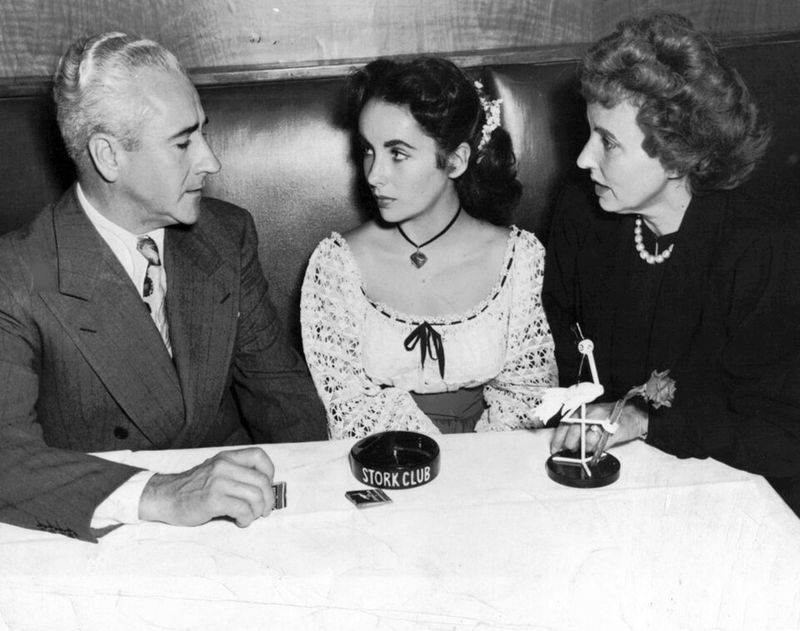
Red hair dye and period costumes signaled a new direction for Taylor in this lively family comedy.
As Mary Skinner, she confidently matched William Powell’s commanding screen presence scene by scene.
Adapted from a beloved Broadway hit, the film allowed her natural charm to translate effortlessly to the screen. Sharp comedic timing paired with genuine sweetness revealed a range far beyond her years, proving she was far more than another pretty face among Hollywood’s rising young talent.
5. Little Women (1949)
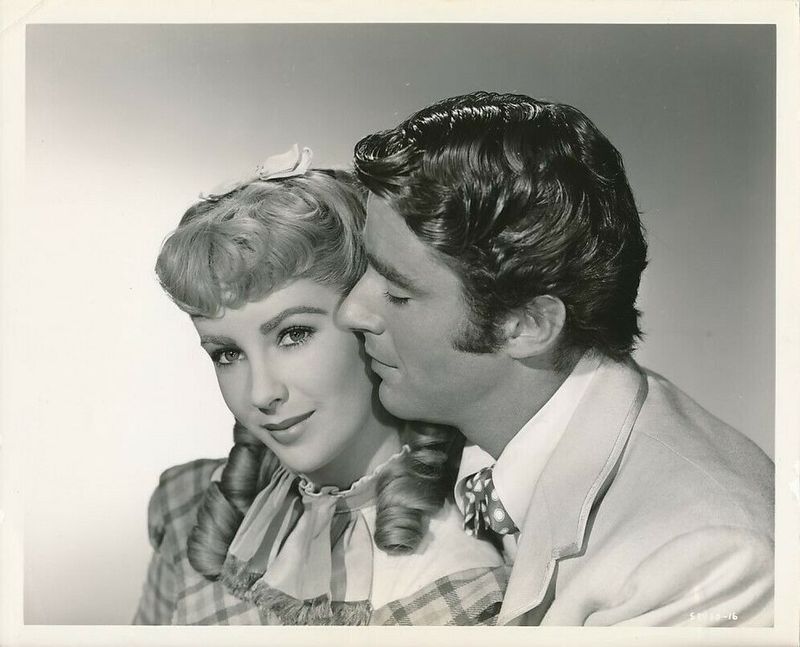
Amy March found a perfect interpreter in a teenage Elizabeth Taylor. Strong chemistry with Peter Lawford brought Louisa May Alcott’s story vividly to life, capturing the youngest sister’s journey toward maturity.
That role showcased her growing dramatic abilities.
Critics noted how she had evolved from a child star into a serious actress. Careful balance between vanity and vulnerability allowed audiences to forgive the character’s flaws.
6. Father Of The Bride (1950)
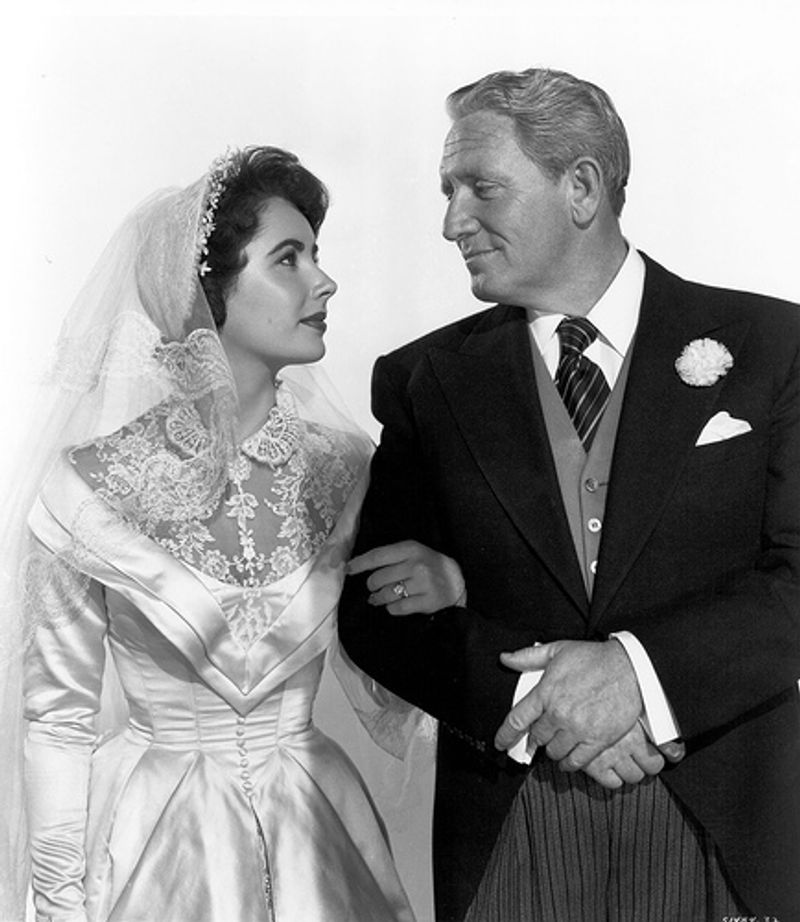
Wedding bells rang for Kay Banks, and America fell completely in love.
Taylor’s transition from child star to leading lady reached its pinnacle in this Spencer Tracy comedy. She radiated joy and confusion in equal measure, capturing every bride’s mix of excitement and overwhelm as her character navigated wedding chaos.
The film’s success proved she could anchor a major production.
7. A Place In The Sun (1951)
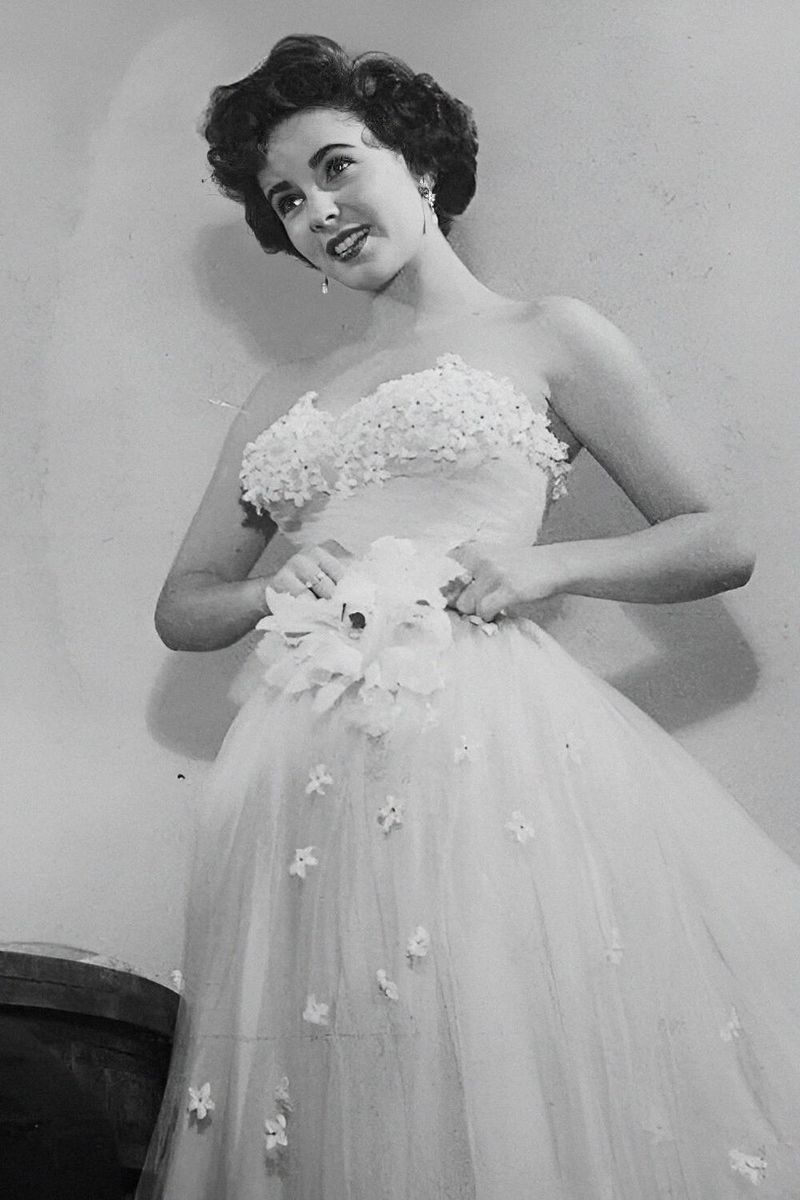
When Montgomery Clift’s tortured eyes met Taylor’s luminous gaze, cinema magic instantly took shape.
In the role of Angela Vickers, she embodied wealth and beauty while revealing genuine emotion that made the tragic love triangle feel completely believable. At last, critics began taking her seriously as a dramatic actress.
Legendary close ups captured vulnerability beneath the glamorous surface, reshaping how audiences saw her talent.
With that performance, the film announced her arrival as a dramatic force impossible to ignore.
8. Ivanhoe (1952)
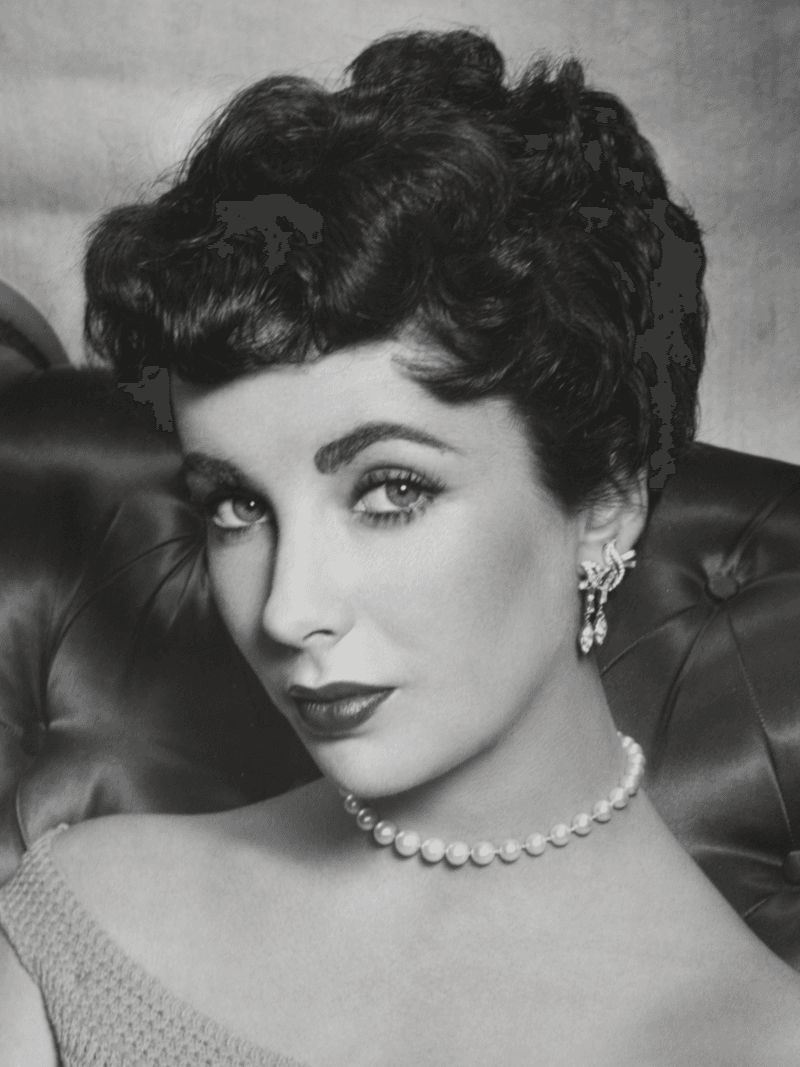
Medieval England came alive through Elizabeth Taylor’s portrayal of Rebecca. Her performance in that historical epic demonstrated an ability to inhabit period stories with convincing authenticity.
Lavish production values highlighted her beauty in Technicolor splendor, while deeper emotion shaped the Jewish healer caught in dangerous times.
That role expanded her range beyond modern American settings.
9. Giant (1956)
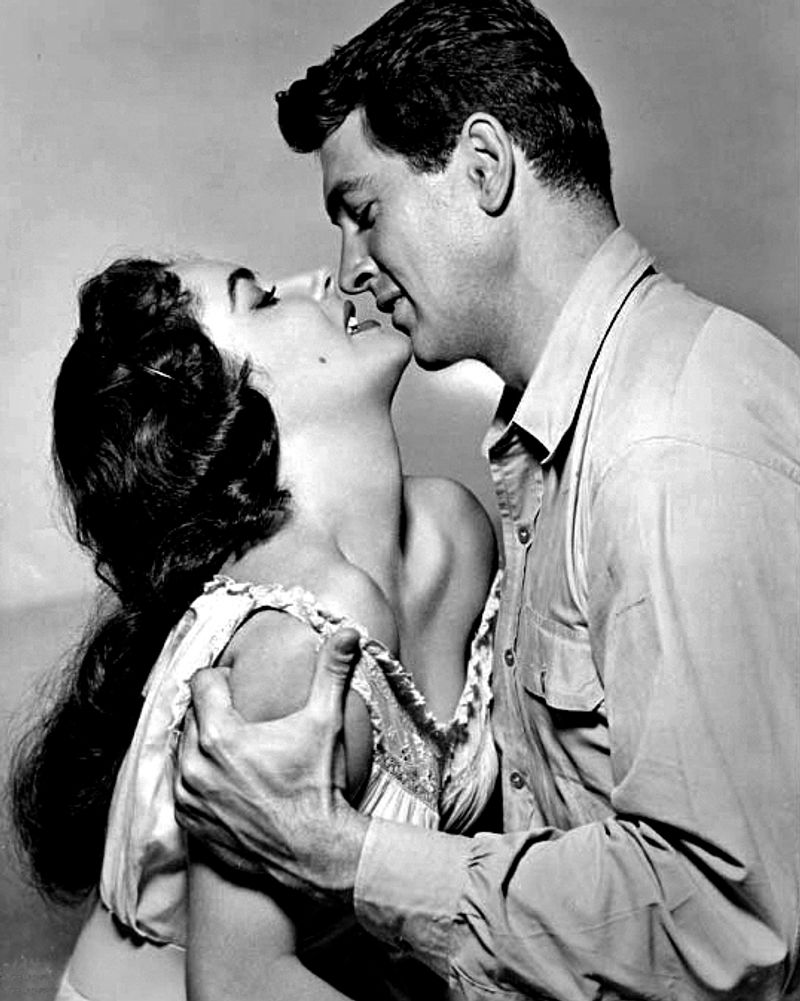
Across a vast Texas landscape, Taylor aged decades before audiences’ eyes as the story unfolded.
As Leslie Benedict opposite Rock Hudson and James Dean, she confronted themes of prejudice and social change with striking nuance and emotional strength.
Such epic scale perfectly matched her rapidly growing stature as a performer. Newfound maturity and quiet wisdom shaped a performance that proved she could carry deeply complex material.
Over time, the film secured its place as a defining cultural touchstone of 1950s cinema.
10. Raintree County (1957)
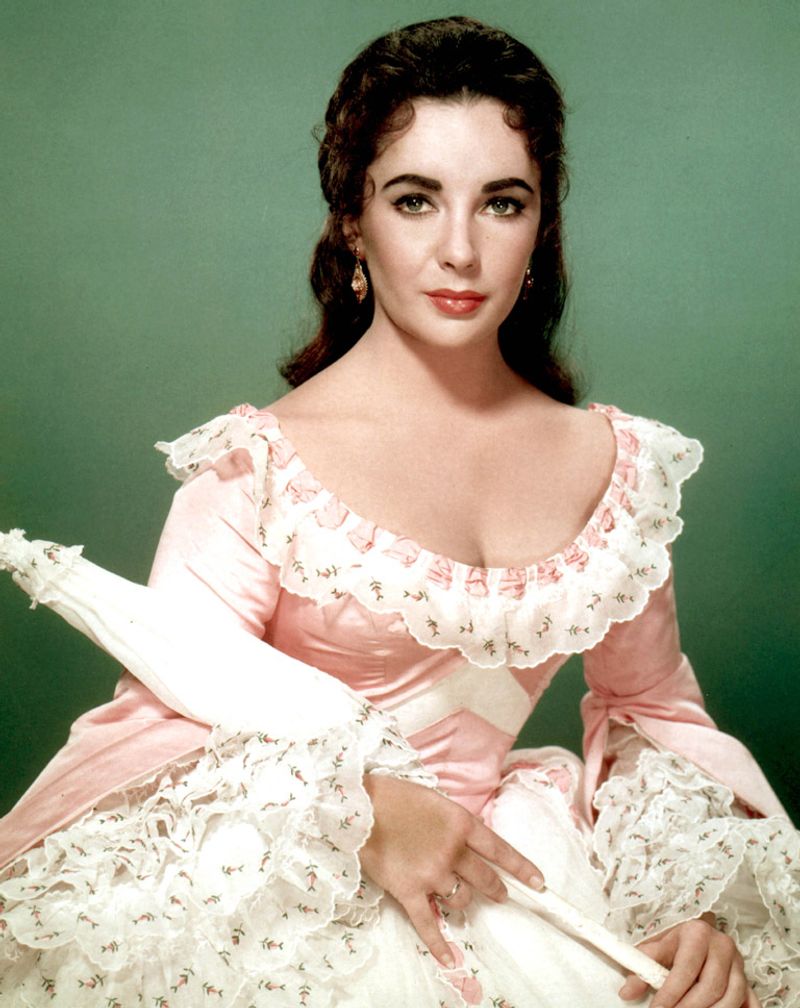
Civil War-era costumes and Southern belle mannerisms shaped Elizabeth Taylor’s role as Susanna Drake.
A troubled production tested her resilience, yet she delivered a haunting portrayal of emotional unraveling and fixation. Iconic wardrobe pieces later entered collections celebrating Hollywood’s golden age.
That film proved she could carry serious dramatic weight even when circumstances behind the camera became challenging.
11. Cat On A Hot Tin Roof (1958)
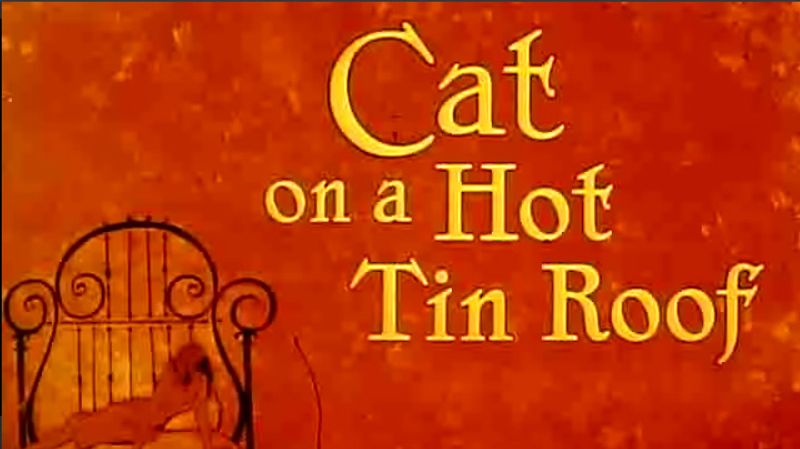
One white slip dress became one of the most unforgettable costumes ever seen on screen.
Inside that role, Taylor’s Maggie “the Cat” Pollitt burned with frustration and desire while navigating her husband’s drinking problem and a house full of guarded secrets. Emotional tension lingered beneath every line, giving the performance a raw honesty that felt impossible to ignore.
Recognition arrived with an Academy Award nomination, confirming what audiences already sensed about her growing dramatic power.
Through little more than a glance, she conveyed complex emotion and proved she had become one of Hollywood’s most compelling actresses.
12. Suddenly, Last Summer (1959)
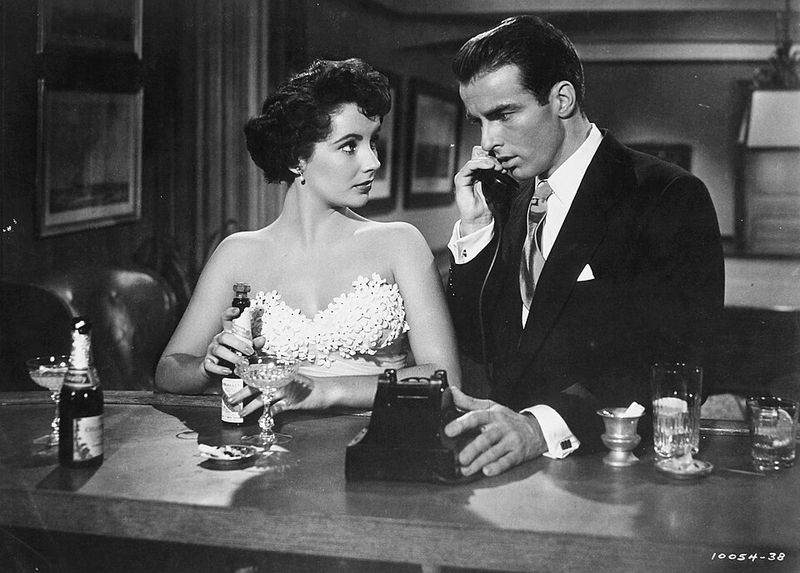
Catherine Holly lets Taylor step into one of her most intense performances, carrying the character’s fear and pressure with total commitment. The Tennessee Williams adaptation pushed her into psychological territory that demanded emotional excavation, and she met the challenge with fierce commitment.
Her work earned critical praise for its depth.
The film showed Hollywood that she could tackle challenging material without losing her essential magnetism or audience connection.
13. BUtterfield 8 (1960)
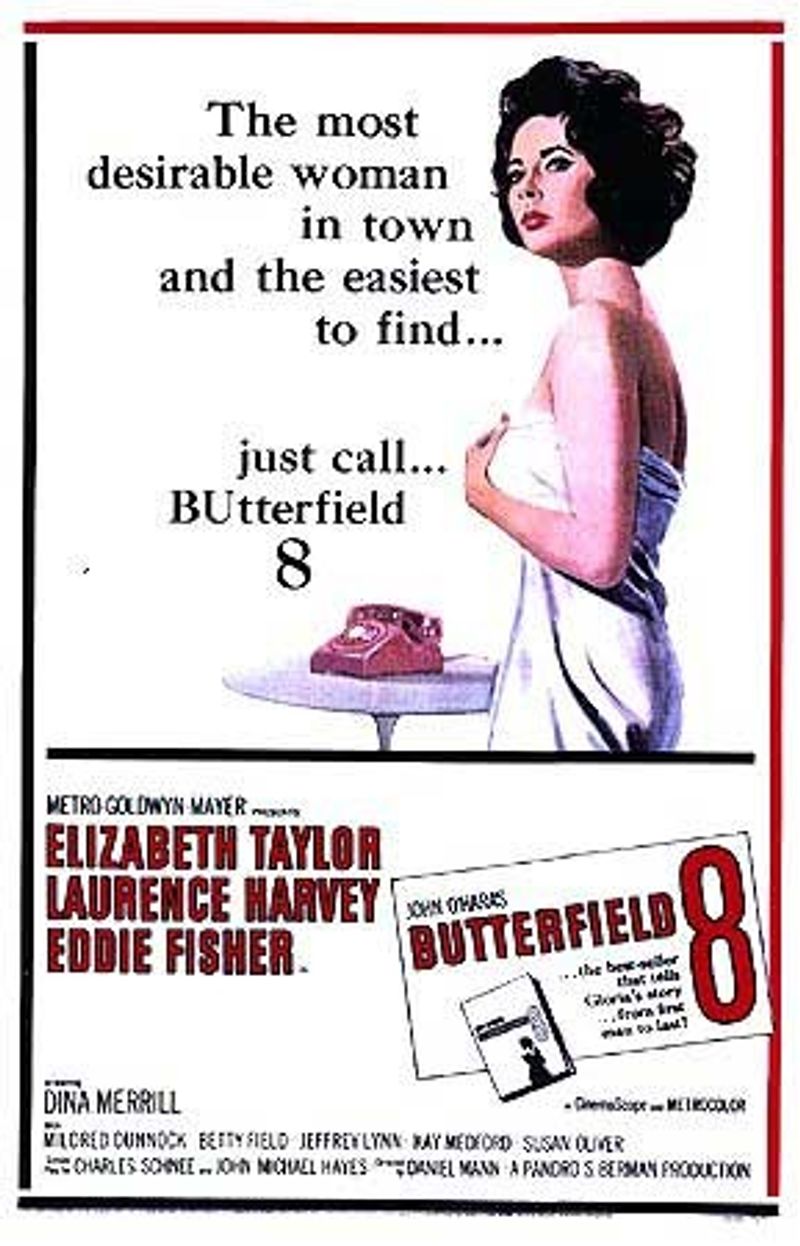
Gloria Wandrous longed for genuine connection in a world that treated her like merchandise.
Her portrayal as Gloria Wandrous earned her her first Academy Award for Best Actress, as well as the Best Actress Oscar, despite her later critical comments about the movie. Audiences strongly disagreed with that assessment.
Her performance revealed desperation beneath glamour, turning Gloria’s search for love into something deeply heartbreaking. Winning the Oscar confirmed her status as Hollywood royalty.
14. Cleopatra (1963)
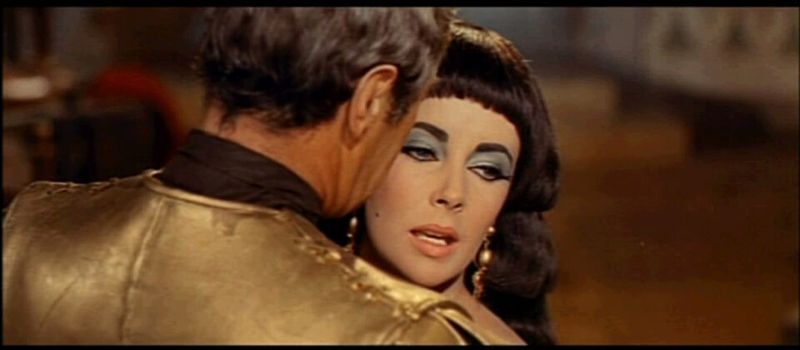
Gold leaf and kohl lined eyes transformed Taylor into cinema’s vision of history’s most famous queen.
Amid a production filled with troubles and controversy, her mesmerizing performance balanced regal grace with undeniable sensuality that defined the character for generations.
Behind the scenes, a romance with Richard Burton ignited during filming and sparked a tabloid frenzy that often overshadowed the film’s artistic achievements. Ultimately, the role sealed her status as a lasting Hollywood icon.
15. The Last Time I Saw Paris (1954)
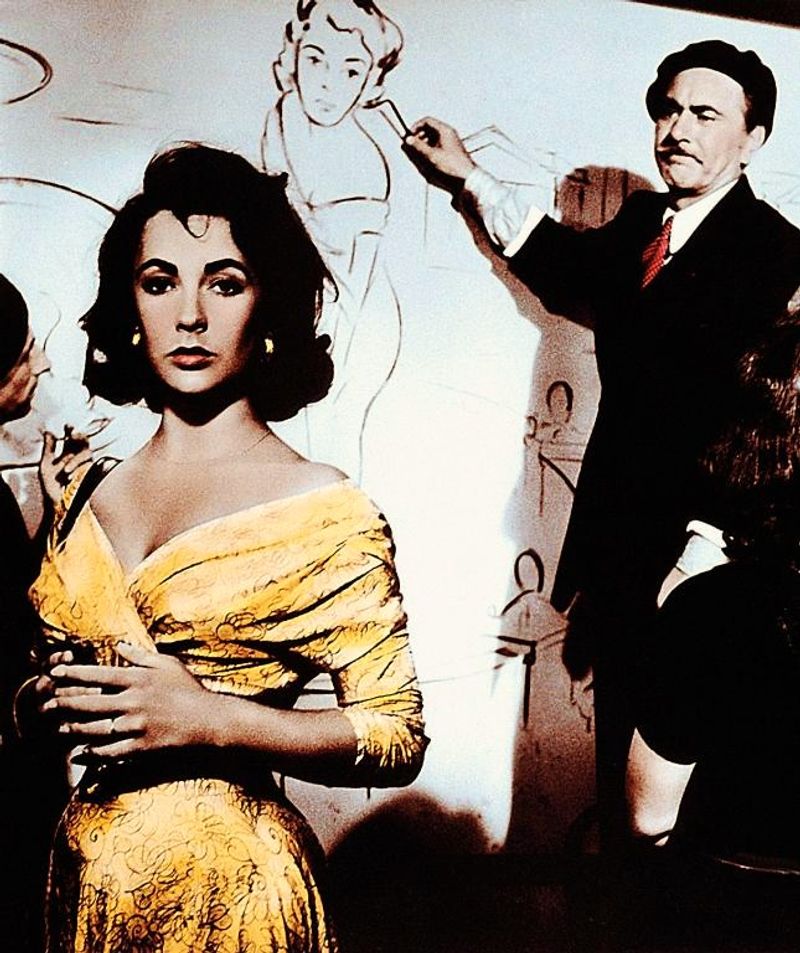
Post-war Paris provided the backdrop for Taylor’s portrayal of Helen Ellswirth Willis.
The romantic drama captured the city’s melancholy beauty and the characters’ search for meaning after global conflict.
Her performance balanced sophistication with emotional fragility, showing how she could inhabit different eras and settings with equal conviction. The film added another dimension to her growing repertoire of complex female characters.
16. Beau Brummell (1954)
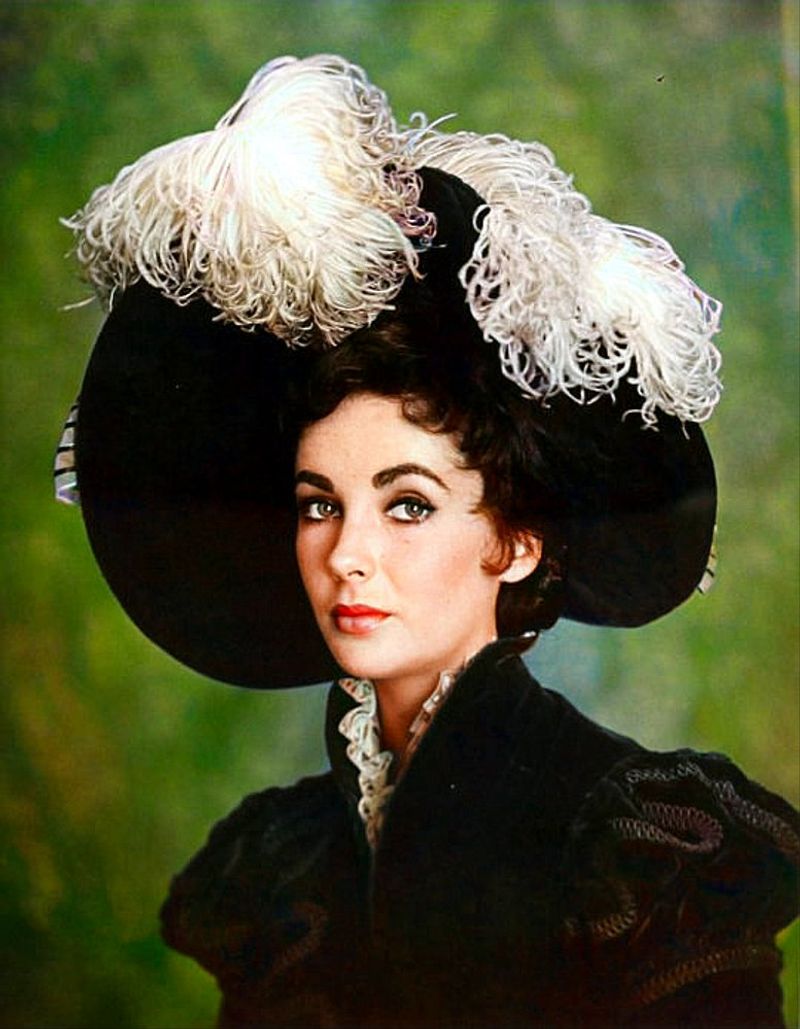
Regency England’s elegance proved a natural fit for Elizabeth Taylor in that historical drama.
Portraying Lady Patricia, she brought grace to the period setting while supporting Stewart Granger’s title character. Colorized stills highlighted her beauty through elaborate costumes and refined styling.
Even without presenting her most demanding role, the film showed how sheer screen presence and professional polish could elevate the material.
17. The Sandpiper (1965)
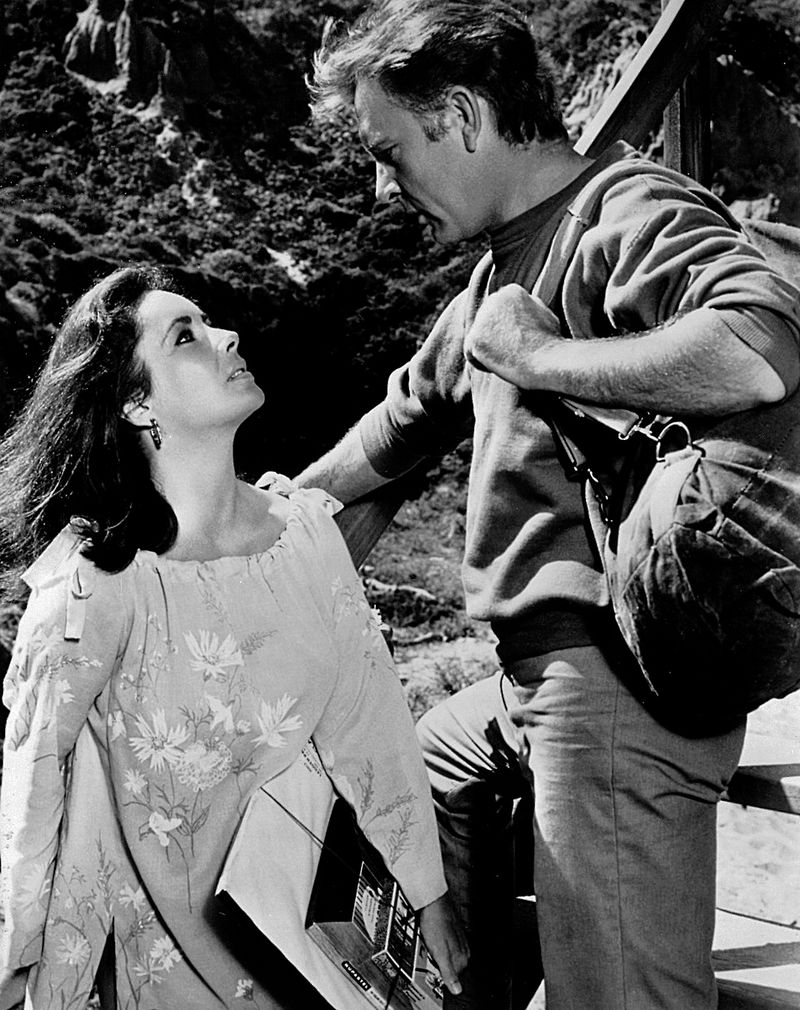
Along Big Sur’s rugged coastline, Taylor reunited on screen with Richard Burton in a story shaped by romance and tension.
As Laura Reynolds, a free spirited artist, she explored themes of independence and unconventional relationships with confident ease. Meanwhile, press photos captured unmistakable real life chemistry between the two stars.
Despite critics dismissing the film, audiences still flocked to theaters eager to watch the famous couple together.
On screen, their partnership reflected the same tempestuous energy as their off screen romance, creating irresistible viewing for fans around the world.
Note: Film details and role notes reflect widely reported credits and biographical summaries available at the time of writing, while behind-the-scenes labels and anecdotes can vary across sources and retellings.
The content is for general informational and entertainment purposes and is not legal, financial, medical, or professional advice.


.jpg)


.jpg)


.jpg)

_(52020944666).jpg)
