From Taverna To Table: 10 Healthy Greek Bites You’ll Love
If you love food that tastes like sunshine and feels like a friendly hug, Greek cuisine is ready to greet you with a warm “yasou” – Greek for “hello” and “to your health.”
However, you might be wondering how to keep things light without losing flavor, tradition, or joy.
Here’s the good news, friend: you can enjoy vibrant dishes that are fresh, balanced, and totally satisfying.
Ready to explore the Mediterranean playbook and pick wins for your plate?
Let’s dive into 10 healthy Greek choices that prove eating well can still feel like a feast.
Disclaimer: The following information is intended for general inspiration and enjoyment.
While Greek cuisine offers many naturally wholesome options, this guide is not a substitute for personalized nutritional or medical advice.
Individual dietary needs vary, so always consult a qualified healthcare professional for guidance tailored to you.
1. Tzatziki
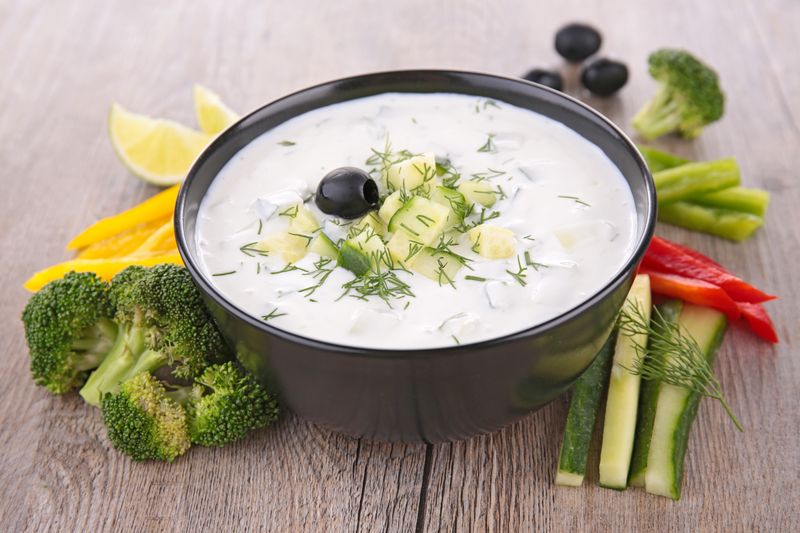
Imagine a dip so cool and refreshing it could double as a spa treatment for your taste buds.
Tzatziki combines thick Greek yogurt with grated cucumber, garlic, lemon juice, and a sprinkle of dill to create something magical.
Honestly, it’s like the superhero of appetizers, fighting off blandness one pita chip at a time.
Greek yogurt brings probiotics to the party, supporting your gut health while keeping things creamy.
The cucumber adds hydration and a subtle crunch, while garlic works its anti-inflammatory magic behind the scenes.
Traditionally served as meze alongside grilled meats or vegetables, tzatziki fits into almost any meal.
Spread it on sandwiches, dollop it over baked potatoes, or just eat it straight with carrot sticks, no judgment here.
If you’ve ever wondered how Greek grandmothers stay so healthy, this dip might be their secret weapon.
Low in calories but high in protein, it keeps you satisfied without weighing you down.
Plus, making it at home takes about five minutes, which is faster than most superhero origin stories.
Just saying, your kitchen could use a hero like this.
2. Dolmades (Stuffed Grape Leaves)
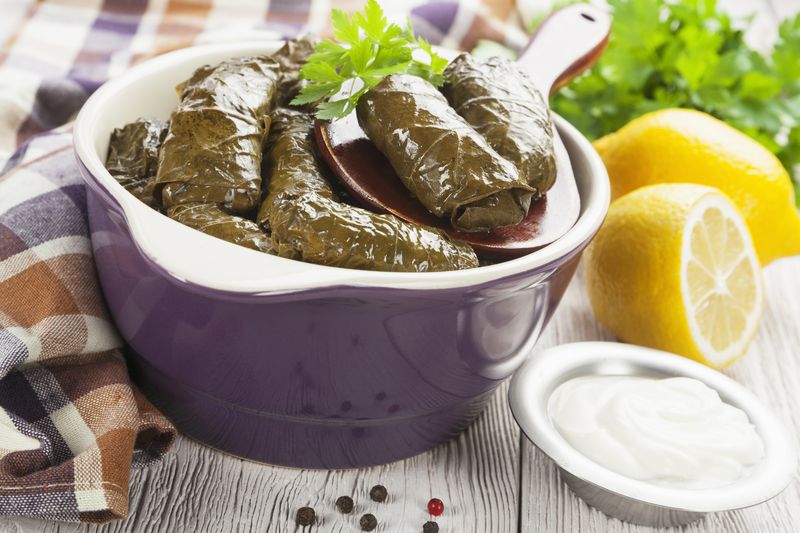
Picture tiny green parcels wrapped with care, each one hiding a treasure of herbed rice and spices.
Dolmades are grape leaves stuffed with a mixture that often includes rice, pine nuts, fresh dill, and sometimes currants for a hint of sweetness.
They’re like edible presents you unwrap with your fork.
Grape leaves themselves are surprisingly nutritious, packed with vitamins A and K plus antioxidants.
The rice filling provides energy, while pine nuts add healthy fats and a buttery texture that makes each bite feel luxurious.
Traditionally, Greek families gather to roll these little bundles together, turning meal prep into a bonding experience.
Each dolma gets a squeeze of lemon before serving, which brightens the earthy flavors and adds vitamin C to the mix.
You can enjoy them warm or cold, making them perfect for picnics, lunch boxes, or fancy dinner parties.
They’re also surprisingly filling despite their small size, thanks to the fiber-rich rice and leaves.
Fun fact: the word “dolma” comes from the Turkish word meaning “stuffed,” and variations exist across the Mediterranean.
However, the Greek version stands out with its generous use of fresh herbs and that signature citrus kick.
3. Spanakopita
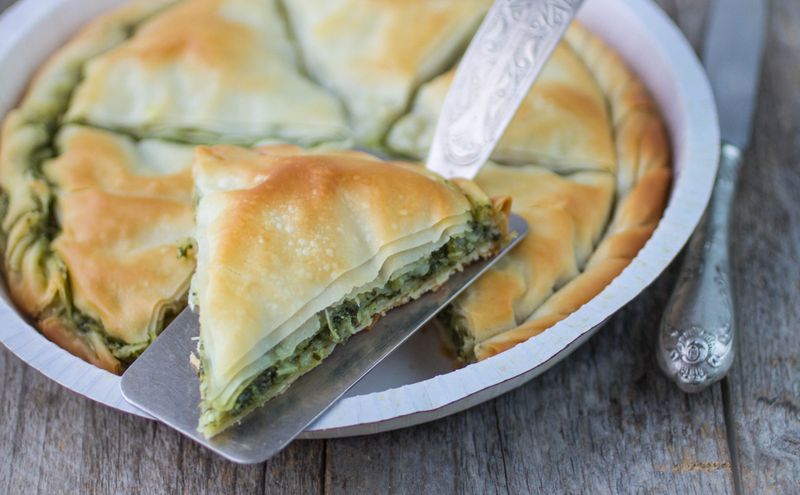
If Popeye ever visited Greece, he’d probably never leave after tasting this spinach pie.
Spanakopita layers crispy phyllo dough with a filling of spinach, feta cheese, leeks, scallions, and dill.
The result is a savory pastry that’s both elegant and comforting, like wearing a tuxedo made of butter.
Spinach brings iron, calcium, and vitamins to your plate, while feta adds protein and that tangy flavor Greek food is famous for.
The phyllo dough bakes up light and flaky, creating dozens of crispy layers that shatter satisfyingly with each bite.
Though it looks fancy enough for a goddess, spanakopita is actually traditional peasant food made with humble ingredients.
Greek cooks have been baking variations of this pie for centuries, often using wild greens foraged from the countryside.
You can slice it into triangles for appetizers or cut larger squares for a main dish.
Either way, it’s best served warm when the cheese is still melty and the phyllo crackles like autumn leaves.
Making it from scratch requires patience as you brush each phyllo layer with olive oil, but the payoff is worth every minute.
Store-bought phyllo works perfectly fine though, even Greek grandmothers take shortcuts sometimes.
4. Fava (Yellow Split Pea Purée)
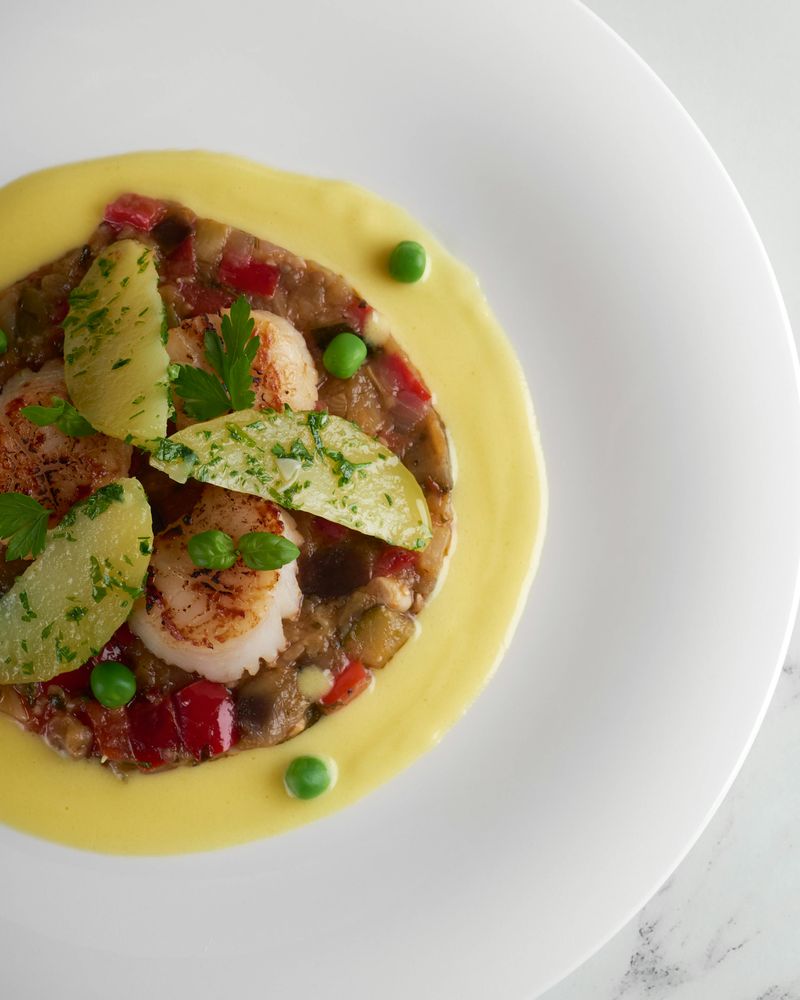
Don’t let the humble split pea fool you, this creamy spread could teach hummus a thing or two about sophistication.
Fava is made by simmering yellow split peas with onions until they’re soft enough to blend into a velvety purée.
A generous drizzle of olive oil, squeeze of lemon, and pinch of salt transform these simple ingredients into something restaurant-worthy.
Split peas are nutritional powerhouses, loaded with plant-based protein, fiber, and B vitamins.
They’re also incredibly budget-friendly, proving that healthy eating doesn’t require a trust fund.
Greek islanders have been making fava for generations, often topping it with capers, raw onion, or cherry tomatoes.
The toppings add texture and brightness to the smooth base, creating layers of flavor that keep your taste buds guessing.
Unlike chickpea-based dips, fava has a naturally sweet, earthy flavor that pairs beautifully with crusty bread or raw vegetables.
It’s also lighter on the stomach, making it perfect for those who find heavier dips too filling.
You can serve it warm or at room temperature, and it actually tastes better the next day after the flavors meld together.
Just saying, leftovers have never been this exciting.
5. Grilled Octopus
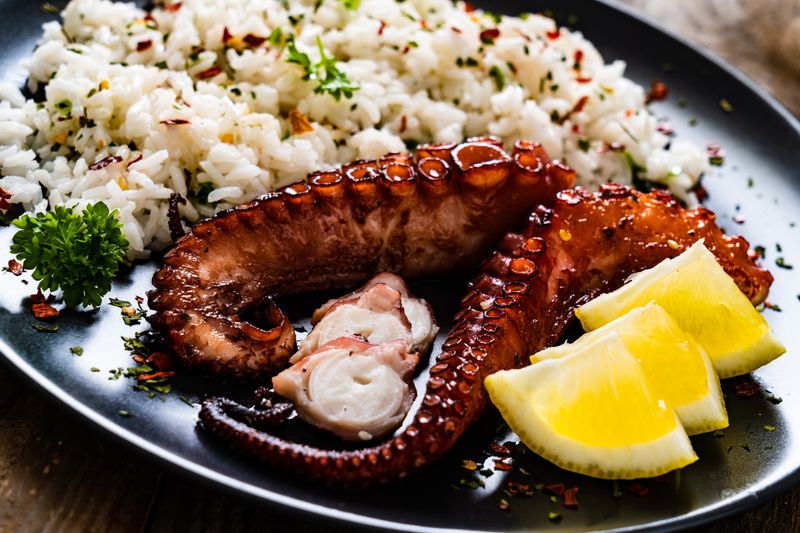
Before you say anything, octopus might sound intimidating, but trust the Greeks on this one.
When marinated in olive oil, lemon, and herbs, then grilled until the edges char and caramelize, octopus becomes tender, smoky, and absolutely irresistible.
It’s like the steak of the sea, but way healthier.
Octopus is incredibly lean, packing about 25 grams of protein per serving with almost no fat.
It’s also rich in omega-3 fatty acids, which support heart and brain health, plus minerals like iron and selenium.
Greek tavernas have perfected the art of grilling octopus, often tenderizing it first by simmering or freezing.
The grilling creates a crispy exterior while keeping the inside moist and tender, striking that perfect textural balance.
Traditionally served with just lemon, olive oil, and oregano, grilled octopus lets the natural flavors shine through.
No heavy sauces or complicated preparations, just quality ingredients treated with respect.
If you’ve never tried octopus before, a Greek taverna is the perfect place to start your adventure.
The Mediterranean knows how to make seafood sing, and this dish hits all the high notes without any fishy aftertaste.
6. Horta Vrasta (Boiled Wild Greens)

Wild greens might not have the glamorous reputation of other Greek dishes, but they’re the unsung heroes of Mediterranean nutrition.
Horta vrasta features greens like dandelion, chicory, or amaranth, boiled until tender and dressed simply with lemon juice and olive oil.
It’s minimalist cooking at its finest, no frills, just pure nourishment.
These greens are loaded with vitamins A, C, and K, plus iron, calcium, and powerful antioxidants.
Dandelion greens in particular support liver function and digestion, making them nature’s detox without the trendy price tag.
Greek villagers have foraged wild greens for centuries, turning free ingredients into daily sustenance.
The slightly bitter flavor might surprise you at first, but the lemon and olive oil balance it perfectly, creating a taste that’s both earthy and bright.
Eating horta is like getting a masterclass in simplicity from the Greek countryside.
No fancy techniques or exotic ingredients, just greens, water, and a couple of pantry staples creating something genuinely good for you.
You can find cultivated versions of these greens at farmers markets if foraging isn’t your thing.
Either way, this dish proves that healthy eating doesn’t have to be complicated or expensive.
7. Souvlaki

Street food doesn’t get much better than chunks of marinated meat grilled on a stick.
Souvlaki features cubed pork (traditionally) marinated in olive oil, oregano, garlic, lemon juice, and salt, then skewered and grilled to smoky perfection.
It’s fast food that actually respects your body, imagine that.
The marinade does double duty, tenderizing the meat while infusing it with classic Greek flavors.
Grilling adds that irresistible char and keeps the meat juicy without adding extra fat or calories.
Pork provides high-quality protein, B vitamins, and minerals like zinc and selenium.
Though it’s not the leanest meat, the portion sizes in traditional souvlaki are reasonable, and the grilling method doesn’t add unnecessary grease.
Greek souvlaki stands have been feeding hungry locals for generations, serving these skewers wrapped in pita with tomatoes, onions, and tzatziki.
It’s the original fast-casual dining experience, perfected long before food trucks became trendy.
You can also make souvlaki with chicken, lamb, or even vegetables for a plant-based version.
The marinade works its magic regardless of what you’re grilling, proving that good flavor transcends dietary preferences.
Did you know the word “souvlaki” comes from “souvla,” meaning skewer?
Sometimes the best foods have the simplest names.
8. Greek Salad (Horiatiki)
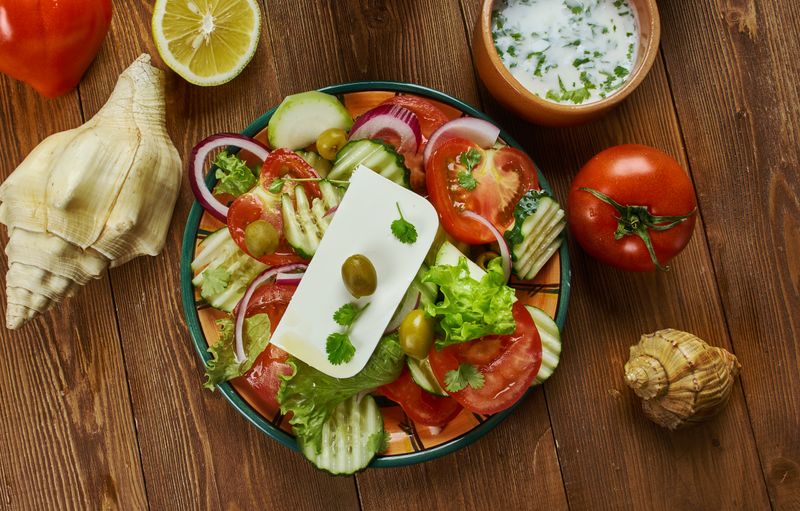
Forget wimpy side salads, horiatiki is the main event, bold and unapologetic.
This classic combines chunky tomatoes, crisp cucumbers, sharp red onions, green peppers, Kalamata olives, and a generous slab of feta cheese.
Everything gets drizzled with olive oil and sprinkled with oregano, creating a flavor explosion that needs no lettuce.
That’s right, authentic Greek salad contains zero lettuce, relying instead on vegetables at their peak ripeness.
The tomatoes should be so ripe they practically burst with sweetness, while the cucumbers add cool refreshment.
Feta cheese provides calcium and protein, while olives contribute healthy monounsaturated fats and a salty punch.
The olive oil dressing adds more healthy fats plus vitamin E, making this salad as nourishing as it is delicious.
Greeks typically enjoy horiatiki as a side dish during lunch or dinner, using bread to soak up the flavorful juices that pool at the bottom.
Wasting those juices would be a crime against good taste.
The beauty of this salad lies in its simplicity, quality ingredients need minimal interference.
Just chop, toss, and enjoy the Mediterranean sunshine on a plate, no matter where you actually are.
9. Briam (Roasted Vegetable Bake)
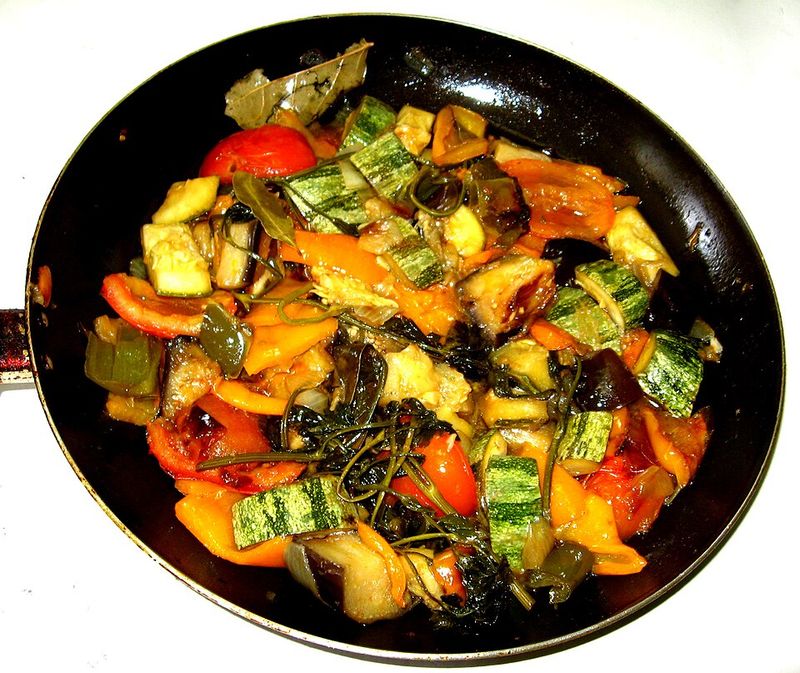
Think of briam as ratatouille’s Greek cousin, equally delicious but with its own Mediterranean personality.
This rustic dish layers sliced vegetables like zucchini, eggplant, potatoes, tomatoes, and peppers in a baking dish, then roasts them slowly with olive oil, garlic, and herbs.
The vegetables caramelize and soften, creating layers of concentrated flavor.
Slow roasting transforms ordinary vegetables into something extraordinary, as their natural sugars caramelize and intensify.
The olive oil helps vegetables absorb fat-soluble vitamins while adding richness without heaviness.
Briam is traditionally peasant food, created by resourceful cooks using whatever vegetables were available.
There’s no strict recipe, just guidelines and common sense, making it perfect for cleaning out your vegetable drawer.
Each vegetable contributes different nutrients, from the antioxidants in tomatoes to the fiber in eggplant and the potassium in zucchini.
Together, they create a nutritional powerhouse that tastes like summer vacation.
You can serve briam warm as a main dish with crusty bread or at room temperature as a side.
It actually improves overnight as the flavors meld, making it ideal for meal prep or potluck contributions.
Though it takes time to roast, the actual hands-on work is minimal, just slice, layer, and let your oven do the heavy lifting.
10. Lentil Soup (Fakes)
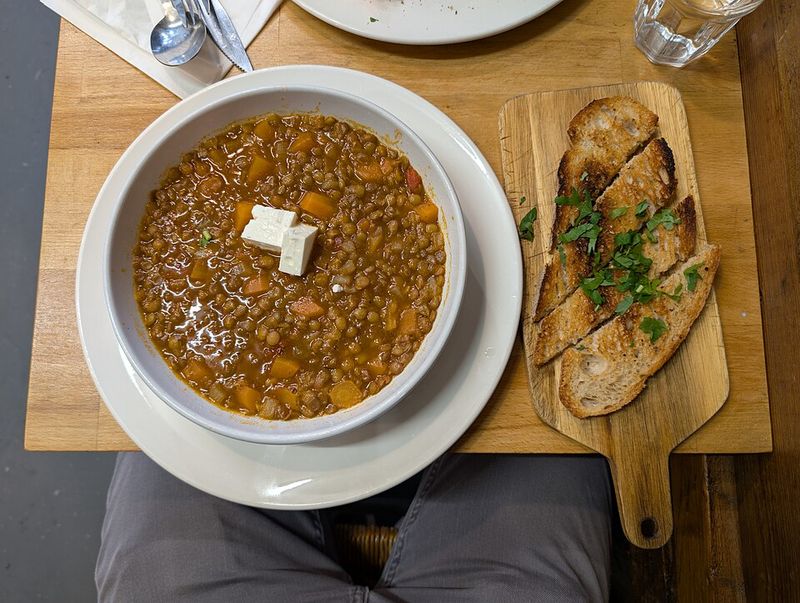
When Greek grandmothers need comfort food that actually loves them back, they make fakes.
This humble lentil soup simmers brown lentils with garlic, onions, tomatoes, and bay leaves until everything becomes tender and flavorful.
A splash of vinegar at the end brightens the earthy lentils and balances the richness.
Lentils are nutritional superstars, packed with plant-based protein, fiber, iron, and folate.
They’re also incredibly affordable and shelf-stable, making them pantry heroes for budget-conscious healthy eating.
Unlike many soups that rely on cream or cheese for richness, fakes gets its body from the lentils themselves as they break down slightly during cooking.
The result is naturally thick and satisfying without any dairy.
Greek families often eat fakes on Fridays during Lent when meat and dairy are avoided, but it’s delicious any day of the week.
The soup is traditionally served with crusty bread for dipping and sometimes a side of olives or pickled vegetables.
The bay leaves add a subtle herbal note that makes the whole pot smell like a Greek kitchen.
Just remember to fish them out before serving, they’re not meant for eating, just flavor infusion.
Share your thoughts below about which Greek bite you’re trying first, or pass this on to someone who’d smile reading it!