19 Historic Roadside Attractions Across The U.S. Still Welcoming Visitors
America’s highways have always had a weakness for giant dinosaurs, oddball museums, neon promises, and the kind of attractions that make a driver slam the brakes and say, hold on, what is that?
That is the charm of a true roadside stop. It aims to tempt tired travelers with personality and just enough glorious weirdness to turn a routine drive into a story people keep telling long after the snacks are gone.
A little nostalgia hangs in the air, but so does the thrill of seeing places that survived changing cars and an era when plenty of travelers now trust their phones more than giant signs by the road.
And honestly, any place that can compete with modern attention spans using pure roadside charisma deserves respect.
1. Lucy the Elephant — Margate City, New Jersey
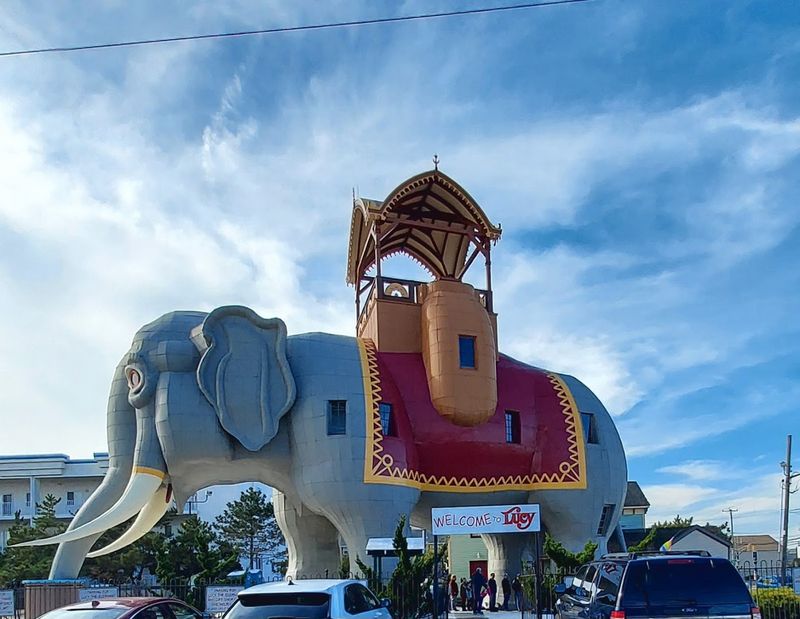
Standing six stories tall and dressed in tin skin, Lucy the Elephant has been turning heads on the New Jersey shore since 1881.
Originally built as a real estate gimmick to lure buyers to the area, this quirky giant has since served as a tavern, a summer cottage, and today, a beloved museum.
Climb up inside her legs and you’ll reach a viewing area with sweeping ocean views that are genuinely breathtaking.
She’s survived hurricanes, neglect, and even a relocation. Lucy is a true survivor.
2. The Big Duck — Flanders, New York
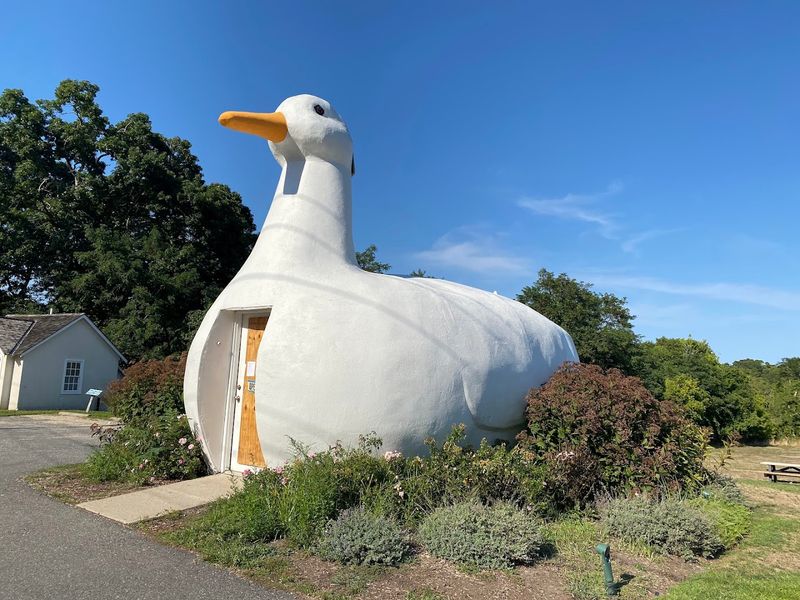
Only on Long Island would a farmer build a giant duck-shaped store to sell duck eggs and ducks, and somehow make it iconic.
Constructed in 1931 by Martin Maurer, the Big Duck stands about 20 feet tall and once housed a thriving poultry business.
Today it operates as a gift shop, and honestly, what better souvenir stop could you ask for than one shaped like a giant waterfowl?
Architects even coined the term “duck” to describe buildings shaped like their products, all thanks to this guy.
3. Mitchell Corn Palace — Mitchell, South Dakota
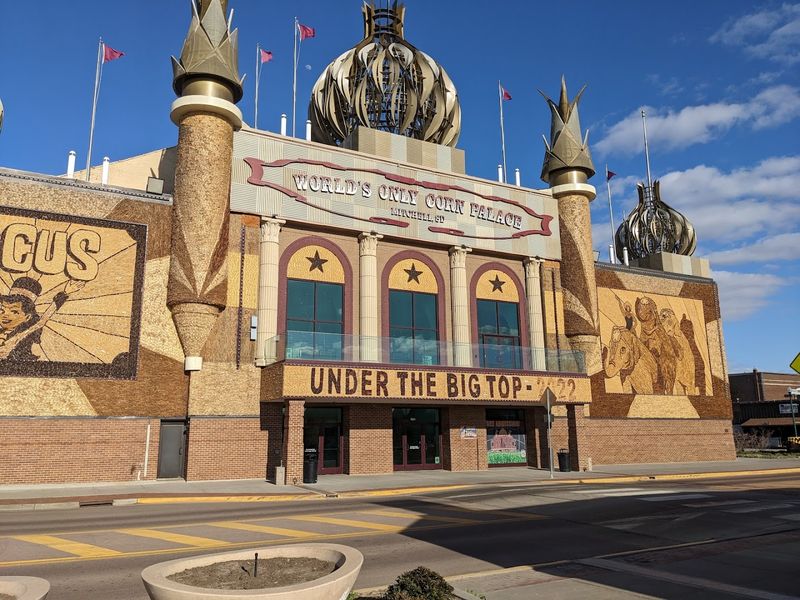
Imagine covering an entire building in corn. Not wallpaper, not paint, actual corn, grain, and native grasses arranged into stunning murals that get redesigned every single year.
The Corn Palace in Mitchell has been doing exactly that since 1892, celebrating the agricultural heart of the Great Plains in the most gloriously extra way possible.
The murals change themes annually, so repeat visits actually make sense. Come for the corn, stay for the sheer creativity on display.
4. Cadillac Ranch — Amarillo, Texas
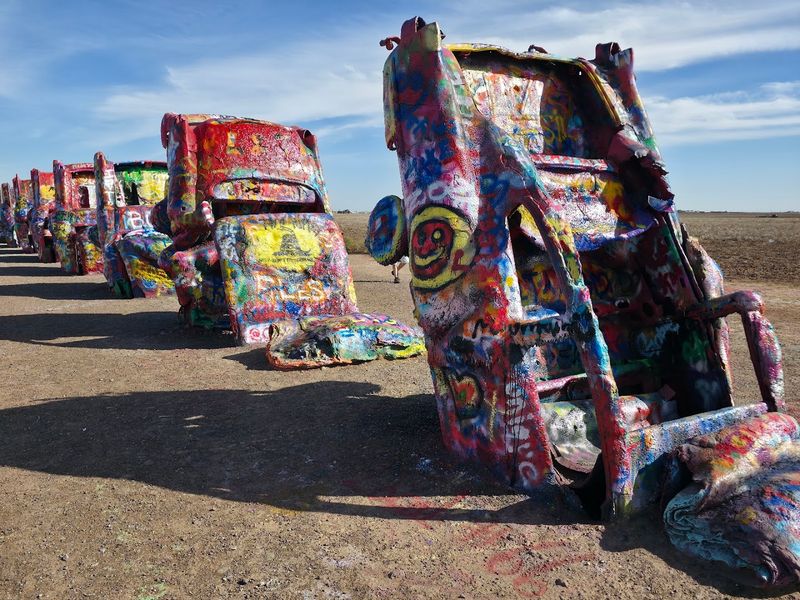
Ten Cadillacs, half-buried nose-first in a Texas panhandle wheat field, all tilted at the exact same angle as the Great Pyramid of Giza.
That’s Cadillac Ranch, and yes, it’s as wonderfully bizarre as it sounds.
Created in 1974 by a group of artists called Ant Farm, this open-air installation sits right along historic Route 66 and has been a magnet for road-trippers ever since.
Bring your own can of spray paint, because adding your mark to the cars is not just allowed, it’s encouraged.
5. South of the Border — Hamer, South Carolina
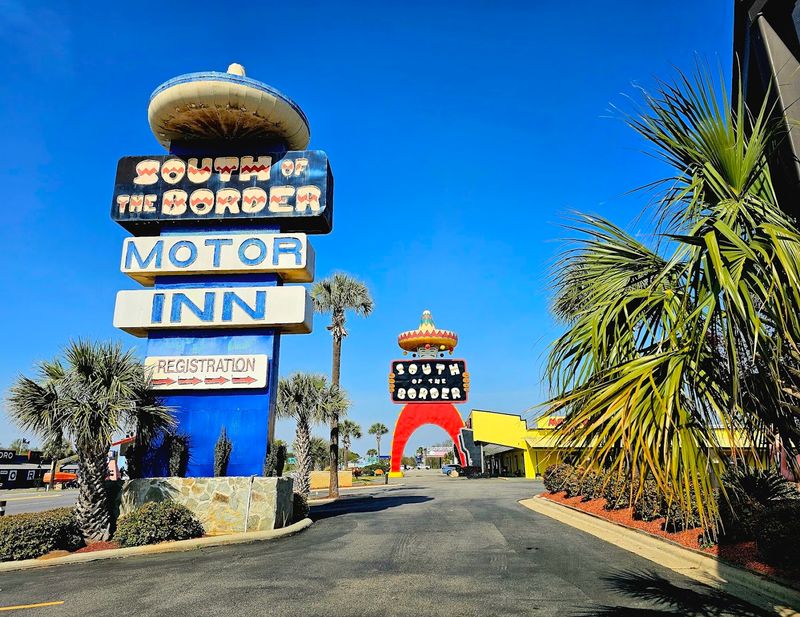
Long before GPS replaced highway billboards, South of the Border was the king of the tease.
Hundreds of punny signs lined I-95 for miles, each one counting down to the big, colorful spectacle at the North Carolina-South Carolina border.
Founded in 1949 by Alan Schafer, this roadside resort grew into a full-blown destination with rides, shops, restaurants, and a towering sombrero-shaped observation deck.
It’s gloriously retro and proudly over the top, which is basically the whole charm.
6. Caverns of Sonora — Sonora, Texas
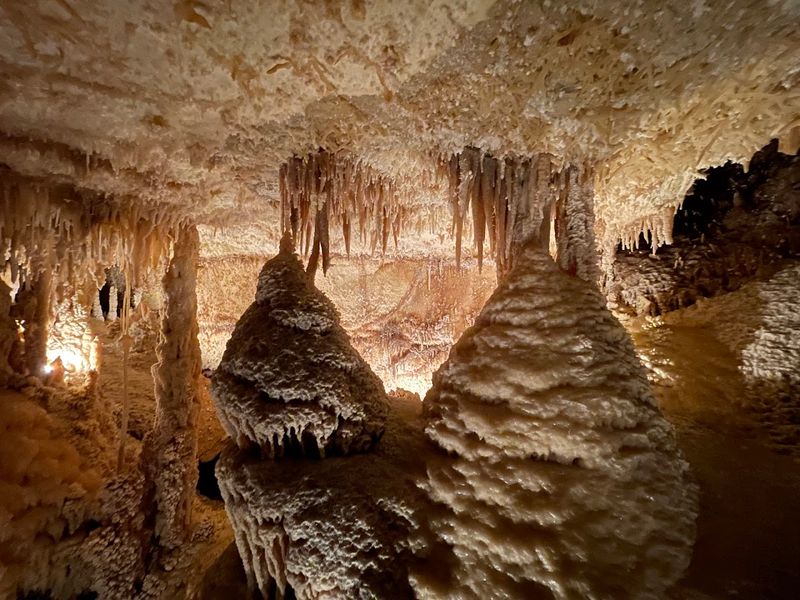
Deep beneath the Texas Hill Country hides one of the most spectacular cave systems in the entire world.
The Caverns of Sonora, open to visitors since 1960, feature crystal-clear helictites, delicate cave coral, and otherworldly formations that look like they belong on another planet.
Even world-renowned cave expert Emil Bequaert once called it the most beautiful cave in the world.
Tours run daily and the underground temperature stays a cool 70 degrees year-round, making it a perfect summer escape.
7. House on the Rock — Spring Green, Wisconsin
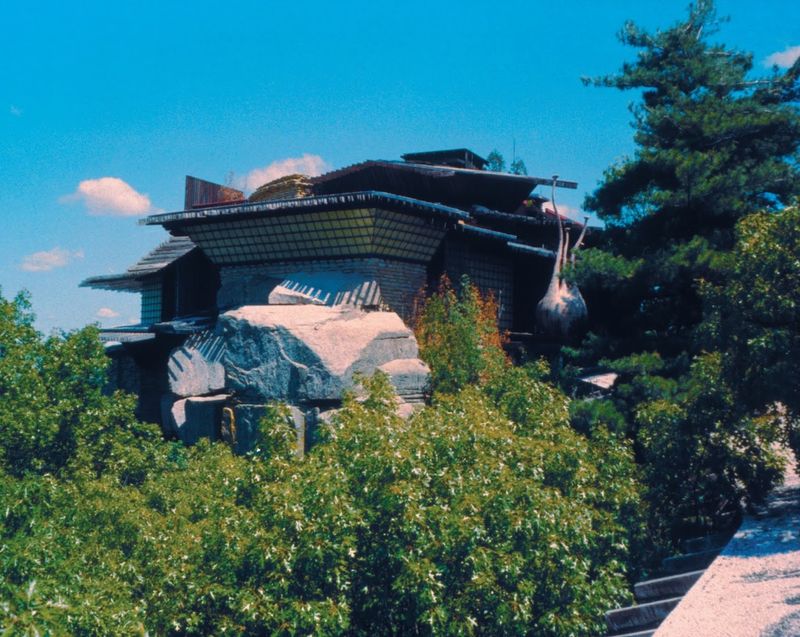
Alex Jordan Jr. built his dream home on top of a 60-foot rock column in the Wisconsin countryside, and then filled it with the most gloriously bizarre collections imaginable.
Mechanical orchestras, a room-sized carousel, suits of armor, and a replica of a blue whale dangling from the ceiling are just a few of the wonders waiting inside.
No wonder Neil Gaiman used it as a setting in his novel American Gods.
Plan for a full day, because leaving early feels genuinely impossible.
8. Wigwam Motel — Holbrook, Arizona
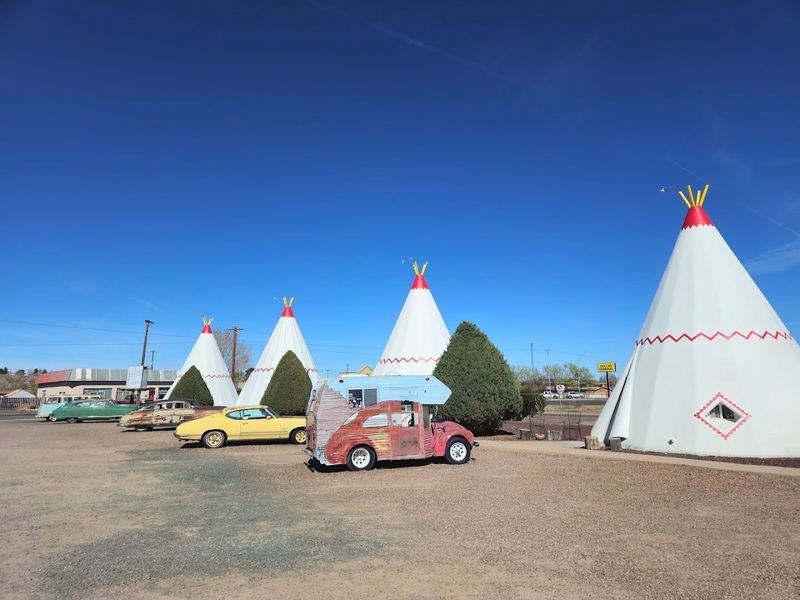
Pulling into the Wigwam Motel feels like stepping directly into a 1950s postcard.
Each room is a self-contained concrete teepee, complete with vintage furnishings and original hickory furniture that has been carefully preserved for decades.
Built in 1950 along the Mother Road, this is one of only three surviving Wigwam Motels left in the country, making it a genuine piece of living Route 66 history.
Reservations fill up fast, especially in summer, so book early if you want to sleep in a teepee tonight.
9. Cabazon Dinosaurs — Cabazon, California
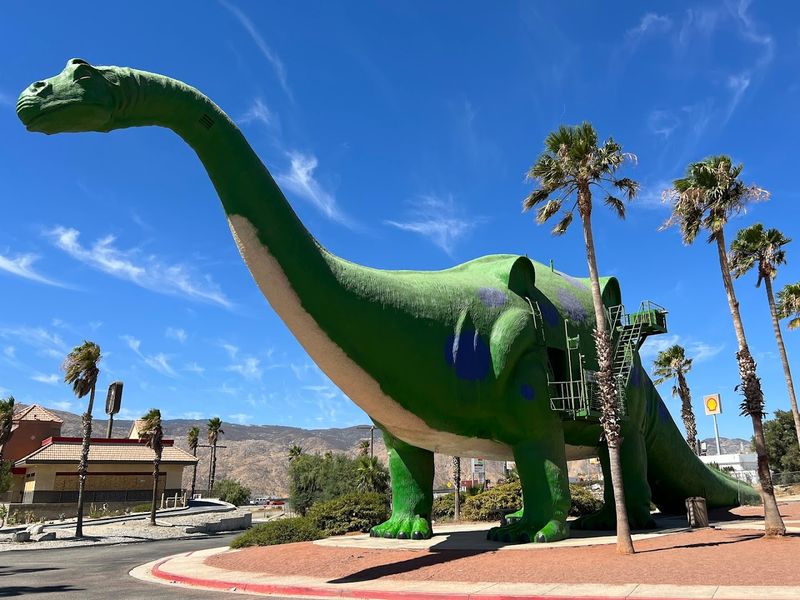
Cruising down Interstate 10 toward Palm Springs, you’ll suddenly spot a massive brontosaurus looming over the desert horizon, and no, you’re not hallucinating.
Dinny the Dinosaur stands 150 feet long and 45 feet high, making him one of the largest dinosaur sculptures ever built.
His smaller but no less ferocious neighbor, Mr. Rex, has been photobombing road-trippers since the 1960s.
Creator Claude Bell spent over a decade building these giants by hand, which honestly makes them even more impressive.
10. Enchanted Highway — Regent, North Dakota
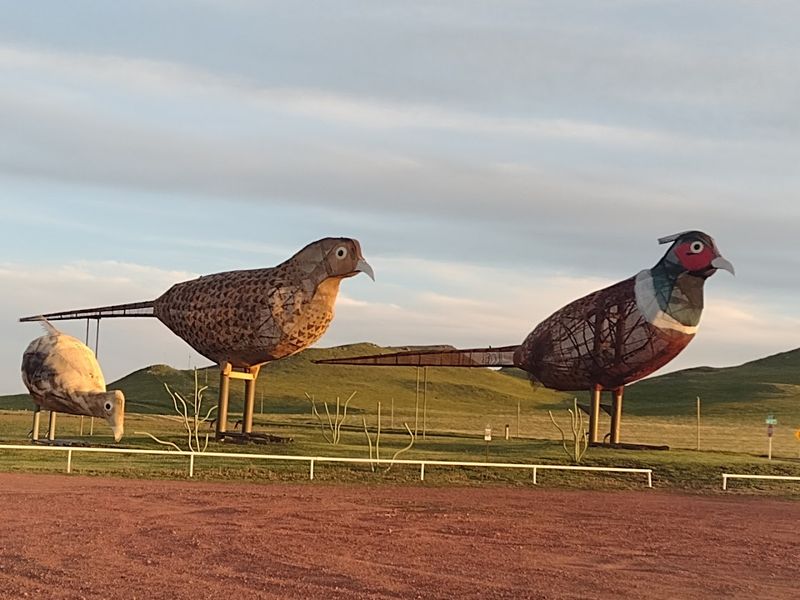
Stretching 32 miles across the windswept North Dakota prairie, the Enchanted Highway is one of the most surprisingly magical road trips you can take in the entire Midwest.
Local artist Gary Greff created a series of enormous scrap-metal sculptures that rise dramatically from the flat landscape, including a family of pheasants so large they hold the Guinness World Record for the biggest metal sculpture.
Every few miles brings a new giant artwork, and the whole route is completely free to drive.
11. Paul Bunyan and Babe the Blue Ox — Bemidji, Minnesota
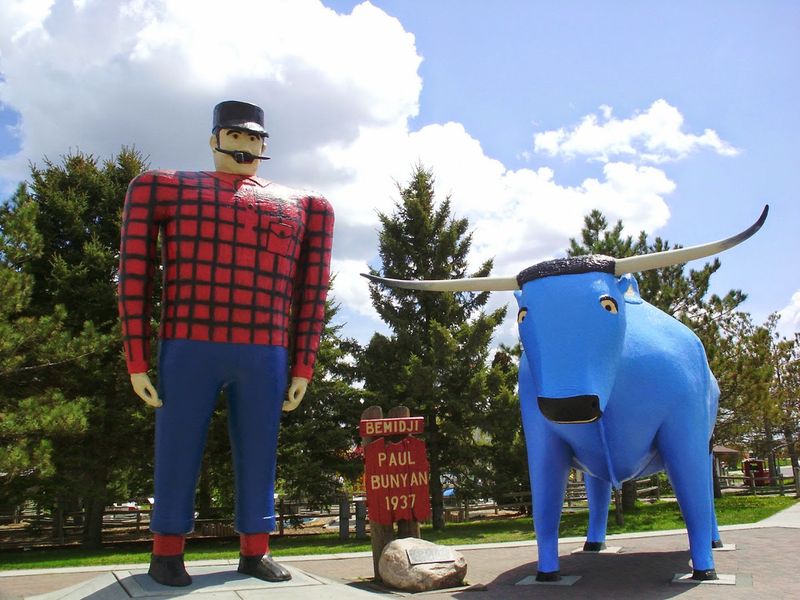
Standing proudly on the shores of Lake Bemidji since 1937, Paul Bunyan and his faithful blue ox Babe are two of America’s most beloved folklore icons frozen in fiberglass glory.
Paul towers at 18 feet tall with a grin that could charm any logging camp, while Babe stands 10 feet high and just as blue as the legends promised.
These statues sparked an entire genre of giant roadside figures across America.
The surrounding tourist center is open year-round and the lakeside setting makes for gorgeous photos.
12. Salvation Mountain — Niland, California
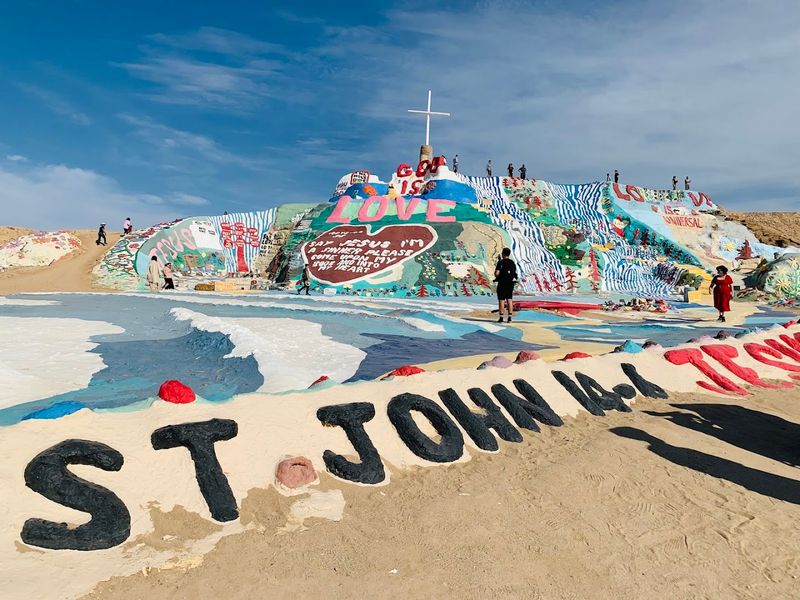
Somewhere in the Sonoran Desert near the Salton Sea, a retired sailor named Leonard Knight spent over 30 years hand-painting a mountain with a message of love.
Salvation Mountain is a psychedelic, sun-baked masterpiece built from adobe, straw, and thousands of gallons of paint, covered in Bible verses, flowers, trees, and the words “God Is Love” in enormous letters.
The site is open sunrise to sunset every single day of the year, completely free of charge.
13. Santa’s Workshop at the North Pole — Cascade, Colorado
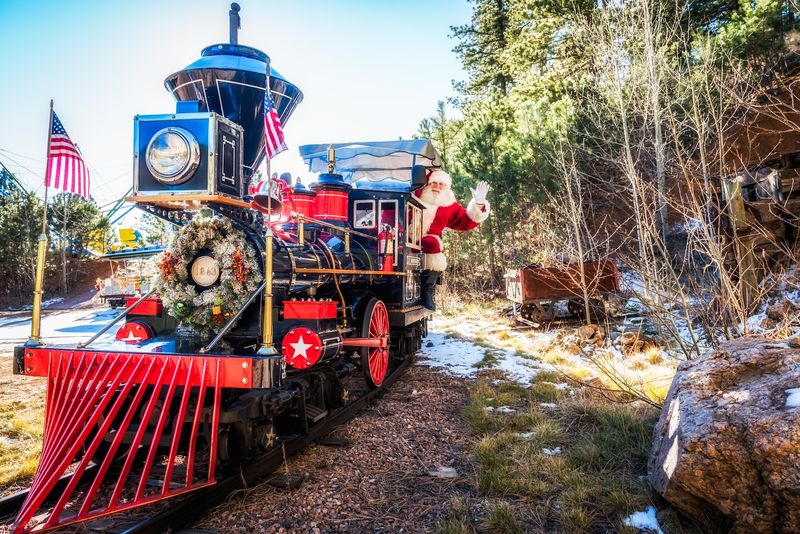
Perched 7,500 feet up in the Colorado Rockies, Santa’s Workshop has been spreading Christmas cheer since 1956, making it one of the oldest theme parks in the entire country.
Nestled among towering pines with Pikes Peak looming behind it, the park features vintage rides, live reindeer, and a visit with Santa himself, every single day it’s open, not just in December.
Kids absolutely love it, but adults tend to get a little misty-eyed too, because something about this place feels genuinely timeless.
14. U-Drop Inn / Tower Station — Shamrock, Texas
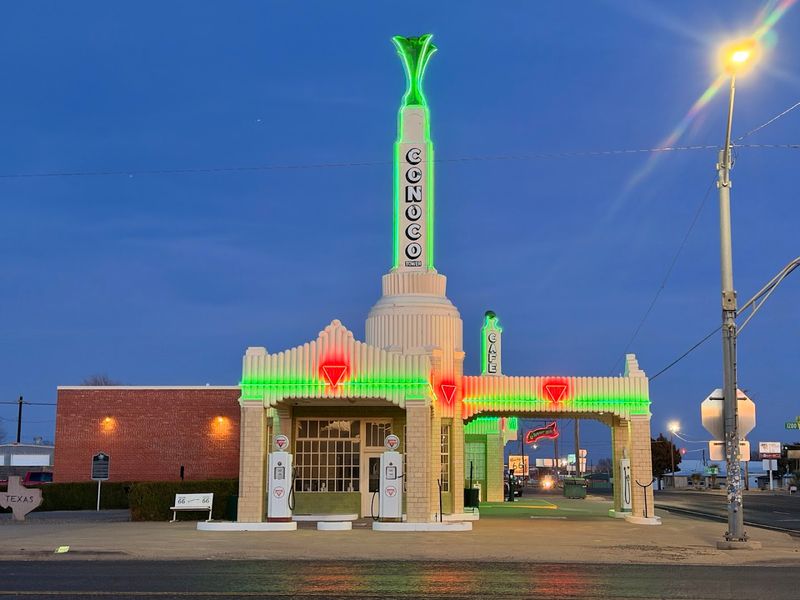
Few buildings on all of Route 66 can match the sheer architectural drama of the U-Drop Inn in Shamrock, Texas.
Built in 1936, this Art Deco masterpiece features a soaring tower, sweeping canopy, and a silhouette so striking that it reportedly inspired the Cozy Cone Motel in the Pixar film Cars.
Restored to its original glory, the building now serves as a visitor center and Chamber of Commerce office.
Walking up to it feels like time-traveling straight to the golden age of American highway culture.
15. 66 Drive-In Theatre — Carthage, Missouri
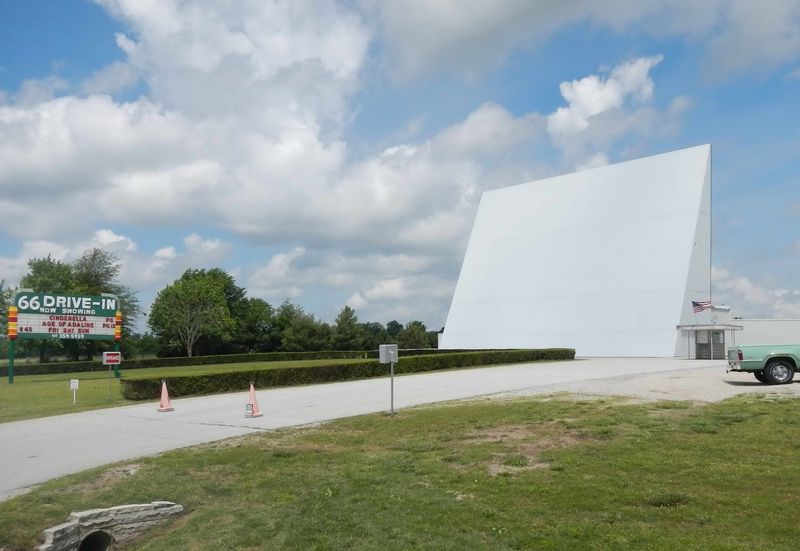
There’s something almost magical about watching a movie under an open sky with the radio crackling through your car speakers.
The 66 Drive-In Theatre in Carthage has been delivering exactly that experience since 1949, making it one of the last surviving drive-ins on the entire length of Route 66.
The massive screen, the retro concession stand, and the warm Missouri nights all combine into something you simply cannot stream at home.
Bring blankets, bring snacks, and enjoy the show.
16. Rock City — Lookout Mountain, Georgia
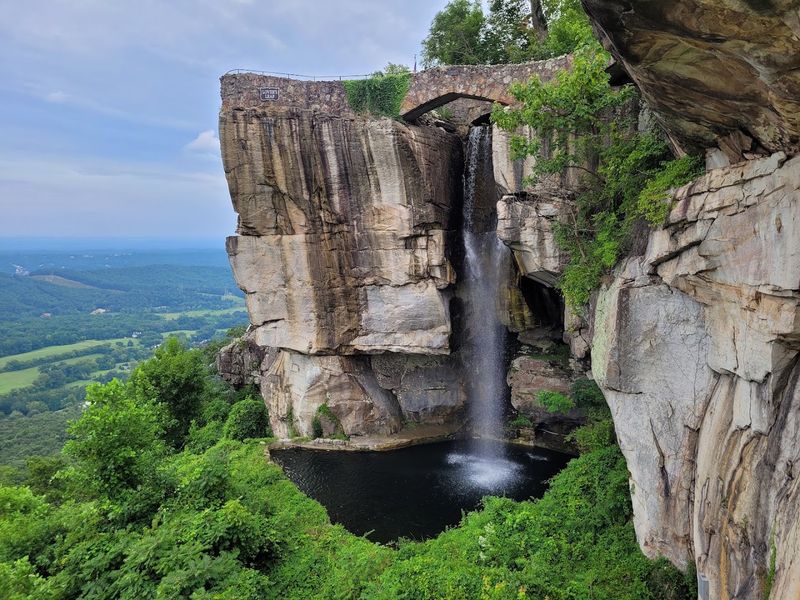
“See Rock City” was painted on barn roofs across the entire Southeast for decades, and honestly, the hype was completely justified.
Perched atop Lookout Mountain near Chattanooga, Rock City features ancient rock formations, narrow pathways through towering boulders and on a clear day, a viewpoint where you can supposedly see seven states at once.
It opened to the public in 1932 and has never really slowed down since.
The Gnome Village and Lover’s Leap overlook are two highlights you shouldn’t miss.
17. Jack Rabbit Trading Post — Joseph City, Arizona
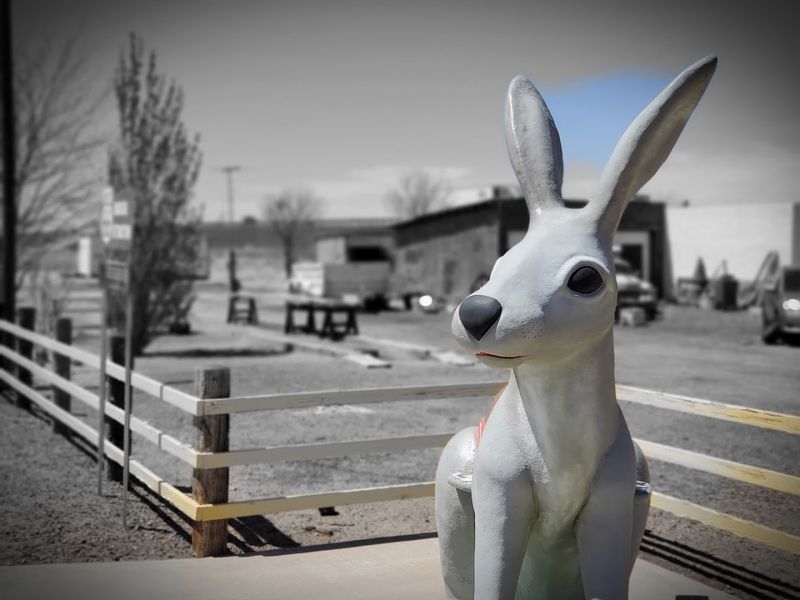
“Here It Is!” That famous yellow sign with a giant jackrabbit has been luring Route 66 travelers off the highway since 1949.
The Jack Rabbit Trading Post in Joseph City, Arizona, is one of the most photographed stops on the entire Mother Road, and rightly so.
The trading post sells souvenirs, Native American crafts, and all the quirky Route 66 memorabilia a road-tripper could ever want.
Pose with the giant jackrabbit out front, because that’s basically mandatory at this point.
18. World’s Largest Ball of Sisal Twine — Cawker City, Kansas
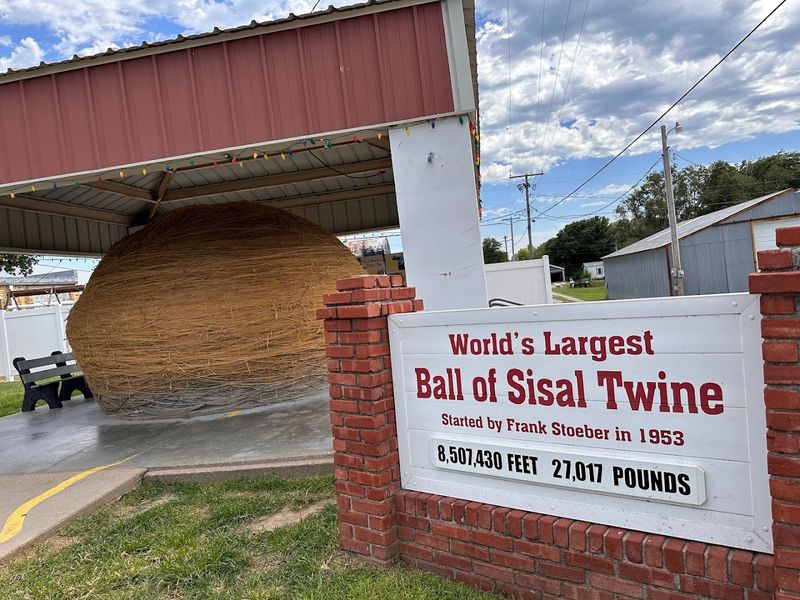
Frank Stoeber started wrapping twine in 1953 because, well, why not? By the time he donated his creation to the town of Cawker City in 1961, it already weighed over 5,000 pounds.
Today the ball tips the scales at more than 20,000 pounds, and visitors are still encouraged to add their own twine to keep it growing.
An annual Twine-a-Thon festival lets visitors contribute officially each summer. Where else can you say you helped build the world’s largest anything?
19. Jolly Green Giant Statue — Blue Earth, Minnesota
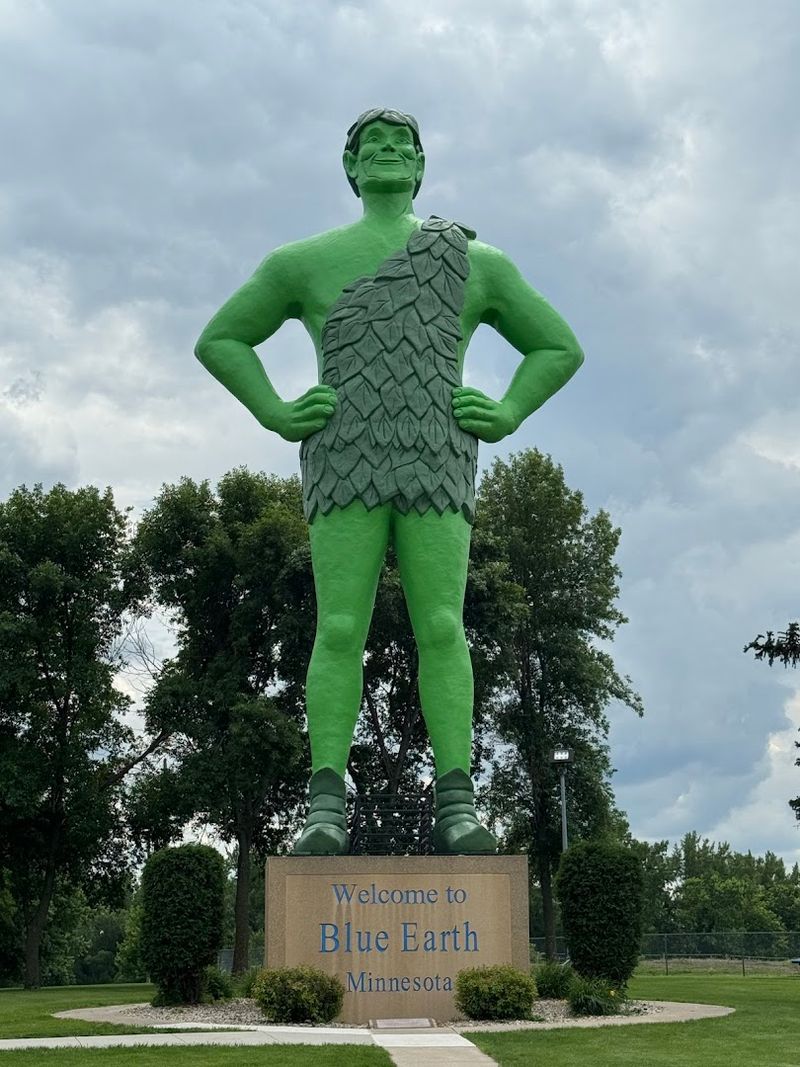
Standing 55 feet tall and painted the most vivid shade of green imaginable, the Jolly Green Giant of Blue Earth, Minnesota, has been greeting travelers along Interstate 90 since 1979.
The statue was built to honor the region’s massive canned vegetable industry and the iconic Green Giant brand, which has deep roots in this corner of the Midwest.
Getting a photo next to those enormous green feet is basically a rite of passage for anyone passing through. Ho ho ho, indeed.