15 Lesser-Known Facts About Filming Star Trek
Beam me up, because the real drama wasn’t just on the bridge.
While the Enterprise explored strange new worlds, the team behind the cameras was boldly going on tight budgets and pure ingenuity. Phasers were set to stun, but the creativity was set to warp speed.
Fifteen behind-the-scenes secrets reveal how that scrappy crew pulled it off, and once you know them, every episode hits different.
1. Lucille Ball Backed Star Trek At Desilu

Desilu Studios faced serious doubts after NBC rejected the first pilot.
Lucille Ball led Desilu and supported keeping Star Trek in play at the studio after the first pilot didn’t land with NBC. Her support meant everything when executives wanted to walk away.
That rare second pilot became the turning point that ultimately got the series on the air. Ball’s gamble paid off in ways nobody could have predicted back then.
2. Klingon Look Changed, Early Portrayals Stayed Simple

Early Klingon villains appeared strikingly human when viewed against later incarnations.
Production constraints kept the early Klingon look simpler than what later series established.
Smooth foreheads evolved into a franchise riddle that subsequent series felt compelled to address. Fan debates stretched across decades, inspiring inventive in-universe explanations to bridge the visual gap.
Creative constraints often plant the seeds for the most intriguing storytelling solutions.
3. Restoration Treated Model As Historical Artifact, Not Remake
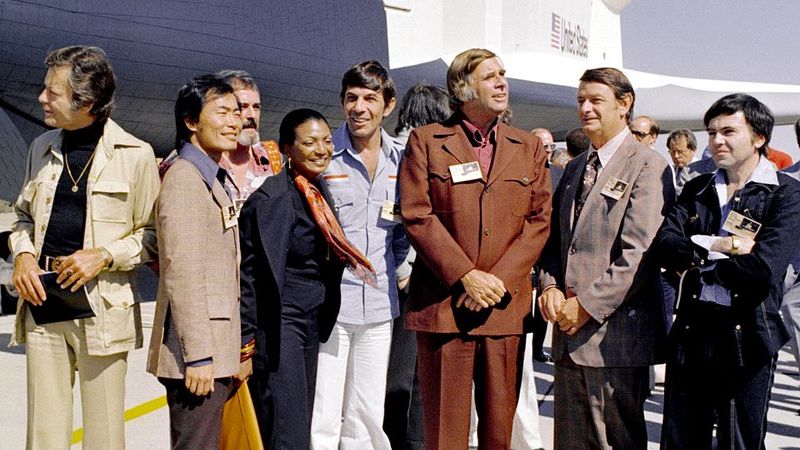
Archaeologist-level care guided museum conservators as they approached the studio model. Preservation of production history mattered more than constructing a polished replica.
Scuffs and last-minute modifications carried traces of long filming days and relentless deadline pressure.
Photos and archival documents were studied closely to recreate one precise moment in the ship’s screen history. Handling props as artifacts pays tribute to the craftsmen who assembled them beneath unforgiving stage lights.
4. Matt Jefferies’ Name Lives On In ‘Jefferies Tubes’
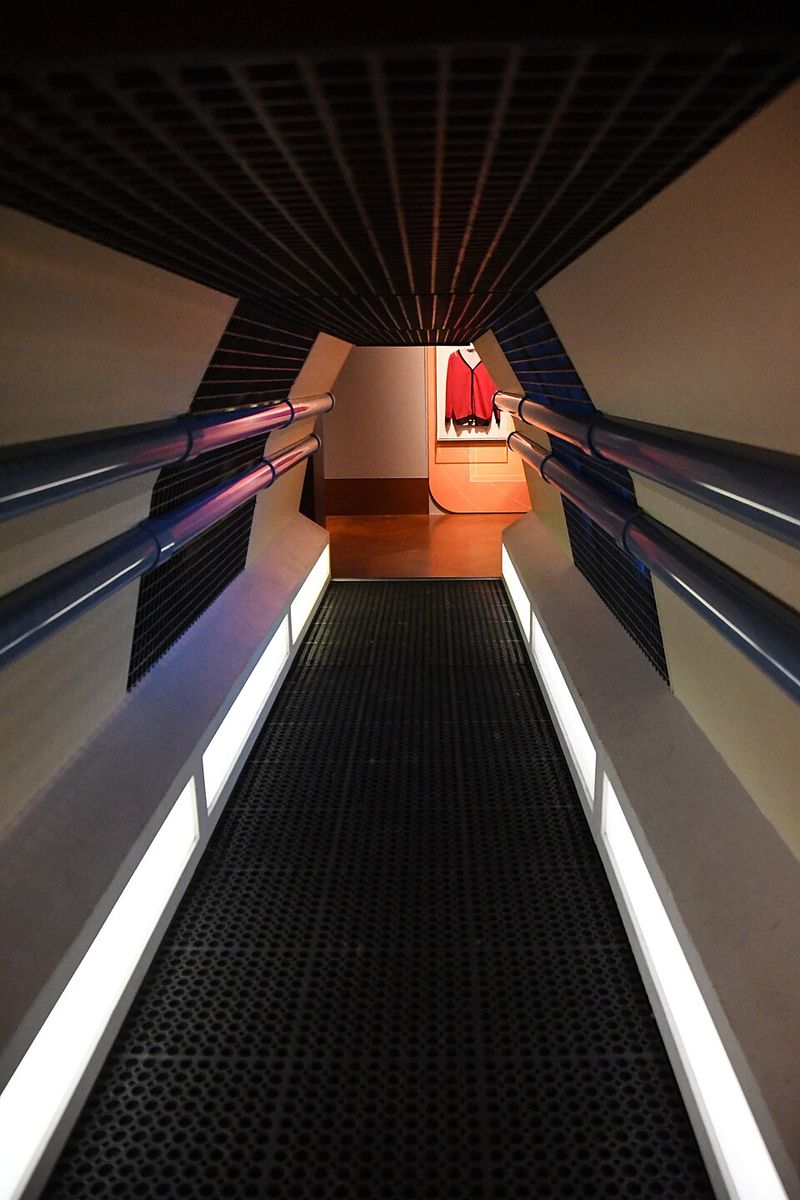
Matt Jefferies designed so much of the Enterprise’s look that the franchise named a piece of the ship after him.
Those cramped maintenance crawlways became known as Jefferies tubes in later Trek lore. Fans who know the history smile every time a character crawls through one.
Honoring the designer that way keeps his creativity alive across generations. The best tributes are the ones built right into the world.
5. Vasquez Rocks Became Recurring Alien Shortcut
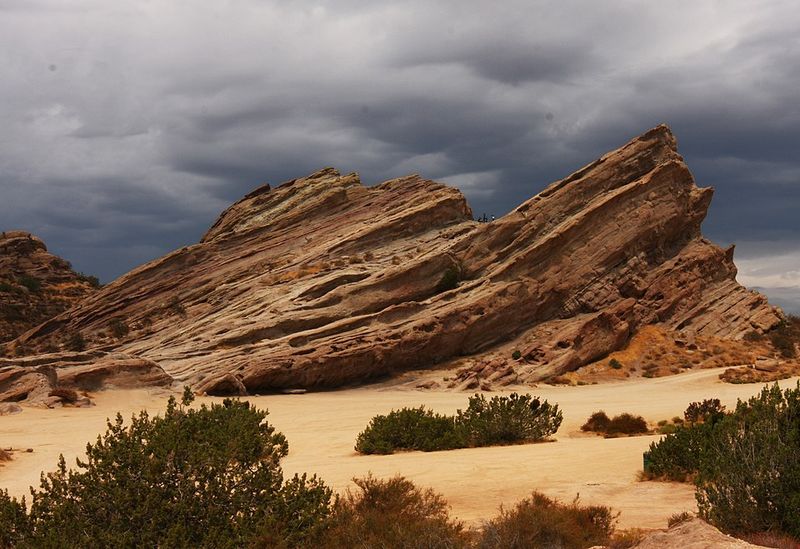
Jagged rock formations from “Arena” evolved into one of Trek’s most recognizable outdoor backdrops.
Standing in for countless alien landscapes, those peaks quietly anchored multiple episodes across the franchise’s run. Returning to the same location trimmed both travel costs and production time when schedules tightened.
Visitors can still explore the site today and trace the ground where Kirk once battled the Gorn.
Natural scenery delivered scale and drama that no studio budget could fully replicate.
6. Museum Displays Preserve Original Bridge Pieces
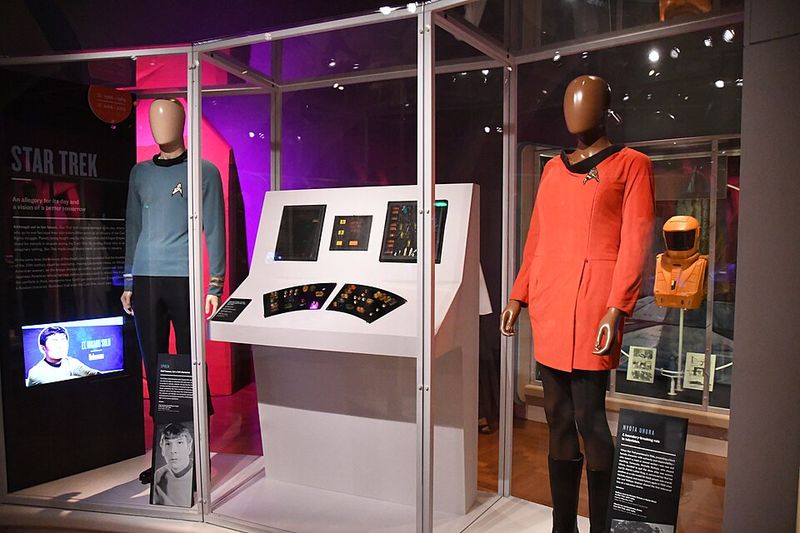
Museum exhibits now house surviving fragments of the original bridge set. Consoles and panels on display reflect the practical craftsmanship behind the show’s production years.
Detailed photography reveals textures and design choices that 1960s television broadcasts often blurred.
Close proximity to that hardware links visitors to the crew members who once operated those switches beneath harsh stage lighting.
Objects built for fiction transform into time capsules when they endure beyond the series they once supported.
7. Tribbles Were Simple Foam-Filled Pouches
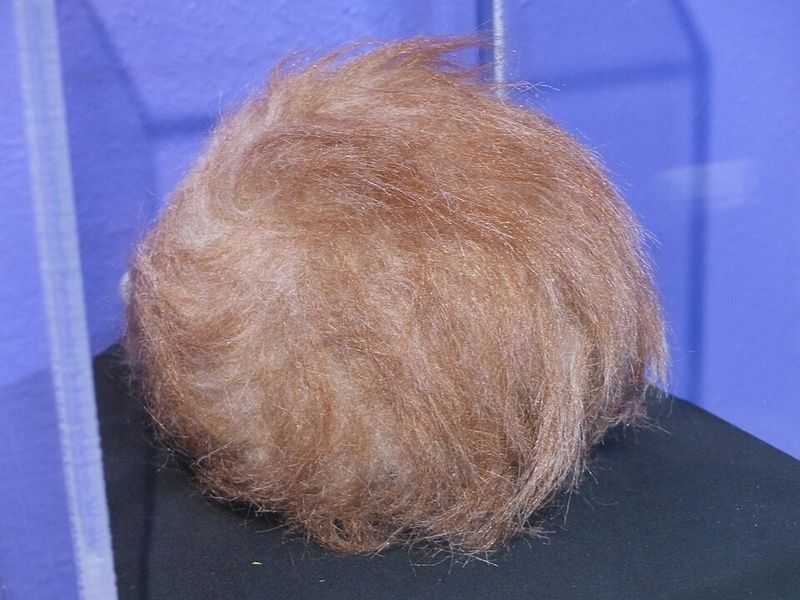
Synthetic fur and foam rubber launched one of the franchise’s most endearing alien invasions.
Simple pouches stitched by the costume team allowed the creatures to be tossed around the set in large numbers. At one point, William Shatner found himself buried beneath a huge pile of them during filming.
Uncomplicated practical effects often leave the strongest impression.
Fuzzy spheres demonstrated that elaborate technology is not required to dominate a scene.
8. Model Film Appeared Throughout Original Run

The starship in flight was portrayed in all 79 episodes of The Original Series using the original 11-foot studio model. Carefully crafted details on that miniature defined the visual identity of the show.
Memorable space sequences all traced back to footage captured of that single ship. A permanent home at the Smithsonian later secured its legacy.
Few props carried the weight of three seasons so completely before earning a place of honor.
9. Smithsonian Restoration Targeted The Enterprise’s August 1967 Look
Restorers picked one specific moment in the model’s life as their target.
They aimed to recreate how the ship looked during “The Trouble with Tribbles” filming in 1967.
That episode marked the last time the studio modified the model during production. Choosing one moment in time gave the team a clear goal instead of guessing what looked “right.”
10. Transporter Sparkle Came From Filmed Aluminum Powder
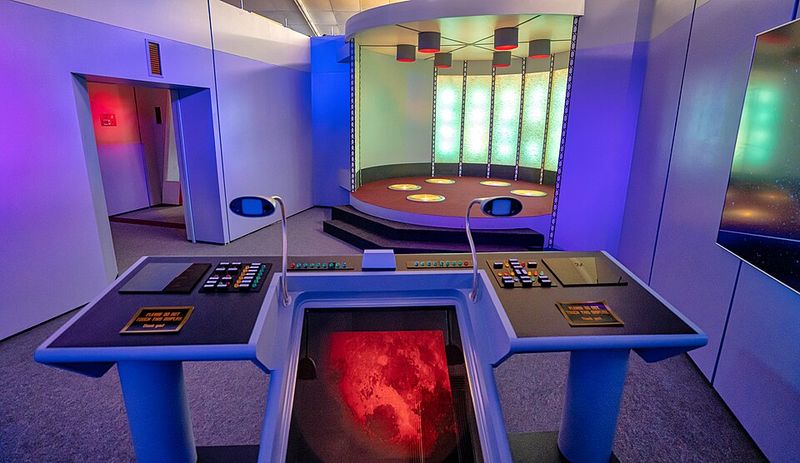
An iconic shimmer began with materials you might spot in an ordinary hardware store. As effects artists recorded the footage for later usage, aluminum dust and powder were separately filmed falling via a powerful beam of light.
Layering that imagery over the actors produced the transporter’s unmistakable glow.
Low-tech ingenuity often withstands time better than elaborate digital tricks. Aluminum dust transformed into one of science fiction’s most enduring visual signatures.
11. Matt Jefferies Built Bridge Layout Around Real-World Cockpit Logic

Jefferies brought aircraft design experience to the captain’s chair.
He laid out the bridge like a functional cockpit where every station made ergonomic sense. That practical thinking helped the space feel real instead of just decorative.
He even helped design the handheld phasers with his brother. Good design comes from understanding how people actually work in tight spaces under pressure.
12. Stage 9 Served As Permanent Set Hub For Key Rooms

Stage 9 functioned as the hub for the core interior sets, which remained standing installations throughout production.
Permanent construction of key rooms allowed the crew to shift quickly and redress spaces without major delays.
Tight shooting schedules left little room for dismantling and rebuilding sets between episodes. Those enduring stages effectively became the Enterprise’s operational home base.
Efficient planning and a stable workspace often prove more powerful than any flashy special effect.
13. Desilu’s Gower Street Lot Became Production Home Base

Once NBC picked up the series, production moved to Desilu’s Gower Street facility.
The show used what later became stages thirty-one and thirty-two on the Paramount lot. Those buildings witnessed every episode come to life under deadline pressure.
Real locations anchor television history in ways that matter to fans. Walking past those stages today means stepping through decades of storytelling.
14. The Menagerie Saved Time By Reusing The Cage Footage
Intense production pressure pushed the crew toward inventive problem-solving when the schedule tightened.
Large portions of the rejected first pilot were reshaped into the foundation of a two-part episode.
Reusing footage from “The Cage” allowed “The Menagerie” to come together quickly while still satisfying effects-heavy requirements. Deadlines and budget limits often turn constraint into unexpected innovation.
15. NBC Ordered Second Pilot After Rejecting The Cage

NBC passed on “The Cage” in February 1965 but did something almost unheard of.
They commissioned a second pilot called “Where No Man Has Gone Before.” That rare second chance got the series to air when most rejected shows stayed dead.
Networks almost never give do-overs like that. One unusual decision changed television history and launched a franchise that outlived everyone’s predictions.
Important: This article highlights behind-the-scenes production notes and commonly reported filming details related to Star Trek: The Original Series and its legacy materials. Some points reflect historical reporting and documented restoration goals, while others summarize widely shared production accounts that may vary slightly across sources.