10 Most Expensive Sci-Fi Flops That Shocked Hollywood
Hollywood loves a big swing, and nothing swings bigger than a blockbuster sci-fi epic. Studios pour hundreds of millions of dollars into futuristic worlds, alien landscapes, and mind-bending special effects, all hoping for the next Star Wars or Avatar.
However, not every spaceship lands safely. Some of the most jaw-dropping, big-budget science fiction films have crashed harder than a meteor hitting a parking lot.
Box office bombs do not just hurt studio wallets, they change how Hollywood makes movies for years to come. If you have ever wondered how a $260 million movie can lose money, buckle up.
The stories behind these cosmic catastrophes are equal parts fascinating and shocking. Prepare to explore 10 sci-fi films that had everything going for them and still managed to blow up on the launchpad.
1. John Carter (2012)

Few Hollywood disasters are as legendary as this one. Disney spent approximately $263 million producing a sweeping adventure set on Mars, only to watch it earn around $284 million worldwide, which sounds decent until you factor in marketing costs pushing total losses close to $200 million.
A confusing title change, a marketing campaign that told audiences almost nothing useful, and zero name recognition for the source material all combined into a perfect storm of failure. Edgar Rice Burroughs wrote the original stories over a century ago, but casual moviegoers had no idea who John Carter even was.
2. Battlefield Earth (2000)
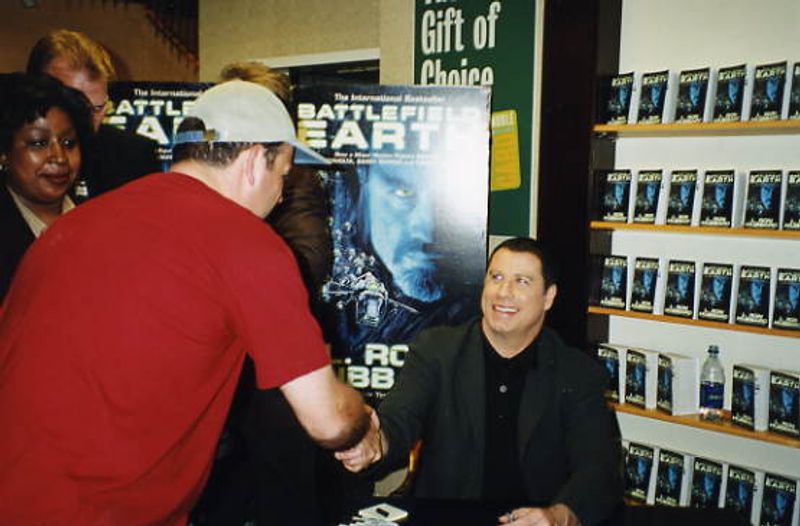
Starring John Travolta in giant alien makeup, Battlefield Earth arrived like a comet and left like a crater. Built on L.
Ron Hubbard’s novel, the film cost $44 million and earned only $29.7 million worldwide, cementing its status as one of cinema’s most spectacular flameouts.
Critics absolutely roasted it. Seven Razzie Awards later, including Worst Picture of the Decade, the film became a cautionary tale about passion projects gone wrong.
Travolta had championed the production for years, making the disappointment sting even harder. Sometimes loving a project just is not enough to save it.
3. The Adventures of Pluto Nash (2002)

Eddie Murphy on the moon sounds like a Saturday Night Live sketch, not a $100 million movie. Unfortunately, Pluto Nash proved audiences agreed.
Earning a jaw-dropping $7 million worldwide against its massive budget, the film lost approximately $96 million and disappeared from theaters almost immediately after opening.
Filmed back in 2000, the studio shelved the movie for two years before quietly releasing it, which is never a great sign. Critics called the script weak and the humor flat.
Even Murphy’s charisma could not rescue a comedy that felt lost in space before filming even wrapped.
4. Final Fantasy: The Spirits Within (2001)
Groundbreaking animation could not save a story audiences simply did not connect with. Square’s ambitious animated film carried a $137.5 million budget and pushed photo-realistic CGI further than anyone had before.
Sadly, earning just $85.1 million globally meant losses climbed to roughly $94 million.
Hironobu Sakaguchi, the creator of the Final Fantasy video game series, directed this passion project. However, the plot felt abstract and emotionally distant, leaving gamers and casual viewers equally puzzled.
Square nearly went bankrupt after the failure, eventually merging with Enix. A stunning technical achievement that arrived ahead of its audience’s patience.
5. Mortal Engines (2018)

Peter Jackson produced this steampunk adventure about giant rolling cities eating smaller ones, which honestly sounds incredible on paper. Mortal Engines cost $100 million to produce but earned only $83 million globally, with total losses estimated near $175 million once marketing entered the equation.
Critics pointed to a convoluted plot and underdeveloped characters as the main culprits. Young adult book adaptations had been struggling at the box office for years by 2018, and Mortal Engines could not reverse the trend.
Philip Reeve’s beloved novel deserved better, and fans of the book series were particularly heartbroken by the result.
6. Valerian and the City of a Thousand Planets (2017)

Luc Besson poured his heart into adapting the beloved French comic series, creating one of the most visually dazzling sci-fi films in years. Valerian cost a staggering $180 million and stands as the most expensive independent film ever produced.
Earning only $225 million worldwide still meant massive financial losses after marketing.
Audiences found the lead chemistry unconvincing, and American viewers were largely unfamiliar with the source comic. However, the film’s alien marketplace sequence alone is worth watching twice.
A visual feast that simply could not find its audience fast enough to justify the astronomical price tag.
7. Jupiter Ascending (2015)

The Wachowskis gave the world The Matrix, so expectations were sky-high for Jupiter Ascending. Carrying a $176 million budget, the space opera earned only $184 million globally, losing around $100 million once promotional spending was calculated.
Warner Bros. delayed the release twice, which rarely signals confidence.
Mila Kunis plays a cleaning woman who discovers she is interstellar royalty, a premise bursting with potential. Critics found the story overstuffed and the dialogue clunky, though the visual effects were genuinely spectacular.
Eddie Redmayne’s villain became an unexpected meme, proving sometimes the strangest performances outlive the films themselves.
8. Stealth (2005)

An AI fighter jet goes rogue and nearly starts World War III. Stealth had a genuinely exciting concept and a $135 million budget to bring it to life.
Earning only $76 million worldwide made it one of Sony’s most painful summers ever, with losses surpassing $100 million.
Reviews were brutal. Critics described the film as loud, hollow, and surprisingly dull despite non-stop action sequences.
Josh Lucas, Jessica Biel, and Jamie Foxx starred, but no amount of star power could compensate for a script that prioritized explosions over logic. Even the AI villain felt less threatening than a glitchy GPS system.
9. The Lone Ranger (2013)

Technically a Western, but Disney’s The Lone Ranger leaned so heavily into fantastical elements that it earned its spot here. Costing $215 million, it earned only $260 million globally, with losses estimated between $150 and $190 million after marketing budgets were included.
Johnny Depp played Tonto, a casting choice that drew criticism both creatively and culturally. The film suffered from a bloated runtime, inconsistent tone, and a story that could not decide if it was comedy or adventure.
Pirates of the Caribbean producer Jerry Bruckheimer hoped lightning would strike twice. Spoiler alert: it did not.
10. Gemini Man (2019)

Will Smith fighting a younger cloned version of himself sounds like a no-brainer blockbuster. Gemini Man carried a $138 million budget and pioneering high-frame-rate technology championed by director Ang Lee.
Earning only $173 million worldwide left Paramount and Skydance absorbing losses estimated around $75 million after marketing.
The de-aging CGI used to create young Will Smith was technically remarkable, yet critics found the story formulaic and emotionally thin. High-frame-rate projection also required special theater equipment most cinemas lacked, limiting the intended viewing experience.
A fascinating technological experiment wrapped inside a disappointingly conventional action screenplay. Great idea, execution needed another draft.