20 Natural Wonders In The U.S. That Feel Almost Unreal
America has no shortage of scenery, but a few places look like they were dreamed up by someone who got carried away in the best possible way.
Water glows strange colors, rock formations rise like they forgot normal geology, and entire landscapes seem determined to make the human brain pause for a second and ask if this is really allowed.
Photos already look suspicious. Seeing them in motion, in person, with real light and actual scale involved is the kind of experience that can make a grown adult stand there grinning like they just walked into a screensaver.
One glance at the right canyon, spring, cave, or coastline, and “beautiful” suddenly feels like a very lazy word.
1. Monument Valley, Arizona and Utah
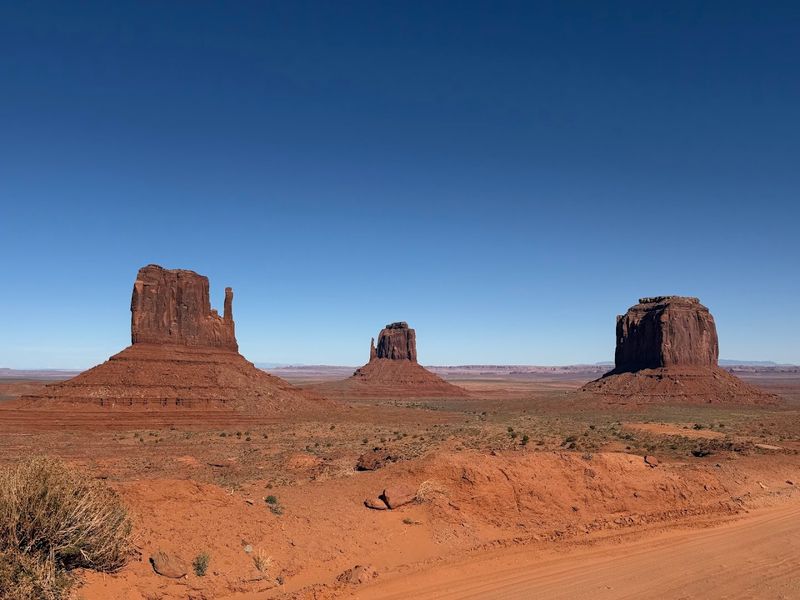
If a landscape could be famous, Monument Valley would be a certified celebrity.
Those towering red sandstone buttes have appeared in so many Western films that seeing them in person feels like stepping onto a movie set.
Rising up to 1,000 feet from the valley floor, the formations are called the Mittens and Merrick Butte.
Located on Navajo Nation land, this place carries deep cultural significance beyond its stunning looks.
Sunrise and sunset paint the rocks in shades of copper and gold that no filter can improve.
2. Bryce Canyon Hoodoos, Utah
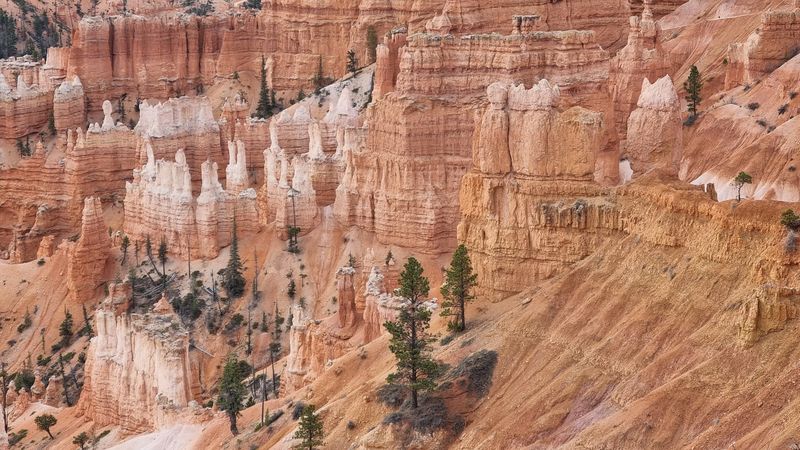
Bryce Canyon looks like someone planted a forest made entirely of stone.
The hoodoos here, tall skinny rock spires carved by frost and rain over millions of years, number in the thousands and glow orange, red, and white depending on the light.
Standing at Bryce Point at sunrise is genuinely one of the most magical moments available on American soil.
Surprisingly, Bryce Canyon is not technically a canyon but an amphitheater shaped by erosion. At over 8,000 feet elevation, the air is crisp and clean.
3. White Sands, New Mexico
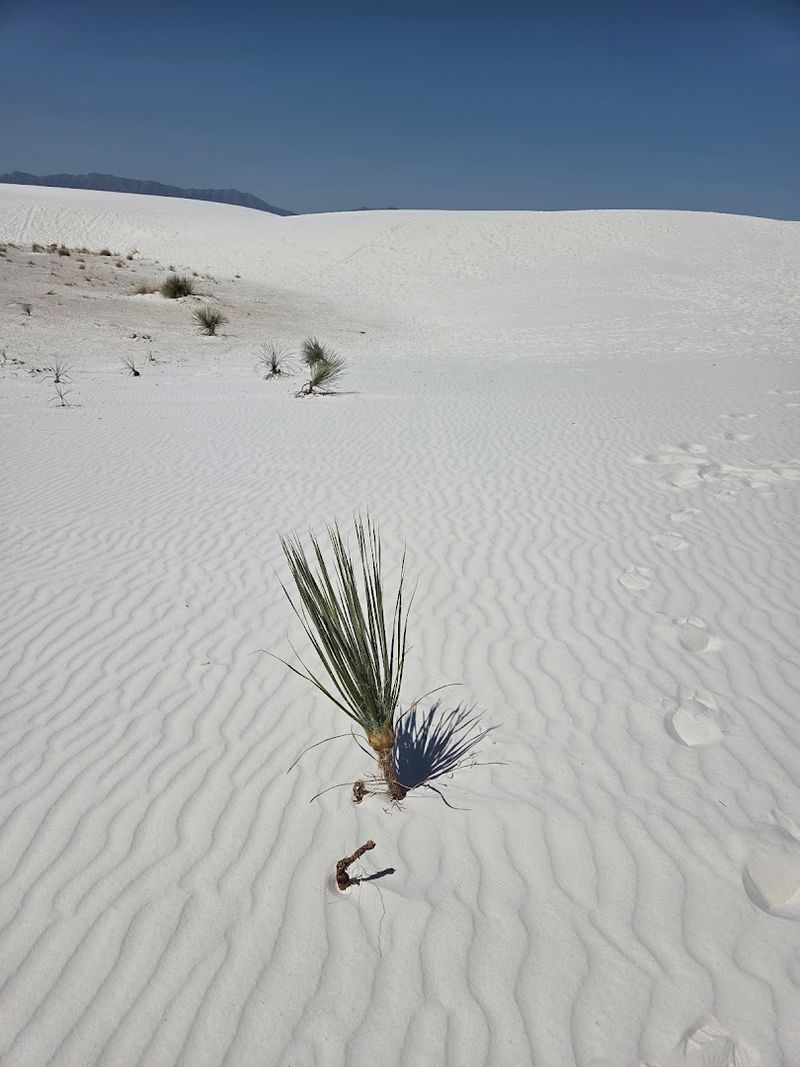
Walking through White Sands feels like someone accidentally left a snow globe open in the middle of the desert.
The dunes here are made entirely of gypsum crystals, which stay cool even in summer heat, a total surprise when you’re expecting scorching sand.
Spread across 275 square miles, this is the largest gypsum dune field on Earth.
Animals like the bleached earless lizard have actually evolved to be white just to blend in here.
4. Crater Lake, Oregon
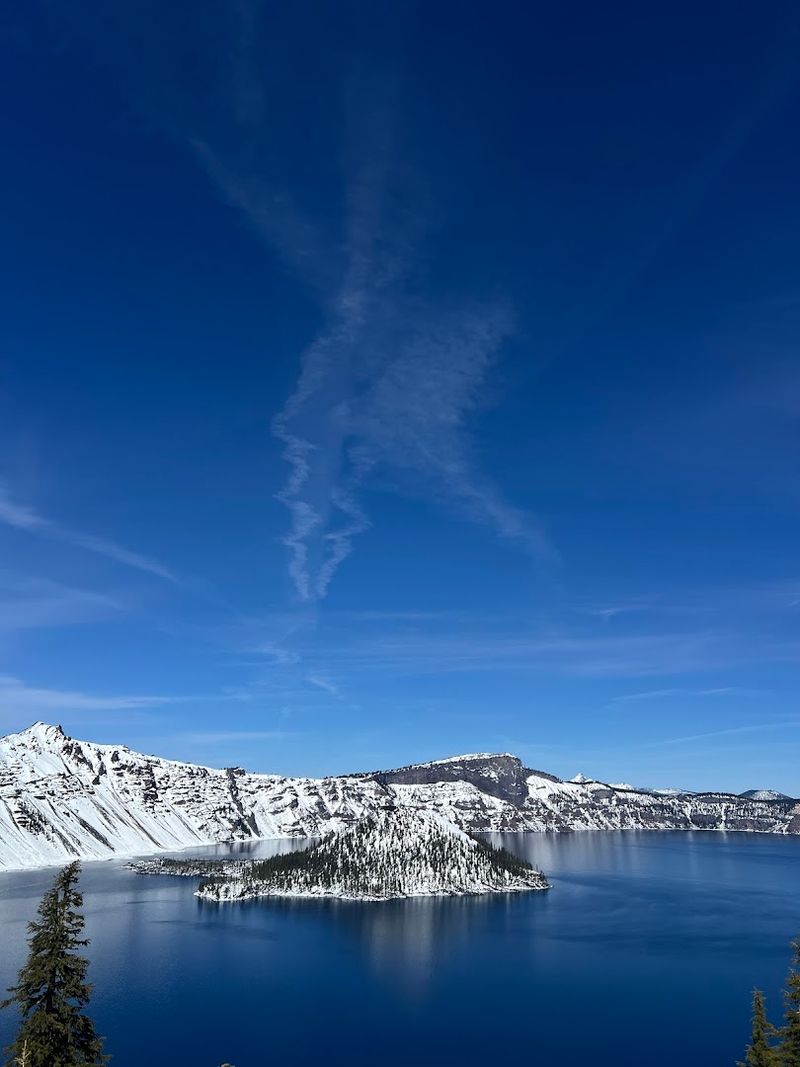
Crater Lake is so blue it almost looks digitally edited, but no, that color is completely real.
Formed nearly 7,700 years ago when the volcano Mount Mazama collapsed after a massive eruption, the caldera slowly filled with rain and snowmelt to create the deepest lake in the United States at 1,943 feet deep.
Because there are no sediments or pollutants, the water achieves a purity and clarity that makes it appear almost electric.
Wizard Island, a small cinder cone, pokes up from the center like a bonus surprise. Visit in summer when the Rim Drive is fully open.
5. Na Pali Coast, Hawaii
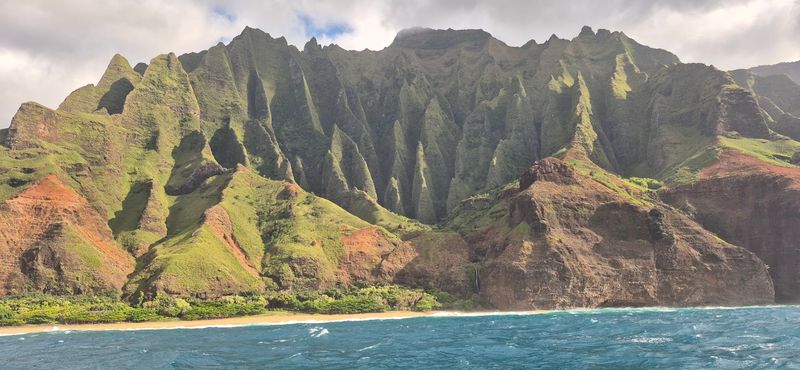
Few places on Earth hit you with this level of raw, dramatic beauty all at once.
The Na Pali Coast on Kauai’s northwest shore features fluted green cliffs soaring up to 4,000 feet above the Pacific Ocean, carved by millions of years of rain and waves.
You can hike the legendary Kalalau Trail, kayak along the base of the cliffs, or take a helicopter tour for a perspective that will permanently rearrange your idea of what beautiful means.
Waterfalls tumble freely down the ridges year-round. This one earns every bit of its reputation.
6. Grand Prismatic Spring, Wyoming
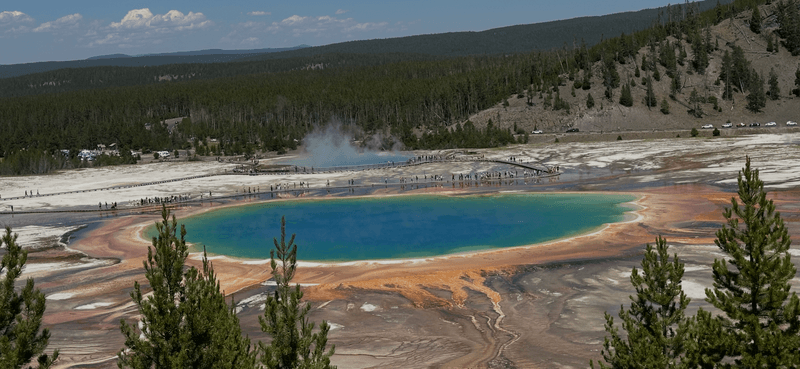
Picture a giant eye staring up at the sky, ringed in neon colors straight out of a sci-fi movie.
Grand Prismatic Spring in Yellowstone is the largest hot spring in the United States, stretching about 370 feet wide. The wild rainbow colors come from heat-loving bacteria living in the water.
Standing on the overlook trail, you can see the full spectrum from deep blue at the center to fiery orange at the edges.
Tip: visit on a sunny morning for the most vivid colors.
7. Horseshoe Bend, Arizona
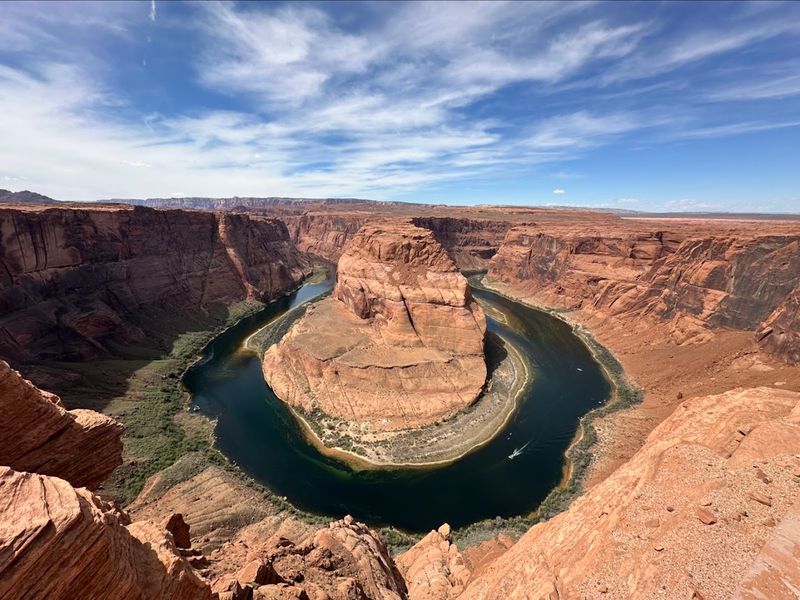
From the edge of the cliff, the Colorado River looks like it changed its mind three times before picking a direction.
Horseshoe Bend is a perfect 270-degree meander carved into Navajo sandstone near Page, Arizona, and the view from the overlook is the kind of sight that makes people go completely silent.
The drop from the rim to the water is roughly 1,000 feet.
Just a few years ago this spot was a hidden gem; now it draws over a million visitors annually, so arriving early in the morning is strongly recommended.
8. Yosemite Valley, California
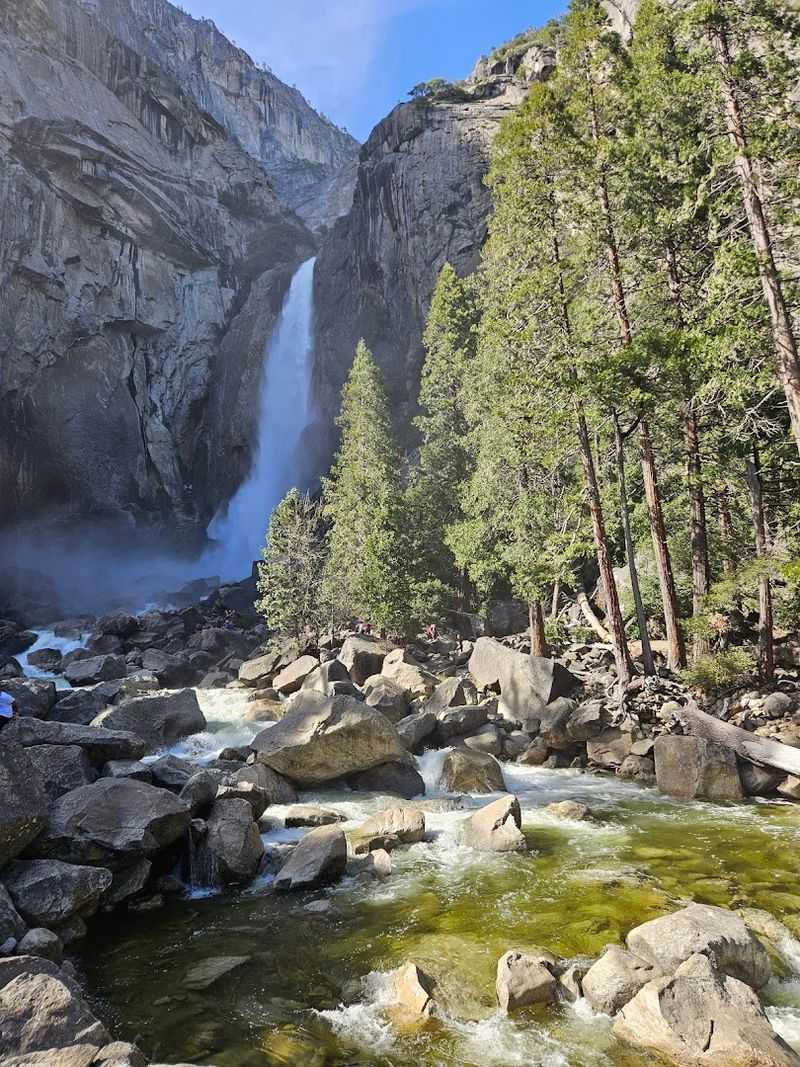
John Muir once called Yosemite Valley the grandest of all the special temples of Nature, and honestly, the man had a point.
Towering granite walls like El Capitan and Half Dome rise more than 3,000 feet above the valley floor, while Yosemite Falls drops nearly 2,400 feet in a roaring cascade. The whole scene looks like a painting that got too ambitious.
Spring is peak waterfall season when snowmelt sends every creek over the edge in spectacular fashion.
Book accommodations months in advance, because everyone else already has this on their list too.
9. Grand Canyon, Arizona
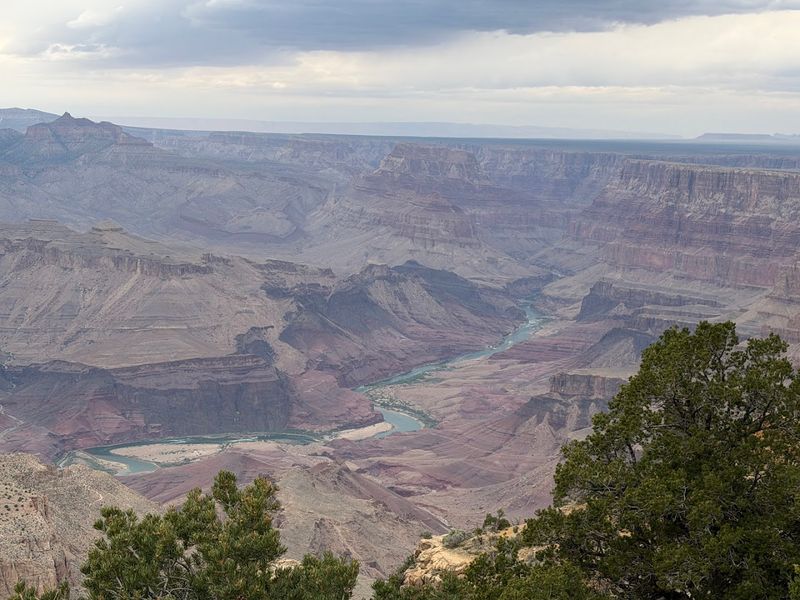
No photograph has ever done the Grand Canyon justice, and that is not an exaggeration.
Standing at the South Rim for the first time, the sheer scale of this 277-mile-long, mile-deep gorge carved by the Colorado River simply does not register in the human brain immediately.
It takes a moment, maybe several moments, to fully process what you are looking at.
The exposed rock layers read like pages from Earth’s geological history book, some dating back nearly two billion years.
Hiking below the rim reveals an entirely different world of desert plants and canyon wrens.
10. Great Sand Dunes, Colorado
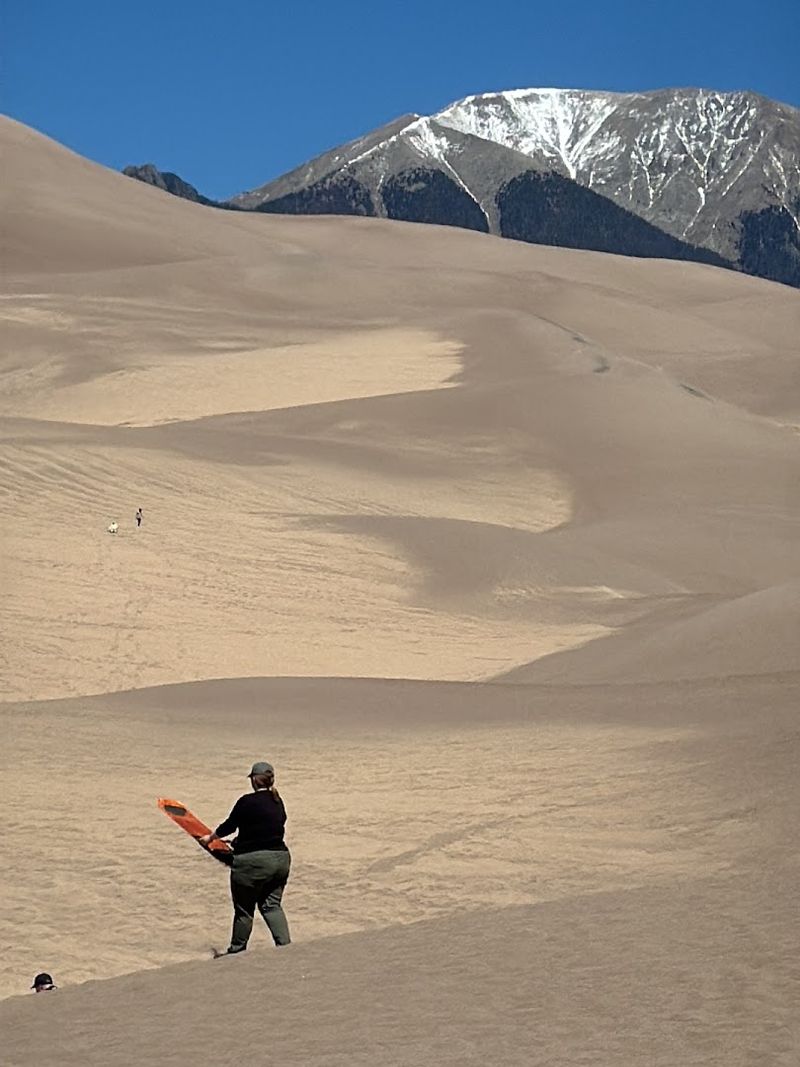
Towering sand dunes in front of snow-capped mountains sounds like a geography mistake, but Colorado pulls it off flawlessly.
Great Sand Dunes National Park holds the tallest dunes in North America, with Star Dune reaching an incredible 750 feet high.
Wind patterns trapped between two mountain ranges have been piling sand here for thousands of years.
Medano Creek flows along the base of the dunes in late spring, creating a shallow, sandy beach vibe that kids absolutely adore.
11. Antelope Canyon, Arizona
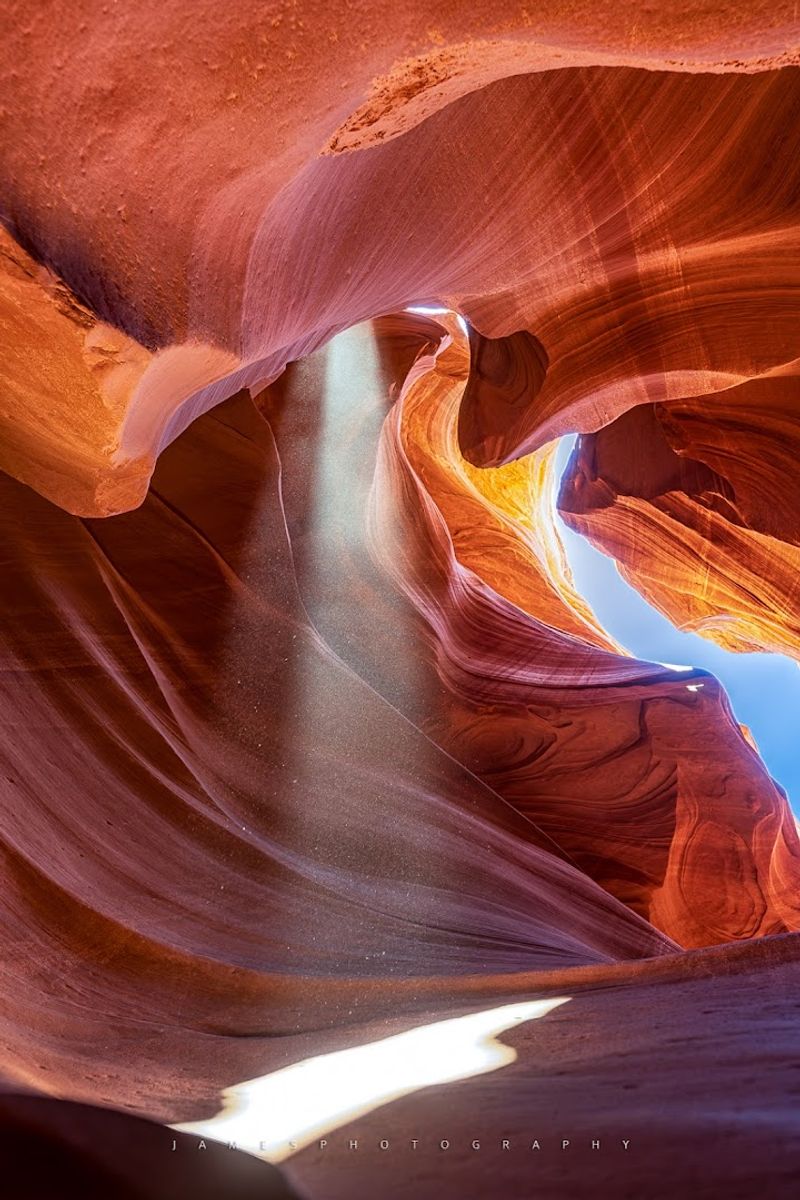
Sunlight drops into Antelope Canyon like a spotlight on a stage, and the sandstone walls practically glow in response.
Located near Page, Arizona, this slot canyon was carved by centuries of rushing floodwater twisting through Navajo sandstone. The curves and shadows create shapes that change every hour as the sun moves overhead.
Photography lovers absolutely lose their minds here, and honestly, who could blame them? The walls reach up to 120 feet high in some spots, making you feel wonderfully small.
12. Denali, Alaska
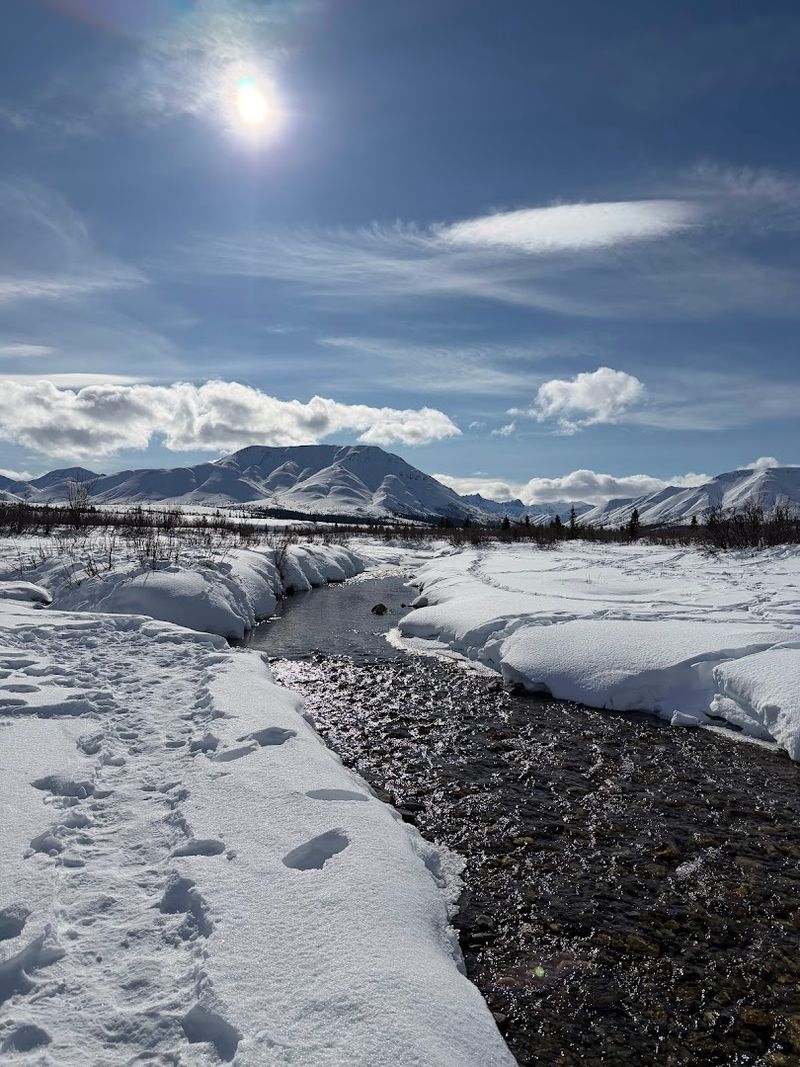
At 20,310 feet above sea level, Denali does not just dominate the Alaskan skyline, it owns it entirely.
The highest peak in North America rises so dramatically from the surrounding lowlands that its vertical relief is actually greater than that of Mount Everest measured from base to summit.
Clear days in Denali National Park offer views that stretch beyond comprehension.
Grizzly bears, wolves, caribou, and moose all roam freely through the six million acres surrounding the mountain. Only about 1,000 climbers attempt the summit each year, and roughly half succeed.
13. Mammoth Cave, Kentucky
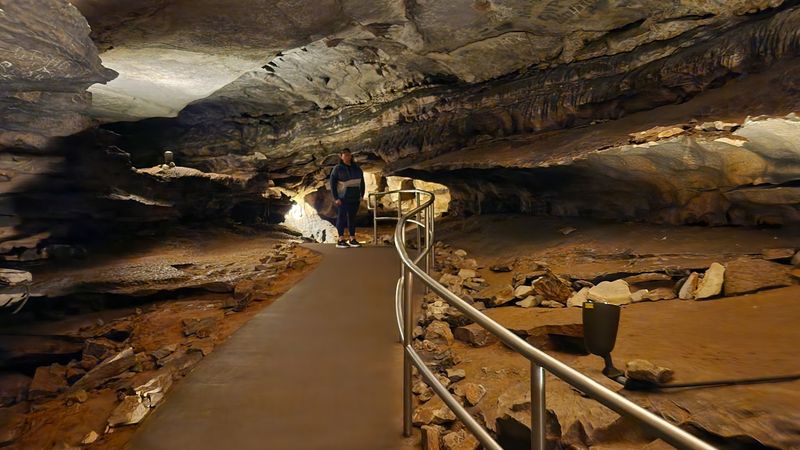
Underground and underrated, Mammoth Cave is quietly one of the most extraordinary places in the entire country.
With over 400 explored miles of passageways, it holds the title of the world’s longest known cave system, and scientists suspect there are hundreds more miles yet to be mapped.
The cave maintains a constant 54 degrees Fahrenheit year-round, making it a welcome escape from summer heat.
Ancient humans sheltered here over 5,000 years ago, leaving behind artifacts that still astound archaeologists today.
14. Glacier Bay, Alaska
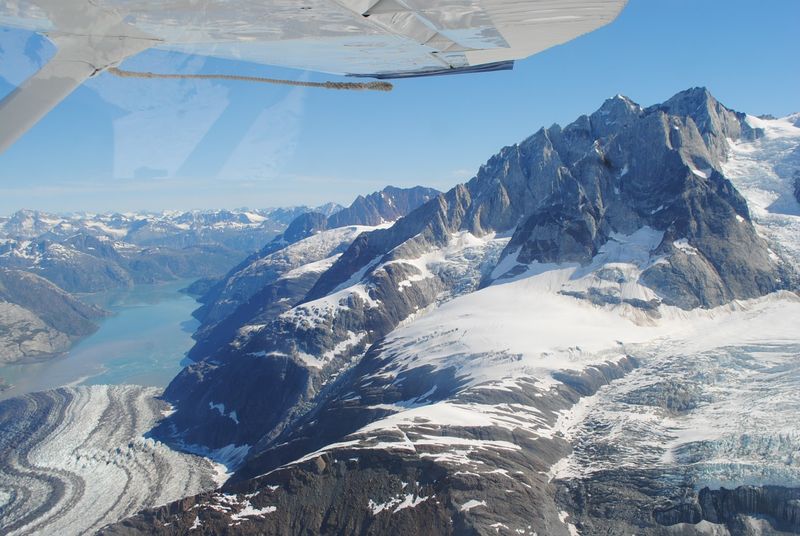
Watching a glacier calve into the ocean is one of those moments where time itself seems to pause.
Glacier Bay National Park in southeastern Alaska is a UNESCO World Heritage Site covering 3.3 million acres of glaciers, fjords, and mountains that were almost entirely buried under ice just 250 years ago.
Humpback whales, orcas, sea otters, and puffins share these icy waters in remarkable abundance. Cruise ships and kayakers both venture into the bay for very different but equally memorable experiences.
Few places on Earth show the power of geological time quite this dramatically.
15. Devils Tower, Wyoming
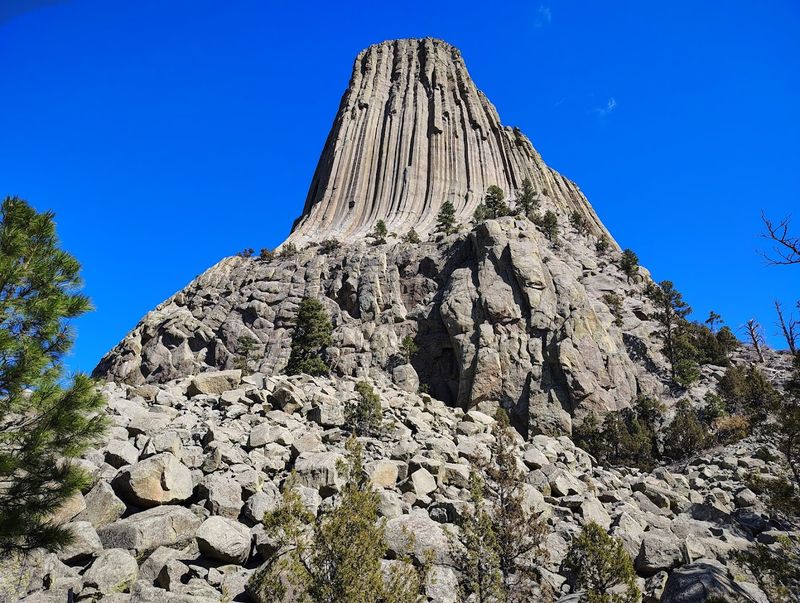
Rising 1,267 feet above the Belle Fourche River valley, Devils Tower looks like it was placed there by something much larger than geology.
The igneous rock column formed when magma pushed up through softer sedimentary rock and slowly cooled into the distinctive hexagonal columns visible today.
Native American tribes have considered it sacred for thousands of years, calling it Bear Lodge among other names.
Rock climbers from around the world come to scale its vertical crack systems, while hikers enjoy the 1.3-mile paved trail circling the base.
16. Badlands, South Dakota
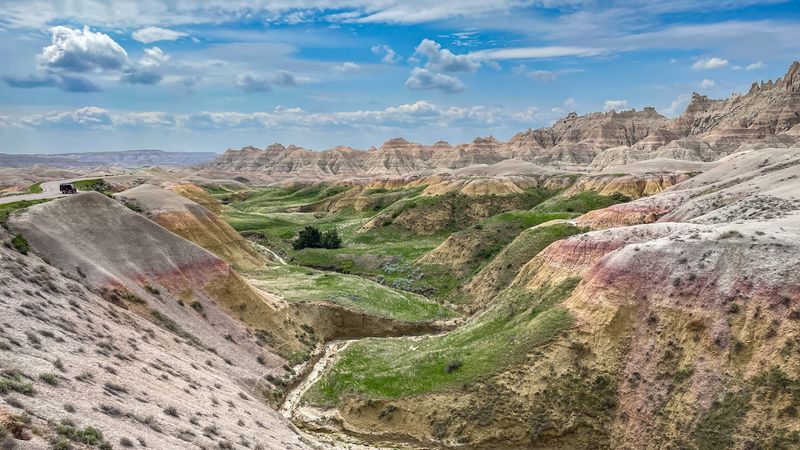
The Badlands earned their name from Lakota Sioux and French fur traders who found the terrain nearly impossible to cross, and one look at the jagged landscape tells you exactly why.
Erosion has been stripping away rock here for half a million years, exposing layers of ancient sediment packed with fossils of rhinoceroses, three-toed horses, and saber-toothed cats.
Bison herds roam freely through the park today, reclaiming land their ancestors once dominated by the millions. Stargazing here is phenomenal thanks to minimal light pollution and wide-open skies.
17. Redwood National and State Parks, California
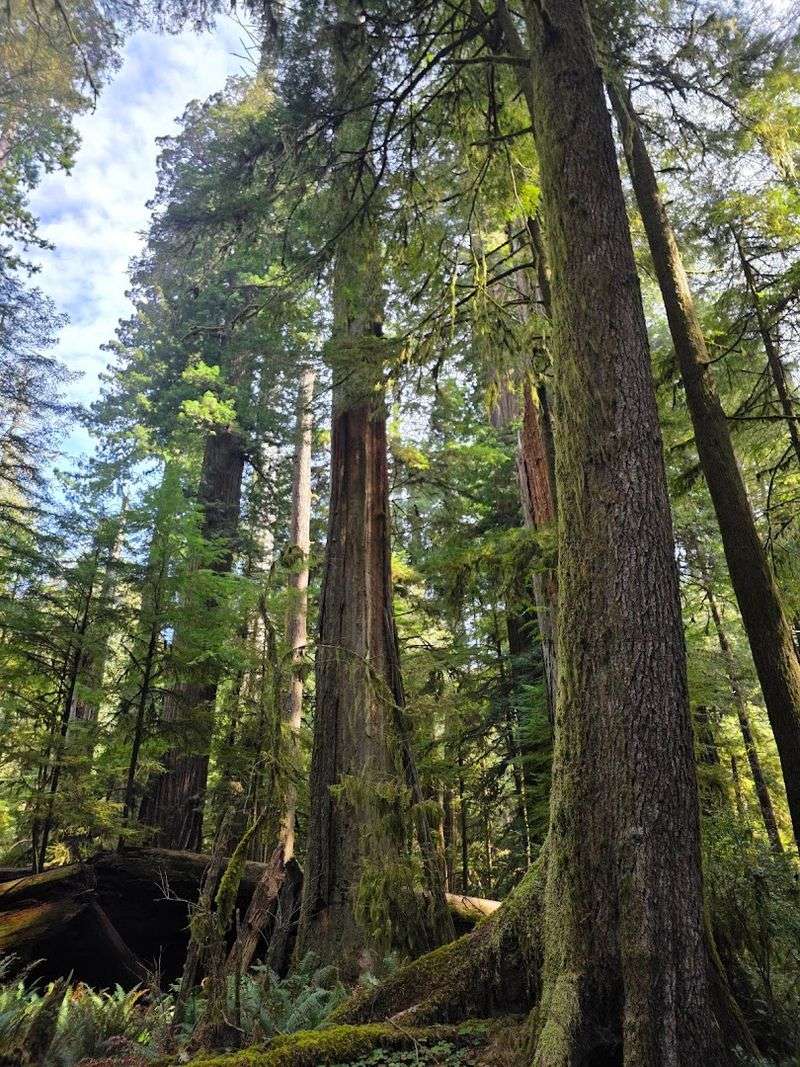
Walking among the coastal redwoods is the closest most of us will ever get to understanding what ancient truly means.
These trees can live over 2,000 years and grow taller than a 35-story building, with the current record holder named Hyperion standing at 380 feet. The forest floor is so shaded and quiet that even whispers feel loud.
Elk wander through open prairies at the park’s edge while banana slugs navigate the fern-covered ground below the canopy.
Stroll the Lady Bird Johnson Grove loop for one of the most serene walks in North America.
18. Hawaii Volcanoes National Park, Hawaii
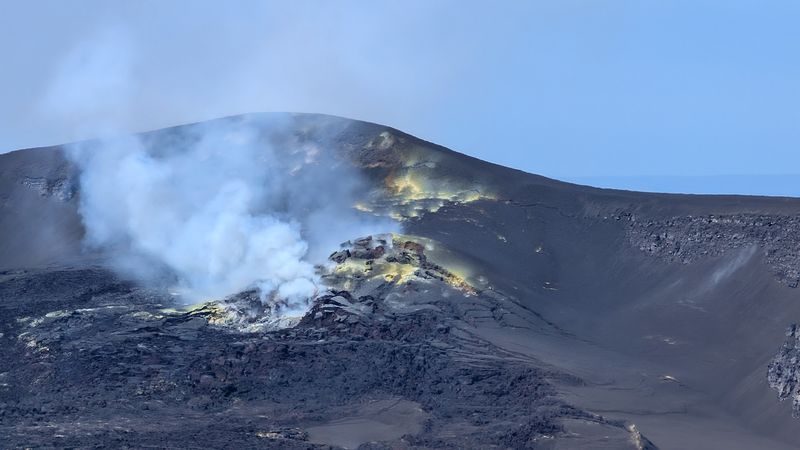
Nowhere else in the United States can you watch the Earth actually being built in real time.
Hawaii Volcanoes National Park on the Big Island is home to Kilauea, one of the most continuously active volcanoes on the planet, which has been adding new land to the island since 1983.
Hardened lava fields stretch for miles, split by glowing cracks that pulse with heat at night. The Thurston Lava Tube offers a cool walk through a tunnel carved by ancient flowing lava.
Check current eruption conditions before visiting, and always respect the park’s safety boundaries around active flow areas.
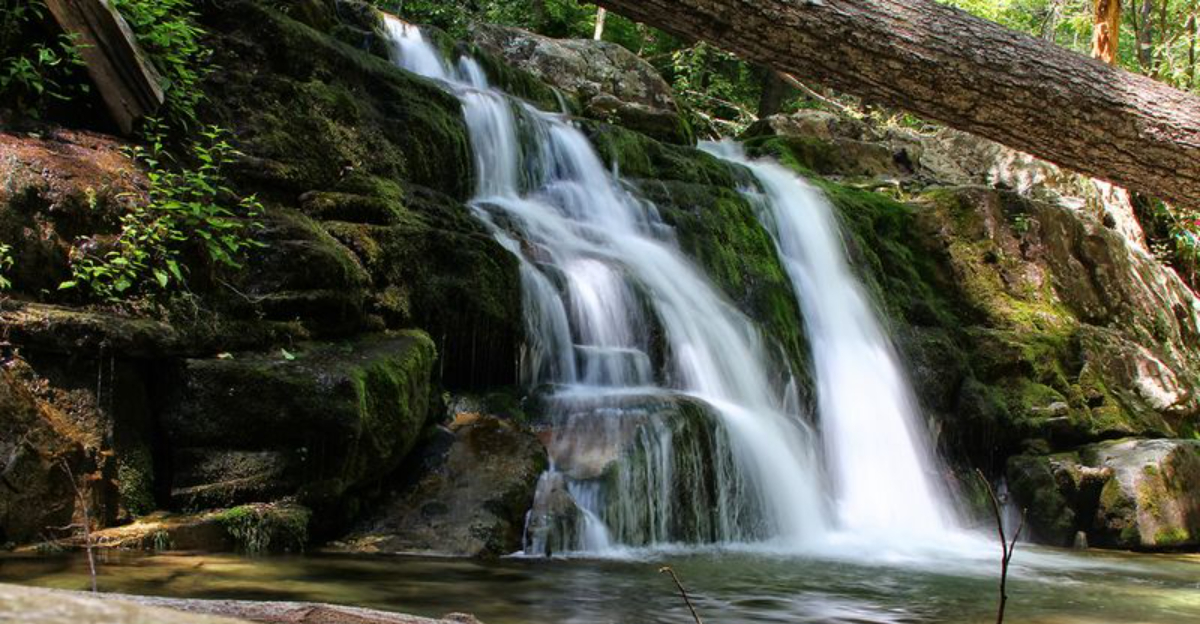
19. Watkins Glen Gorge, New York
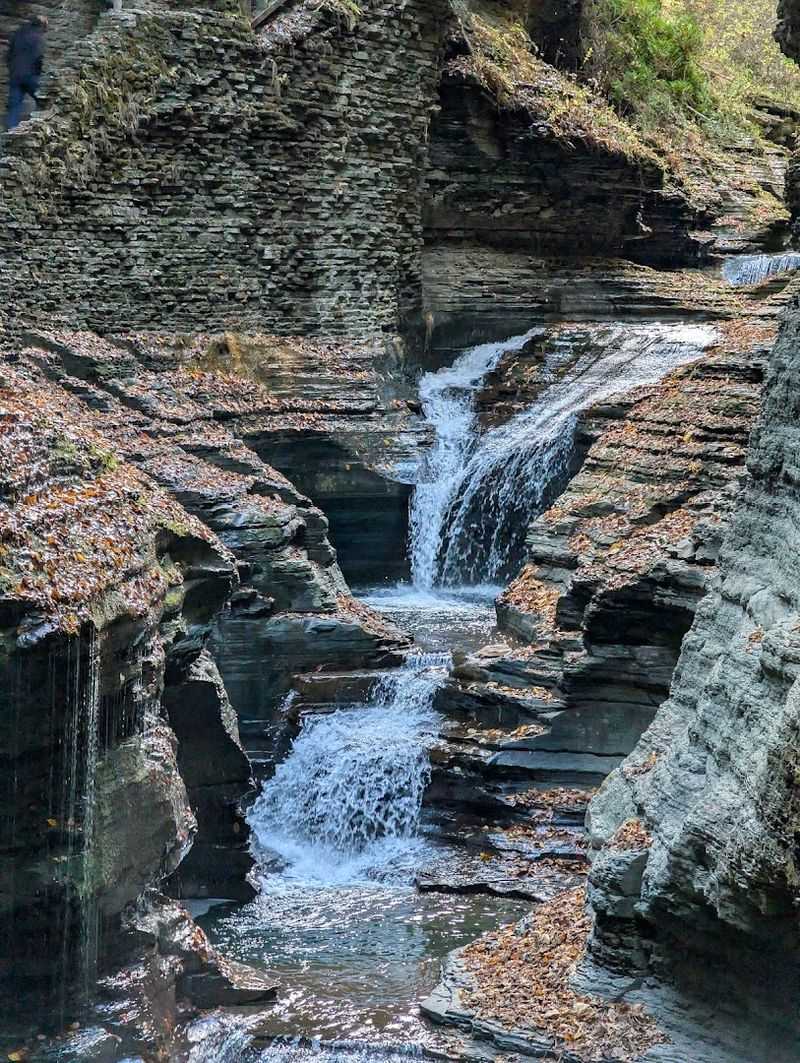
Tucked into the Finger Lakes region of New York, Watkins Glen Gorge packs an almost unbelievable amount of drama into just 1.5 miles of trail.
The path winds past 19 waterfalls, through tunnels carved directly into the rock, and under overhanging cliffs draped in moss and fern.
Rainbow Falls, one of the most photographed spots in the park, shoots water directly over the trail in a curtain of mist.
The stone steps and pathways were built by the Civilian Conservation Corps in the 1930s.
20. Carlsbad Caverns, New Mexico
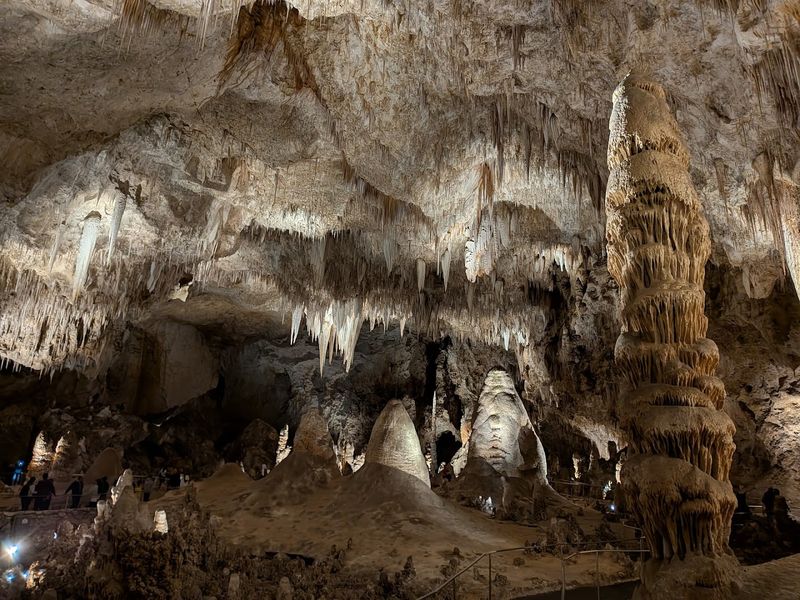
Stepping into Carlsbad Caverns feels like the ground swallowed you whole and delivered you somewhere entirely new.
The Big Room, the main attraction, covers 8.2 acres underground and rises 255 feet at its tallest point, making it one of the largest cave chambers in North America.
Formations with names like the Bottomless Pit and the Rock of Ages have been growing here for hundreds of thousands of years.
Every evening from spring through fall, hundreds of thousands of Brazilian free-tailed bats spiral out of the cave entrance in a spiraling black cloud that lasts nearly two hours.