15 TV Shows That Make Learning English Fun And Easy
Watching TV can turn into a surprisingly powerful way to learn English, almost like sneaking into a classroom where the lessons feel like entertainment. Every episode delivers natural speech, real conversations, and everyday expressions that stick far better than memorizing lists.
Words come alive through context, tone, and emotion, making each scene a mini lesson in disguise. Different characters bring different accents, speeds, and ways of speaking, creating a full spectrum of listening practice.
Comedies deliver quick exchanges and playful wordplay, dramas offer deeper emotional language, and simple dialogue helps build confidence step by step. Repetition across episodes reinforces new phrases without feeling repetitive, which makes progress feel smooth and enjoyable.
Subtitles can act as a helpful guide, connecting spoken words to written form, while rewatching favorite scenes locks in understanding. Over time, phrases start to feel familiar, sentences become easier to follow, and confidence grows naturally.
Learning becomes less about effort and more about immersion, turning downtime into progress. Each episode adds another layer, shaping fluency in a way that feels natural, relaxed, and surprisingly effective.
1. Friends
Six friends, one iconic couch, and enough everyday English to fill a dictionary. Running for ten seasons, this beloved sitcom set in New York City became a global classroom without ever trying to be one.
Characters speak clearly, use common vocabulary, and repeat natural phrases constantly, making new words stick effortlessly.
Beginners especially love how simple yet expressive the dialogue feels. You will pick up greetings, reactions, sarcasm, and humor all in one episode.
How cool is that? Watching with subtitles first, then without, is a proven strategy many language teachers recommend for rapid listening improvement.
2. The Office (US)

Office humor hits differently when you start understanding every punchline. Set inside the Dunder Mifflin paper company in Scranton, Pennsylvania, this mockumentary-style comedy captures workplace English in its most hilariously awkward form.
Characters deliver hilarious lines, use idioms, and navigate social situations that mirror real professional environments.
Intermediate learners benefit enormously here because conversations feel unscripted and spontaneous, even though every word is carefully written. Picking up phrases like “circle back” or “touch base” will genuinely impress coworkers someday.
Bonus points for learning how NOT to run a meeting, courtesy of the legendary Michael Scott.
3. The Crown
Formal, precise, and absolutely stunning, this historical drama chronicles the reign of Queen Elizabeth II across decades of British history. Every sentence feels carefully constructed, making it a goldmine for advanced learners who want to master sophisticated vocabulary and proper British pronunciation.
How British English differs from American English becomes crystal clear episode by episode. Phrases, titles, and formal expressions used in royal and political circles are woven naturally into every conversation.
If you have ever wanted to sound polished and articulate, spending time inside Buckingham Palace through a screen is honestly one of the smartest moves you can make.
4. Stranger Things
Nostalgia meets supernatural chaos in one of Netflix’s most talked-about series. Set in the fictional town of Hawkins, Indiana during the 1980s, the show blends American slang, pop culture references, and fast-paced teenage dialogue into an addictive package intermediate learners absolutely love.
Listening carefully to how characters express fear, excitement, or disbelief teaches emotional vocabulary in a way no grammar book can replicate. Phrases bounce quickly between characters, so rewinding becomes part of the fun rather than a frustration.
Just saying, if a show makes you forget you are studying, it is doing something very right.
5. Peppa Pig
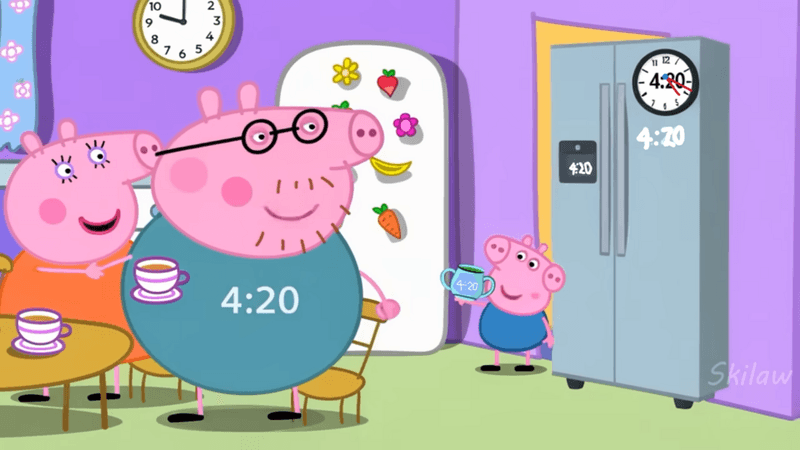
Short sentences, clear pronunciation, and a cheerful British accent make this animated series a surprisingly powerful tool for absolute beginners and young learners. Every episode runs about five minutes, covering everyday topics like muddy puddles, school days, and family outings in the simplest possible language.
Adults learning English often secretly love Peppa Pig too, and honestly, no judgment here. Basic vocabulary is introduced through repetition, which is exactly how the brain locks in new words.
If you want to build a strong foundation before tackling more complex shows, starting small and colorful is genuinely one of the smartest strategies around.
6. Modern Family

Eleven seasons of warm, witty family comedy make Modern Family one of the most rewarding shows for English learners at every level. Set across three connected households in Los Angeles, the show exposes viewers to a rich variety of accents, speech styles, and generational vocabulary all in one package.
Grandparents speak differently than teenagers, and immigrants navigate English differently than native speakers. Watching how language shifts between characters builds real listening flexibility.
Mockumentary-style confessionals also slow the pace down enough for learners to absorb dialogue without feeling overwhelmed. Honestly, laughing while learning is one of the most underrated study methods ever invented.
7. Brooklyn Nine-Nine

A police comedy that makes you genuinely root for every single character is rare, and Brooklyn Nine-Nine nails it completely. Set in a New York City police precinct, the show delivers sharp, fast, and endlessly quotable dialogue packed full of American slang, humor, and professional vocabulary.
Intermediate and advanced learners will love how characters play with language, using sarcasm, wordplay, and pop culture references constantly. Each episode introduces new expressions without ever feeling like a lesson.
Detective Jake Peralta’s love of movie references alone could fill an entire vocabulary notebook. Plus, the ensemble cast keeps conversations dynamic and unpredictable every single episode.
8. Downton Abbey

Upstairs or downstairs, every character in Downton Abbey speaks with remarkable clarity and purpose. Set in a grand Yorkshire estate between 1912 and 1926, the series showcases formal British English spoken by aristocrats alongside more casual speech used by household staff, offering learners an incredible range of registers.
Vocabulary related to manners, social class, and historical events appears naturally throughout each episode. Advanced learners especially appreciate how subtle word choices reveal character and status.
Watching how language reflects power dynamics is a sophisticated skill, and Downton Abbey teaches it beautifully without ever making it feel like homework.
9. The Good Place

A comedy set in the afterlife that casually teaches philosophy and advanced vocabulary sounds impossible, yet The Good Place pulls it off brilliantly. Eleanor Shellstrop and her unlikely crew navigate moral dilemmas using clever, layered dialogue that rewards careful listeners with both laughs and genuine insight.
Words like “consequentialism,” “ethical framework,” and “existential crisis” pop up regularly but always in context, making complex vocabulary surprisingly accessible. How a show makes Aristotle feel funny is honestly a superpower.
Advanced learners looking to stretch beyond everyday conversation will find The Good Place both intellectually stimulating and outrageously entertaining, sometimes within the same sentence.
10. Bluey

Australian English gets its well-deserved spotlight through Bluey, an animated series about a Blue Heeler puppy family living in Brisbane. Praised worldwide for its warmth and emotional depth, the show introduces learners to Australian pronunciation, local expressions, and family-centered vocabulary in the most delightful way possible.
Episodes are short, dialogue is clear, and every story carries a small but meaningful lesson. Learners who want exposure to English beyond American and British accents will find Bluey refreshingly different.
Did you know Bluey consistently ranks among the most-watched children’s shows globally? Sometimes the best English teacher wears fur and loves playing games.
11. Seinfeld

A show famously described as being about nothing somehow teaches you everything about American conversational English. Seinfeld follows four neurotic New Yorkers through hilariously mundane situations, delivering some of the sharpest, most quotable dialogue in television history across nine seasons.
Humor here relies heavily on irony, observation, and wordplay, which makes it exceptional for learners ready to move beyond basic comprehension. Understanding why a joke lands requires grasping cultural context, timing, and subtle vocabulary nuances.
If a learner can follow a full Seinfeld conversation without subtitles, consider that a serious English milestone worth celebrating loudly.
12. Dora the Explorer

Bold, bilingual, and built for beginners, Dora the Explorer has introduced English vocabulary to millions of young learners across more than 170 countries. Episodes are structured around simple repetitive phrases and direct audience participation, making new words land quickly and memorably for younger viewers.
Dora literally pauses and waits for viewers to answer questions, turning passive watching into active learning. Vocabulary is introduced visually and verbally at the same time, doubling retention.
Even adult beginners benefit enormously from the show’s patient pacing and clear enunciation. Sometimes the most powerful learning tools come wrapped in a cartoon backpack and a whole lot of enthusiasm.
13. How I Met Your Mother

Narrated entirely in the past tense by an older Ted Mosby telling his kids a very long story, How I Met Your Mother is a brilliant show for learners practicing storytelling language and time-based expressions. Running for nine seasons, the series blends humor, romance, and surprisingly emotional moments into addictive viewing.
Phrases like “legend, wait for it, dary” became cultural shorthand understood worldwide. Beyond the catchphrases, the show excels at demonstrating how Americans use informal language, jokes, and callbacks in everyday conversation.
Intermediate learners especially benefit from the show’s clever narrative structure, which models natural English storytelling in a way few other comedies attempt.
14. Avatar: The Last Airbender

Epic, emotionally rich, and genuinely beautiful, Avatar: The Last Airbender offers English learners a fantasy adventure packed full of expressive vocabulary, moral complexity, and diverse speech patterns. Characters range from playful and casual to wise and formal, exposing viewers to a remarkable breadth of English registers.
Dialogue is clear, deliberate, and carefully paced, making it accessible even for intermediate learners. Themes of courage, identity, and responsibility are explored through conversations that feel meaningful rather than superficial.
If a show can make you cry, laugh, and learn a new word all within twenty minutes, it earns a permanent spot on every English learner’s watchlist.
15. Sherlock

Fast, brilliant, and absolutely packed full of advanced vocabulary, Sherlock reimagines Arthur Conan Doyle’s legendary detective in modern-day London. Benedict Cumberbatch delivers rapid-fire monologues full of deductive reasoning, medical terminology, and razor-sharp British wit, making every episode an exhilarating workout for serious English learners.
Pausing and rewinding is practically required, but that repetition is exactly what builds strong listening comprehension over time. Exposure to formal British speech alongside casual street language gives learners a genuinely wide vocabulary range.
Advanced learners will especially love how Sherlock demonstrates that precise word choice carries enormous power, proving English mastery is basically its own superpower.